
There are 3 Companies in Hungary
that provide CRM Consulting Services!
Hungary is an open economy where particular emphasis is placed on encouraging foreign direct investments. Partnership with potential investors is a national priority, special attention is paid to the needs of already existing companies, and to the further development of the business climate. In Hungary, the IT Services market is predicted to reach a revenue of $2.06 billion in 2025, according to Statista.
Discover Top IT Companies in Hungary specialized in CRM Consulting including Hubspot, IBM CRM, Microsoft Dynamics CRM, Marketo, Salesforce, Sugar CRM, Zoho CRM and more.
Customer relationship management (CRM) lies at the heart of any successful business strategy, enabling companies to cultivate meaningful connections with their customers and drive sustainable growth. However, implementing and optimizing a CRM system can be a complex endeavor without the right expertise. CRM Consulting services offer invaluable guidance and support, helping businesses harness the full potential of CRM solutions. Below we explore the realm of CRM Consulting and how getting these services can be useful (or not) for your business.
Handpicked companies • No obligation to hire • 100% risk-free
Explore Top CRM Consulting Companies in Hungary

With over 25 years of experience serving more than 250 international clients, we are a one-stop shop for IT services and digitizing business needs.
Solution for everyday business problems! With our youthful energy, we set your business in motion!
Filter CRM Consulting Companies in Hungary by Cities
Find the right tech company near you or from a specific city. Some of the best companies might be located in smaller cities.
Find more CRM Consulting companies around the world
TechBehemoths is the world's most advanced and user-friendly platform to match IT Companies with real clients without hustle.
The Hungarian ICT Industry: General Report & Country Overview
Hungary is an open economy where particular emphasis is placed on encouraging foreign direct investments. Partnership with potential investors is a national priority, special attention is paid to the needs of already existing companies, and to the further development of the business climate.
Starting in 2010, Hungary has put a lot of effort into developing the IT sector. Some of the best steps in this direction are:
- Tax modifications and incentive systems related to R&D activities
- Strategic partnership for local IT companies, as well as government projects
- A dual education system based on the tech industry’s needs
- Adjusted the economic climate to the latest requirements of Industry 4.0
In Hungary, the IT Services market is predicted to reach a revenue of $2.06 billion in 2025, according to Statista. For 2024, the revenue for the same industry was $1.97 billion, which confirms the steady ground the national IT industry stands on. Additionally, Hungarian IT companies have access to the vast EU digital market, which allows them to export services across Europe.
The most popular IT services provided by Hungarian companies are Software development, Software engineering, and cybersecurity. However, in the last several years, local companies have also focused on app development and have worked on an increasing number of projects in the AR and VR branches.
Why You Should Work With Hungarian IT Companies
Even though the digital market is dominated by foreign IT companies (66%), there are also local companies that are striving to provide cutting-edge technology services, which may compete in some places with US, German, and UK companies. For central Europe, this represents a big step ahead and provides cheaper alternatives to the same services for potential customers.
In 2023, the value of Hungarian exported IT services reached 33,664 million euros or 20.9% of the entire export value of the country. The numbers are expected to grow significantly due to foreign direct investments in the sector, which also grew by 19% in the 2019-2020 Q1, and in 2024, Hungary attracted 10 million euros in FDI.
What You Should Pay Attention to When Working With Hungarian IT Companies
Hungarian IT companies are not the best-known on the international market, so far. However, their increased potential lately may lead to a market boom in the central European market, and many potential customers could turn their attention to this progressive alternative. But the main challenge the companies will possibly face is a lack of experience in working with big projects. In its turn, the lack of experience can lead to poor project management, late project delivery, or even poorly executed projects.
How Reliable Are Hungarian IT Companies
Hungarian IT companies don’t have a reputation for providing services in IT, which can turn both into an advantage and a disadvantage for the companies. Depending on how well local IT companies will start performing on a larger scale, the reliability of companies will be appreciated.
How Does the Hungarian IT Sector Relate to the Neighboring Countries
The V4 countries are working together in many areas, including in the IT sector. Companies from these countries benefit from facilities and easier access to national markets, but they also compete.
In these regards, Hungary is the 2nd fastest-growing country in the IT sector in the group of 4, straight after Poland, which already took the lead with an advantage of 35%.
Outside the V4 group, Romania and Ukraine are also countries that are direct competitors with the Hungarian IT sector. It is still uncertain whether Hungary, Ukraine, Poland, or Romania will become the largest Central European hub in the EU, and generally, in Europe.
What is CRM Consulting and what are its benefits for your projects?
Customer relationship management (CRM) is one of the key elements of any successful business strategy, enabling companies to enable meaningful connections with their customers and drive sustainable growth. However, implementing and optimizing a CRM system can be a complex task without the right expertise. CRM Consulting services offer valuable guidance and support, helping businesses benefit from the full potential of CRM solutions. Below we explore CRM Consulting and how getting these services can be useful for your business.
CRM consulting services provide a wide range of expert solutions designed to help businesses enhance customer interactions, streamline processes, and boost overall sales and marketing efficiency. From CRM strategy development to system integration and customization, CRM Consulting caters to the entire CRM implementation lifecycle. Key services related to CRM Consulting include CRM assessment and planning, CRM customization and integration, data migration, user training, and ongoing support.
To provide better CRM Consulting services, companies leverage a variety of tools and technologies. These may include popular CRM platforms such as Salesforce, Microsoft Dynamics 365, HubSpot, and Zoho CRM. Additionally, integration tools, data migration solutions, and analytics software play a crucial role in optimizing CRM implementation and performance.
Companies seeking CRM Consulting services have the flexibility to choose between specialized IT companies and digital agencies. Specialized IT companies often have deep expertise in CRM technologies and provide niche solutions for CRM implementation and optimization. Digital agencies, on the other hand, may offer a broader suite of services, including CRM Consulting, making them a suitable option for businesses seeking comprehensive digital transformation.
Contracting CRM Consulting services may bring a set of advantages for businesses aiming to strengthen customer relationships and achieve sustainable growth. By implementing an effective CRM system, companies can centralize customer data, enabling a 360-degree view of their interactions. This enhanced visibility empowers sales and marketing teams to deliver personalized and targeted campaigns, resulting in improved customer satisfaction and increased sales. Moreover, CRM Consulting streamlines processes, enhances productivity, and facilitates data-driven decision-making, ultimately driving long-term profitability.
Selecting the right CRM Consulting partner is crucial to ensure a successful project. Consider the following criteria:
-
Expertise and Experience: Look for a provider with proven experience in CRM implementation, integration, and support, ideally with a track record in your industry
-
Customization: Ensure the provider can tailor CRM solutions to meet your specific business needs and processes.
-
Scalability: Choose a partner who can support your business as it grows and evolves.
-
Client References: Request client references to gain insights into the provider's performance and customer satisfaction.
TechBehemoths is your go-to platform for finding the best CRM Consulting companies worldwide. With over 982 companies listed across 70+ countries and territories, the platform offers a vast selection of reliable consulting partners. TechBehemoths provides valuable information such as client reviews, ratings, and detailed profiles, enabling you to make an informed decision and select the right CRM Consulting provider for your project.
What type of CRM systems do businesses use?
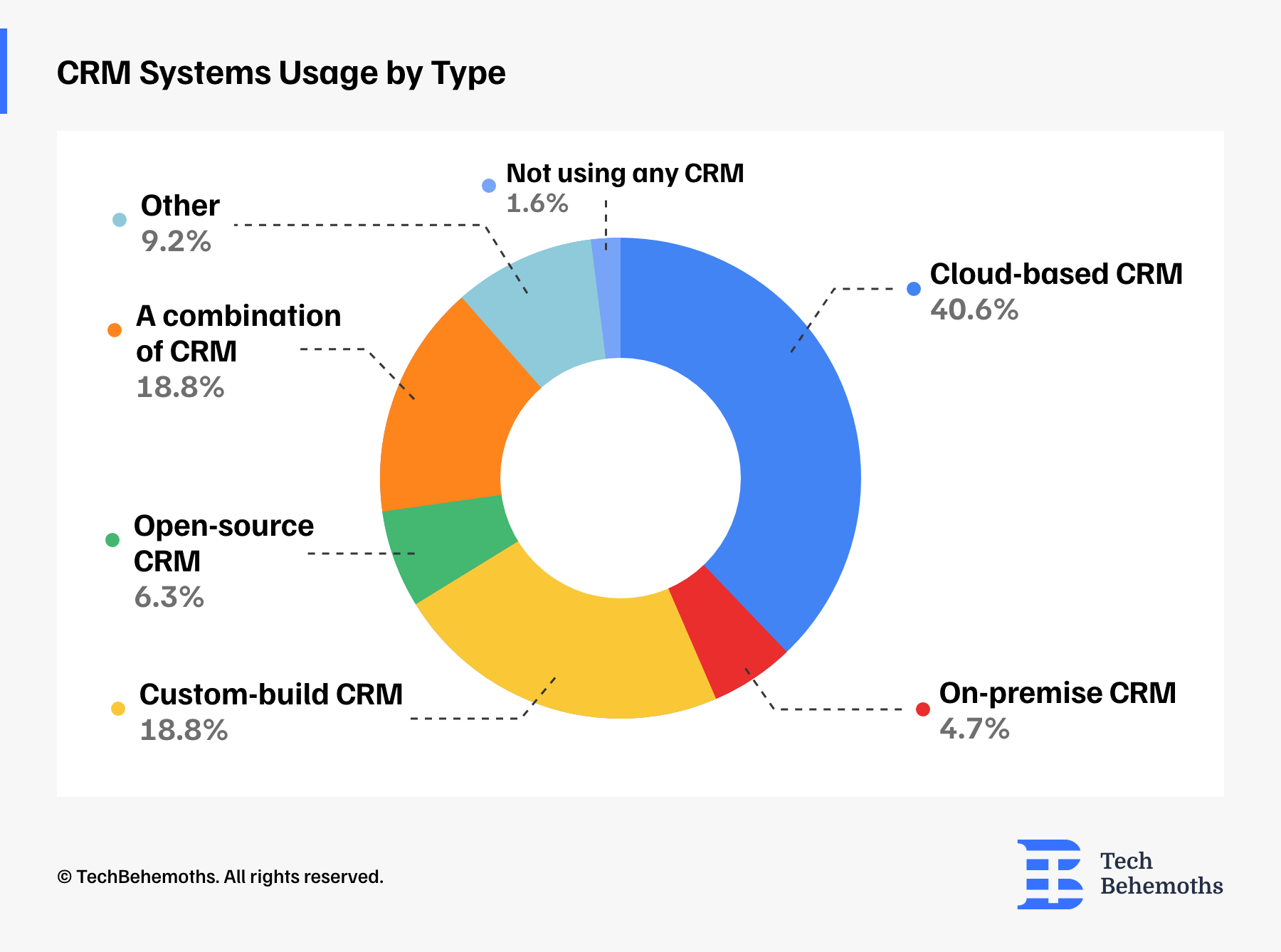
According to a recent survey, over 40% of businesses prefer to use cloud-based CRM systems, due to scalability, ease of integration, and automatic updates. Examples include Salesforce, HubSpot CRM, and Zoho CRM.
Around 19% of businesses use custom built CRMs and 1.6% don’t use any CRMs. This means that about 20% of businesses need flexible solutions to address their unique workflows and integrate seamlessly with their existing systems.
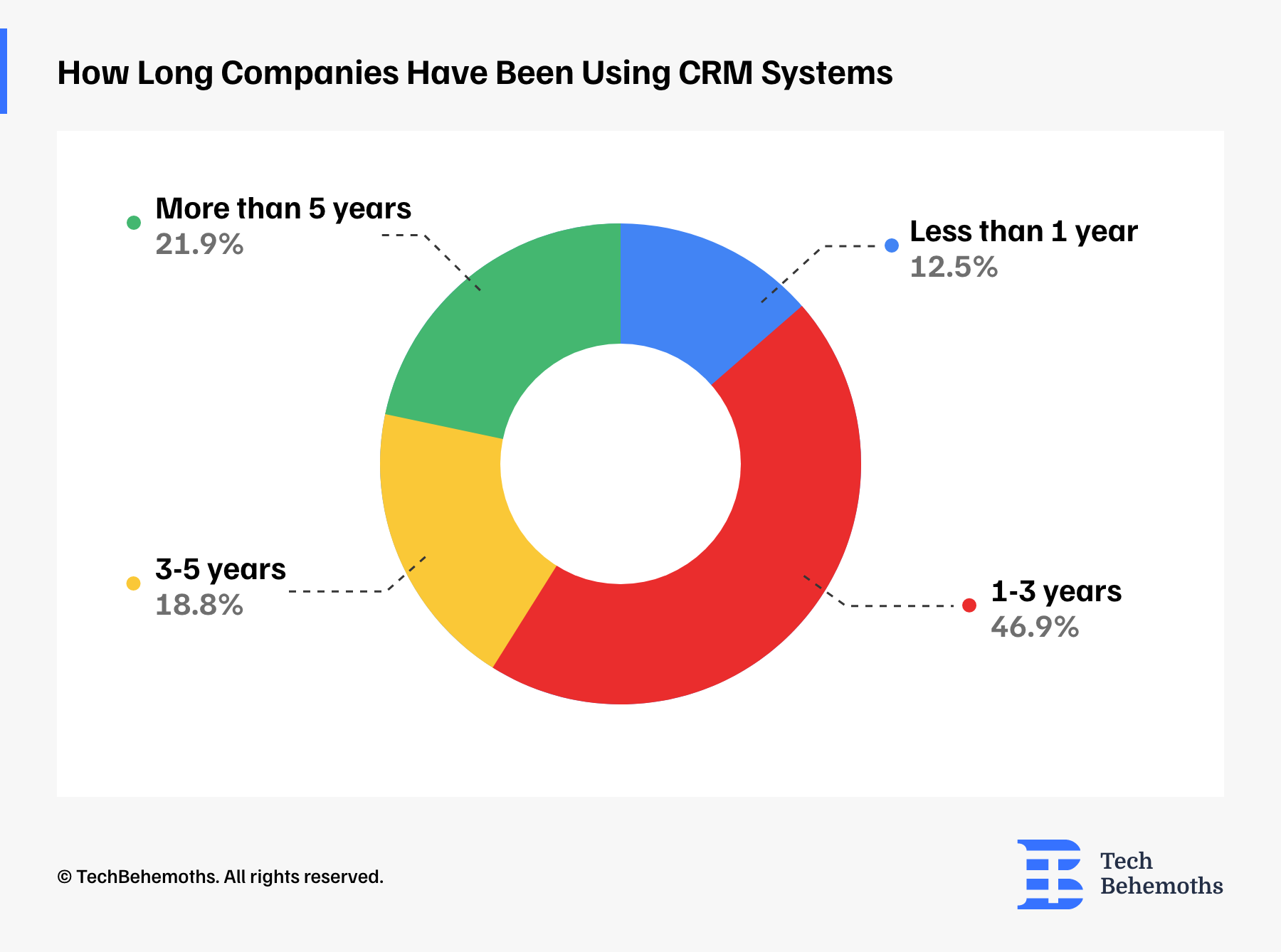
How long have companies been using CRMs?
The survey data shows that CRM adoption is still work in progress for many tech companies. The largest group of respondents , around 47% have been using CRM systems for 1-3 years. Another 12 % have been using CRM systems for less than 1 year, meaning that some companies are just getting started with CRM.
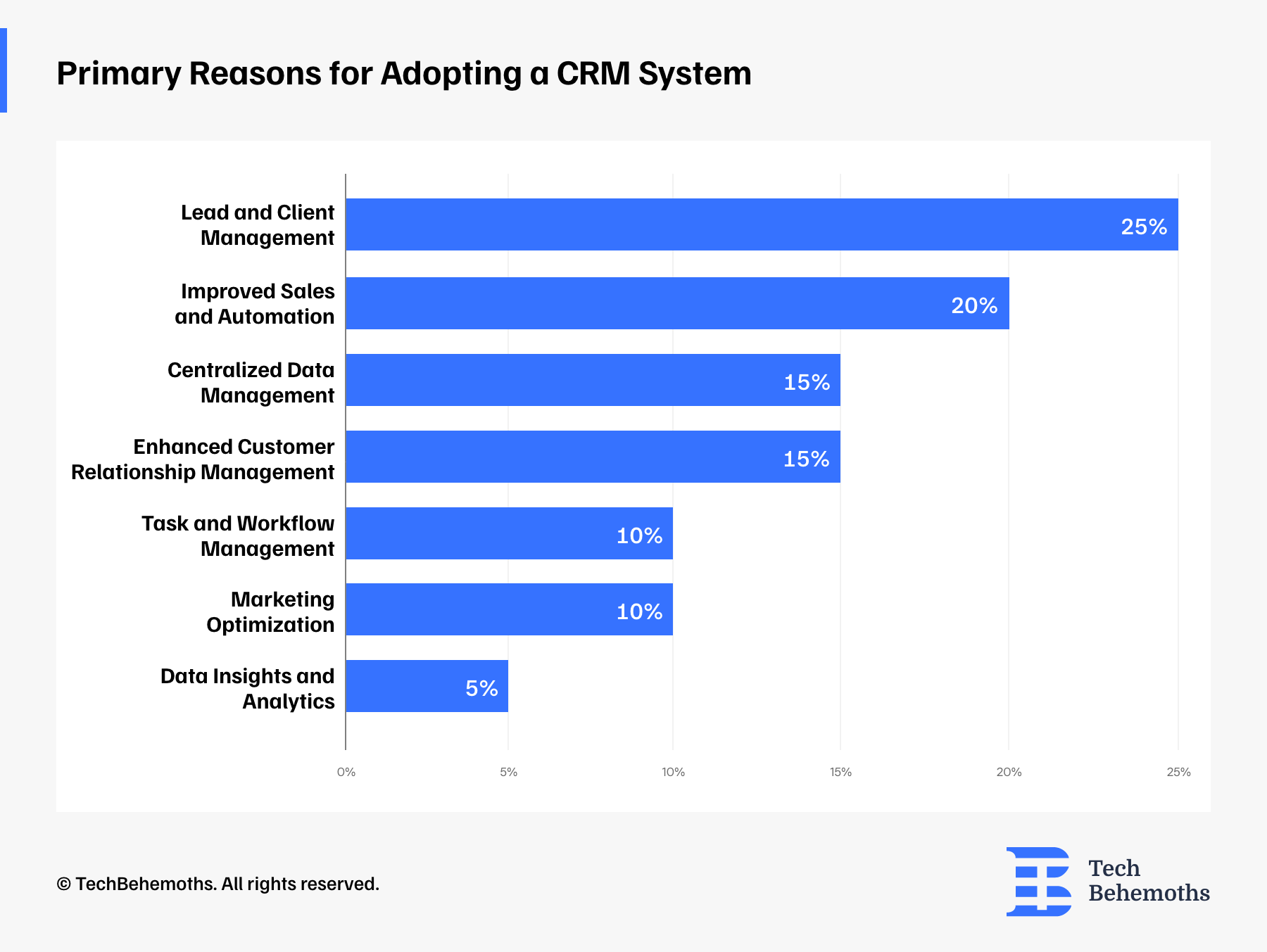
Why do tech businesses use CRMs?
Many professionals think that CRM systems are essential for lead and client management. They help track contacts, organize information, and effectively strengthen customer relationships.
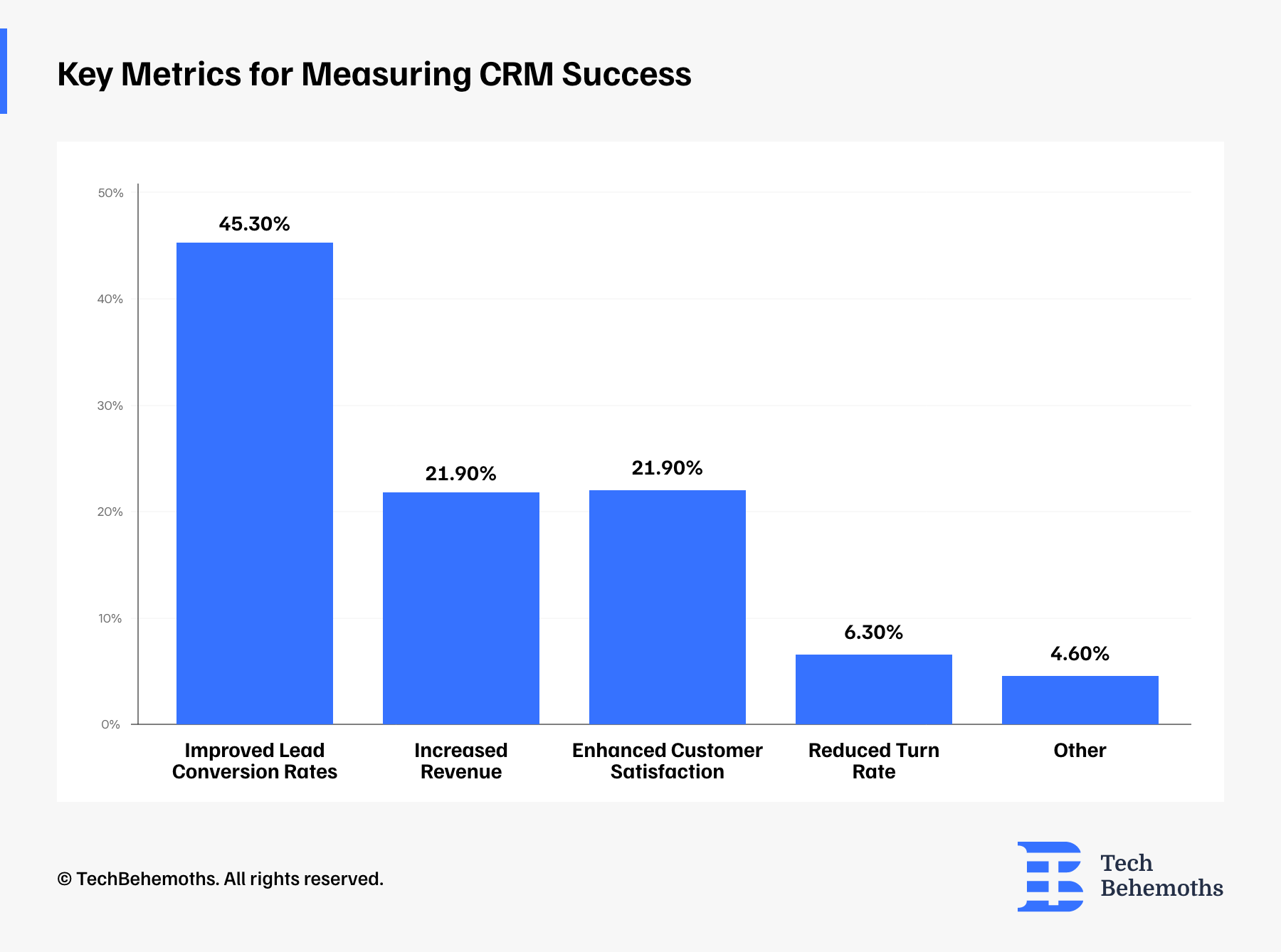
How to measure the success of a CRM system?
Here are some metrics that you can use to measure the success of your CRM system, based on survey data.
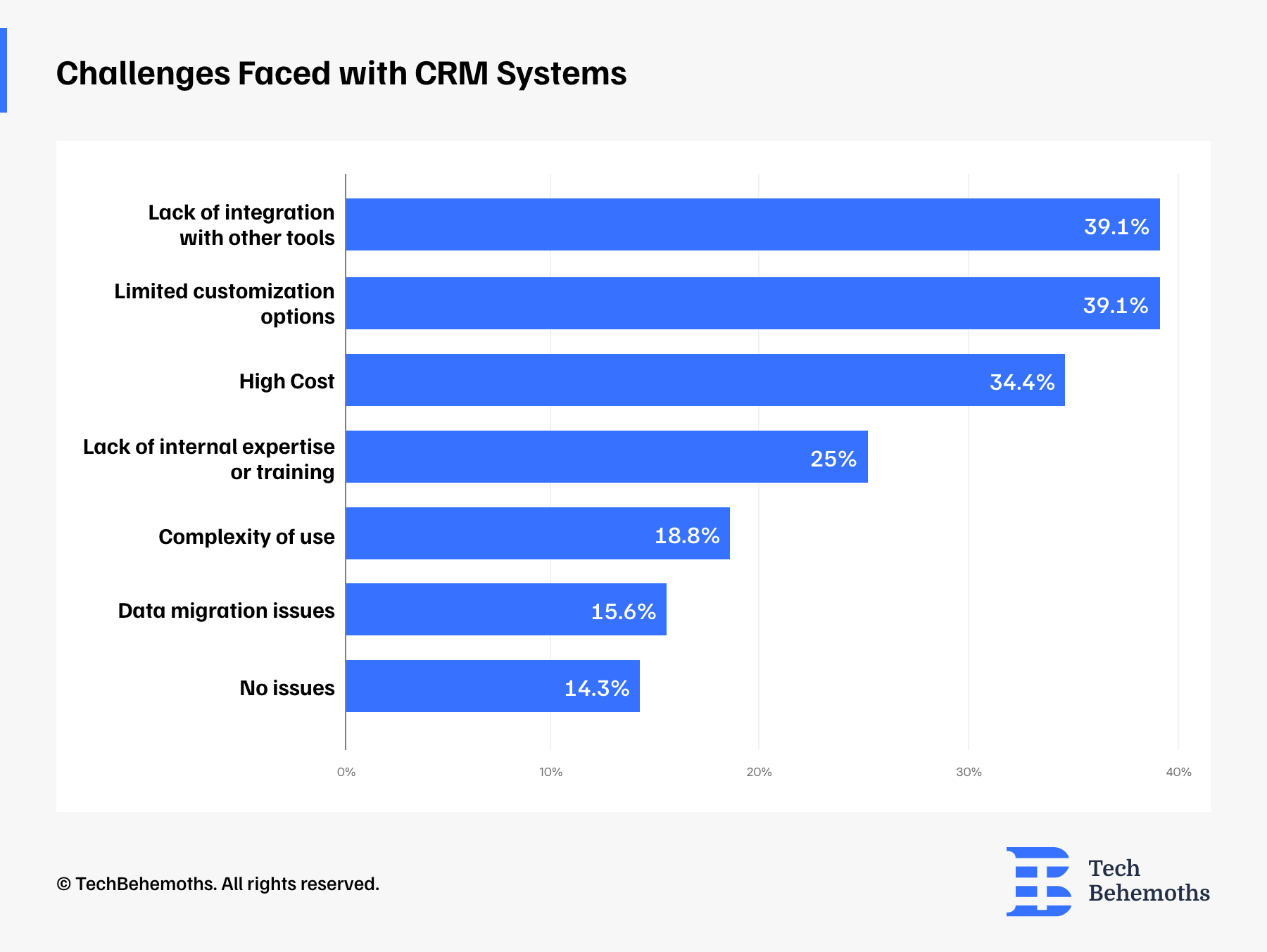
Almost 40% of IT businesses struggle with CRM integration/customization
Most survey respondents noted that lack of integrations with other tools and limited customization options are major issues. This might be an opportunity to work with the right CRM consulting partners that will map the right tools and processes when implementing a CRM system.
Another challenge is the high cost of CRM systems, and the lack of in-house expertise or training. This highlights the need for user-friendly designs and training programs to help users.
Complexity is also an issue, affecting 19% of respondents who find CRMs hard to use. Data migration problems concern around 16% of users when switching to new systems.
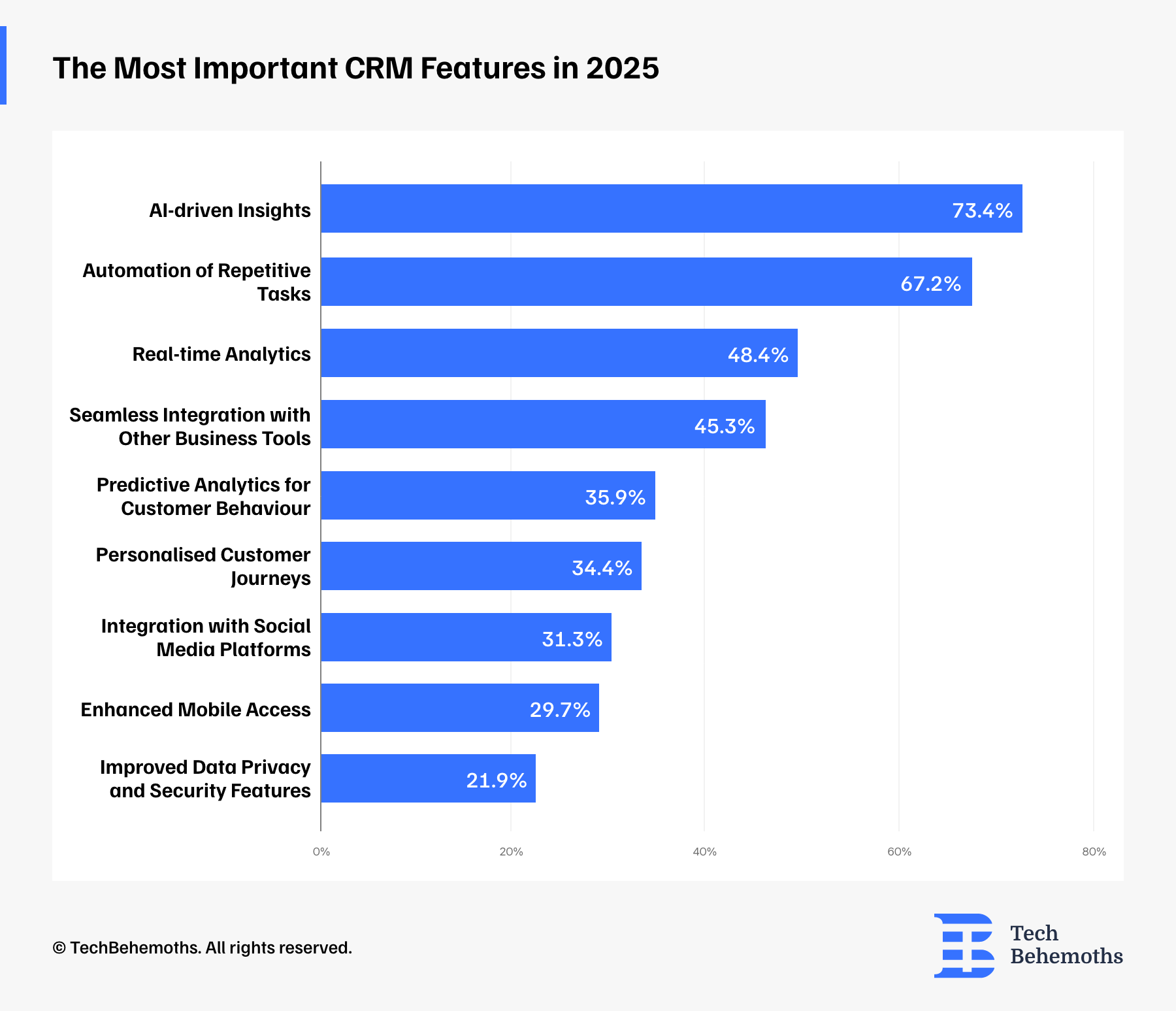
What to look for when choosing a CRM?
The most important CRM features reflect a strong focus on innovation, efficiency, and connectivity. AI-driven insights, automation, real-time analytics are among the top desired features for efficient CRMs.
Useful CRM and other tools for sales teams
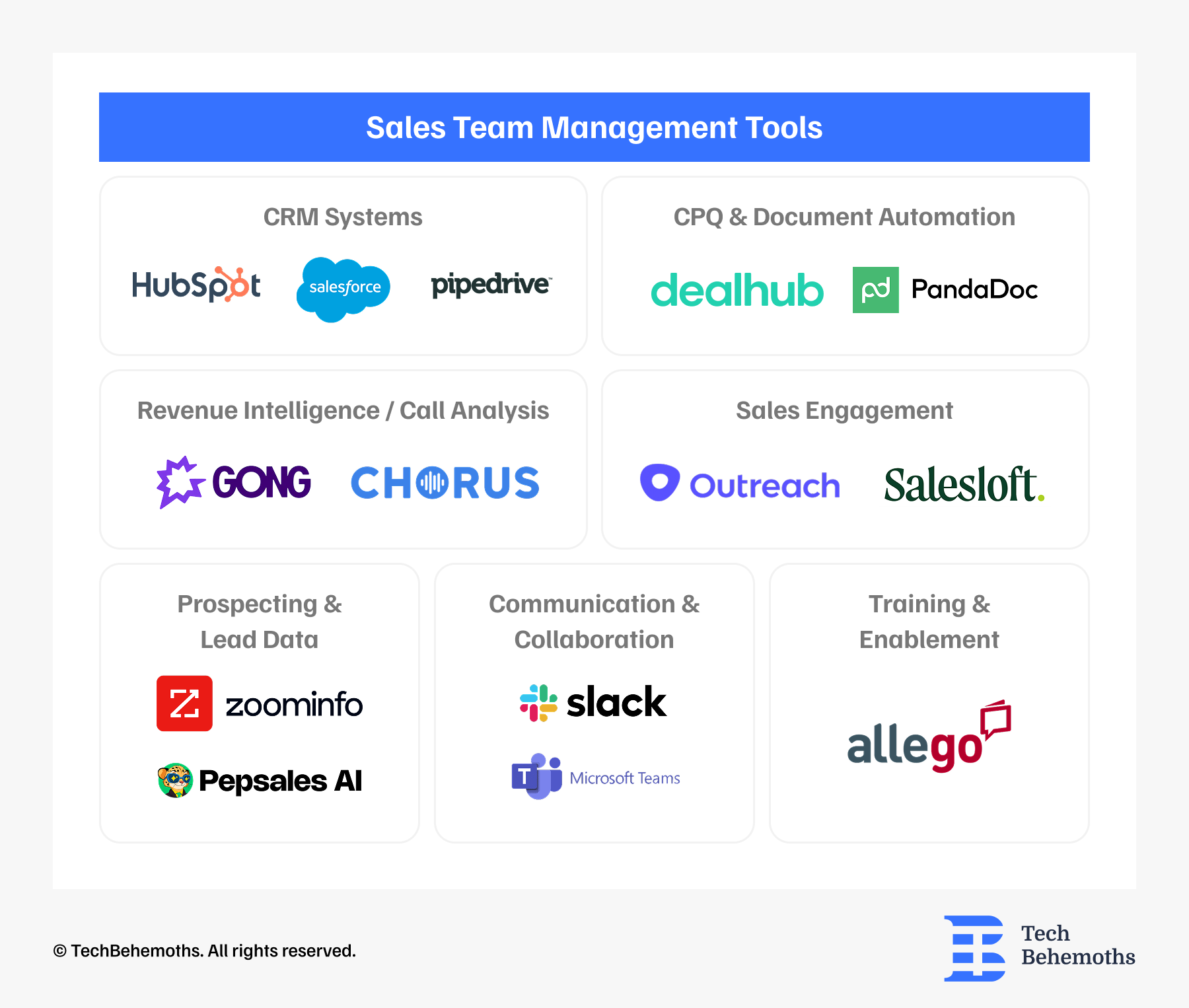
Here is the recommended list of tools that will help you monitor, manage and properly evaluate all sales processes and details, including communication and customer service of the sales team.
1. CRM Systems
These are the systems that keep track of all your customers and offers in one place. Examples: Salesforce, HubSpot, Pipedrive
2. CPQ & Document Automation
These tools automatically generate prices, offers, and contracts, saving you time spent on manually created PDFs. Examples: DealHub, PandaDoc
3. Revenue Intelligence / Call Analysis
These are programs that record and analyze sales calls, so you can see what works and better estimate the chances of closing deals. Examples: Gong, Chorus.ai
4. Sales Engagement
Tools that help automate messages, follow-ups, and contact sequences with potential customers. Examples: Outreach.io, SalesLoft
5. Prospecting & Lead Data
Platforms that find and verify potential customers (including emails, positions, company, etc.). Examples: ZoomInfo, Pepsales AI
6. Training & Enablement
Platforms for training the sales team, which provide materials, coaching and examples of best practices. Examples: Allego
Use advanced filters on TechBehemoths platform or submit your project requirements to get relevant service providers for your next CRM related integrations or customizations.