
There are 12 Companies in Ukraine
that provide Online Reputation Management Services!
IT is the most advanced and popular field in Ukraine. The Ukrainian IT industry is expected to reach $3.74 billion in value by 2025, according to Statista. The local software development community is expected to reach 300,000 professionals in 2025 to 450,000 by the end of the year.
Discover Top IT Companies in Ukraine specialized in Online Reputation Management and other related services. Find the best IT service providers for your projects.
Online reputation management (ORM) is the practice of strategically controlling and enhancing the way a brand, business, or individual is perceived online. It plays a vital role in building customer trust, establishing industry credibility, and driving sales. Key aspects of ORM include effectively responding to negative feedback, getting positive reviews, and closely monitoring brand mentions on various platforms.
Handpicked companies • No obligation to hire • 100% risk-free
Featured Companies in Ukraine
This month, the following Online Reputation Management companies managed to provide an outstanding service and support. It's worth taking a look.

Fire Bee Techno Services is an ISO-Certified Blockchain and AI Development Company In india and across the world with 13+ years of experience.


WeHaveSEO is an international SEO agency helping businesses across the USA, Ukraine, UK and Australia achieve long-term growth in organic search.
Explore Top Online Reputation Management Companies in Ukraine
All-in-One Marketing for Your Crypto, Forex & iGaming Project

COMPAS Agency is a marketing agency that has been helping businesses grow for over 8 years through effective digital solutions.

webPCstudio - you IT-expert

Full-service communications agency working with business, government, and NGOs to build visibility, trust, and measurable impact.
We are an SEO agency specialising in high-quality link-building to enhance your website’s authority, organic rankings, and long-term traffic growth.

A Group Consulting is an international marketing and consulting company that serves clients across the globe.

AroundB has been working with blockchain, Web3, fintech, and crypto projects since 2016 and has over 50 successful projects accomplished.


BRIDGING THE GAP BETWEEN YOUR IDEAS AND EXECUTION
Filter Online Reputation Management Companies in Ukraine by Cities
Find the right tech company near you or from a specific city. Some of the best companies might be located in smaller cities.
Find more Online Reputation Management companies around the world
TechBehemoths is the world's most advanced and user-friendly platform to match IT Companies with real clients without hustle.
IT Industry in Ukraine: Insights and Profile
IT is the most advanced and popular field in Ukraine. The Ukrainian IT industry is expected to reach $3.74 billion in value by 2025, according to Statista. The local software development community is expected to reach 300,000 professionals in 2025 to 450,000 by the end of the year.
Ukraine ranks 4th in the world by the number of tech workers after the United States, India, and Russia. Moreover, its IT workforce is expected to surpass the 450,000 mark by the end of 2025. The current hourly rate for a software engineer in Ukraine is $10-$120, which is budget-friendly and doesn’t compromise the quality. This country is a perfect choice for new R&D facilities, outsourcing software development, or hiring talented tech professionals. Top tech companies in Ukraine include GlobalLogic, EPAM & EPAM Digital, Luxoft, and others that work on developing the country’s tech ecosystem.
Why Should You Work With Ukrainian IT Companies?
The Ukrainian tech industry has benefited from a close cultural fit with European and Western markets as well as a central time zone. This means that the cultural fit comes from both a shared European history as well as working regularly with international businesses. Since 2013, an agreement between the European Union and Ukraine has also made it easier for Ukrainians to travel throughout Schengen to build business relationships.
Additionally, the considerably lower prices compared to other European countries made Ukraine a good destination for sourcing out talent and workforce with relatively competitive skills and education. Hiring tech experts from this country brings the possibility for businesses to optimize their software development efforts, save costs, and resources.
What to Be Aware of When Working With Ukrainian IT Companies
Due to the cheap prices Ukrainian tech companies offer, the market perception tends to take professionals and companies based in Ukraine as an outsourcing destination or a budget project alternative to other similar European opportunities. Additionally, cybersecurity, piracy, and tech skills raise questions about hiring or not a Ukrainian web agency for web projects.
How Reliable Are Ukrainian Companies
Having the association agreement with the EU, Ukrainian companies starting in 2013 entered a new phase of cooperation and received more access to the European market, business culture, and IT environment and infrastructure. It is considered now, in 2025, more reliable than it was before, and visible progress was registered; but with the regional background, it is still far behind its neighbors in terms of competitiveness and skills.
Ukraine in the Eastern European IT scene
Eastern Europe emerged as a vibrant tech hub that provides talented tech experts at competitive rates. Ukraine is an important tech hub in Eastern Europe, alongside other countries like the Czech Republic, Bulgaria, Moldova, Romania, Slovakia, and Hungary. It is characterized by high literacy and multilingual abilities, a rich talent pool, a focus on STEM education, and original ideas and perspectives. Developers in Ukraine have different hourly rates, based on their experience and the industry they work in: Software (<$26), Cybersecurity ($21.42-$28.98), and AI & ML ($21.75-$29.43). Ukraine’s tech sector is still growing and provides multiple benefits for people who look to hire a developer from this country.
How the Ukrainian IT Industry Relates to the Neighboring Countries
With three large competitors as neighbors, Ukraine, with an IT industry equal to $3.74 billion, has been struggling to become the largest tech hub in the region. Compared to Russia, with its IT industry worth $8.06 billion, Ukraine enjoys a similar IT infrastructure but has more opportunities due to its access to the EU market. Poland, with its IT industry market equal to $11.28 billion, on the other hand, has a considerable advantage due to advanced facilities and market investments, which make it more attractive than Ukraine. Also, Romania’s IT industry, which is worth $1.36 billion, is a strong competitor in the region that claims leading positions in software development and IT infrastructure development.
Because of the present conflict in the country, the IT industry is affected, and its progress faces some challenges. Overall, Ukraine has a strong position in the region and in Europe, with a massive IT presence that allows companies based there to attract more customers from different segments. However, the trends show that market preferences move to another price segment than the one Ukrainian companies are.
What is Online Reputation Management and what are its benefits for your projects?
Online reputation management (ORM) is the practice of strategically controlling and enhancing the way a brand, business, or individual is perceived online. It plays a vital role in building customer trust, establishing industry credibility, and driving sales. Key aspects of ORM include effectively responding to negative feedback, getting positive reviews, and closely monitoring brand mentions on various platforms.
Are you aware that 75% of businesses consider online reviews, comments, and forum posts crucial for their financial stability and reputation?
Why online reputation management is important for your business
-
The way your brand appears online can significantly impact purchasing decisions.
In fact, studies show that 59% of shoppers conduct online research before making a purchase, and a whopping 97% of consumers consult product reviews before buying. This means that if your brand doesn't present itself positively online, you risk losing potential customers.
-
Managing negative reviews is essential for any business.
While negative reviews are unavoidable, actively monitoring and responding to them can have a positive impact on your online reputation. Research has shown that customers who had their complaints addressed within five minutes on social media were more likely to continue making purchases with the company in the future.
-
It provides valuable feedback.
Customer reviews offer valuable feedback that can help identify and address potential issues in your products, services, or overall customer experience. By analyzing and reading through multiple reviews, you can gather useful insights that highlight recurring complaints and guide improvements.
Factors that Contribute to ORM
While every business uses a unique mix to maintain its online reputation, effective ORM should involve combining the following strategies:
-
Owned media - Experiences of both employees and customers, user-generated material, assessments, online seminars, and brand-generated content.
-
Paid media - Lead generation, affiliate programs, native advertising, and sponsored social media postings.
-
Earned media - Public relations, media relations, and influencer marketing.
-
Shared media - Community service and collaborations, co-branding campaigns, and organic social media content.
What is the role of online brand reputation manager
A brand reputation manager maintains a positive online image for a brand. They utilize various online resources to monitor and influence public perception of the brand. This involves analyzing reviews, tracking online mentions, and measuring brand sentiment. By actively managing the brand's online presence, they ensure that the brand maintains a positive reputation among its audience.
TechBehemoths lists over 900 online reputation management service providers. Use the smart filters to find and select the companies you need. You can view their profiles and reach out to them for collaboration or submit your project.
The system will match your peoject requirements with the best brand strategy service providers. Lastly, you can find out more about what is online reputation management and how to develop effectively on TechBehemoths blog.
Where to track your brand mentions and what tools to use?
The web is vast, so finding mentions about your brand requires specific tools. You can monitor your brand mentions and sentiment on different platforms like:
-
Social media - Facebook, Linkedin, Twitter (X)
-
Web and news sites - niche websites/blogs and news sites.
-
Review sites - Trustpilot, Google reviews
-
AI chatbots - ChatGPT, Perplexity,
-
Communities and forums - Reddit, Quora, niche forums
Examples of tools you can use to track the mentions of your brand:
- Social media, community, review sites - BrandMentions, Brand24, Mention.com
- Web and news - Ahrefs, BrandMentions, Brand24
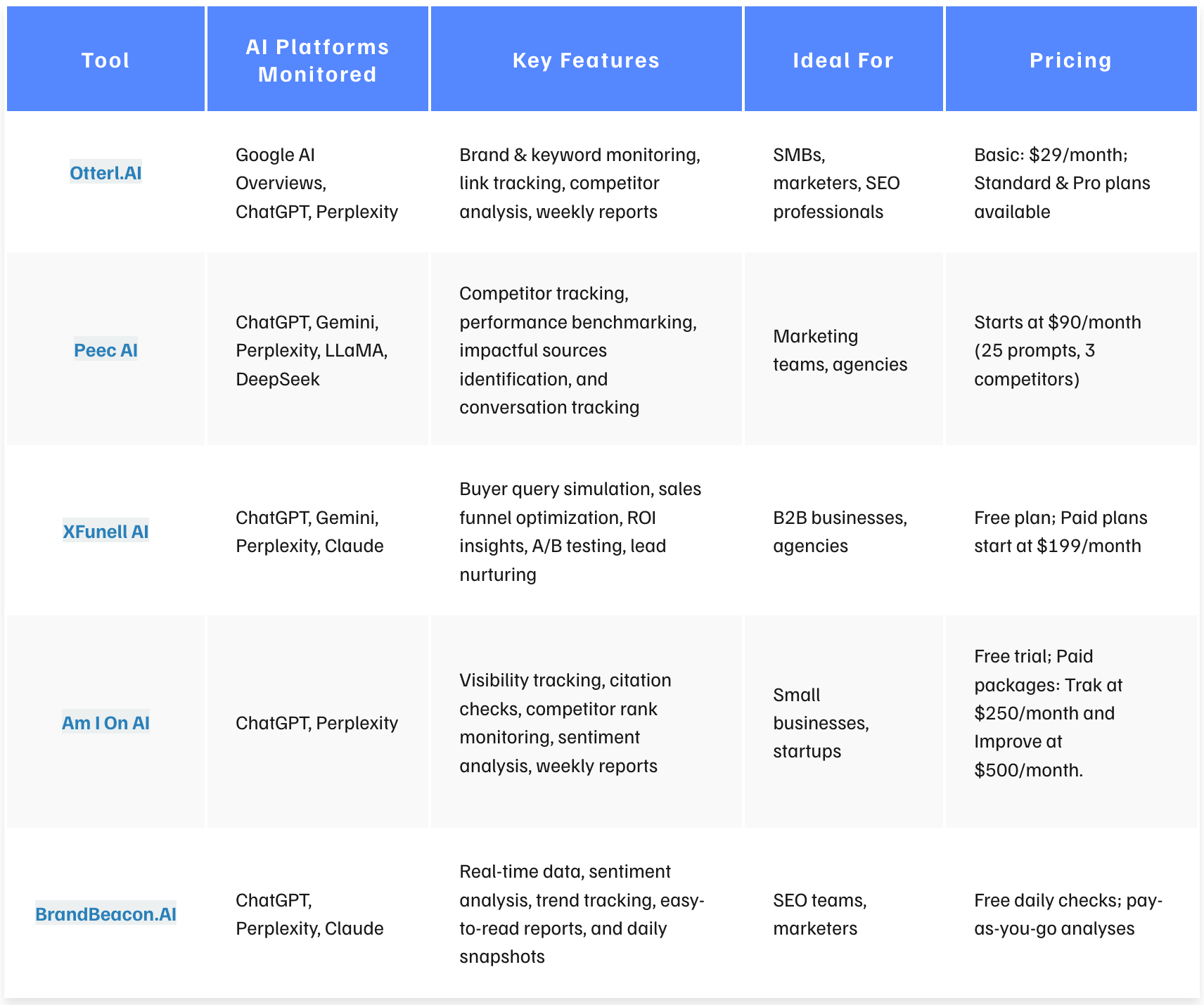
- AI chatbots - Peec AI, Otterly.AI, BrandBeacon.Ai
Most recently, AI chatbots like ChatGPT are gaining fast user adoption and are transforming how people search for and access information. Users are asking more complex questions instead of searching keywords, and the process is more conversational.
AI chatbots aren’t like Google, they don’t rank content traditionally. Instead, they serve and recommend content and websites based on users questions, context, quality, and relevance.
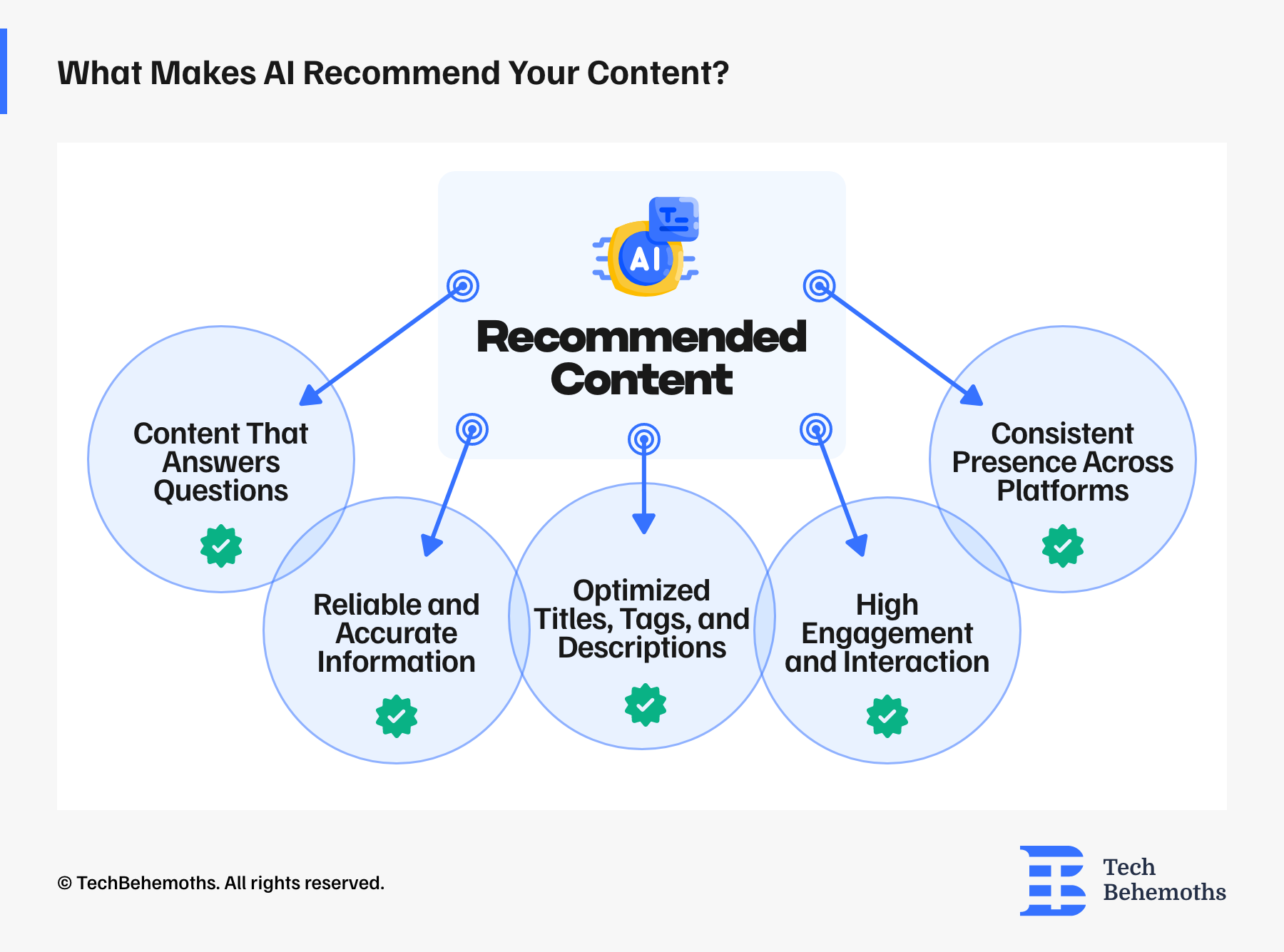
Knowing how good your brand is performing in chatbots and the general sentiment of users when they ask questions about your brand/content is important for your business. This data can help you adjust your marketing activities accordingly and react to possible negative feedback or reviews.
Here is a comparison of some AI chatbot visibility tools:
Key elements for an efficient reputation management strategy
Here are some practical considerations for a successful online reputation management strategy:
1. Define your unique values
Ask yourself some of these questions: what problem are you solving for your customers, why would they want to buy from you and not your competitors? Then tailor your answers/actions to these values
2. Monitor your brand mentions
Use the tools mentioned earlier to track the mentions about your brand on different platforms. Be proactive and respond to positive and negative feedback, reviews, etc.
3. Listen to your customers
Social media platforms, review sites along with your site are feedback channels for your customers. It’s important to listen to your customers' frustrations and positive experiences to adjust your product/service accordingly and communicate in a professional manner.
4. Monitor your competitors
Tracking the online mentions of your competitors is a good way to stay up to date with what’s happening with your competitors and get ideas of new marketing campaigns.
5. Define the key elements
Consider the key elements that are part of your online reputation management:
-
A clear statement of your brand mission/unique value proposition, and social media activities to support them
-
Regular brand related updates using high-quality content
-
Up-to-date positive feedback from customers
-
Internal documentation on how to answer to positive/negative reviews and feedback
-
Fake reviews and spam management rules
-
List of possible reputation risks and how to manage them.
-
Responsibilities distribution among sales, marketing, and support teams. Who is doing what?
If you need help with ORM, consider finding the right agency for your needs, using the Submit your project option on TechBehemoths. It’s free, and there is no obligation to hire.