
There are 220 Companies in the United States
that provide Online Reputation Management Services!
The United States has probably the most advanced software and information technology (IT) services industry in the world. More than 40 percent of the $5 trillion global IT market is in North America, primarily the United States. The industry accounts for $2.1 trillion of U.S. value-added GDP (more than 10 percent of the national economy) and 702.276 jobs.
Discover Top IT Companies in the United States specialized in Online Reputation Management and other related services. Find the best IT service providers for your projects.
Online reputation management (ORM) is the practice of strategically controlling and enhancing the way a brand, business, or individual is perceived online. It plays a vital role in building customer trust, establishing industry credibility, and driving sales. Key aspects of ORM include effectively responding to negative feedback, getting positive reviews, and closely monitoring brand mentions on various platforms.
Handpicked companies • No obligation to hire • 100% risk-free
Featured Companies in United States
This month, the following Online Reputation Management companies managed to provide an outstanding service and support. It's worth taking a look.

Callbox is a leading B2B growth partner using AI-enhanced prospecting and human expertise to scale your sales pipeline and close more deals.
Fulminous Software Verified Company
Forsyth, United States Head office in: India
WE LOVE TO BUILD ASK FOR IT AND HAVE IT

Free marketing strategy session! We'll learn about you, your business, & your goals. Then, we’ll make custom recommendations to make your biz shine.
Explore Top Online Reputation Management Companies in United States
Use the advanced filter to find companies near you or refine the results Last updated in: September, 2026
Fire Bee Techno Services Verified Company
Atlanta, United States Head office in: India
Fire Bee Techno Services is an ISO-Certified Blockchain and AI Development Company In india and across the world with 13+ years of experience.
We help businesses get more clients, patients, or customers through powerful, effective digital marketing strategies leveraging AI and humans!

Birmingham, AL, United States Head office in: United States
Snow Monkey is a full-service online reputation management firm that helps individuals and businesses protect, repair, and grow their presence.
Trusted by brands globally to improve their visibility online through honest SEO and digital advertising strategies that work.
Digital marketing agency helping brands rank on Google and get cited by ChatGPT, Perplexity, and Gemini. $50M+ generated since 2014.

Digital Eggheads Verified Company
Katy, United States Head office in: Pakistan
A digital marketing agency driving growth with tailored solutions and innovative strategies for your unique business needs.

New York, United States Head office in: United States
Smarter Website Design, Smarter Branding, Smarter Marketing. Stronger Results.
CICOR Marketing Verified Company
Naperville, United States Head office in: United States
CICOR is a dynamic marketing agency that delivers comprehensive, integrated marketing services designed to help businesses of all types thrive.
Montana, United States Head office in: United States
Creativity in Our Blood Line - We grow brands with web design, digital marketing, graphic design, and mobile app development services.

SeoSamba Marketing OS is a marketing automation and SEO platform. This multi-function platform saves tons of time and money over point solutions.

Salmore Technology builds powerful digital products from apps to websites, helping businesses grow through innovation and smart design.

Build Authority. Drive Growth.

Webociti helps businesses turn clicks into customers through strategy-led digital marketing and measurable growth systems.
Delloweb International Verified Company
Bolingbrook, United States Head office in: Pakistan
Delloweb International delivers innovative digital solutions worldwide, specializing in web development, cloud services & App, and digital marketing.
PRETO BUSINESS Corp. Verified Company
Sacramento, United States Head office in: United States
PRETO Business Corp.—a Public Affairs&Growth Hacking agency that employs a comprehensive approach to communication. VISION: WE RISE BY LIFTING OTHERS

Hollywood, United States Head office in: United States
360Wise: Your trusted partner in brand marketing and PR. Elevating visibility, engagement, and impact for celebrities, brands, and public figures.

Houston, United States Head office in: United Kingdom
Fifth Ring is a global B2B marketing agency helping complex, technical brands Own the Space, from brand to demand.

Umbrella Digital Solutions Verified Company
Clarence, United States Head office in: Canada
Toronto design and development agency that specializes in full-stack solutions across marketing, data, and technology.

A catalyst for digital transformation by delivering intelligent, human-centered technology solutions that redefine and enhance everyday experiences.
Tech Implement Verified Company
New York, United States Head office in: Pakistan
Backed by 15+ years of industry experience, we create custom software and AI-powered solutions that help businesses innovate, automate, and grow.

We help tech companies scale engineering capacity and deliver great software.
Filter Online Reputation Management Companies in United States by Cities
Find the right tech company near you or from a specific city. Some of the best companies might be located in smaller cities.
Find more Online Reputation Management companies around the world
TechBehemoths is the world's most advanced and user-friendly platform to match IT Companies with real clients without hustle.
ICT in the United States: General Profile and Insights
The United States has probably the most advanced software and information technology (IT) services industry in the world. More than 40 percent of the $5 trillion global IT market is in North America, primarily the United States. The industry accounts for $2.1 trillion of U.S. value-added GDP (more than 10 percent of the national economy) and 702.276 jobs. According to CompTIA, there are more than 700,000 software and IT services companies in the United States.
The average net salary of a web developer in the US is around $82,532 annually. On the other hand, the hourly rate is nearly $33.47, which makes it one of the best-paid jobs in the world within the IT industry.
Why Should You Work With American Web & Software Development Companies
U.S. software development companies operate in a mature, harmonized market and have a reputation for producing reliable and effective solutions that quickly accelerate to the marketplace. International companies in the industry have shown interest in the U.S. market because of its strong intellectual property rights laws and enforcement. U.S. companies lead the world's packaged and custom-software markets and are competitive in nearly all other market segments with a stable overseas market share.
What You Should Be Aware of When Working With a US-based ICT Company
Having a large IT market has both advantages and disadvantages. While offering a wider variety of US IT companies to choose from is one of the biggest advantages the U.S. has to offer, the challenge for potential clients and partners of the U.S.-based web & IT companies is that the industry development is not equally distributed across all states and cities. For example, many tech companies are relocating to Texas from Silicon Valley. This is why it’s good to have in mind the most important U.S. IT hubs and focus on choosing the most suitable one depending on your needs.
How Reliable are US-based IT Companies
Based on a report delivered by CompTIA in 2020, which is still relevant for 2025, the changes in the global IT market that make competition in this area tougher, U.S. companies will focus more on three development pillars:
- Training and Certification of professionals in their existing tech skills
- Training and Certification of professionals in new tech skills
- Career growth and project management.
This means that the market is saturated with the workforce, and there is a small probability that companies will increase their hiring rate for new professionals. However, intensive and extensive skills development of U.S. tech professionals will increase the capacity and attractiveness of U.S. IT companies and web agencies. Additionally, this will improve the already well-developed abilities to deliver high-end products and services in the IT field.
How Does the US IT Industry Relate to the Neighboring Countries
Considering that the US has probably the most developed IT infrastructure, the industry will keep its position for at least 3 years. On the other hand, the rising numbers of IT companies from Canada and Mexico come in contrast with what US companies have to offer. In other words, clients still have to choose between US companies and neighboring countries as the offers differ in quality and ways of executing projects.
Overall, the US IT industry is in leading positions in different sectors, and combined with an authentic business culture, will probably continue to keep its attractiveness. Although companies from the U.S. are flexible and are always adjusting to market requirements, the global market still remains unpredictable, which may lead to significant changes in the future.
US Tech Industry Outlook for 2025 and Beyond
The US is still leading the world with its cutting-edge technologies, despite some narratives. The expected revenue for the market of IT Services in the US is $563.94 billion by 2025, with a CAGR of 3.73% from 2025-2030, according to Statista. The biggest segment of this segment is IT Outsourcing, reaching $218.02 billion by the same year. This sector has an increased demand for solutions in cloud computing and cybersecurity services.
Artificial Intelligence will influence the tech sector in the US, with only the Generative AI contribution to GDP of $7 trillion in the next 10 years, and it can save up to $1.4 billion for the federal government.
The US is keeping its position in scientific research, graduate education, AI firms, and competitiveness. The US tech sector’s future focuses include AI, increasing cybersecurity & cloud computing.
What is Online Reputation Management and what are its benefits for your projects?
Online reputation management (ORM) is the practice of strategically controlling and enhancing the way a brand, business, or individual is perceived online. It plays a vital role in building customer trust, establishing industry credibility, and driving sales. Key aspects of ORM include effectively responding to negative feedback, getting positive reviews, and closely monitoring brand mentions on various platforms.
Are you aware that 75% of businesses consider online reviews, comments, and forum posts crucial for their financial stability and reputation?
Why online reputation management is important for your business
-
The way your brand appears online can significantly impact purchasing decisions.
In fact, studies show that 59% of shoppers conduct online research before making a purchase, and a whopping 97% of consumers consult product reviews before buying. This means that if your brand doesn't present itself positively online, you risk losing potential customers.
-
Managing negative reviews is essential for any business.
While negative reviews are unavoidable, actively monitoring and responding to them can have a positive impact on your online reputation. Research has shown that customers who had their complaints addressed within five minutes on social media were more likely to continue making purchases with the company in the future.
-
It provides valuable feedback.
Customer reviews offer valuable feedback that can help identify and address potential issues in your products, services, or overall customer experience. By analyzing and reading through multiple reviews, you can gather useful insights that highlight recurring complaints and guide improvements.
Factors that Contribute to ORM
While every business uses a unique mix to maintain its online reputation, effective ORM should involve combining the following strategies:
-
Owned media - Experiences of both employees and customers, user-generated material, assessments, online seminars, and brand-generated content.
-
Paid media - Lead generation, affiliate programs, native advertising, and sponsored social media postings.
-
Earned media - Public relations, media relations, and influencer marketing.
-
Shared media - Community service and collaborations, co-branding campaigns, and organic social media content.
What is the role of online brand reputation manager
A brand reputation manager maintains a positive online image for a brand. They utilize various online resources to monitor and influence public perception of the brand. This involves analyzing reviews, tracking online mentions, and measuring brand sentiment. By actively managing the brand's online presence, they ensure that the brand maintains a positive reputation among its audience.
TechBehemoths lists over 900 online reputation management service providers. Use the smart filters to find and select the companies you need. You can view their profiles and reach out to them for collaboration or submit your project.
The system will match your peoject requirements with the best brand strategy service providers. Lastly, you can find out more about what is online reputation management and how to develop effectively on TechBehemoths blog.
Where to track your brand mentions and what tools to use?
The web is vast, so finding mentions about your brand requires specific tools. You can monitor your brand mentions and sentiment on different platforms like:
-
Social media - Facebook, Linkedin, Twitter (X)
-
Web and news sites - niche websites/blogs and news sites.
-
Review sites - Trustpilot, Google reviews
-
AI chatbots - ChatGPT, Perplexity,
-
Communities and forums - Reddit, Quora, niche forums
Examples of tools you can use to track the mentions of your brand:
- Social media, community, review sites - BrandMentions, Brand24, Mention.com
- Web and news - Ahrefs, BrandMentions, Brand24
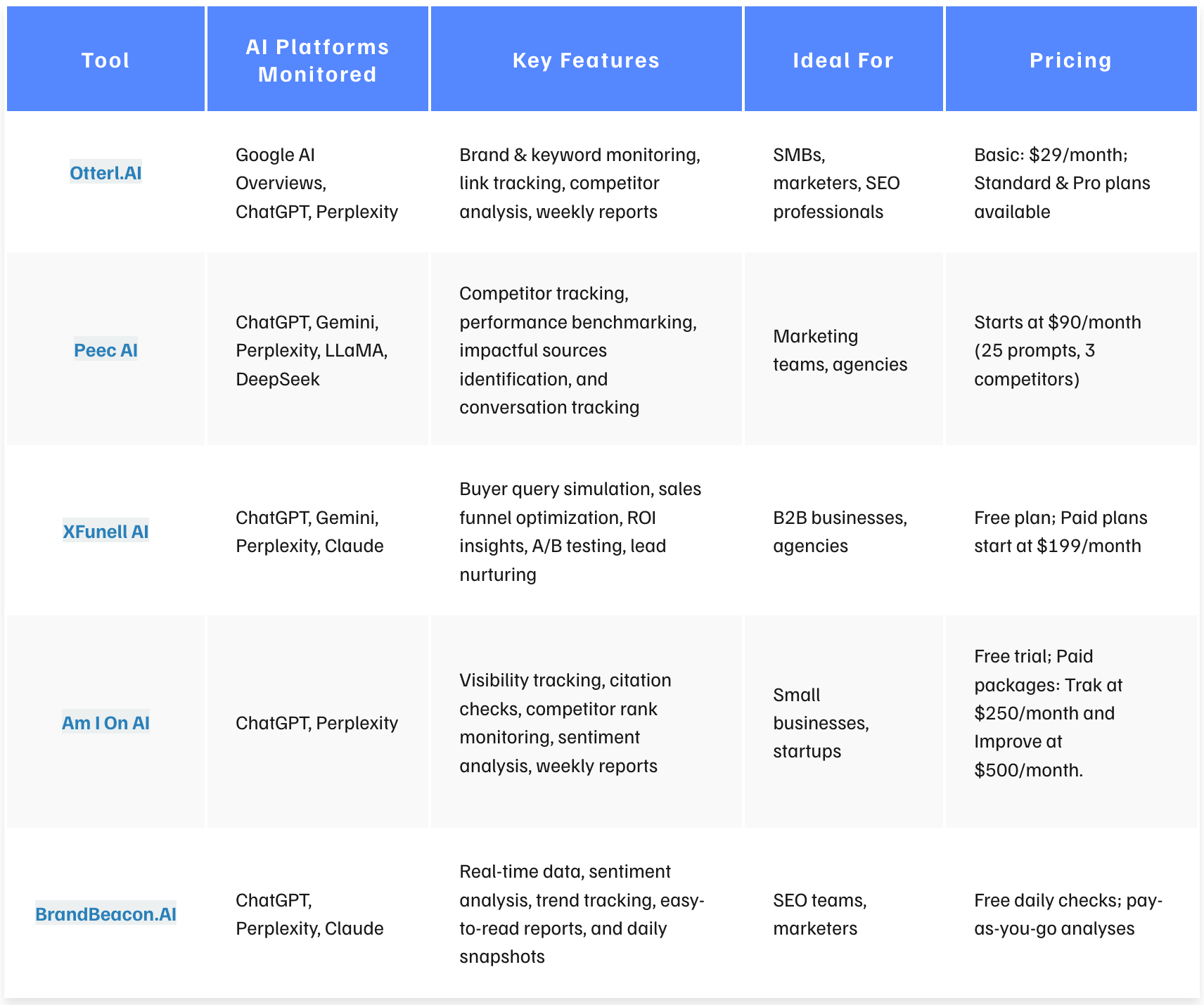
- AI chatbots - Peec AI, Otterly.AI, BrandBeacon.Ai
Most recently, AI chatbots like ChatGPT are gaining fast user adoption and are transforming how people search for and access information. Users are asking more complex questions instead of searching keywords, and the process is more conversational.
AI chatbots aren’t like Google, they don’t rank content traditionally. Instead, they serve and recommend content and websites based on users questions, context, quality, and relevance.
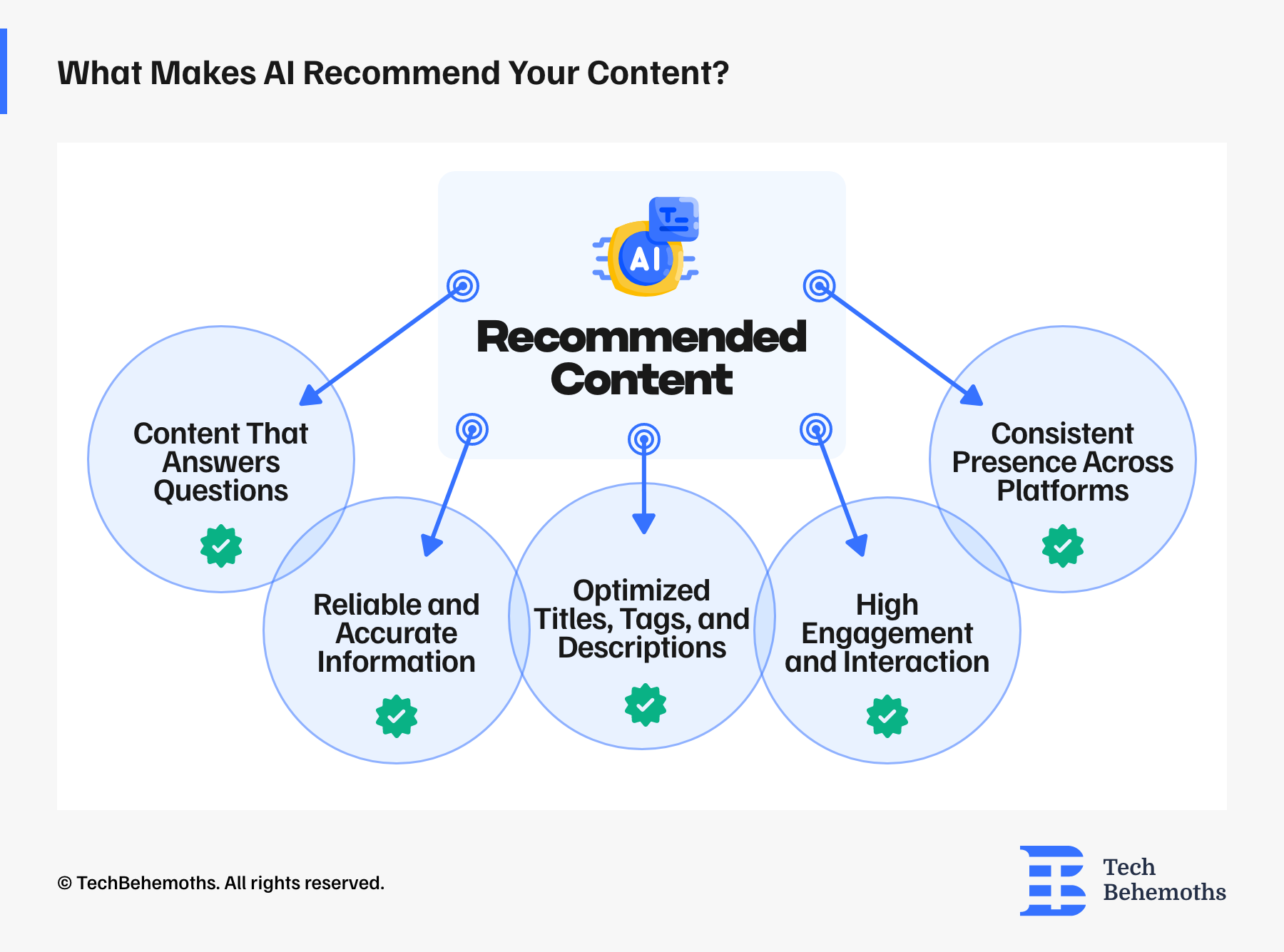
Knowing how good your brand is performing in chatbots and the general sentiment of users when they ask questions about your brand/content is important for your business. This data can help you adjust your marketing activities accordingly and react to possible negative feedback or reviews.
Here is a comparison of some AI chatbot visibility tools:
Key elements for an efficient reputation management strategy
Here are some practical considerations for a successful online reputation management strategy:
1. Define your unique values
Ask yourself some of these questions: what problem are you solving for your customers, why would they want to buy from you and not your competitors? Then tailor your answers/actions to these values
2. Monitor your brand mentions
Use the tools mentioned earlier to track the mentions about your brand on different platforms. Be proactive and respond to positive and negative feedback, reviews, etc.
3. Listen to your customers
Social media platforms, review sites along with your site are feedback channels for your customers. It’s important to listen to your customers' frustrations and positive experiences to adjust your product/service accordingly and communicate in a professional manner.
4. Monitor your competitors
Tracking the online mentions of your competitors is a good way to stay up to date with what’s happening with your competitors and get ideas of new marketing campaigns.
5. Define the key elements
Consider the key elements that are part of your online reputation management:
-
A clear statement of your brand mission/unique value proposition, and social media activities to support them
-
Regular brand related updates using high-quality content
-
Up-to-date positive feedback from customers
-
Internal documentation on how to answer to positive/negative reviews and feedback
-
Fake reviews and spam management rules
-
List of possible reputation risks and how to manage them.
-
Responsibilities distribution among sales, marketing, and support teams. Who is doing what?
If you need help with ORM, consider finding the right agency for your needs, using the Submit your project option on TechBehemoths. It’s free, and there is no obligation to hire.