
There are 3 Companies in Cayman Islands
that provide Online Reputation Management Services!
The Cayman Islands is a prosperous British Overseas Territory in the Caribbean known for its coral reefs, diverse population of over 130 nationalities, and thriving offshore finance industry. The island’s ICT sector is a booming hub for innovation, especially in Blockchain, IT, and fintech, driven by the Cayman Enterprise City (CEC)’s Tech City zone that offers tax benefits and a business-friendly environment.
Discover Top IT Companies in Cayman Islands specialized in Online Reputation Management and other related services. Find the best IT service providers for your projects.
Online reputation management (ORM) is the practice of strategically controlling and enhancing the way a brand, business, or individual is perceived online. It plays a vital role in building customer trust, establishing industry credibility, and driving sales. Key aspects of ORM include effectively responding to negative feedback, getting positive reviews, and closely monitoring brand mentions on various platforms.
Handpicked companies • No obligation to hire • 100% risk-free
Explore Top Online Reputation Management Companies in Cayman Islands

AI Software Development Company

Full-service digital marketing agency helping Caribbean businesses grow with lead generation and strategy. Based in Cayman, serving clients worldwide.

A LOCAL & GLOBAL AGENCY THAT WORKS DIFFERENTLY BECAUSE WE ARE BUILT DIFFERENTLY. Website development, video production, online marketing & more!
Filter Online Reputation Management Companies in Cayman Islands by Cities
Find the right tech company near you or from a specific city. Some of the best companies might be located in smaller cities.
Find more Online Reputation Management companies around the world
TechBehemoths is the world's most advanced and user-friendly platform to match IT Companies with real clients without hustle.
IT Industry in the Cayman Islands: General Profile and Insights
The Cayman Islands is a prosperous British Overseas Territory in the Caribbean known for its coral reefs, diverse population of over 130 nationalities, and thriving offshore finance industry. The island’s ICT sector is a booming hub for innovation, especially in Blockchain, IT, and fintech, driven by the Cayman Enterprise City (CEC)’s Tech City zone that offers tax benefits and a business-friendly environment.
It is attractive for many global firms thanks to its skilled workforce, strong IP protection, and a sustainable digital economy. The Cayman Tech City is home to some of the world’s leading Web3, AI, and fintech companies. It also fosters the largest innovation ecosystem in the region and provides access for both beginning startups and established ones, as well as unicorns. The IT industry experiences rapid growth due to advancements in Data Analytics, AI, and Cloud Computing.
Proximity to North America markets, only 1.5 hours to Miami, makes the islands an attractive hub for clients in the U.S. and Canada. The Cayman Islands also have a welcoming attitude towards global talent with immigration policies designed to attract and retain top talent. Exceptional lifestyle benefits, including a high standard of living, a good education and healthcare system, and a business-friendly environment, make the islands a good choice for major tech projects.
Why Should You Work With a Tech Company from the Cayman Islands?
The Cayman Islands offer a combination of tax benefits, regulatory support, and access to world-class infrastructure in the Eastern time zone. It is a favorite destination for technology and IT services companies due to the tax-neutral environment. Cayman offers a tax-neutral status, with zero corporate taxes, and it offers the possibility to focus on innovation and reinvest directly into growth.
This region has a business-friendly legal and regulatory framework tailored to support foreign tech companies. It is the ideal hub for Software, AI, and IP assets thanks to its strong IP protections and compliance with global economic standards.
Its strategic location is another advantage of working with a tech firm from the Cayman Islands. The proximity to North America is a possibility for companies to operate within the Eastern Standard Time Zone, which encourages real-time collaboration and reduces logistical challenges.
The tech environment in the Cayman Islands is growing and gives access to skilled talent in various fields like Software Engineering, IT services, and Data Management.
What You Should Be Aware of When Working With Tech Firms from the Cayman Islands?
Working in the tech industry of the Cayman Islands brings many possibilities, but also a set of challenges. High regulatory and compliance overload is one of them. As it is a tax haven, Cayman entities face pressure for transparency, which can lead to more compliance burdens. Also, if your project involves crypto, tokens, or digital assets, the firm must comply with the Virtual Asset Act, which has been mandatory since April 2025.
Data protection in the Cayman Islands via DPA aligns with global standards like GDPR, creating robust rules for data handling, especially for international transfers, meaning that tech firms must build compliance into their operations, which can add complexity.
In 2025, AI-driven attacks that include deepfakes and synthetic identity fraud are targeting the island’s financial and tech sectors, according to PwC Cayman. Companies are already taking measures and investing heavily in their cyberdefense, as they are managing sensitive financial data. Additionally, the Cayman Islands have high living costs, which include rent, utilities, and essentials.
Are IT Companies from the Cayman Islands Reliable?
Cayman firms are primarily optimized for the high-compliance sector, like fintech, Web3, and Asset Management. The local IT firms can also be considered reliable by following the robust regulatory framework. The Virtual Asset Act requires full licensing for custodians and trading platforms. CIMA has been conducting inspections throughout 2025 to ensure that companies have robust governance and internal audits. Because it aligns with GDPR, organizations and clients trust that their data is being managed properly and safely.
Reliability is boosted additionally by the islands’ infrastructure, which is meant to withstand Caribbean and global financial demands. Also, major organizations operate out of the Cayman Enterprise City (CEC) or TechCayman. This offers subsea fiber-optic links and resilient power grids that allow firms to operate seamlessly and without interruptions.
How is the Cayman’s IT industry Related to Neighboring Countries?
As of November 2025, the Cayman Islands was officially confirmed as the Caribbean Hub for the Commonwealth Enterprise and Investment Council (CWEIC). This center is designed to connect Caribbean infrastructure projects with global investors. It also takes a leading role in regional connectivity through the Submarine Cable Act 2025. The islands work closely with the Liberty Caribbean ICT for connectivity standards with neighbors like the Bahamas and Panama, making sure that the data hosted in Cayman is accessible at high speeds through the Caribbean. In 2025, Cayman’s regulatory frameworks for AI and Virtual Assets started being used as blueprints for other Caribbean nations.
What is Online Reputation Management and what are its benefits for your projects?
Online reputation management (ORM) is the practice of strategically controlling and enhancing the way a brand, business, or individual is perceived online. It plays a vital role in building customer trust, establishing industry credibility, and driving sales. Key aspects of ORM include effectively responding to negative feedback, getting positive reviews, and closely monitoring brand mentions on various platforms.
Are you aware that 75% of businesses consider online reviews, comments, and forum posts crucial for their financial stability and reputation?
Why online reputation management is important for your business
-
The way your brand appears online can significantly impact purchasing decisions.
In fact, studies show that 59% of shoppers conduct online research before making a purchase, and a whopping 97% of consumers consult product reviews before buying. This means that if your brand doesn't present itself positively online, you risk losing potential customers.
-
Managing negative reviews is essential for any business.
While negative reviews are unavoidable, actively monitoring and responding to them can have a positive impact on your online reputation. Research has shown that customers who had their complaints addressed within five minutes on social media were more likely to continue making purchases with the company in the future.
-
It provides valuable feedback.
Customer reviews offer valuable feedback that can help identify and address potential issues in your products, services, or overall customer experience. By analyzing and reading through multiple reviews, you can gather useful insights that highlight recurring complaints and guide improvements.
Factors that Contribute to ORM
While every business uses a unique mix to maintain its online reputation, effective ORM should involve combining the following strategies:
-
Owned media - Experiences of both employees and customers, user-generated material, assessments, online seminars, and brand-generated content.
-
Paid media - Lead generation, affiliate programs, native advertising, and sponsored social media postings.
-
Earned media - Public relations, media relations, and influencer marketing.
-
Shared media - Community service and collaborations, co-branding campaigns, and organic social media content.
What is the role of online brand reputation manager
A brand reputation manager maintains a positive online image for a brand. They utilize various online resources to monitor and influence public perception of the brand. This involves analyzing reviews, tracking online mentions, and measuring brand sentiment. By actively managing the brand's online presence, they ensure that the brand maintains a positive reputation among its audience.
TechBehemoths lists over 900 online reputation management service providers. Use the smart filters to find and select the companies you need. You can view their profiles and reach out to them for collaboration or submit your project.
The system will match your peoject requirements with the best brand strategy service providers. Lastly, you can find out more about what is online reputation management and how to develop effectively on TechBehemoths blog.
Where to track your brand mentions and what tools to use?
The web is vast, so finding mentions about your brand requires specific tools. You can monitor your brand mentions and sentiment on different platforms like:
-
Social media - Facebook, Linkedin, Twitter (X)
-
Web and news sites - niche websites/blogs and news sites.
-
Review sites - Trustpilot, Google reviews
-
AI chatbots - ChatGPT, Perplexity,
-
Communities and forums - Reddit, Quora, niche forums
Examples of tools you can use to track the mentions of your brand:
- Social media, community, review sites - BrandMentions, Brand24, Mention.com
- Web and news - Ahrefs, BrandMentions, Brand24
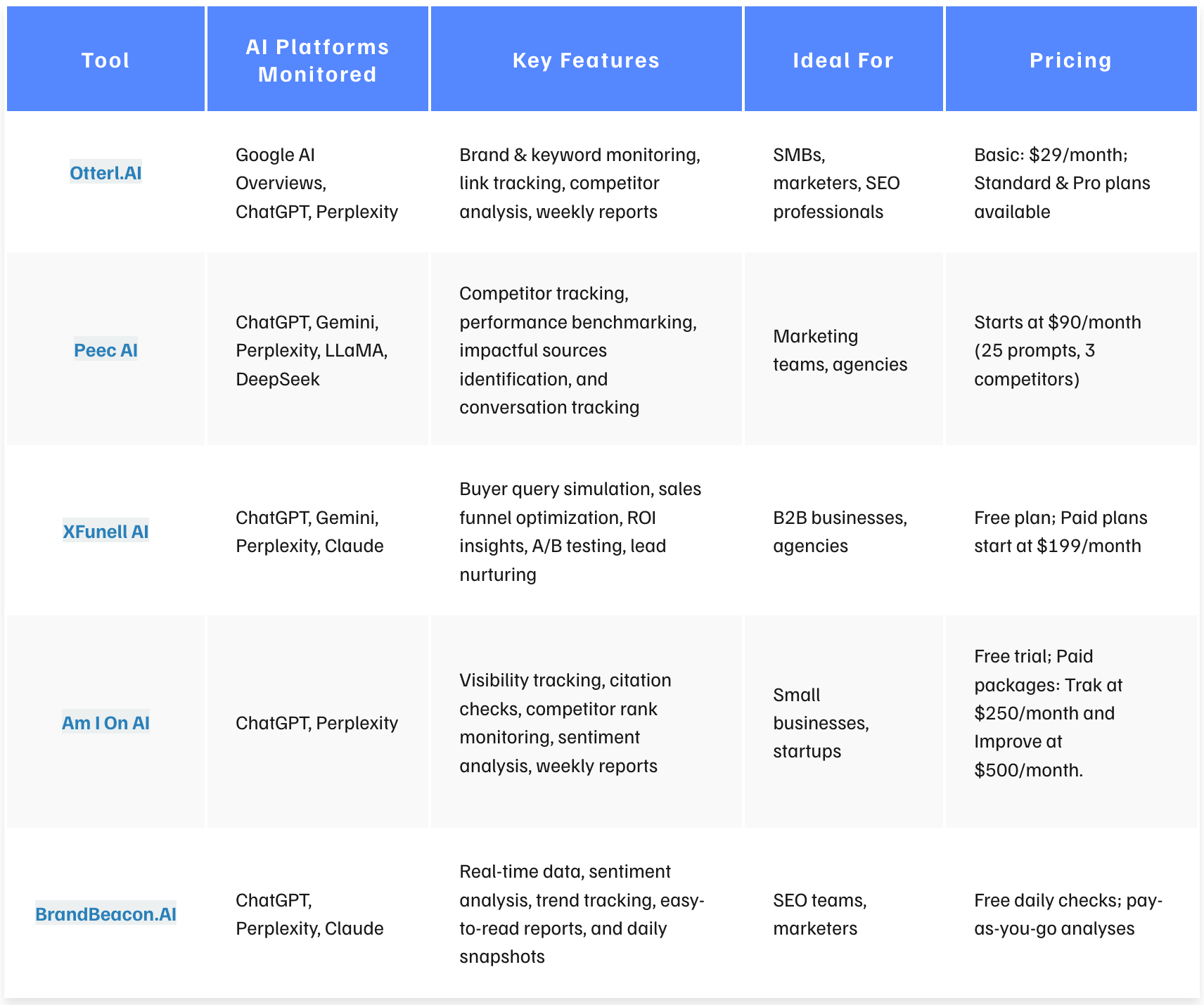
- AI chatbots - Peec AI, Otterly.AI, BrandBeacon.Ai
Most recently, AI chatbots like ChatGPT are gaining fast user adoption and are transforming how people search for and access information. Users are asking more complex questions instead of searching keywords, and the process is more conversational.
AI chatbots aren’t like Google, they don’t rank content traditionally. Instead, they serve and recommend content and websites based on users questions, context, quality, and relevance.
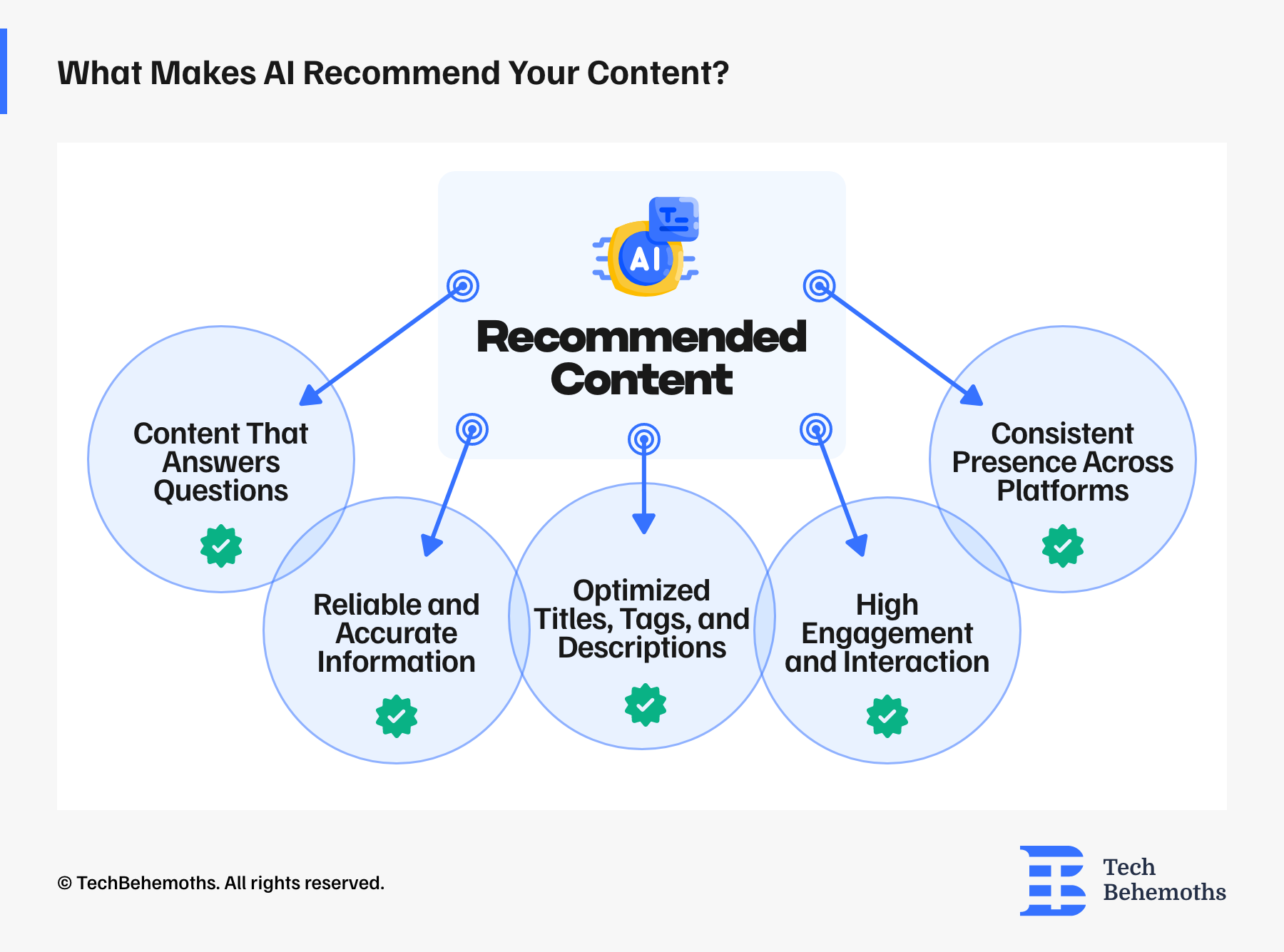
Knowing how good your brand is performing in chatbots and the general sentiment of users when they ask questions about your brand/content is important for your business. This data can help you adjust your marketing activities accordingly and react to possible negative feedback or reviews.
Here is a comparison of some AI chatbot visibility tools:
Key elements for an efficient reputation management strategy
Here are some practical considerations for a successful online reputation management strategy:
1. Define your unique values
Ask yourself some of these questions: what problem are you solving for your customers, why would they want to buy from you and not your competitors? Then tailor your answers/actions to these values
2. Monitor your brand mentions
Use the tools mentioned earlier to track the mentions about your brand on different platforms. Be proactive and respond to positive and negative feedback, reviews, etc.
3. Listen to your customers
Social media platforms, review sites along with your site are feedback channels for your customers. It’s important to listen to your customers' frustrations and positive experiences to adjust your product/service accordingly and communicate in a professional manner.
4. Monitor your competitors
Tracking the online mentions of your competitors is a good way to stay up to date with what’s happening with your competitors and get ideas of new marketing campaigns.
5. Define the key elements
Consider the key elements that are part of your online reputation management:
-
A clear statement of your brand mission/unique value proposition, and social media activities to support them
-
Regular brand related updates using high-quality content
-
Up-to-date positive feedback from customers
-
Internal documentation on how to answer to positive/negative reviews and feedback
-
Fake reviews and spam management rules
-
List of possible reputation risks and how to manage them.
-
Responsibilities distribution among sales, marketing, and support teams. Who is doing what?
If you need help with ORM, consider finding the right agency for your needs, using the Submit your project option on TechBehemoths. It’s free, and there is no obligation to hire.