Is WeWork Afiliation Referral Program a SCAM?


Summary
This article shares my personal, firsthand, experience-based look at how affiliate and referral programs really work, and how they sometimes don’t. Through a concrete case with WeWork, it highlights the gap between content-driven value creation and opaque, unfair commission rules.
The article serves as a cautionary note for creators and affiliates to be selective, vigilant, and realistic when engaging with large brands’ referral programs.
What is the Affiliation Program, or Affiliate or Referral?
Affiliate or referral programs have long been at the heart of growing most online businesses. I remember us doing pretty good numbers with it back in 2012 and 2015, when we were generating about 25% of our annual revenue from affiliates. To get there, you first need to establish a serious, reliable solution for your services, so that your affiliates can confidently refer you. The better your service, the more popular it becomes. The more popular it is, the more sales you generate. More sales mean it becomes more interesting for affiliates to promote and earn from it, too. The more they sell on your behalf, the more you earn with less effort. A simple rule of thumb.
Establishing transparent relationships with your affiliates is paramount. They must trust you and your service. Having that relationship in place and active is incredibly powerful. Just think about it, they are literally working for you. They promote your service and your brand, think of creative approaches to differentiate you from competitors, and offer unique perspectives to future buyers. Having such a robust system in place can, at some point, create a passive income source.
My first experience with Affiliation Programs
And yet, I’ve personally seen terribly unfair cooperations in the past. First, in 2012, with Envato, when we had to pivot our then-startup Winithemes, as it was literally impossible to earn serious amounts of money because of its many limitations, shady rules, and terms. We overcame this by pivoting and creating a new service, which we grew into a mature business and ultimately exited in 2017 to a US buyer.
I see many YouTubers working hard and creating sophisticated video content, as well as bloggers and vloggers reviewing things for a living. I have personally purchased many things thanks to them. I discovered new brands and services exclusively because of their continuous efforts and commitment. Deep inside, I am grateful for their work, as we ourselves have relied on and earned quite good money thanks to their efforts. We often thought about what meticulous, Sisyphus-like work this is, working for someone else, growing their brand and reputation, simply in the hope of making a sale one day. Kudos to them.
My Affiliate experience with WeWork
While working in Berlin and London, and having meetings in different parts of the city, it was a good opportunity to visit most of the WeWork offices in these two cities. I wrote two very thorough and transparent articles reviewing WeWork offices in Berlin and London:
The idea came naturally - to help others make a decision and ultimately gain some tech‑savvy readers on the blog too. In the end, these turned out to be two very popular articles. We get hundreds of visits every month to them. At some point, after a year, someone from the team asked, “Why not add a referral?” At first, we said no; that’s by far not our business or income source. It’s for people. But in the end, my colleague was right: the articles were doing a great job, helping both future tenants and WeWork. Why not leverage that too? So we added the referral.
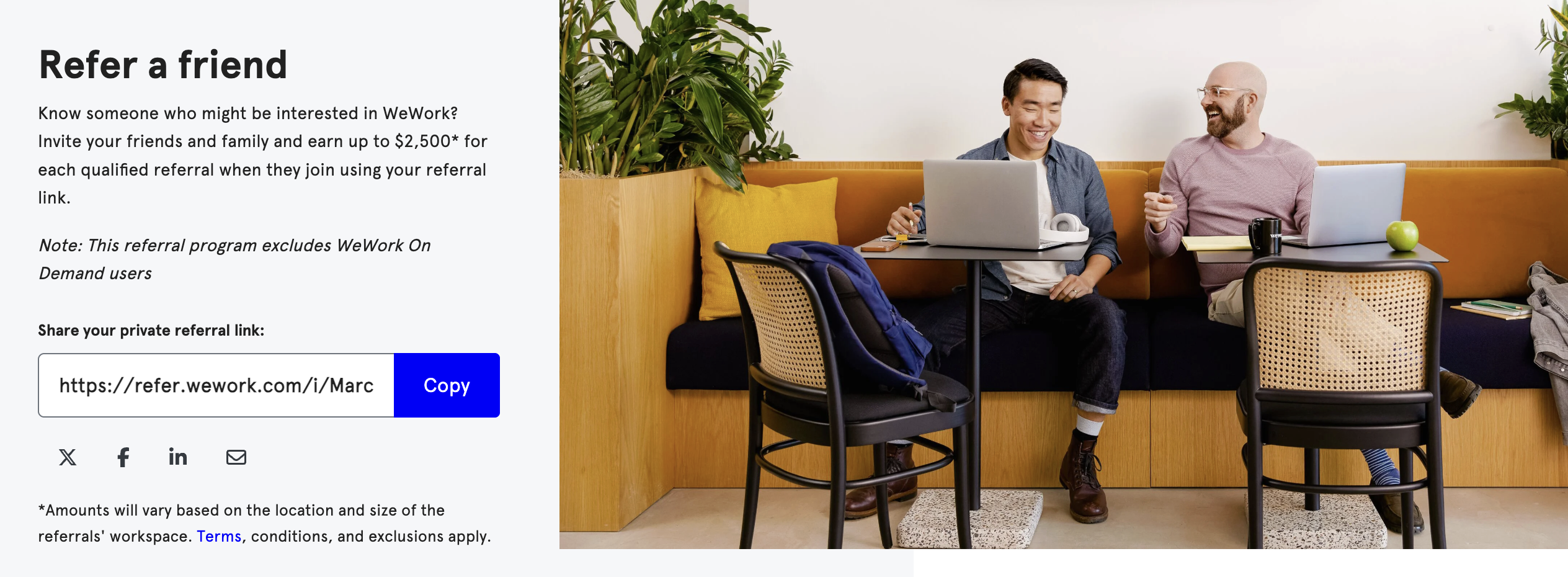
How much does WeWork pay for a referral?
To become a WeWork affiliate member, you have to share a referral link to bring new businesses. Earnings vary depending on the type of membership the referral converts to and the length of commitment. I believe the location should matter as well, as some US and European locations are considerably more expensive than others, hence the value brought. I found these numbers as potential earnings:
-
For smaller membership deals, around $125 - $250
-
Mid deals and All Access memberships - $250 - $500
-
Larger deals (50+ seats) - ±$1,250
-
Some regional WeWork referral pages mention ±10% of membership fees for successful referrals.
The Exact numbers depend on contract size, market, and terms.
Within a few days, two people signed up for WeWork. We were not even aware of how much we could earn, as that was not the scope. Everything was fun, and on top of that, being paid for the referral was fantastic, until we found out from the WeWork sales team that we were not eligible for the promised commission. Digging into the details, we got the same answer from both sales reps.
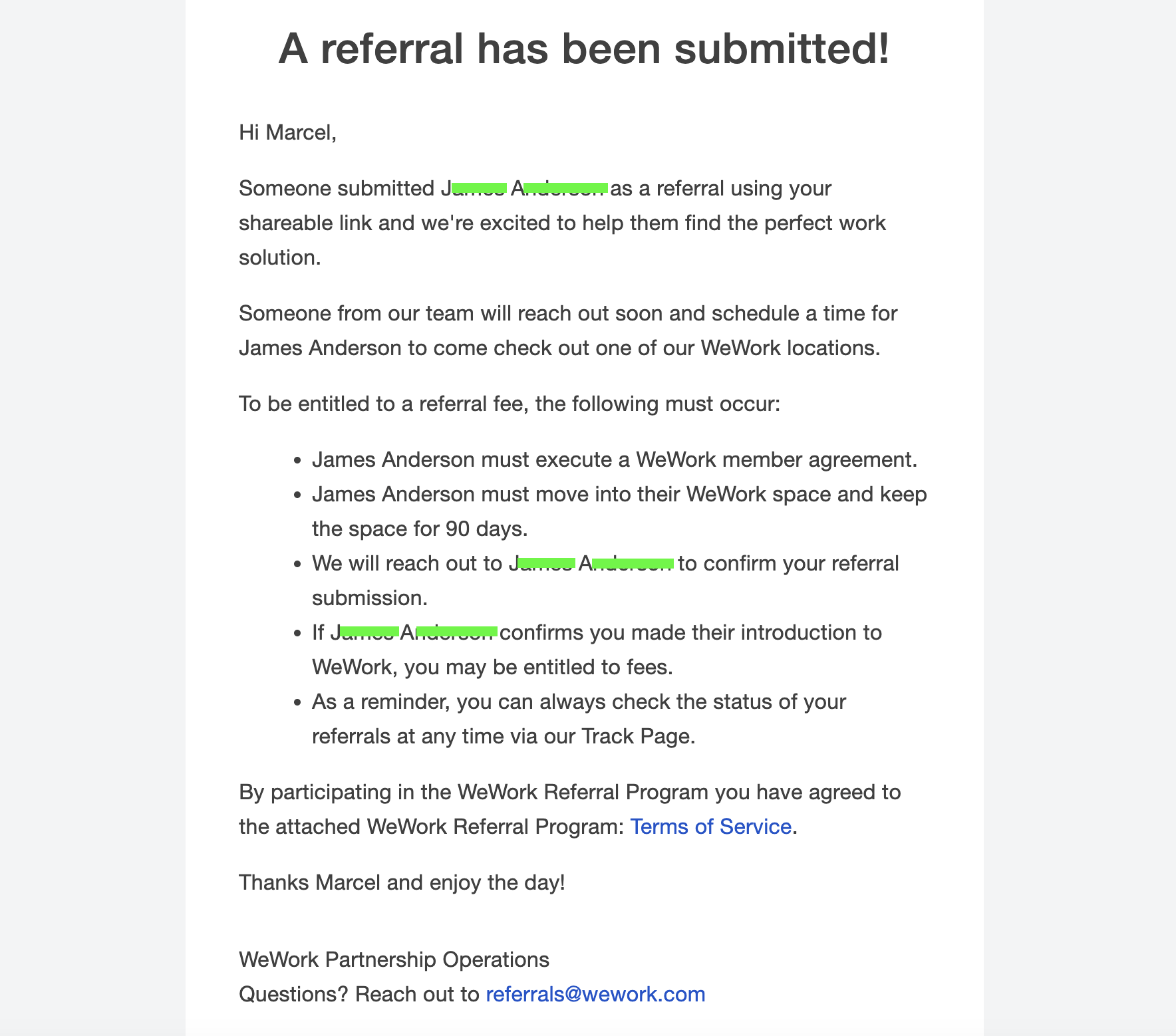
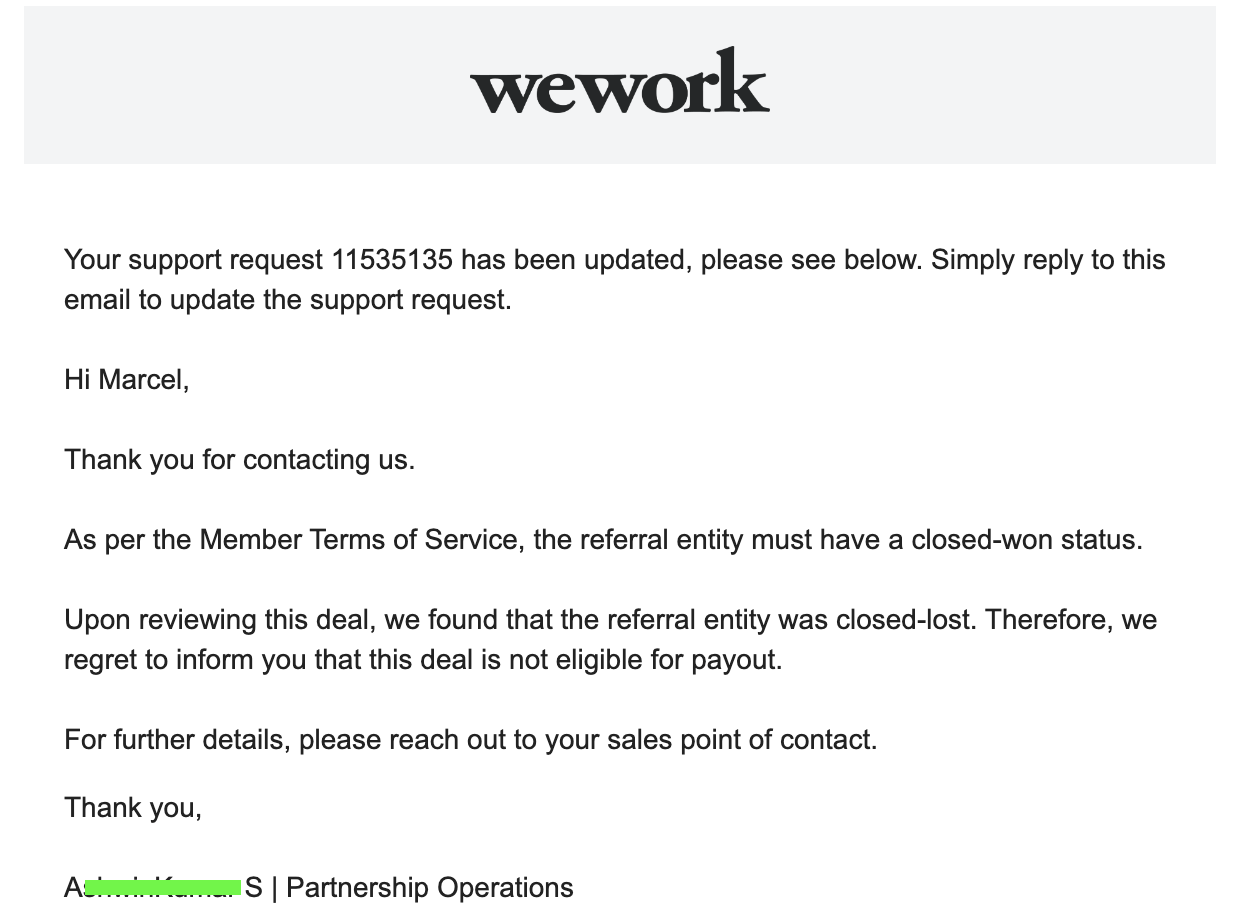
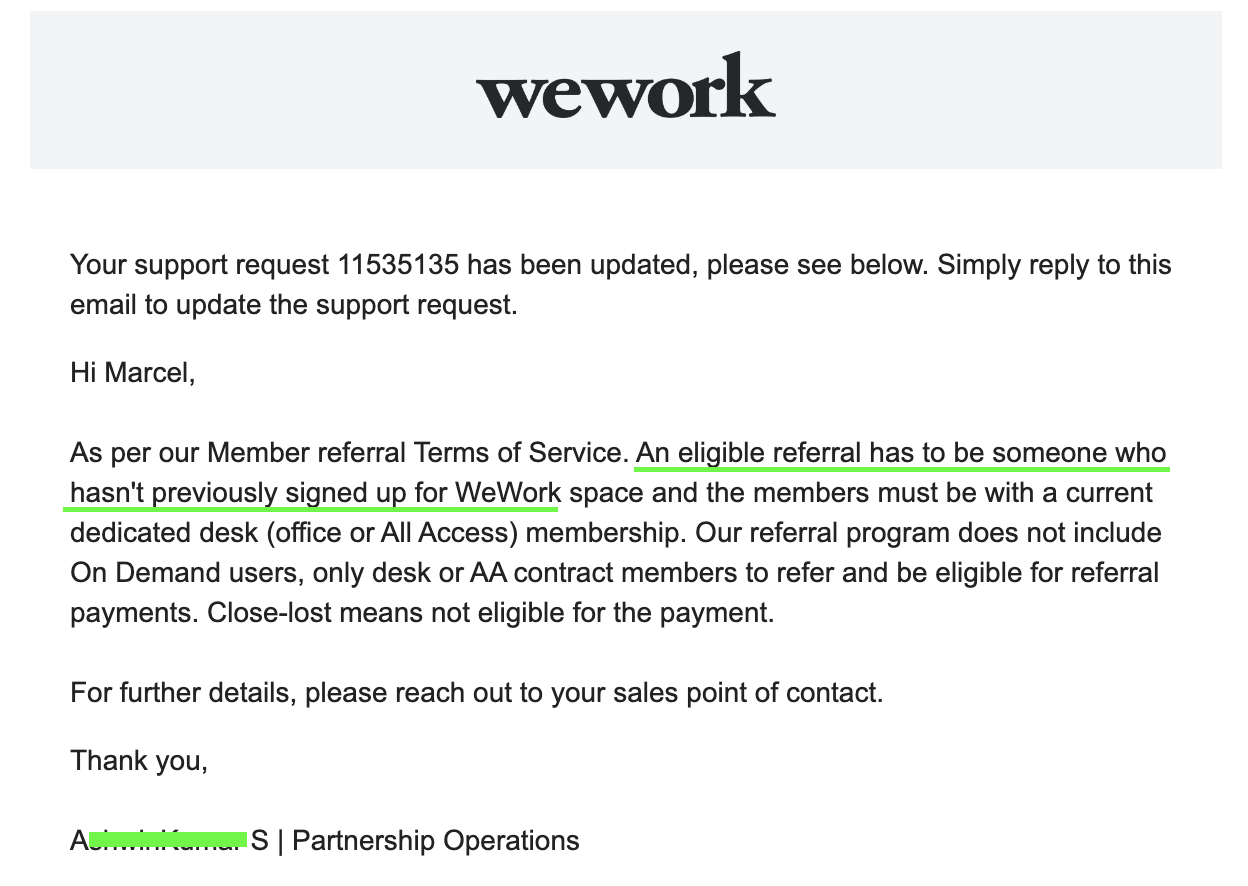
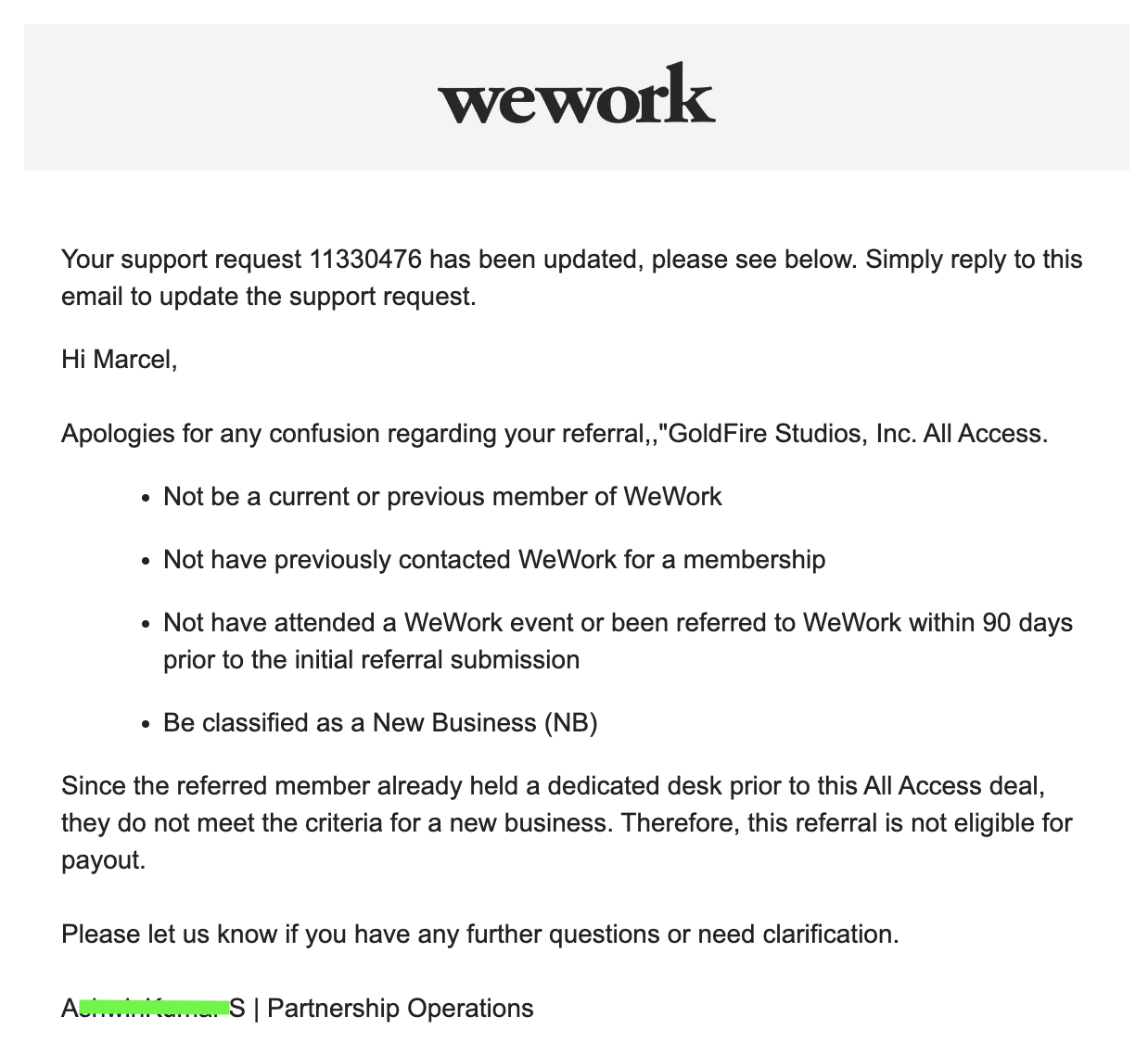
In other words, if someone has ever visited WeWork and did not make a purchase, but later signed up after visiting your referral, you are not eligible for the commission. Is this fair? To me, absolutely not. Even in a situation where someone was a paid client in the past and signed up again after visiting someone’s article or promotion, the affiliate should be paid. In the end, their words and work convinced someone to rejoin.
To put it differently, it’s like advertising McDonald’s, and someone orders a Big Mac after reading your article or watching your video, only to be told, “Sorry, they knew about us already. They’ve visited our restaurants before and tried it in the past.” Of course they did. It’s a massive brand. But the sale happened because of that specific piece of content. That’s the whole point.
On top of that, after their 3 months of usage, WeWork will ask the new member who specifically referred them in order to validate the sale. This is hard to comprehend. How could they remember which website or video had convinced them to sign up? People visit many sources at once and consult various pages until one final article convinces them to proceed.
Is the WeWork Referral or Affiliation Program a scam?
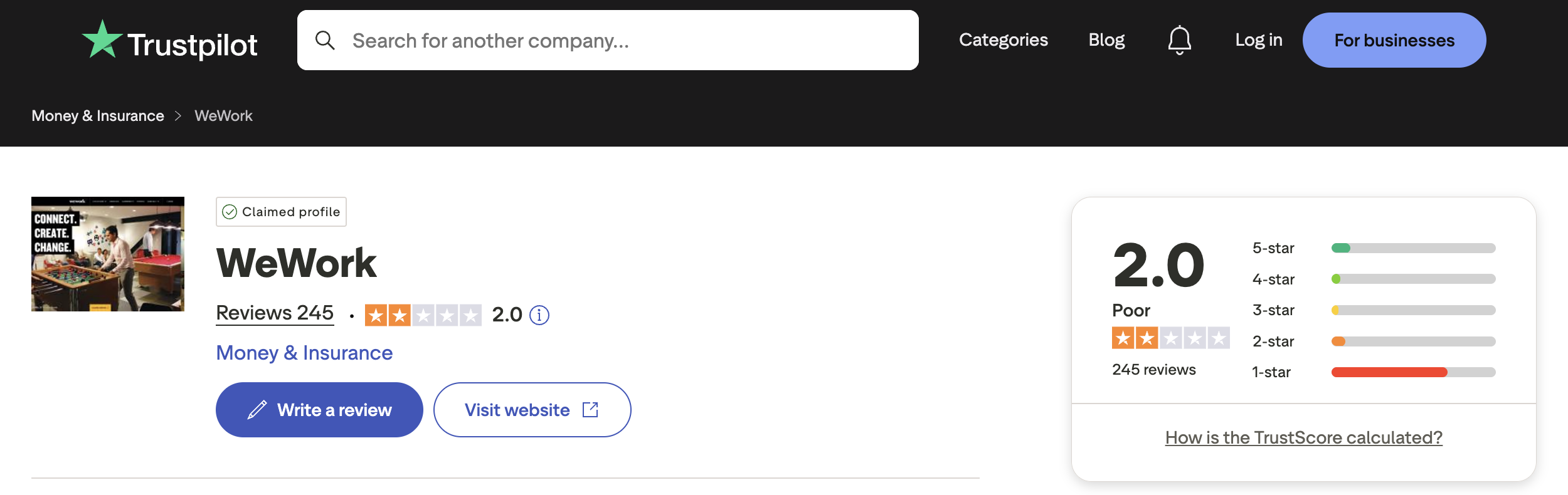
I did a quick search online to see what others were saying. Not surprisingly, I am not the only one. On Trustpilot, they have 2.0 stars from 245 reviews as of today. Just a glimpse below.
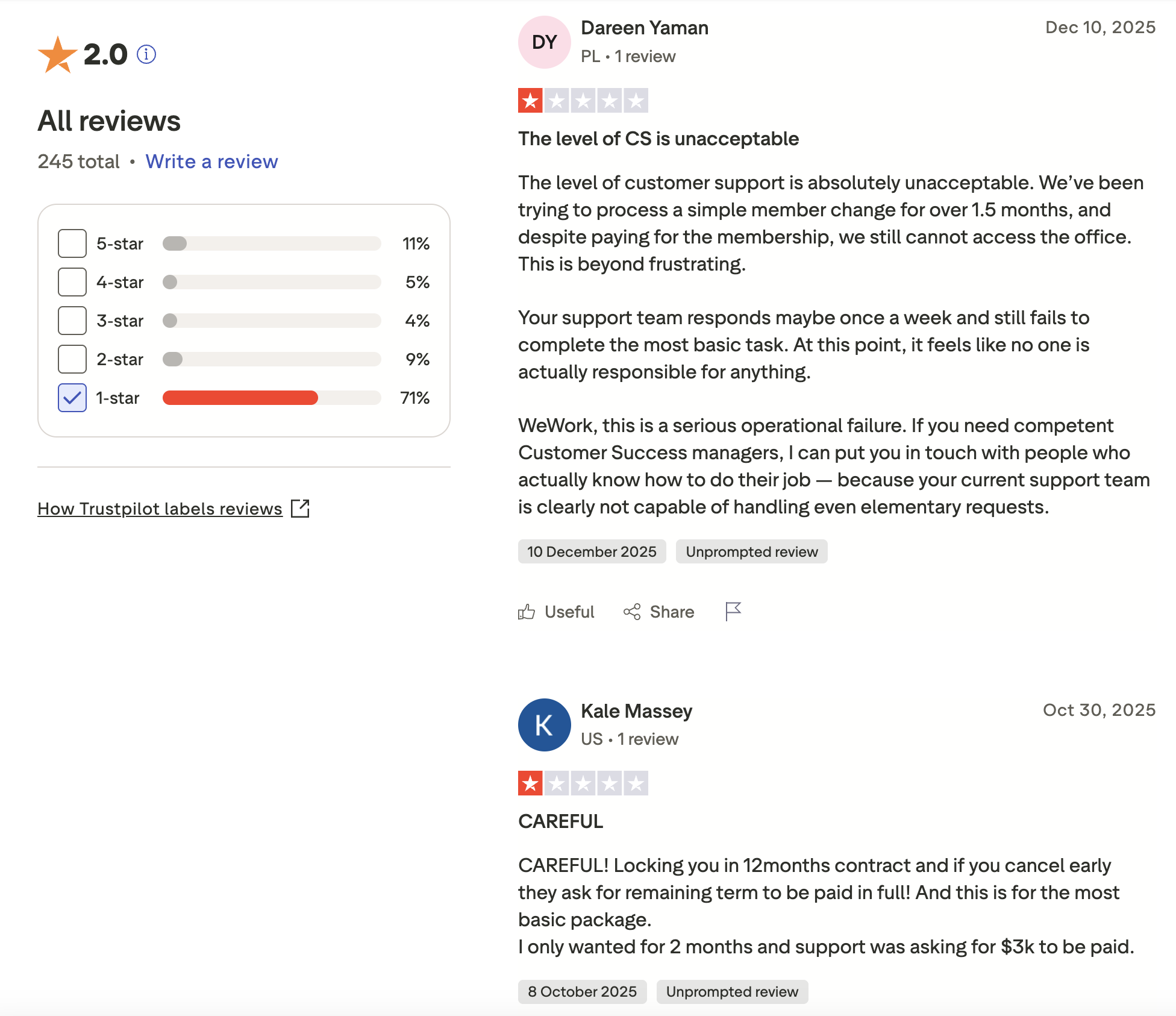
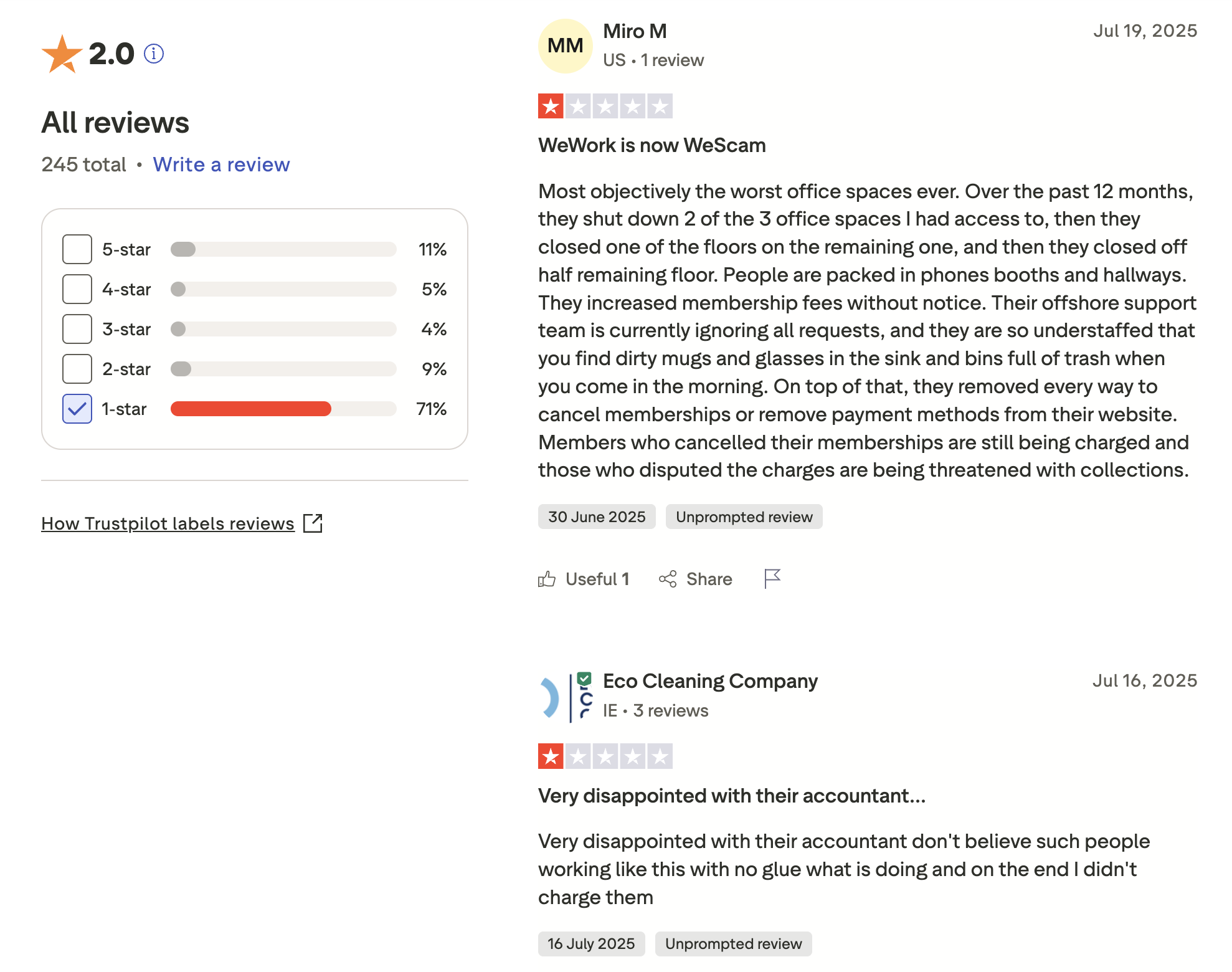
Another example, on Reddit:
From maxverse (OP):
“Update: I called them, and they're ’phasing out’ referrals, whatever that means. The guy was pretty evasive, and in general, I think their sales team for All Access sucks.”
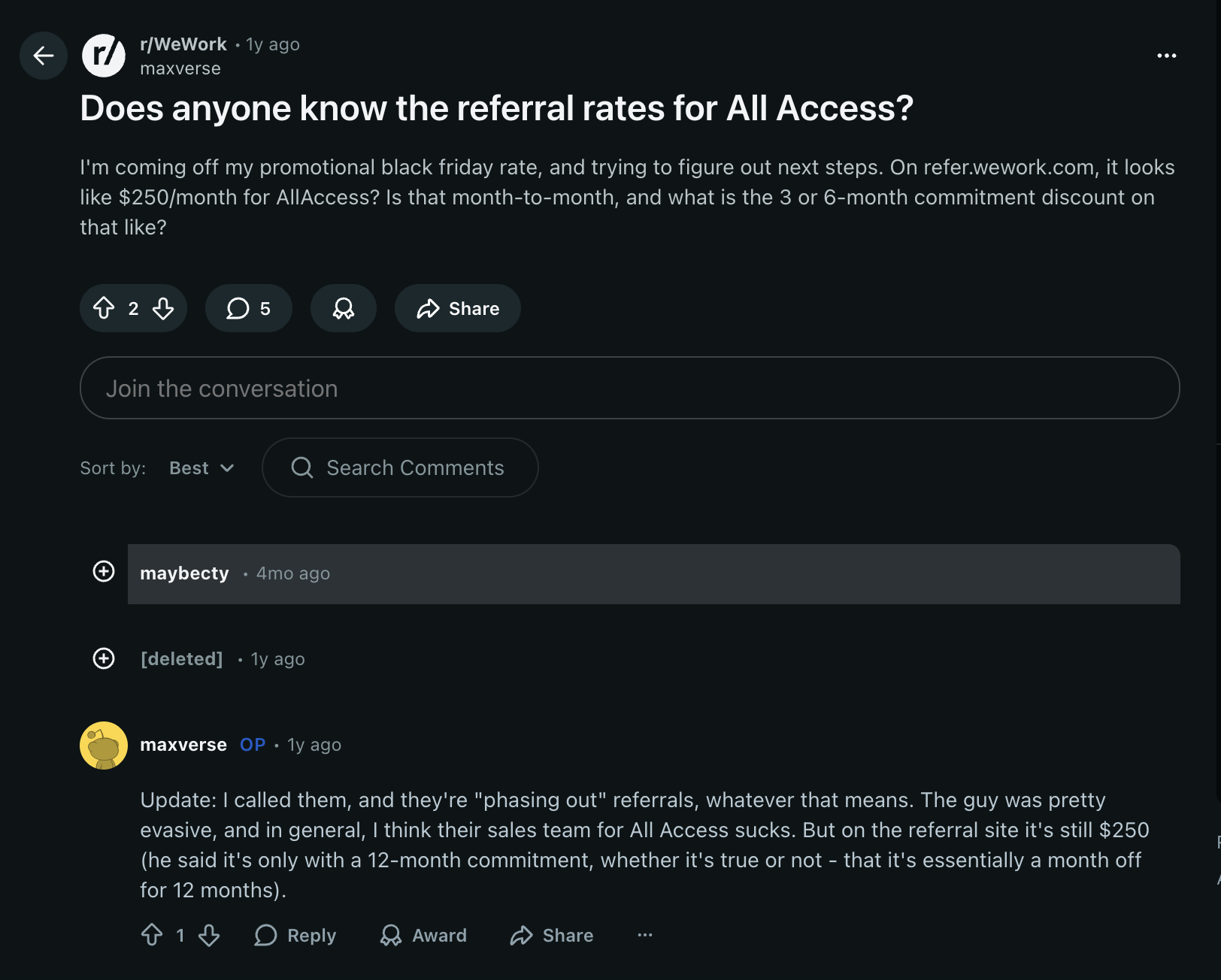
I won’t go deeper into this. It takes time and focus away from what is really needed. I decided to raise this red flag about WeWork’s ethics and transparency. I want to make sure that real people involved in helping WeWork grow its brand, acting as WeWork’s ambassadors, often at their own expense, are aware and vigilant. Their calculations and hopes may be quickly shattered by unprofessional and perhaps shady terms and conditions.
Do I recommend the WeWork Referral or Affiliation Program?
No. Stay away. There are many other sources and ethical services to talk about. There is no point in working on something when the terms are unclear and overly subtle, with many “ifs” in between.
Is WeWork a nice office to rent?
It was. It had many interesting facilities, nice spaces, and good locations. As of today, January 2026, many places in London are permanently closed. Many Quiet Rooms are permanently closed as well, cramming people into smaller and more crowded spaces. I still like it, but it’s sad to see its decline, something many of its members have noticed too.
Related Questions & Answers
Is the WeWork referral program worth it?
Does WeWork pay commissions consistently?
Is this a common issue with WeWork or an exception?
Would the author recommend promoting WeWork today?
How much does WeWork pay for a referral?
Are affiliate programs still a viable growth channel in general?
I’m dedicated to delivering useable, beautiful and pain-solving products to the world. My team and I previously created 4 other startups and made 3 exits. TechBehemoths is the greatest one so far.
Discover more TechBehemoths Insights
Learn practical tips and insights about IT Companies, how to find the right company for your projects.
Read the latest news about Market Trends and fresh Interviews.