How Does Samsung Advertise Its Products ?


Summary
This article takes you through Samsung’s transformation, from its early beginnings and first black-and-white TVs to global campaigns that redefined modern advertising.
Discover:
- The key moments that defined Samsung’s rise from a local trading company to a global innovator
- The evolution of its advertising
- The role of partnerships, branding, and audience insight in building a trusted global ecosystem
- What lies behind Samsung’s marketing strategy, who it’s for, and how much the company invests to stay visible and relevant worldwide.
In most parts of the world, there is a good chance that someone’s first smartphone will be a Samsung. The company is ranked at the top, with a reputation for cost, efficiency, innovation, and quality in everything it produces.
But how did Samsung achieve its success? Where, when, and how did they start? What type of strategy does Samsung use, and what is the role of advertising in their path to success?
Samsung’s Origins: Where It All Began (1938–1978)
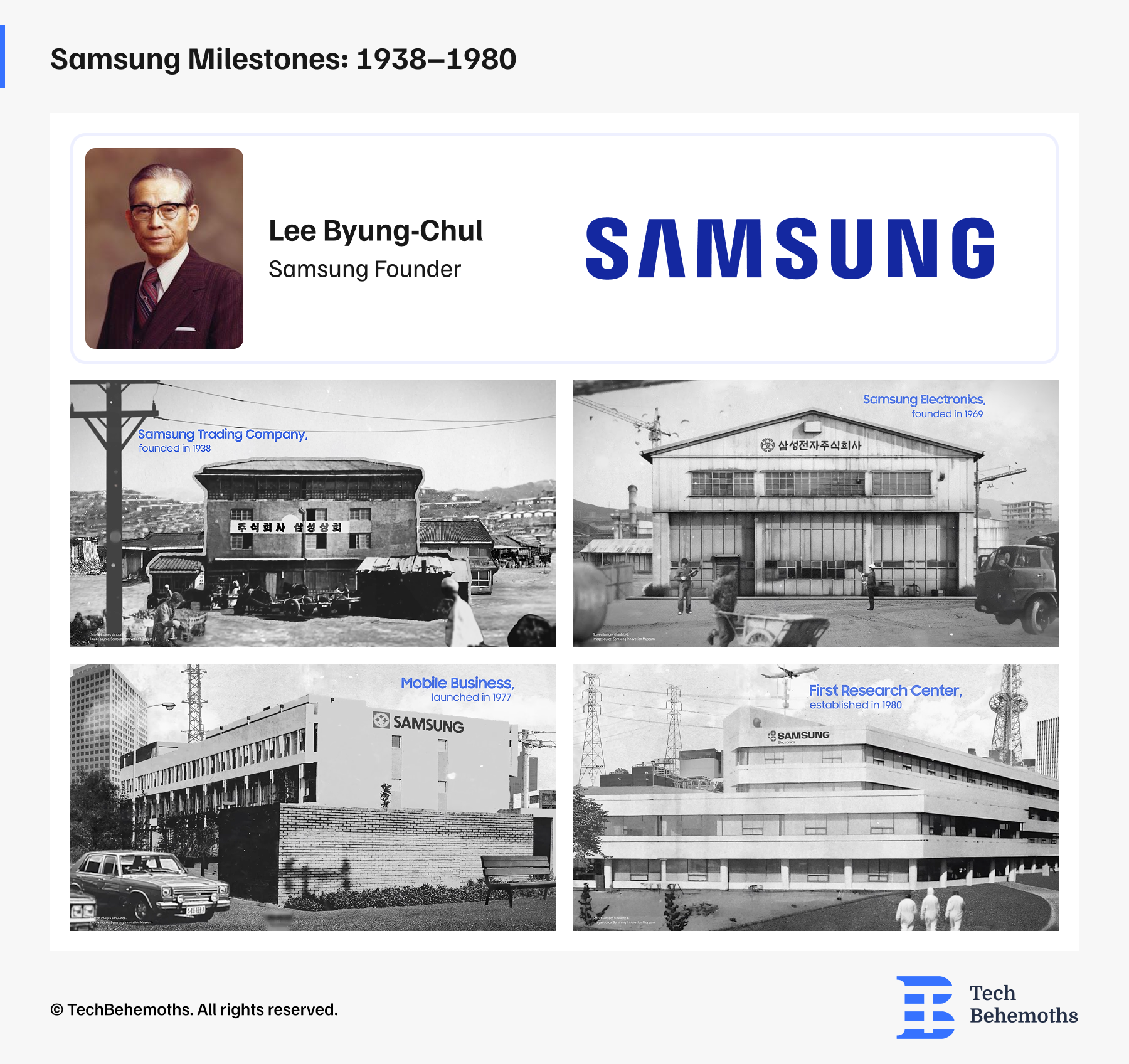
The Samsung story began on March 1, 1938, in Taegu (now Daegu), as a small Korean grocery trading company founded by Lee Byung-Chull.
Initially named Samsung Trading Company, it started with just 40 employees and was trading noodles and exporting local products, such as dried fish, to China and Manchuria. These humble beginnings reflect Korea's challenging economic environment in the years leading up to World War II, where basic goods like food were essential for survival and trade.
Over the next few decades, Samsung expanded its reach into various industries. However, a big change happened in 1969 when the company partnered with a Japanese company, Sanyo, to form Samsung-Sanyo Electronics. This partnership marked Samsung's entry into the electronics industry, which became its primary focus.
They started by manufacturing products such as black and white televisions. The company produced 5 million TVs, a significant milestone in 1978. As the company grew, it transformed into Samsung Electronics, which is now a key part of the Samsung Group and one of the world’s leading technology companies.
Early Marketing and Brand Identity
For many of these early years, Samsung operated without formal branding or marketing efforts.
At that time, Samsung used simple print announcements of product availability in local newspapers or on product packaging, as well as word-of-mouth.
However, even in the absence of large-scale promotional efforts, the company’s logo functioned as an early form of brand communication, helping establish identity and recognition.
Samsung Logo Evolution
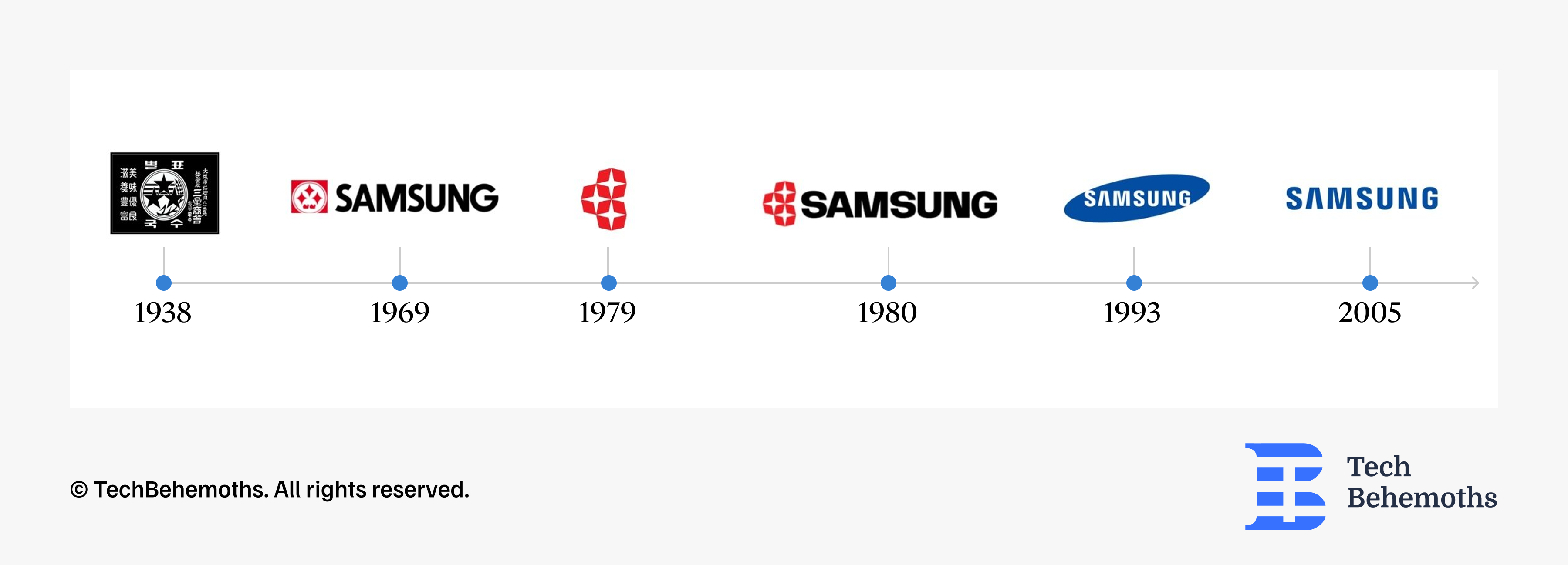
Samsung introduced its first logo in 1958. The design was complex, featuring stars, stripes, and wheat plants to represent its agricultural roots.
The name Samsung means “three stars” in Korean. The name was linked to Korean cultural understanding and folklore, where stars symbolized something large, powerful, and eternal.
This early symbolism laid the foundation for Samsung’s long-term vision, even before branding and advertising became central to its growth strategy.
The Mobile Market (1969–1986s): Modernization & Media
In 1980, Samsung entered the telecommunications sector by producing telephones and fax machines, later shifting to mobile phones in 1988.
One of the earliest known Samsung advertisements specifically for the U.S. market was a television commercial in 1986 (or slightly earlier), which emphasized the quality of its TV sets.
An article in The New York Times described it as the company’s advertising debut, which showcased its new color TVs. The ad featured a "Miami Vice"-style hero using a remote control to operate both his television set and a large outdoor Samsung display, demonstrating the power and brand recognition they sought to achieve. This spectacle drew a crowd. The voice-over stated, "Feel the Power. Samsung Electronics."
Source: The New York Times Archives, An article from October 6, 1986, mentioned the "First TV Spot For Samsung.
Global Expansion (1990s–2000s): Building a Premium Brand
In 1995, Samsung made an important decision to change its business strategy. The company decided to focus on modern technology and innovations instead of the less successful products it had been selling. To do this, it stopped producing those lower-performing products and invested in new technologies.
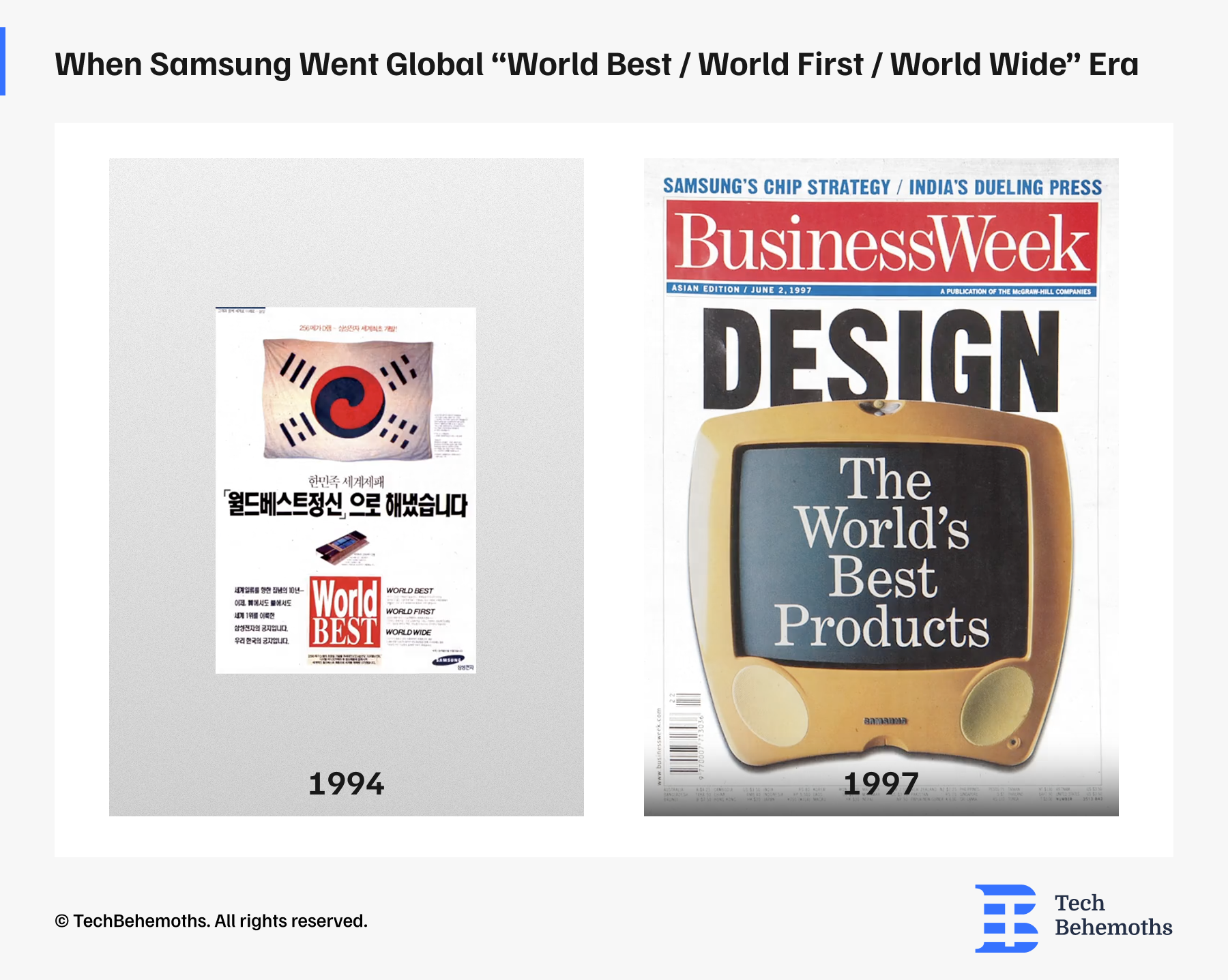
“World Best / World First / World Wide”
In the early 1990s, Samsung set a global ambition and launched "World Best / World First / World Wide" campaign, a strategic branding effort that conveyed the company's message that Samsung was not just a Korean company, but aimed to become a global leader in technology.
The slogan appeared in print advertisements, corporate communications, and international marketing materials, signaling Samsung's determination to achieve world-class quality, lead in innovation, and expand its presence far beyond Korea.
More than a tagline, this campaign captured an important moment in Samsung’s history. That period was when the company redefined its identity and positioned itself among the world’s major technology players.
As Samsung entered international markets, its advertising became more polished and globally consistent.
Through strong TV advertising, large-scale billboard campaigns, and a growing focus on product quality, Samsung built its reputation as a world-class electronics brand.
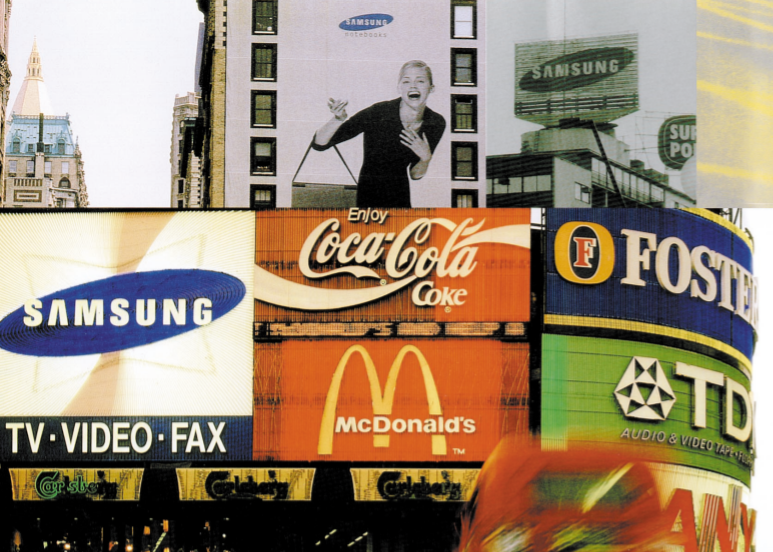
Source https://www.samsung.com/us/about-us/leadership-and-mission/heritage/
2000–2010: Samsung’s Digital Transformation Era
These years are known as Samsung’s early digital era, the period between traditional TVs and home electronics, and the rise of more advanced mobile phones, still before the explosion of smartphones.
“DigitAll: Everyone’s Invited’’ Campaign (2000)
In early 2000, Samsung launched “DigitAll: Everyone’s Invited”. Its message was simple: digital technology should be accessible to everyone. Instead of focusing only on being the best, they emphasized openness, innovation, and inclusivity. This was the defining campaign of this decade and was used in advertisements for:
- Digital televisions
- Laptops
- Digital cameras
- Flip and slider phones (before smartphones)
- Premium home appliances
Through this campaign, Samsung positioned itself as a brand that brings people together through technology, whether through mobile phones, home appliances, or digital devices, making everyday life easier and more connected.
The Smartphone Era (2010–Present)
By the mid-2010s, the brand shifted toward human-centered storytelling. Campaigns such as “The Next Big Thing” and “Do What You Can’t” focus on empowerment, creativity, and breaking limits. This marked a transition from showcasing what technology does to highlighting what people can achieve with it.
''The Next Big Thing'' Campaign (2011)
Samsung's "The Next Big Thing" campaign is one of the most successful marketing series, originally launched in 2011 and reimagined for 2025. The original series, which ran from 2011 to 2013 and was created by the agency 72andSunny, parodied an iPhone line, showcasing how users discovered that the Samsung Galaxy S II already had the features they were looking for, such as a larger screen and 4G speeds.
In January 2025, Samsung revived the slogan with a new focus on Galaxy AI and individual empowerment: "The next big thing is you". The campaign shifts the focus from the hardware itself to the user, highlighting how Samsung Vision AI and Galaxy AI tools help people live "incredible" lives.
Do What You Can't (2017)
"Do What You Can't" is a powerful Samsung brand philosophy and advertising campaign launched around 2017. It encourages people to overcome physical, social, and self-imposed barriers using innovation and technology, especially Galaxy devices, to achieve the seemingly impossible. This campaign showcases inspiring stories of people who defy limits and conventions, aligning with Samsung's history of technological breakthroughs.
We make what can’t be made so you can do what can’t be done.
Samsung

It's a worldwide concept, with campaigns adapted for different regions (Latin America, Southeast Asia) and featuring local heroes. It's known for bold advertising, including stunts on the Burj Khalifa and music campaigns.
With this campaign, Samsung reminds us that we were born to turn the impossible into possible and enables us to do what we can't.
Join the Flip Side (2022–2023)
The Join the Flip Side campaign introduced Samsung’s Galaxy Z Flip as more than just a new phone format; it was an invitation to try something different. By using playful visuals, emotional moments, and light humor (like scenes where the world literally folds), Samsung encouraged people to rethink their choices. The message resonated especially with Gen Z and those curious about switching, framing foldables as fun, expressive, and refreshingly different.
That same creative spirit carried over into local collaborations. In Brazil, Samsung teamed up with São Paulo–based graphic designer Jean Rosa to turn the Galaxy Z Flip5’s foldable design into a series of digital artworks. The full collection was later shared on Samsung Brazil’s Instagram, bringing the campaign closer to local culture and creative communities.
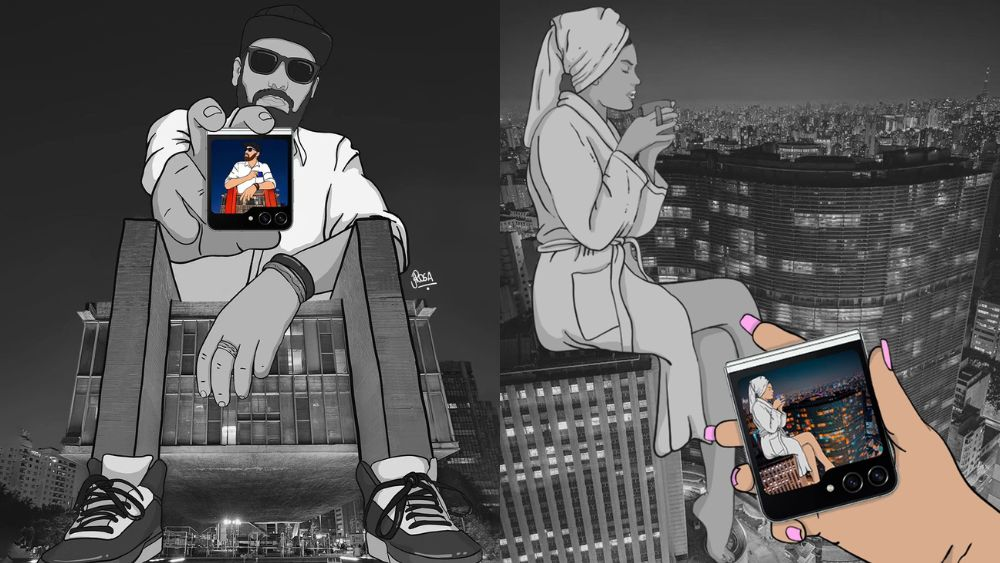
As Samsung’s product storytelling matured, from foldable to creative collaborations, the brand moved toward a unifying message that explained not just what it makes, but why it values, and why it stands out.
Why Samsung? The Global Brand Campaign (2025)
In 2025, Samsung launched Why Samsung, a global brand campaign that brings its core values into focus:
“The ’Why Samsung’ campaign brings together what truly defines Samsung appliances - innovative Bespoke AI, seamless SmartThings connectivity, trusted Knox security, and lasting reliability,” said Jessie Song, Vice President and Head of Marketing Group at Digital Appliances (DA) Business, Samsung Electronics.
Rolled out across more than 50 countries starting in October 2025, the campaign spans Samsung.com, YouTube, and social media, with a strong emphasis on home appliances and smart home experiences.
The promise we make to you.
That’s why Samsung.
Galaxy Unpacked” Launch Events (Ongoing since 2009)
Beyond traditional advertising, Samsung also built its brand through large-scale experiences that turned product launches into global moments.
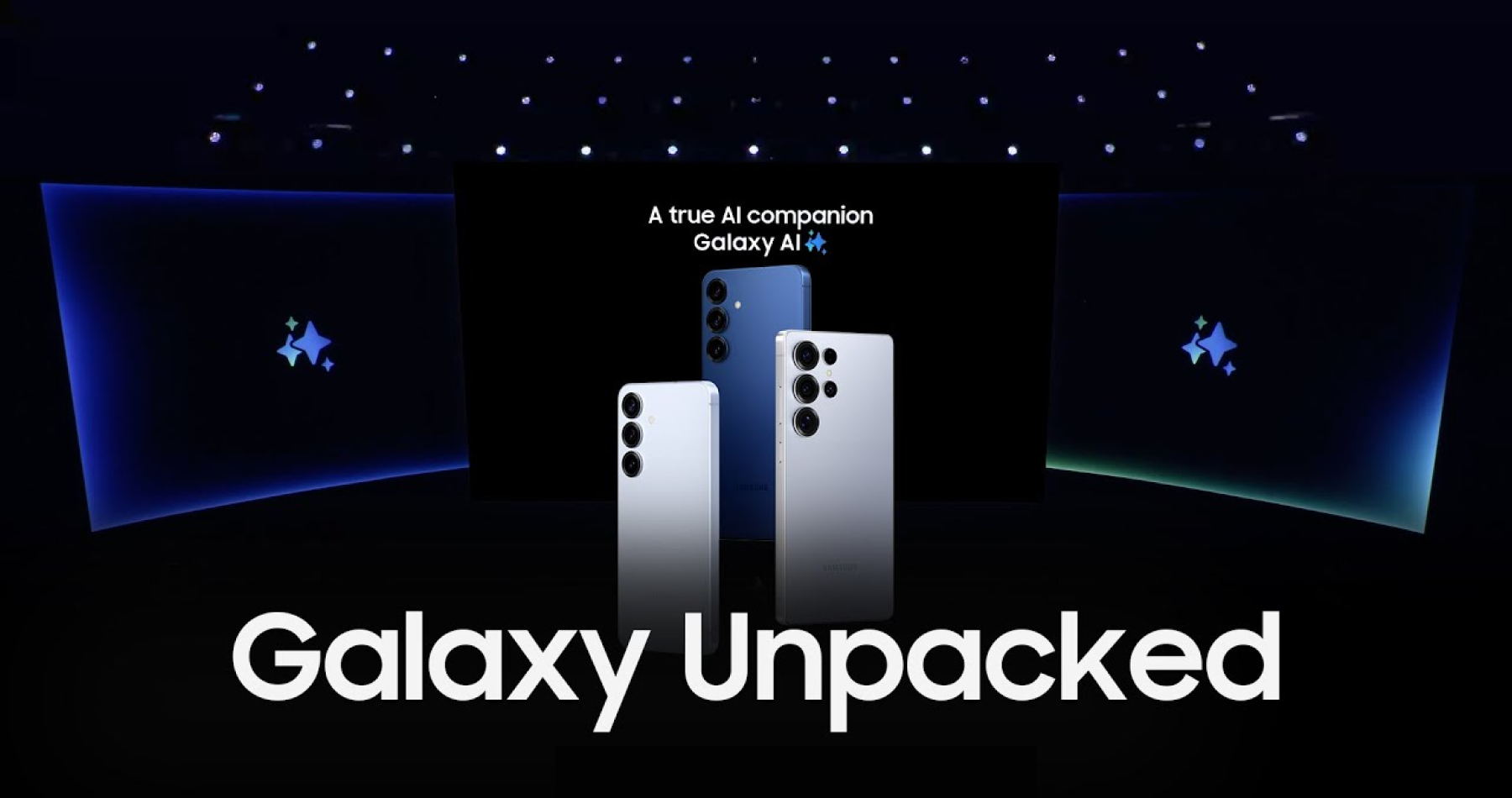
Galaxy Unpacked first debuted in 2009. It was originally called "Samsung Mobile Unpacked". It was held at the Communic Asia event in Singapore when Samsung introduced its Galaxy lineup on a global stage for the first time.
Since then, the event series has evolved into one of the most anticipated launch formats in the tech industry. The events showcase Samsung’s latest Galaxy smartphones, foldables, wearables, tablets, and ecosystem innovations.
Often streamed live and amplified by global media, creators, and social platforms, Galaxy Unpacked has transformed product launches into storytelling moments with lasting cultural impact. Most recently held in 2025, it remains Samsung’s primary stage for connecting innovation with a global audience.
How Samsung Uses Strategic Partnerships to Strengthen Its Brand Identity?
Over the years, Samsung has also focused on building a reputation for quality and innovation, and has engaged in major sports, cultural, and entertainment sponsorships. They are an important element of a company’s marketing strategy. They help brands increase visibility, reach new audiences, strengthen their image, and associate themselves with positive values like performance, innovation, and community.
The Olympic Games and Samsung
Samsung first partnered with the Olympic Games in 1997 and made its first appearance at the Nagano 1998 Winter Games. Over the years, the partnership grew through a few standout moments.
Most notably, London 2012, where mobile technology became central to the fan experience, and PyeongChang 2018, hosted in Samsung’s home country, which highlighted innovation, 5G, and national pride. More recently, Samsung continued this role at Tokyo 2020 and Paris 2024, reinforcing its position as a brand that supports connection, communication, and shared global moments, well beyond individual product launches.
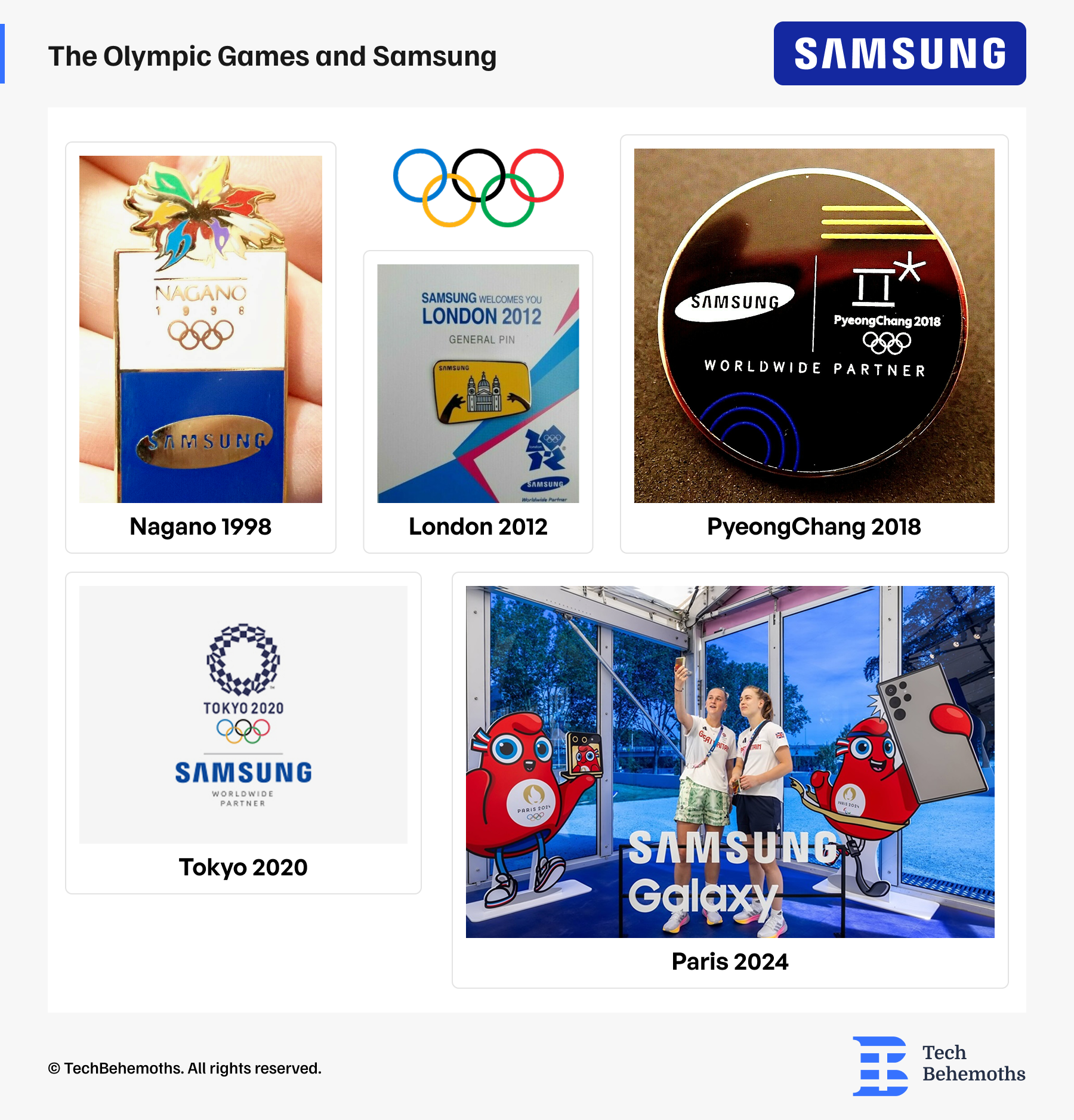
This partnership provides Samsung with visibility across diverse cultures and generations, enabling it to associate itself with values such as connection, progress, and overcoming limitations, while also appearing both global and relatable. It is not just about sponsoring an event but about being present where the world comes together, building trust, credibility, and emotional ties that go far beyond individual product promotions.
Cannes Film Festival and Samsung
In 2018, Samsung became an official Technology Partner of the Cannes Film Festival. This partnership involves Samsung providing advanced mobile and display technologies to support the festival. Samsung promotes its Galaxy devices as vital tools for creating content, filming on the go, and sharing festival moments.
The festival editions in 2023 and 2024 continued to emphasize creator culture, premium branding, and the link between technology and cinema. Samsung's support helps with media coverage, assists creators, and improves the festival experience.
This partnership has linked Samsung's brand with creativity, cinema, and cultural influence, showcasing its technology as a tool for modern storytelling rather than just electronics.
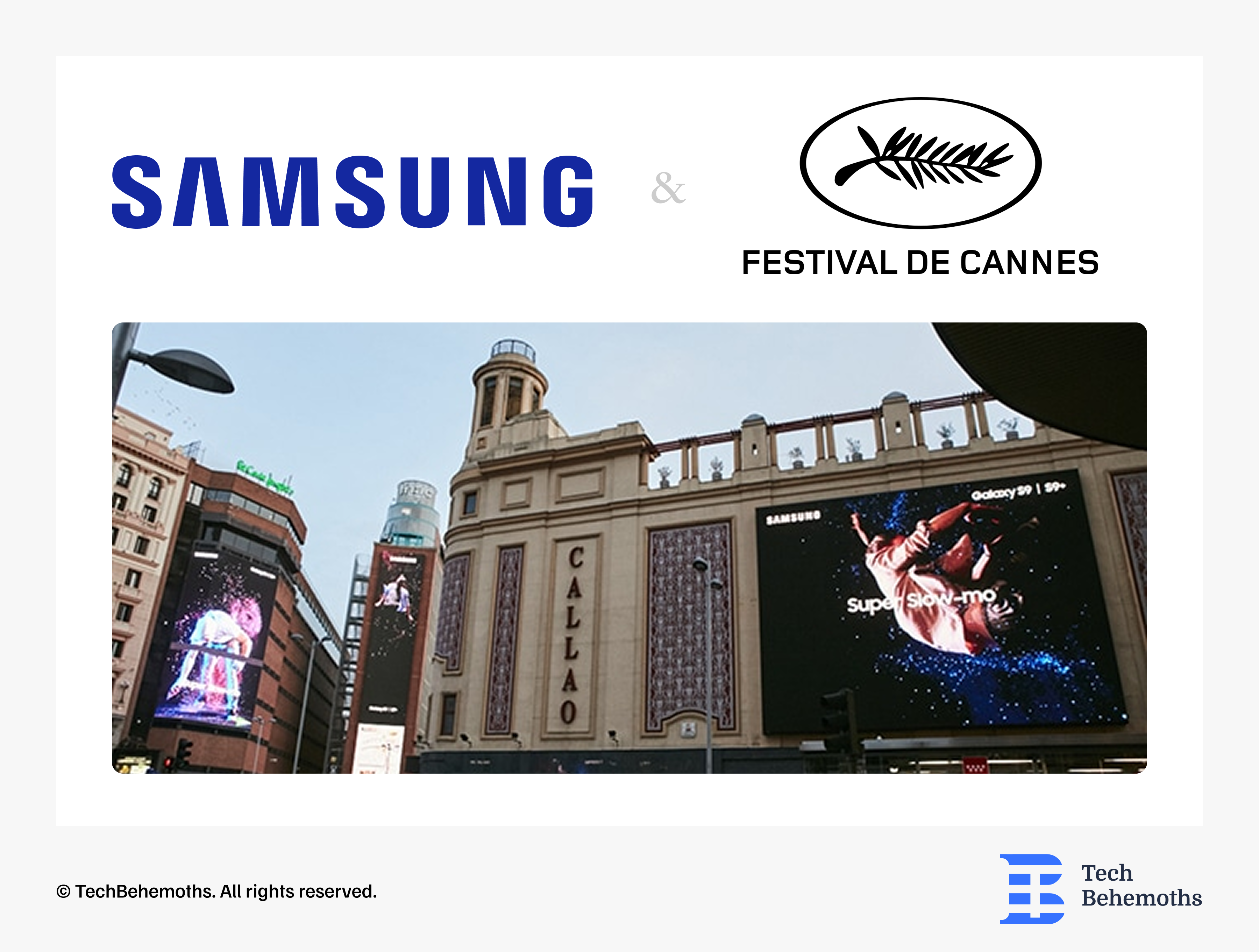
Collaborations like this, along with others such as the World Cyber Games and Hollywood Partnerships, help strengthen Samsung's global identity and position the company as a technology leader.
What Type of Strategy Does Samsung Use?
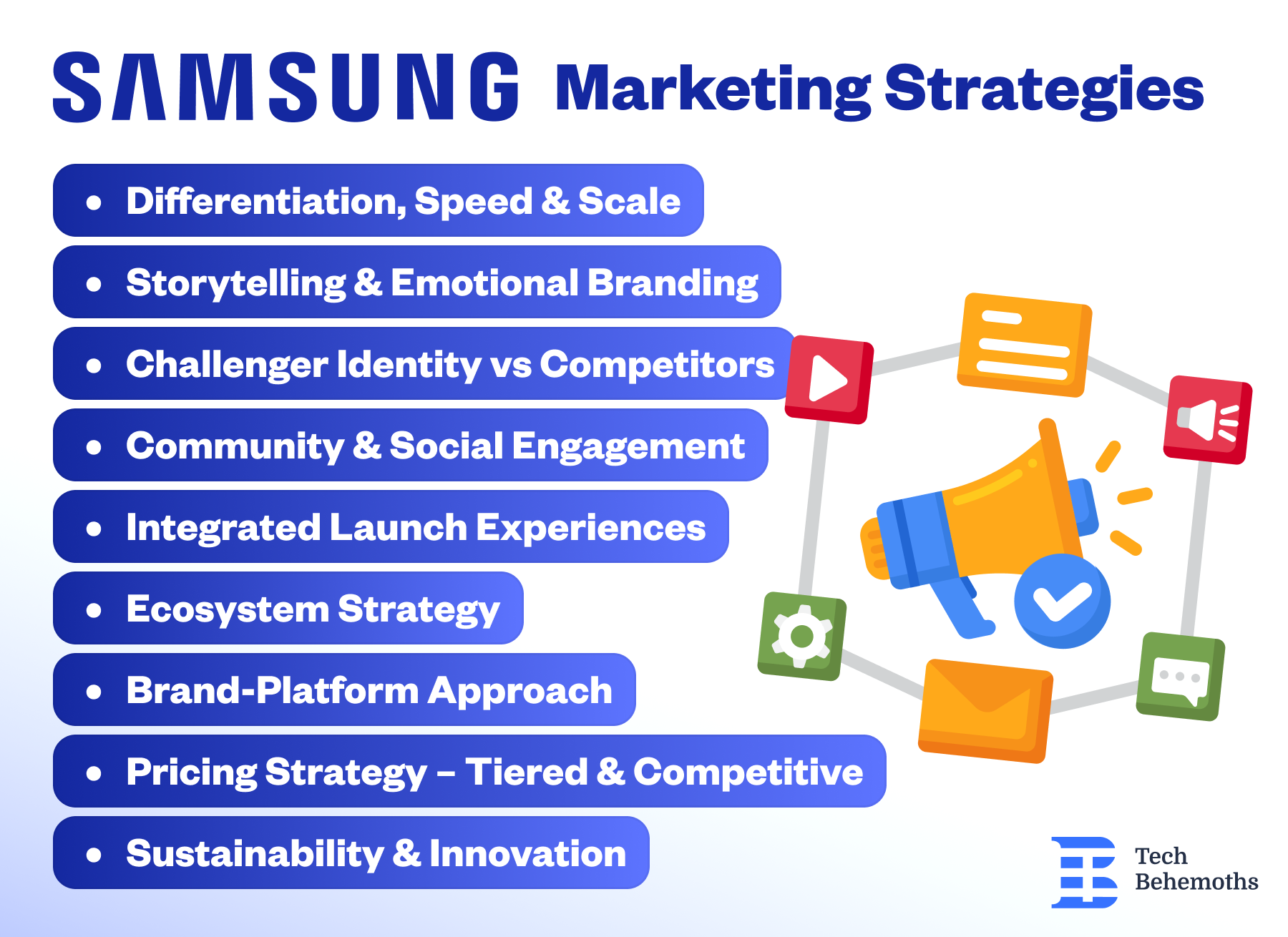
Samsung's strategy is built around differentiation, speed, and scale. Unlike brands that rely on rarity or minimalism, Samsung competes through a wide range of options, affordability, and rapid innovation, bringing new features to market quickly and across multiple price segments.
Some of the main directions are:
- Storytelling & Emotional Messaging – Campaigns like "Do What You Can't" have transcended the boundaries of specifications and transformed into inspiration and personal power.
- Challenger Identity vs. Competitors – Samsung consistently highlighted how its products outperform or innovate beyond rivals, especially Apple, positioning itself as both aspirational and accessible.
- Community & Social Engagement – Samsung engaged with the community and social culture through user-generated content and movements that appeal to Gen Z, like Join the Flip Side
- Integrated Launch Events – Galaxy Unpacked events became marketing spectacles, leveraging live streaming and influencer amplification.
This way, Samsung uses a challenger strategy when facing direct competitors, a brand-platform strategy, and an ecosystem strategy, connecting smartphones, wearables, and smart home products under one experience.,
Samsung also emphasizes sustainability and innovation, highlighting eco-friendly tech, AI integration, and connected lifestyles.
Who is Samsung's Target Audience?
Samsung targets a wide range of users connected by technology, lifestyle, and ambition.
From students purchasing their first smartphone to professionals managing comprehensive smart ecosystems, the brand appeals to different generations and lifestyles, all with the same goal - making innovation accessible to everyone.
Demographic Range
Samsung serves a global audience, including both mass and premium markets, from entry-level smartphone users to high-income professionals.
Age Segments
Each generation finds something to connect with in Samsung’s ecosystem:
-
Gen Z (18–25) are trend-driven, social-media active, attracted to bold design and campaigns like Join the Flip Side.
-
Millennials (26–40) are tech-savvy, value innovation and lifestyle integration, exemplified by products within the Galaxy ecosystem.
-
Gen X & Professionals (40+) appreciate reliability, productivity, and premium features as seen in devices like the Galaxy S, Galaxy Fold, and various business solutions.
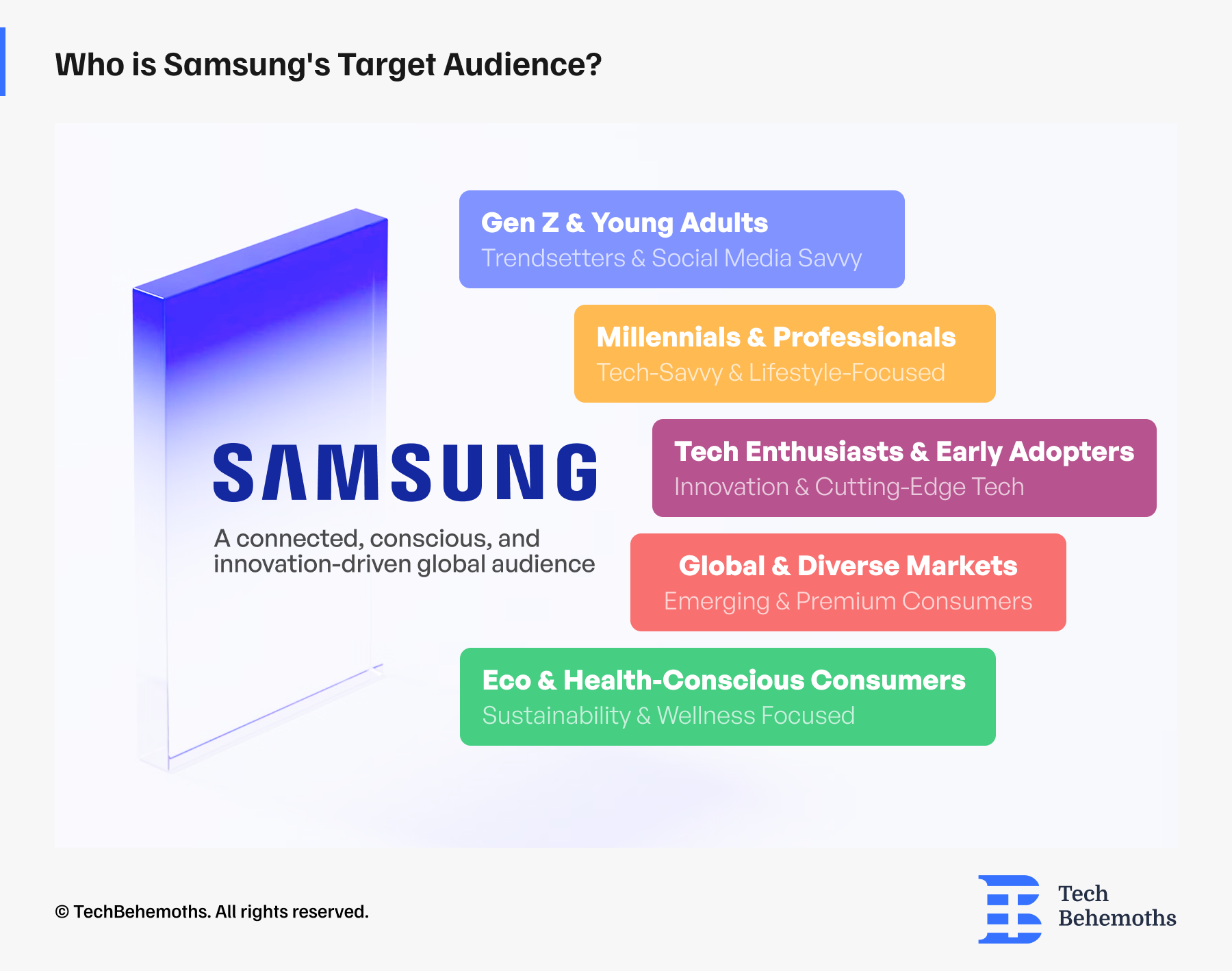
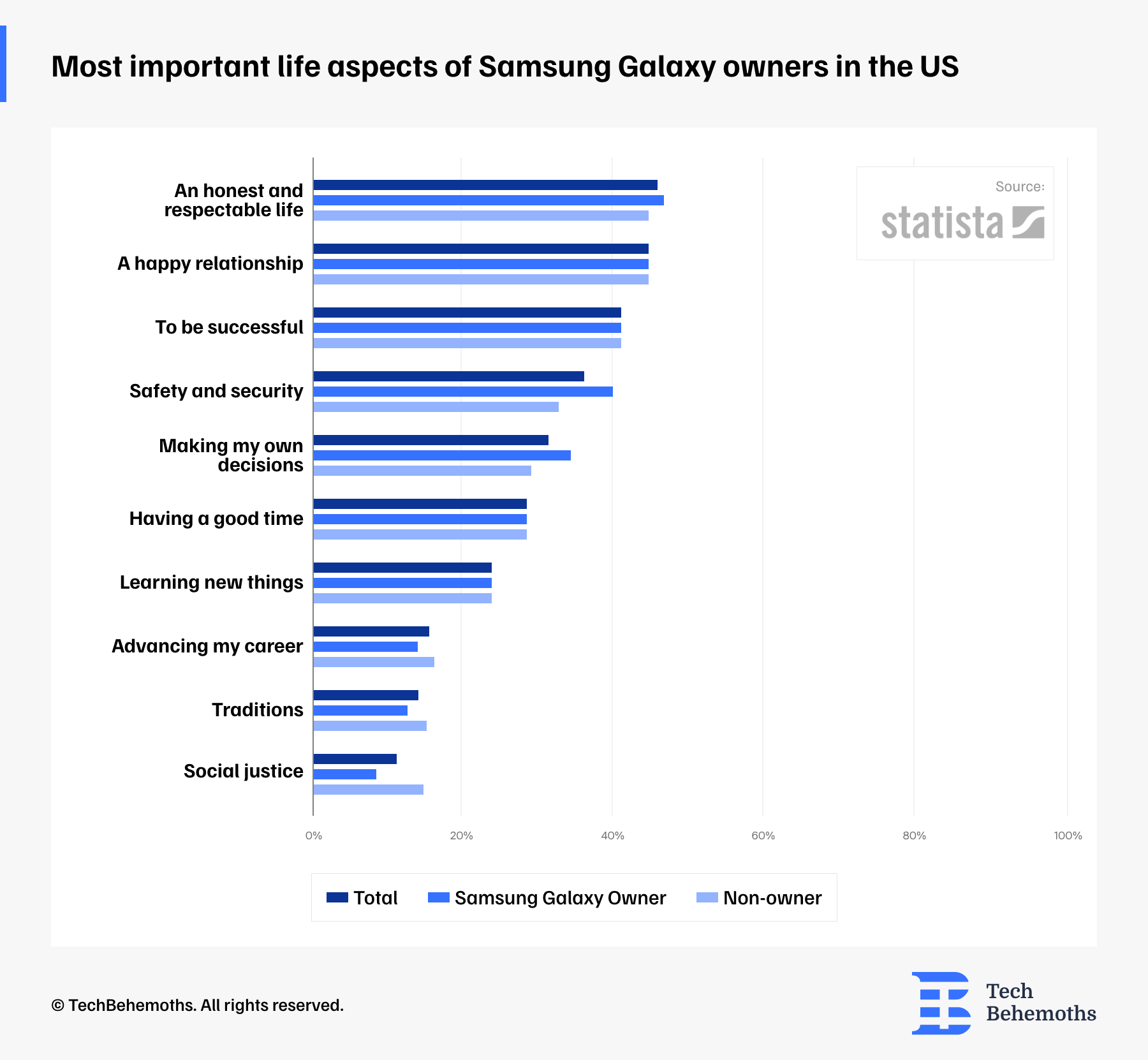
Samsung’s users share more than just demographics. They prefer devices that look as good as they perform. Samsung’s audience includes deeply loyal customers who live within the Galaxy ecosystem, but it also attracts “switchers,” those moving from competing brands like Apple or Xiaomi, users who engage with limited-edition releases, influencer collaborations, and Samsung creative campaigns.
How Much Money Does Samsung Spend on Advertising?
Samsung spends several billion dollars each year on advertising and marketing, being one of the largest global ad spenders. Samsung is investing heavily to keep its brand and product launches visible across regions and channels.
Industry analysts estimate Samsung’s annual marketing and advertising budget at around $11 billion. with Ad Age reporting $9.27 billion in 2023. In 2024, the company maintained a similar worldwide spend of $9.3 billion, while U.S. investments increased by nearly 12%, reaching $2.3 billion.
These budgets cover everything from global campaigns and media placements to digital ads, sponsorships, and local promotions, part of Samsung’s long-term strategy to sustain strong visibility and compete directly with other tech giants worldwide.
Samsung ranks second in the top 10 consumer electronics companies worldwide by sales, despite facing massive competition from mammoth brands like Apple, Microsoft, and Sony.
So, What Makes Samsung’s Marketing Strategy Successful?
Wrapping Up
Now that we’ve explored Samsung’s brand messaging and philosophy, long-term strategy, ecosystem thinking, advertising campaigns, cultural positioning, and evolution over the decades, it becomes clear why the brand continues to stand out.
Samsung’s marketing success comes from its ability to operate at scale and move fast, while never losing sight of the human story behind its technology. Instead of selling products one by one, Samsung consistently promotes an ecosystem that fits into everyday life, across devices, homes, and experiences.
This balance has allowed Samsung not only to compete with other tech giants but to remain relevant, trusted, and influential for people across different generations and markets around the world.
Looking for an Advertising Company?
Check our list of top advertising companies
Related Questions & Answers
What is the Samsung strategy for 2026?
What is Samsung's targeting strategy?
What does Samsung sell the most?
I absolutely love embracing new opportunities and connecting with people. Every project is a chance to analyze, create, and work until I am satisfied with the results. Bringing creativity into every aspect of my work offers a fresh perspective on turning ideas into reality. Paying attention to the details is key because it's the little things that truly make all the difference.
Discover more TechBehemoths Insights
Learn practical tips and insights about IT Companies, how to find the right company for your projects.
Read the latest news about Market Trends and fresh Interviews.