
There are 2 Companies in Taiwan
that provide Online Reputation Management Services!
Despite its relatively small population of 23.11 million citizens, Taiwan continues to strengthen its position as a technological powerhouse. Since the 1980s, Taiwan has taken a proactive approach to the development of emerging technologies. And while this history of manufacturing prowess still accurately defines the island, an economic revolution is underway.
Discover Top IT Companies in Taiwan specialized in Online Reputation Management and other related services. Find the best IT service providers for your projects.
Online reputation management (ORM) is the practice of strategically controlling and enhancing the way a brand, business, or individual is perceived online. It plays a vital role in building customer trust, establishing industry credibility, and driving sales. Key aspects of ORM include effectively responding to negative feedback, getting positive reviews, and closely monitoring brand mentions on various platforms.
Handpicked companies • No obligation to hire • 100% risk-free
Explore Top Online Reputation Management Companies in Taiwan

Toronto design and development agency that specializes in full-stack solutions across marketing, data, and technology.

AJ Marketing runs influencer, celebrity, and content campaigns for brands in Asia-Pacific. Planned and executed by native teams.
Filter Online Reputation Management Companies in Taiwan by Cities
Find the right tech company near you or from a specific city. Some of the best companies might be located in smaller cities.
Find more Online Reputation Management companies around the world
TechBehemoths is the world's most advanced and user-friendly platform to match IT Companies with real clients without hustle.
The IT Industry in Taiwan: Software Agencies and Companies Information
Despite its relatively small population of 23.11 million citizens in 2025, Taiwan continues to strengthen its position as a technological powerhouse. Since the 1980s, Taiwan has taken a proactive approach to the development of emerging technologies. And while this history of manufacturing prowess still accurately defines the island, an economic revolution is underway.
According to a World Economic Forum report, Taiwan is in the midst of an innovation-driven economy. These findings are unsurprising given its position as a future-thinking hub of technology and engineering.
Hints of this high-tech excellence are prevalent throughout the Taiwanese economy. According to Statista, in 2023, it was ranked first with an average download speed of 153.51 Mbps, but in 2025, it dropped to 17th place. Further reflecting its robust manufacturing industry, the country produces 70 percent of the world's integrated circuits and 90 percent of laptops sold around the globe.
Why Should You Work With a Taiwanese IT Company?
Companies like Microsoft continue to invest heavily in Taiwan’s IoT industry. Taiwan’s ample supply of engineering talents and reasonable wages make it a desirable tech hub. In response to this growth, the government’s Asia Silicon Valley Development Agency (ASVDA) endeavors to raise Taiwan's global market share in IoT from 3.8 percent in 2015 to 4.2 percent by 2020 and 5 percent by 2025.
In addition to that, local companies continue to provide digital services such as software development, digital design, and cybersecurity, among others, especially for foreign companies. Why do international customers choose to work with Taiwanese IT companies?! It’s simple - in the region, is really tough to find better options as price/quality offers.
What to Be Aware of When Working With Taiwanese IT Companies
Taking into consideration that the local IT industry performs above the regional average, Taiwan is a place where IT companies are extremely competitive, and their density is high. Probably higher than you might get used to in the US or Europe. For this reason, a very important and required action for customers is to pay attention to companies’ specifications, which may be the decisive factor for the result of the project.
How Does the Taiwanese IT Industry Relate to the Neighboring Countries?
According to the Organization for Economic Development, Taiwan has a 98.5 percent literacy rate and the fourth-highest standardized math test scores in the world. Further, over 25 percent of all university degrees are in engineering. As a result, many continue to see Taiwan as a desirable hub for further investment.
Compared to the neighboring countries, including China, Japan, and the Philippines, the digits are close when it comes to literacy; however, in terms of the number of engineers, Taiwan surpasses all its neighbors and has one of the highest chances to become the regional tech hub leader, at least in some branches of IT.
What is Online Reputation Management and what are its benefits for your projects?
Online reputation management (ORM) is the practice of strategically controlling and enhancing the way a brand, business, or individual is perceived online. It plays a vital role in building customer trust, establishing industry credibility, and driving sales. Key aspects of ORM include effectively responding to negative feedback, getting positive reviews, and closely monitoring brand mentions on various platforms.
Are you aware that 75% of businesses consider online reviews, comments, and forum posts crucial for their financial stability and reputation?
Why online reputation management is important for your business
-
The way your brand appears online can significantly impact purchasing decisions.
In fact, studies show that 59% of shoppers conduct online research before making a purchase, and a whopping 97% of consumers consult product reviews before buying. This means that if your brand doesn't present itself positively online, you risk losing potential customers.
-
Managing negative reviews is essential for any business.
While negative reviews are unavoidable, actively monitoring and responding to them can have a positive impact on your online reputation. Research has shown that customers who had their complaints addressed within five minutes on social media were more likely to continue making purchases with the company in the future.
-
It provides valuable feedback.
Customer reviews offer valuable feedback that can help identify and address potential issues in your products, services, or overall customer experience. By analyzing and reading through multiple reviews, you can gather useful insights that highlight recurring complaints and guide improvements.
Factors that Contribute to ORM
While every business uses a unique mix to maintain its online reputation, effective ORM should involve combining the following strategies:
-
Owned media - Experiences of both employees and customers, user-generated material, assessments, online seminars, and brand-generated content.
-
Paid media - Lead generation, affiliate programs, native advertising, and sponsored social media postings.
-
Earned media - Public relations, media relations, and influencer marketing.
-
Shared media - Community service and collaborations, co-branding campaigns, and organic social media content.
What is the role of online brand reputation manager
A brand reputation manager maintains a positive online image for a brand. They utilize various online resources to monitor and influence public perception of the brand. This involves analyzing reviews, tracking online mentions, and measuring brand sentiment. By actively managing the brand's online presence, they ensure that the brand maintains a positive reputation among its audience.
TechBehemoths lists over 900 online reputation management service providers. Use the smart filters to find and select the companies you need. You can view their profiles and reach out to them for collaboration or submit your project.
The system will match your peoject requirements with the best brand strategy service providers. Lastly, you can find out more about what is online reputation management and how to develop effectively on TechBehemoths blog.
Where to track your brand mentions and what tools to use?
The web is vast, so finding mentions about your brand requires specific tools. You can monitor your brand mentions and sentiment on different platforms like:
-
Social media - Facebook, Linkedin, Twitter (X)
-
Web and news sites - niche websites/blogs and news sites.
-
Review sites - Trustpilot, Google reviews
-
AI chatbots - ChatGPT, Perplexity,
-
Communities and forums - Reddit, Quora, niche forums
Examples of tools you can use to track the mentions of your brand:
- Social media, community, review sites - BrandMentions, Brand24, Mention.com
- Web and news - Ahrefs, BrandMentions, Brand24
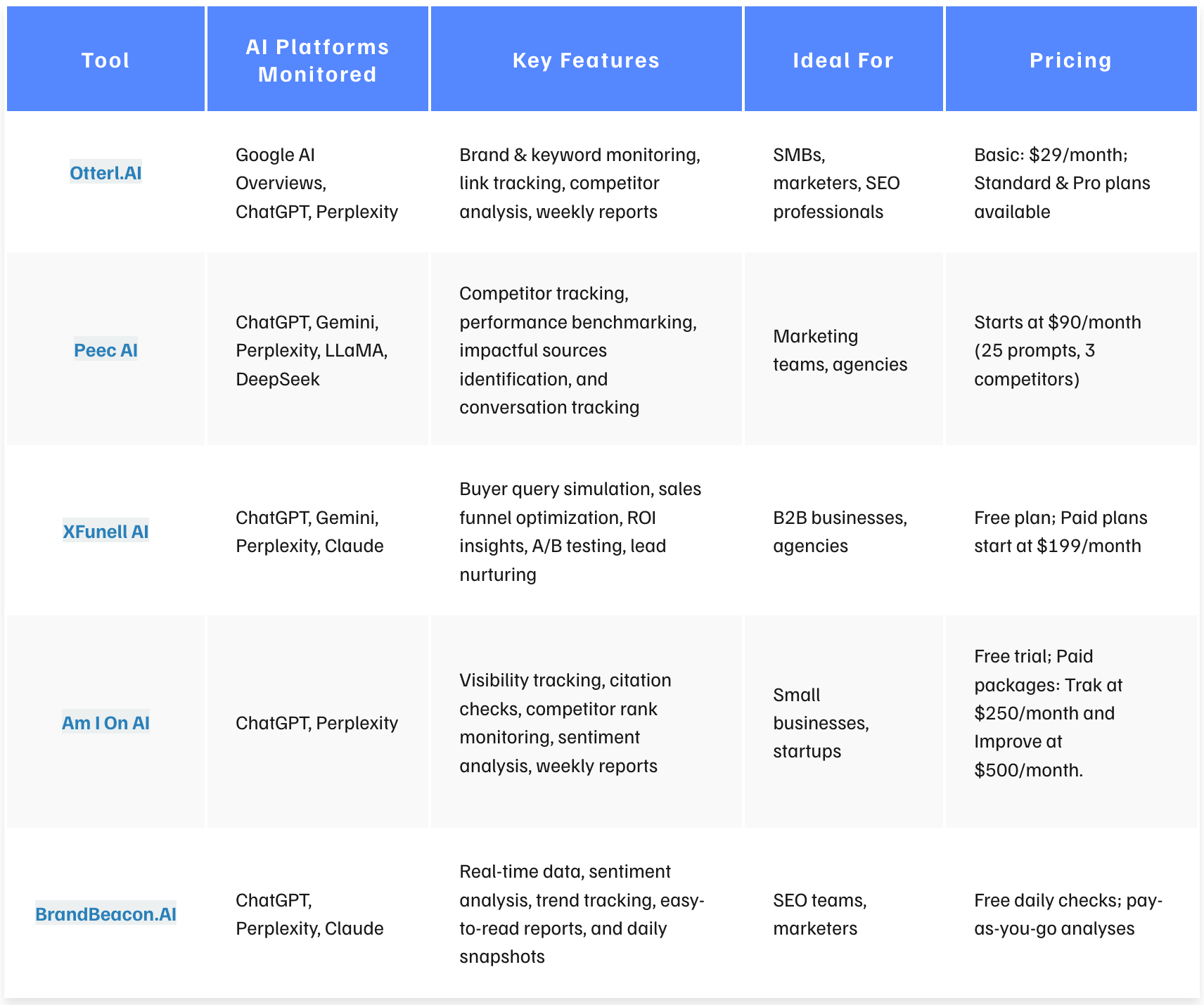
- AI chatbots - Peec AI, Otterly.AI, BrandBeacon.Ai
Most recently, AI chatbots like ChatGPT are gaining fast user adoption and are transforming how people search for and access information. Users are asking more complex questions instead of searching keywords, and the process is more conversational.
AI chatbots aren’t like Google, they don’t rank content traditionally. Instead, they serve and recommend content and websites based on users questions, context, quality, and relevance.
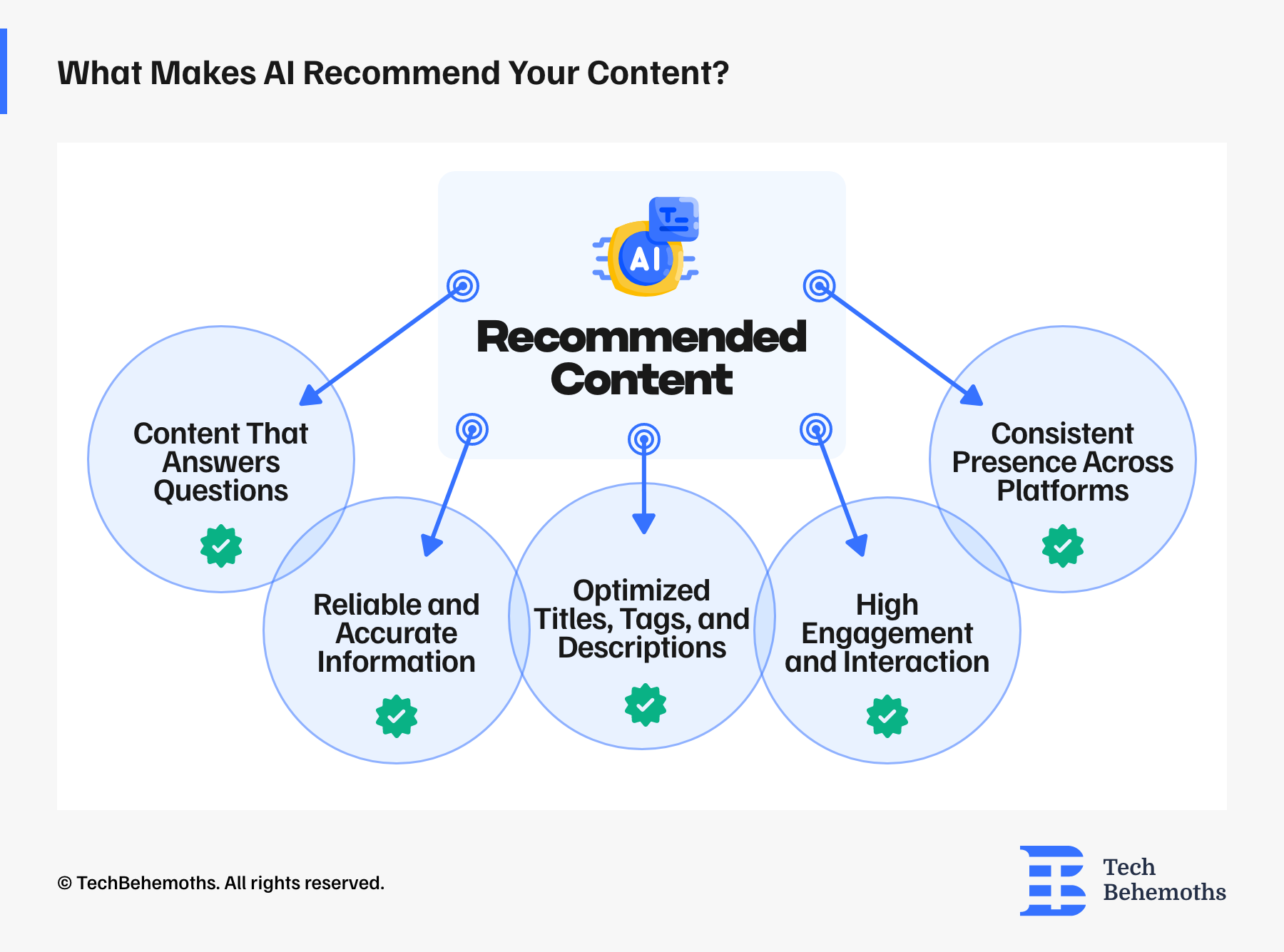
Knowing how good your brand is performing in chatbots and the general sentiment of users when they ask questions about your brand/content is important for your business. This data can help you adjust your marketing activities accordingly and react to possible negative feedback or reviews.
Here is a comparison of some AI chatbot visibility tools:
Key elements for an efficient reputation management strategy
Here are some practical considerations for a successful online reputation management strategy:
1. Define your unique values
Ask yourself some of these questions: what problem are you solving for your customers, why would they want to buy from you and not your competitors? Then tailor your answers/actions to these values
2. Monitor your brand mentions
Use the tools mentioned earlier to track the mentions about your brand on different platforms. Be proactive and respond to positive and negative feedback, reviews, etc.
3. Listen to your customers
Social media platforms, review sites along with your site are feedback channels for your customers. It’s important to listen to your customers' frustrations and positive experiences to adjust your product/service accordingly and communicate in a professional manner.
4. Monitor your competitors
Tracking the online mentions of your competitors is a good way to stay up to date with what’s happening with your competitors and get ideas of new marketing campaigns.
5. Define the key elements
Consider the key elements that are part of your online reputation management:
-
A clear statement of your brand mission/unique value proposition, and social media activities to support them
-
Regular brand related updates using high-quality content
-
Up-to-date positive feedback from customers
-
Internal documentation on how to answer to positive/negative reviews and feedback
-
Fake reviews and spam management rules
-
List of possible reputation risks and how to manage them.
-
Responsibilities distribution among sales, marketing, and support teams. Who is doing what?
If you need help with ORM, consider finding the right agency for your needs, using the Submit your project option on TechBehemoths. It’s free, and there is no obligation to hire.