
There are 2 Companies in Kazakhstan
that provide Online Reputation Management Services!
In 2025, Kazakhstan bids on three tech pillars - Gov Tech, Smart City Tech, and FinTech: these are the top priorities the central authorities have in the long term. Another catalyst of the enhanced digitalization program in Kazakhstan is the Astana Hub, which has over 600 members and is considered the engine of the IT sector of Kazakhstan. The country focuses on AI development and integration in public sectors, following the National AI Development Concept running through 2029.
Discover Top IT Companies in Kazakhstan specialized in Online Reputation Management and other related services. Find the best IT service providers for your projects.
Online reputation management (ORM) is the practice of strategically controlling and enhancing the way a brand, business, or individual is perceived online. It plays a vital role in building customer trust, establishing industry credibility, and driving sales. Key aspects of ORM include effectively responding to negative feedback, getting positive reviews, and closely monitoring brand mentions on various platforms.
Handpicked companies • No obligation to hire • 100% risk-free
Explore Top Online Reputation Management Companies in Kazakhstan

AI-powered content factory: we run 10-50 branded social accounts and ship 1000-10000 posts a month, with human marketers steering strategy.

ITCOMMS - Tech PR Agency in Central Asia, helps both domestic and international IT enterprises with communication strategies, PR, Personal Brand etc
Filter Online Reputation Management Companies in Kazakhstan by Cities
Find the right tech company near you or from a specific city. Some of the best companies might be located in smaller cities.
Find more Online Reputation Management companies around the world
TechBehemoths is the world's most advanced and user-friendly platform to match IT Companies with real clients without hustle.
The ICT in Kazakhstan: Data & Insights
Kazakhstan's high economic growth has been attributable to large and growing oil and gas exports, but some non-export sectors also featured double-digit growth, including construction, banking, and real estate. The IT sector was never a priority for the government-supported economy fields, and thus web industry developed by itself, with small steps, and exclusively based on market requirements.
According to Paylab, the salary in the IT sector in Kazakhstan varies from $565.62/mo - $1,902.39/mo. The average hourly rate, as expected, varies between $4 - $11 for web developers, which means that a local agency may charge slightly more per hour than the official numbers.
Why Work With Kazakh Web Agencies?
Even though there are no visible changes and state-supported policies that would develop the branch, Kazakhstani web agencies still exist and provide the same range of services as Western European ones, but for a considerably lower price.
What to Be Aware of When Working With Kazakh Web Agencies
However, you may want to give a second thought to whether the price range is your main reason, and also explore other options in the region. Even though web services are cheap in Kazakhstan, you may find difficulties in communication, project management, software piracy, and also in project delivery terms.
Are Kazakh Agencies Reliable?
It depends from case to case on how reliable web development and design agencies from Kazakhstan really are. Tech Behemoths don’t interfere in the selection process, but you may consider having a call with all agencies from the country, and also try to avoid agencies based in small cities.
How Does Kazakhstan Relate to Its Neighboring Countries in Terms of IT?
On the background of a well-developed IT sector in Armenia, and a slightly lower IT development sector in Georgia, Kazakhstan faces challenges of exiting the global market and promoting its services and web products. Also, web companies lack substantial state support and government policies that will encourage the development of this branch. On the other hand, the lack of strong competition in the IT sector in this country makes it a good target for IT startups.
All in all, Kazakhstan has a still undiscovered IT potential and hopefully will develop this field in the coming years. Until then, few web agencies struggle to acquire new products and use the latest technologies and lower prices to get a relatively strong presence on the local market.
Kazakhstan IT Market in 2025
As the Digital Kazakhstan program, launched in 2018, is enhanced by other government-supported actions in the ICT sector, Kazakhstan has registered a strong growth and aims even further. In 2025, Kazakhstan bids on three tech pillars - Gov Tech, Smart City Tech, and FinTech: these are the top priorities the central authorities have in the long term. Another catalyst of the enhanced digitalization program in Kazakhstan is the Astana Hub, which has over 600 members and is considered the engine of the IT sector of Kazakhstan. All these put together are considered enough for the moment to boost Kazakhstan's tech industry. Additionally, the country focuses on AI development and integration in public sectors like energy, healthcare, and education, following the National AI Development Concept running through 2029.
What is Online Reputation Management and what are its benefits for your projects?
Online reputation management (ORM) is the practice of strategically controlling and enhancing the way a brand, business, or individual is perceived online. It plays a vital role in building customer trust, establishing industry credibility, and driving sales. Key aspects of ORM include effectively responding to negative feedback, getting positive reviews, and closely monitoring brand mentions on various platforms.
Are you aware that 75% of businesses consider online reviews, comments, and forum posts crucial for their financial stability and reputation?
Why online reputation management is important for your business
-
The way your brand appears online can significantly impact purchasing decisions.
In fact, studies show that 59% of shoppers conduct online research before making a purchase, and a whopping 97% of consumers consult product reviews before buying. This means that if your brand doesn't present itself positively online, you risk losing potential customers.
-
Managing negative reviews is essential for any business.
While negative reviews are unavoidable, actively monitoring and responding to them can have a positive impact on your online reputation. Research has shown that customers who had their complaints addressed within five minutes on social media were more likely to continue making purchases with the company in the future.
-
It provides valuable feedback.
Customer reviews offer valuable feedback that can help identify and address potential issues in your products, services, or overall customer experience. By analyzing and reading through multiple reviews, you can gather useful insights that highlight recurring complaints and guide improvements.
Factors that Contribute to ORM
While every business uses a unique mix to maintain its online reputation, effective ORM should involve combining the following strategies:
-
Owned media - Experiences of both employees and customers, user-generated material, assessments, online seminars, and brand-generated content.
-
Paid media - Lead generation, affiliate programs, native advertising, and sponsored social media postings.
-
Earned media - Public relations, media relations, and influencer marketing.
-
Shared media - Community service and collaborations, co-branding campaigns, and organic social media content.
What is the role of online brand reputation manager
A brand reputation manager maintains a positive online image for a brand. They utilize various online resources to monitor and influence public perception of the brand. This involves analyzing reviews, tracking online mentions, and measuring brand sentiment. By actively managing the brand's online presence, they ensure that the brand maintains a positive reputation among its audience.
TechBehemoths lists over 900 online reputation management service providers. Use the smart filters to find and select the companies you need. You can view their profiles and reach out to them for collaboration or submit your project.
The system will match your peoject requirements with the best brand strategy service providers. Lastly, you can find out more about what is online reputation management and how to develop effectively on TechBehemoths blog.
Where to track your brand mentions and what tools to use?
The web is vast, so finding mentions about your brand requires specific tools. You can monitor your brand mentions and sentiment on different platforms like:
-
Social media - Facebook, Linkedin, Twitter (X)
-
Web and news sites - niche websites/blogs and news sites.
-
Review sites - Trustpilot, Google reviews
-
AI chatbots - ChatGPT, Perplexity,
-
Communities and forums - Reddit, Quora, niche forums
Examples of tools you can use to track the mentions of your brand:
- Social media, community, review sites - BrandMentions, Brand24, Mention.com
- Web and news - Ahrefs, BrandMentions, Brand24
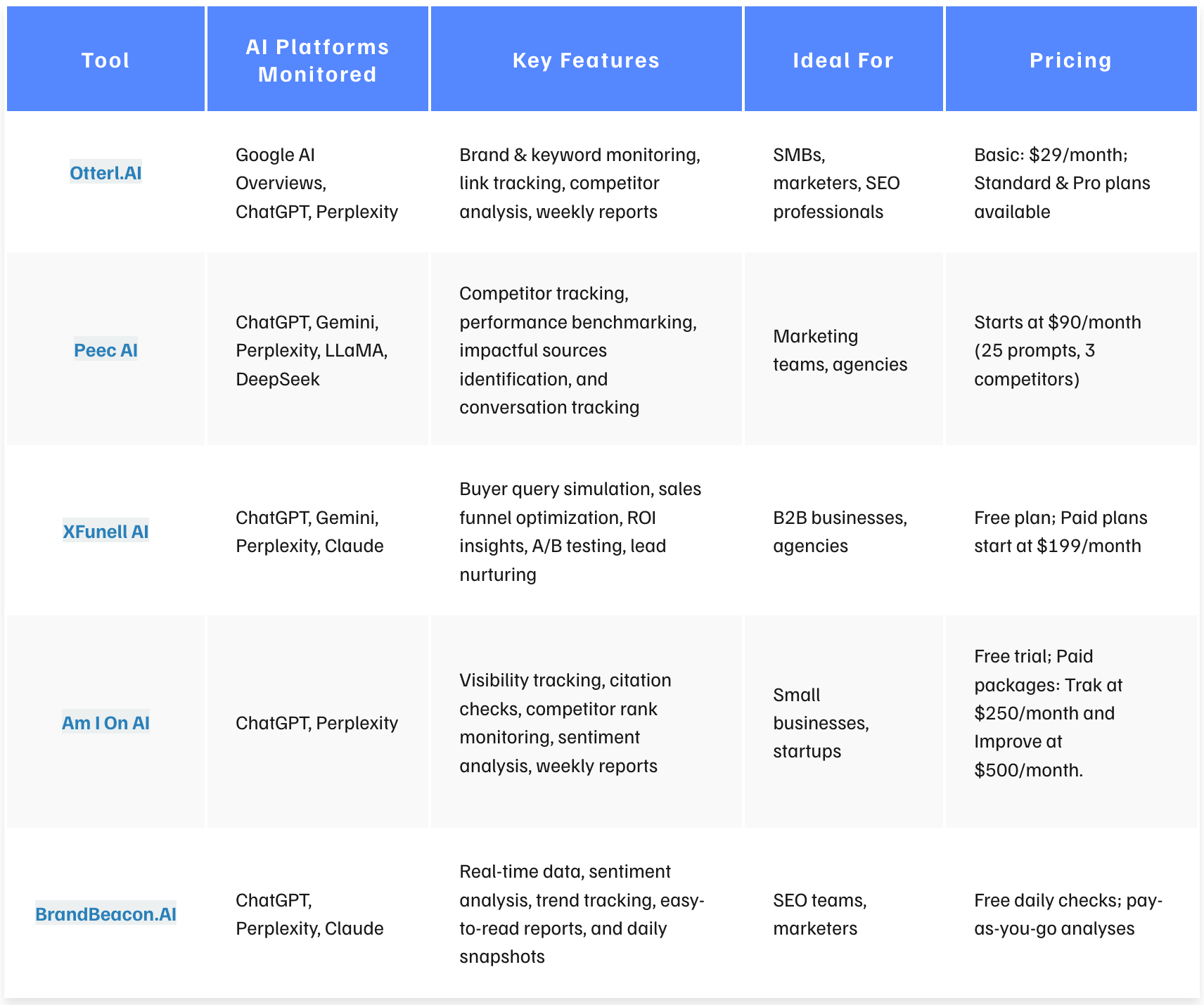
- AI chatbots - Peec AI, Otterly.AI, BrandBeacon.Ai
Most recently, AI chatbots like ChatGPT are gaining fast user adoption and are transforming how people search for and access information. Users are asking more complex questions instead of searching keywords, and the process is more conversational.
AI chatbots aren’t like Google, they don’t rank content traditionally. Instead, they serve and recommend content and websites based on users questions, context, quality, and relevance.
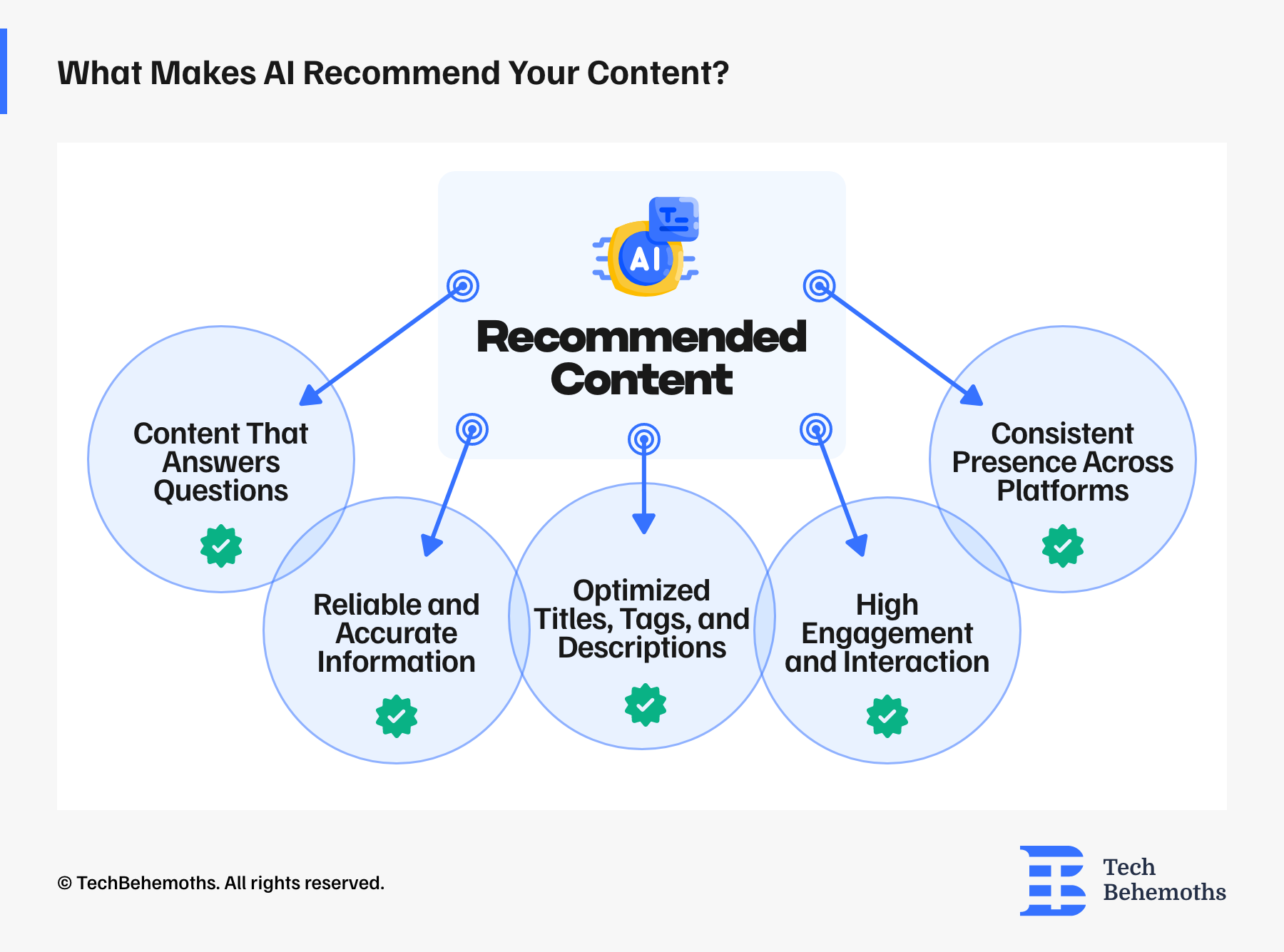
Knowing how good your brand is performing in chatbots and the general sentiment of users when they ask questions about your brand/content is important for your business. This data can help you adjust your marketing activities accordingly and react to possible negative feedback or reviews.
Here is a comparison of some AI chatbot visibility tools:
Key elements for an efficient reputation management strategy
Here are some practical considerations for a successful online reputation management strategy:
1. Define your unique values
Ask yourself some of these questions: what problem are you solving for your customers, why would they want to buy from you and not your competitors? Then tailor your answers/actions to these values
2. Monitor your brand mentions
Use the tools mentioned earlier to track the mentions about your brand on different platforms. Be proactive and respond to positive and negative feedback, reviews, etc.
3. Listen to your customers
Social media platforms, review sites along with your site are feedback channels for your customers. It’s important to listen to your customers' frustrations and positive experiences to adjust your product/service accordingly and communicate in a professional manner.
4. Monitor your competitors
Tracking the online mentions of your competitors is a good way to stay up to date with what’s happening with your competitors and get ideas of new marketing campaigns.
5. Define the key elements
Consider the key elements that are part of your online reputation management:
-
A clear statement of your brand mission/unique value proposition, and social media activities to support them
-
Regular brand related updates using high-quality content
-
Up-to-date positive feedback from customers
-
Internal documentation on how to answer to positive/negative reviews and feedback
-
Fake reviews and spam management rules
-
List of possible reputation risks and how to manage them.
-
Responsibilities distribution among sales, marketing, and support teams. Who is doing what?
If you need help with ORM, consider finding the right agency for your needs, using the Submit your project option on TechBehemoths. It’s free, and there is no obligation to hire.