
Summary
Building an AI product without validation is one of the fastest and, at the same time, most widespread ways to waste time and budget. In this blog post, we explain how to validate your AI idea before you start the development process.
We cover the importance of confirming there's a real problem to solve, testing market demand, analyzing competitors, and checking whether customers are willing to pay.
“95% of AI projects fail.” You’ve probably seen this statistic in clickbait headlines. We are not sure about this statistic, and keep in mind that the exact number probably depends on how the “failure” is defined. However, we know for sure that launching an AI product is a complex, expensive, and risky process.
At Empat, we work with AI projects every day, and we’ve seen that even brilliant ideas can fail without proper product validation. Sometimes AI products fail because of technical problems. But it often fails because customers never needed it. In such a case, if you predict this failure's reason from the very beginning, a huge amount of time, money, nerves, and human resources can be saved.
To support our idea, we’ve researched market studies. According to MIT's Project NANDA, which analyzed more than 300 enterprise AI initiatives in 2025, only around 5% of generative AI pilots reach production.
That is why we insist that AI product validation should happen before development. Its goal is not to predict the future with certainty. Validation helps to replace assumptions with evidence and determine whether an idea has enough real demand to justify building it.
In this article, we’ll explore how to validate an AI product concept before investing heavily in development. We’ll cover the whole process from identifying a real problem and testing market demand to analyzing competitors, validating willingness to pay, and using AI for a fast and effective way to research.
Start With the Problem, Not With the Technology
Most failed AI products deal not with poor technologies. The problem is that such failures happen because of the mistaken assumption that people or businesses really need the product.
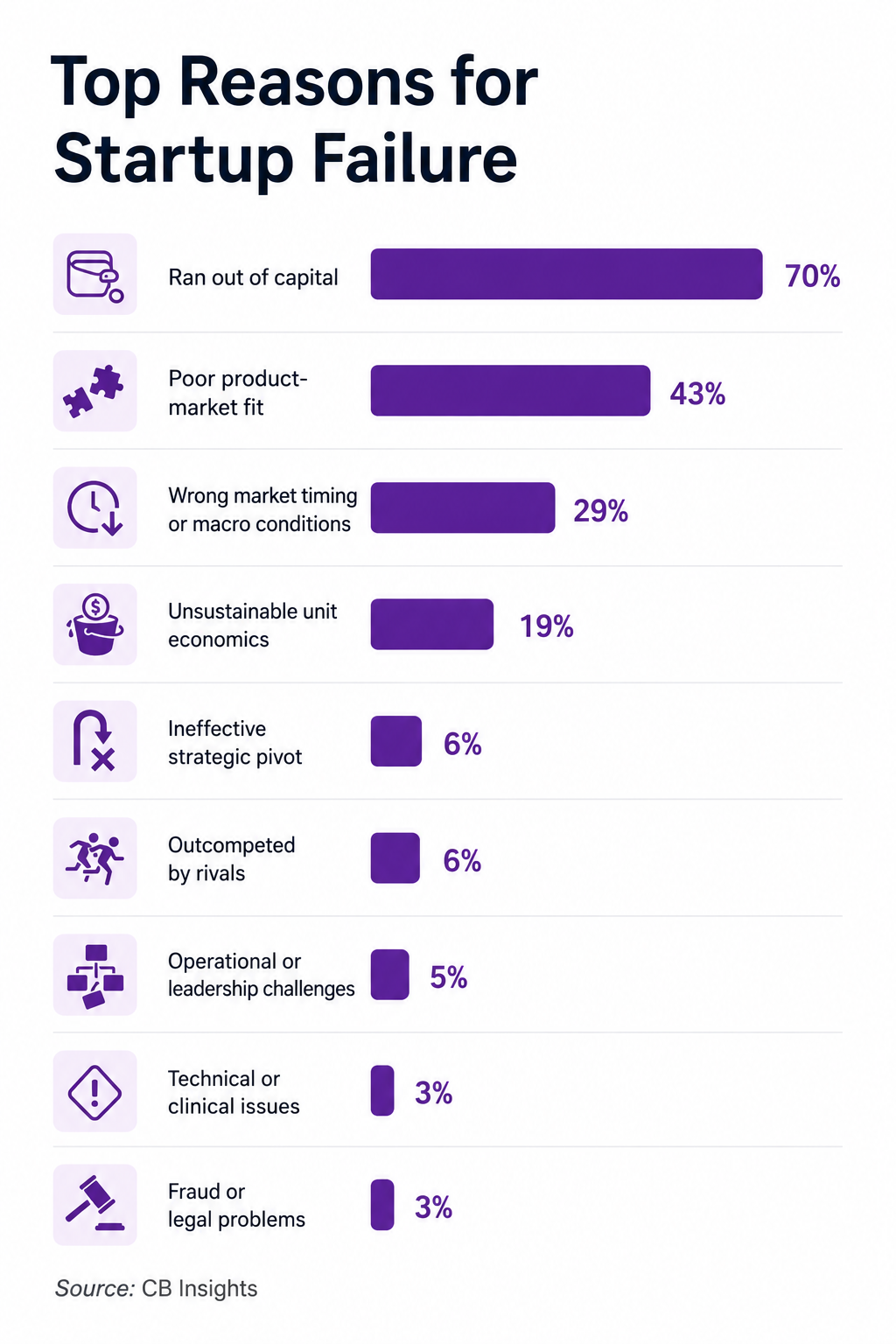
CB Insights' research also places poor product-market fit at the top reasons for the startup's failure. They state that 43% of failures are caused by weak product-market fit ahead of market timing, macro conditions, having the wrong team, or technical issues.
For AI products, the situation is even more critical. There is a risk that you can easily get lost behind impressive technical results. A model that classifies documents with 94% accuracy may sound successful, but it still may not have commercial value if no one actually has a problem that needs this solution.
That’s why, before building even a prototype, we ask clients to describe the problem they or their customers have. We try to figure out what exactly users are struggling with today, how often they face these challenges, and how they deal with them now.
During the communication, we may find out that the current solution is a spreadsheet, a manual process, a competitor’s tool, or even nothing at all. And that last answer is especially important. If people are not actively trying to solve the problem and simply live with it, that may be a sign that the problem is not painful enough to justify a new product. It's a signal to investigate this issue deeper or in more detail.
Test Demand Before You Start Coding
Once the problem is real, the next question is whether enough people care about it in order to justify a build. This is where a lot of teams skip straight to development. It may seem that launching a landing page or a waitlist is less exciting than shipping products. And that’s a huge mistake that usually costs a significant budget.
For example, a basic demand test that includes a landing page describing the solution, a short outreach campaign, and a handful of paid pilot conversations typically costs a few hundred dollars and a week or two of effort from a small team. On the contrary, failed product development costs tens of thousands. Besides, it’s critical to consider the engineering time, infrastructure, and opportunity cost.
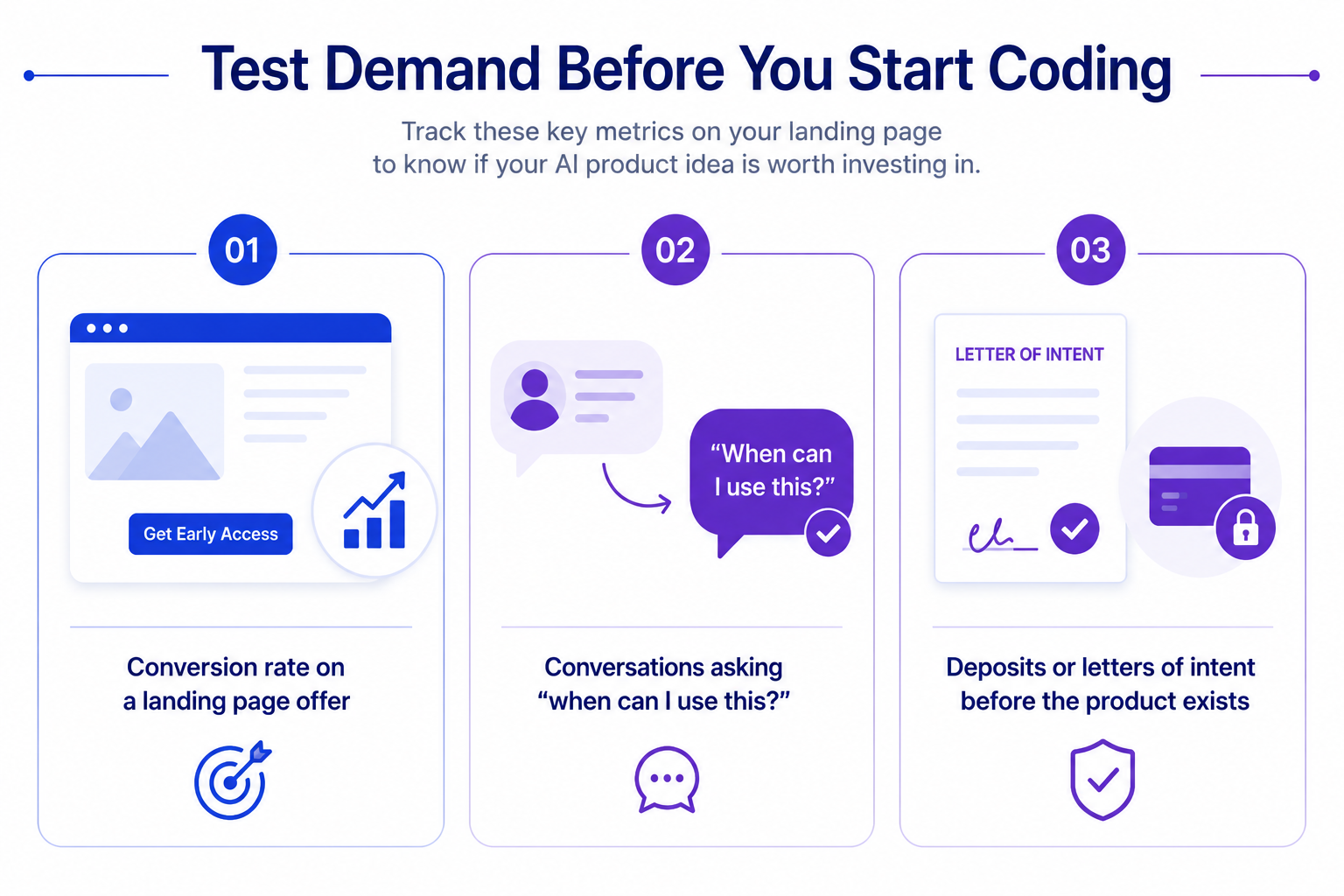
So, if you are testing the demand through a landing page, consider the following metrics in order to identify whether the idea is worth investing in:
-
conversion rate on a landing page offer;
-
the share of outreach conversations that end with someone asking "when can I use this;
-
the fact that people are willing to put down a deposit or sign a letter of intent before the product exists.
At Empat, we often work on AI software development projects where validation is part of the process, not an afterthought.
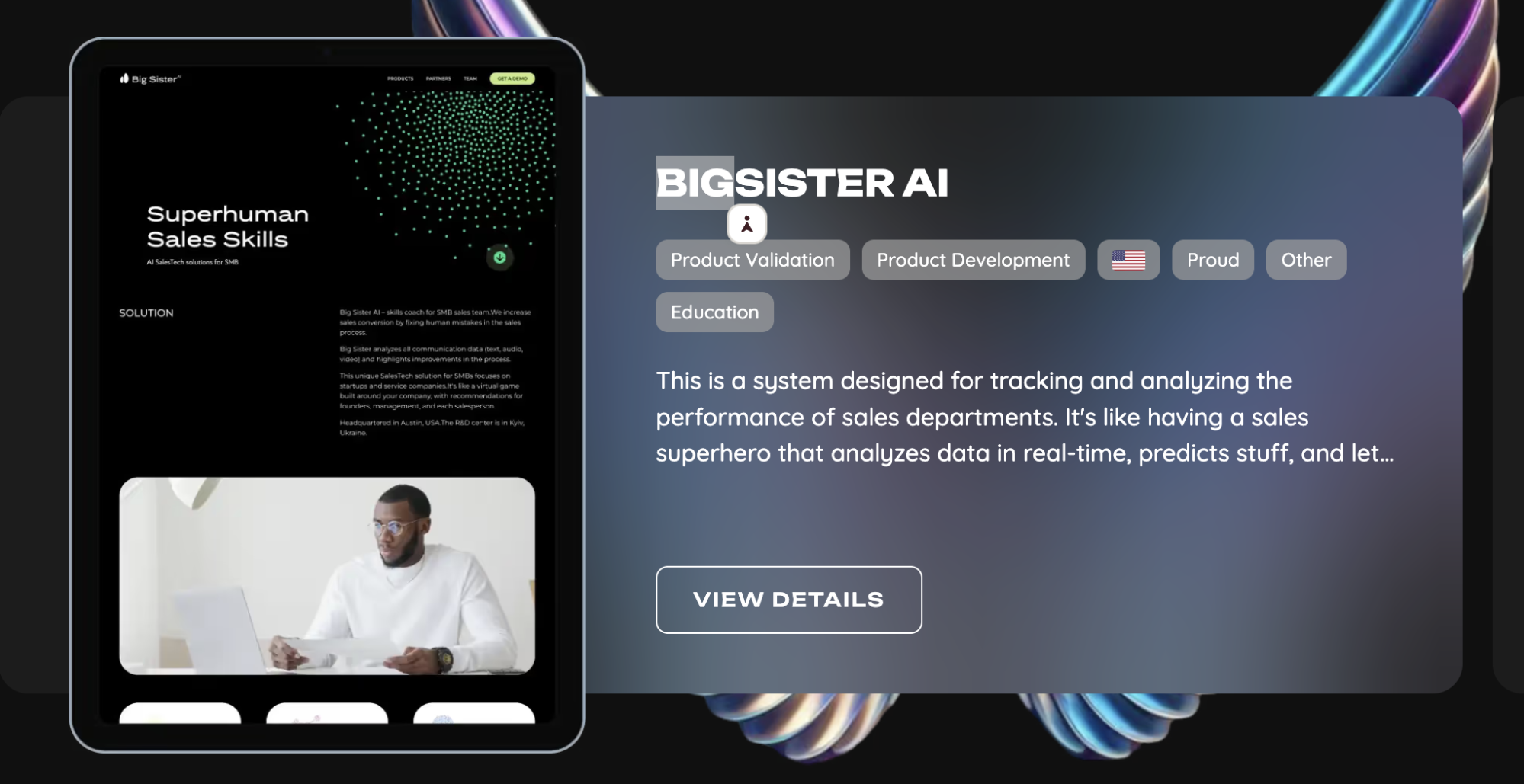
For example, when working on Bigsister AI, we tested the prototype with potential users before moving to the development stage. We gathered people who matched the previously defined target audience. We also used interviews and usability testing alongside the prototype to see how potential customers actually interacted with the product. This helped us collect more than just their opinions. It allowed us to see how users perceived the product and identify the barriers they encountered while using it. These insights helped the team refine the concept and make development decisions based on real user behavior.
Identify the Competition Level
Validating demand is only half of the deal. The other half is to understand whether someone is already meeting that demand better than you could.
This is a step founders underestimate more than any other. According to the Crayon State of Competitive Intelligence Report 2026, 44% of companies report having little or no visibility into their competitors. Businesses often don’t look closely enough to determine who else is solving the same problem.
AI products carry a specific version of this risk. Many "AI-powered" tools are thin interfaces sitting on top of the same handful of foundation models. It means the underlying capability is rarely a moat.
The differentiation has to come from somewhere else. You may find competitive advantage in proprietary data, a workflow only you understand, a distribution channel, or a level of specialization. A general-purpose tool is definitely not worth building. A serious competitive analysis needs to answer one question clearly — if a well-funded competitor read this pitch tomorrow, could they rebuild the core of it in a quarter? If the answer is yes, the plan needs another layer of defensibility before it's worth funding.
Find Out If People Will Actually Pay
This is the spot where the most confident-sounding validation often falls apart. People are generous with praise for an idea they'll never actually buy, and the gap between the two rarely shows up until money is actually on the table. It's a pattern Empat has watched play out across client pitches.
Directly asking how much the customer is ready to pay for a product or service cannot demonstrate the real purchase behavior. People often express interest in an idea without being willing to spend money on it. That's why pricing decisions should be based on real commitments rather than hypothetical answers.
That’s why we recommend structuring pricing research based on trade-offs and real commitments. You may use a small deposit, a paid pilot, or a signed letter of intent with a number attached. These would definitely be more reliable signs of willingness to pay rather than a single yes-or-no question about price.
Once there is enough evidence that customers need the product and are willing to pay for it, the focus can shift from validation to building. An AI app builder such as Rocket.new can help teams turn validated requirements into a working application, offering a faster way to move from a confirmed concept to product development.
Let AI Help You With the Research About AI
There's a useful irony here: the same technology you're trying to validate can also make the validation faster.
Work that used to take a research agency four to six weeks, including synthesizing interviews, tracking competitor moves, and structuring survey data, can now be compressed to under a day using AI-assisted research tools. AI-powered research is several times faster than traditional methods. AI also allows for faster research and more effective research. That’s why founders can afford to run three or four rounds of validation instead of one, refining the problem statement and pricing hypothesis each time.
McKinsey's 2025 survey found that 88% of organizations now use AI regularly in some part of their workflow. However, the tools are only as good as the questions a founder feeds them. AI can summarize a hundred customer interviews in minutes. However, it cannot decide which hundred people are worth interviewing, or notice when an answer is polite rather than honest. That part still belongs to the AI software development team building the product.
Conclusion
AI can significantly increase the effectiveness of product development. However, it can't create demand where it doesn’t exist. The strongest AI products appear not as a result of the work of the most AI-skilled teams or the use of the most advanced models. They’re built by experts who understand their customers' needs and pain points.
Validating the problem, testing the real demand, and challenging the assumptions before you start the AI software development process are the key steps for a successful AI project launch. They help you decrease risks and avoid investing huge amounts of money in projects that no one needs, or no one is ready to pay for.
Related Questions & Answers
AI product validation is the process of confirming that an AI solution solves a real customer problem. It needs to take place before development begins. It involves testing market demand, evaluating competitors, validating pricing, and ensuring that AI is the right technology for the problem.
The core goal of product validation is to reduce the risk of building a product that users don't actually need.
You don't need a finished product to validate the market demand. You may start with launching customer interviews, a landing page, waitlists, prototype demonstrations, paid pilot programs, or letters of intent. These methods provide real market feedback before investing in full-scale development.
Yes. AI can significantly speed up market research. You may use AI to summarize customer interviews, analyze competitors, organize survey results, and identify market trends. However, founders still need to ask the right questions and make strategic decisions based on the results.
Would you like to read more about this?