TechBehemoths SEO Expert Insights 2026


Summary
Discover practical insights from three SEO experts on what drives long-term organic growth, where to invest your SEO budget, how to evaluate an SEO provider, and what content continues to perform in the era of AI Overviews.
Between AI Overviews, evolving search behavior, and increasing competition, businesses are asking the same questions:
How long does SEO really take? Where should we invest first? What still works in the age of AI?
To answer these questions, we invited three experienced SEO professionals from different markets to share their perspectives. While each works with different clients and industries, several common themes emerged.
Meet the Experts
Gary Wells is the Managing Director of Webmaster Services Hawaii, a U.S.-based digital agency specializing in web development, local SEO, and online business growth. With years of experience helping businesses strengthen their digital presence, Gary focuses on building high-performing websites and data-driven SEO strategies that deliver measurable business results, particularly in competitive local markets.
Sonia Algaba Benito is a Senior SEO Consultant at IMAP Internet Marketing Agency, a digital marketing agency based in Spain that specializes in SEO and online growth strategies. With a background in journalism and audiovisual communication, she combines content expertise with technical SEO to help businesses improve their online visibility through tailored, performance-driven strategies.
Tareq Bin Ali is the Director and COO at Notionhive, a full-service technology and digital marketing agency with offices in Canada and Bangladesh. With a background in engineering and entrepreneurship, he combines technical expertise with strategic thinking to help businesses build sustainable digital growth. Throughout his career, he has worked with organizations of all sizes, from Silicon Valley startups to Fortune 500 companies, delivering tailored technology and marketing solutions.
Let's begin with the first question.
What should businesses realistically expect from SEO in the first 12 months?
Gary Wells, Webmaster Services Hawaii
The first 12 months are about building a compounding foundation, not flipping a switch. In the first one to three months, the on-page work should be completed — content revised wherever it's needed so every page is clearly speaking to the relevant keywords it's meant to rank for, title tags and structure tightened, technical issues and cannibalization resolved, and Google Business Profile and citations made consistent. By the end of that stretch, you should already see a measurable improvement in your current rankings — terms moving up positions in Search Console even before they hit page one. It's foundational work, but it shows up in the data.
Months four through eight is where that foundation starts converting to traction — long-tail and lower-competition terms begin ranking on page one, impressions and clicks climb, and the early leads come in. The competitive money terms are still maturing. By months nine through twelve, you should see meaningful gains on those harder terms, a real lift in organic traffic, and a lead pipeline that's becoming predictable rather than occasional.
Here in Hawaii, the local markets are small enough that progress often shows faster than national averages suggest — a single island market has far fewer serious competitors than a mainland metro, so once the on-page foundation is solid you can climb the local pack and organic results quickly. The trade-off is that search volumes are low, so the real win is measured in qualified local leads and calls, not raw traffic numbers. The honest expectation: SEO is a 12-to-18-month investment, but you should see measurable ranking movement within the first quarter, and a steadily dropping cost-per-lead as the year goes on.
Sonia Algaba Benito, IMAP Internet Marketing Agency
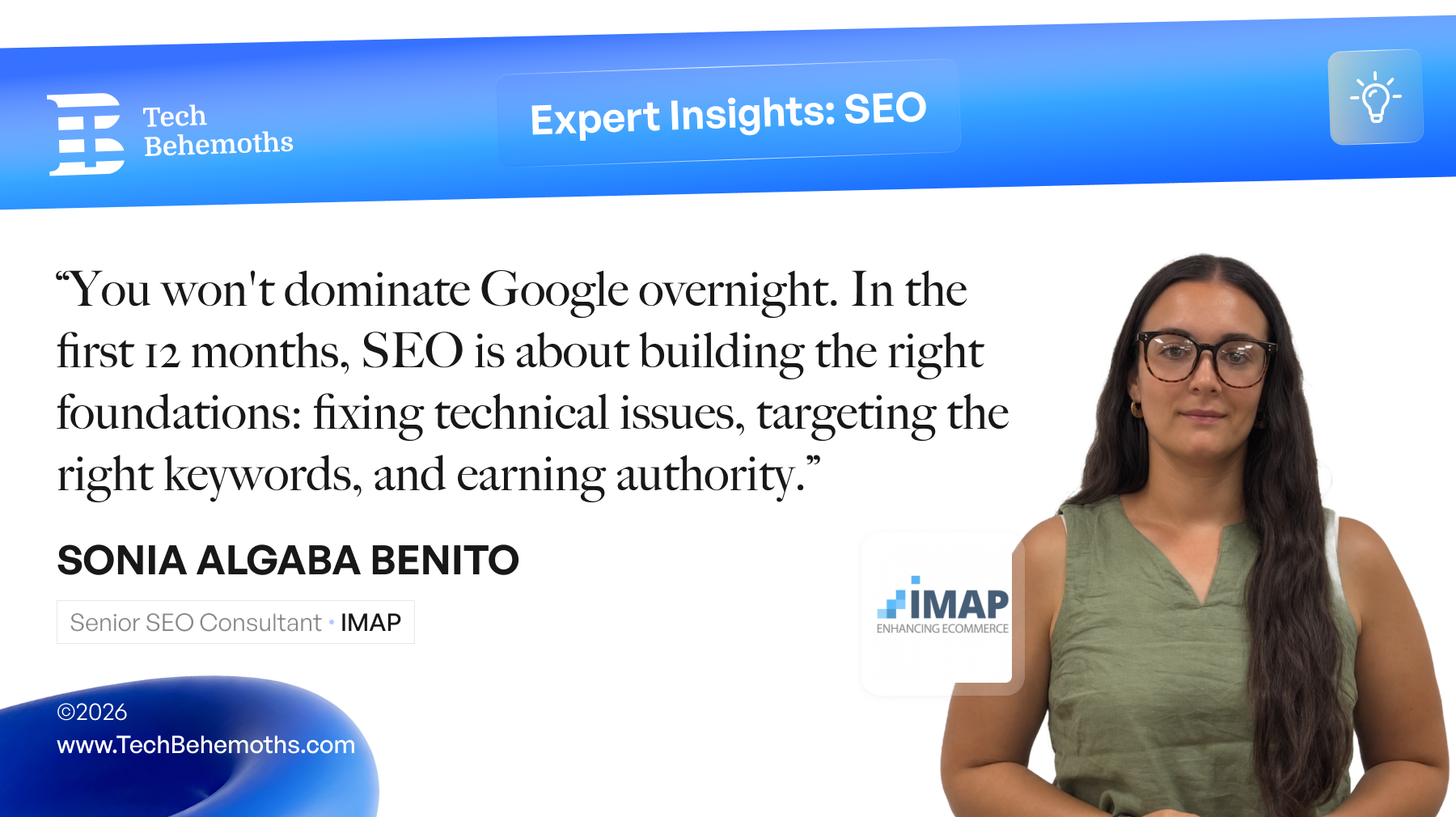
In the first 12 months, SEO is about building foundations — fixing technical issues, targeting the right keywords, and earning authority. You won't dominate Google overnight, but between months 6 and 12, you should start seeing growth in leads, sales, or inquires. It’s a long-term investment, and the returns build up over time.
Tareq Bin Ali, Notionhive
Honestly, the first six months are mostly invisible work that does not show up in traffic yet. You are fixing technical debt, cleaning up site architecture, building topical depth, and earning the first real links. If someone promises you a traffic spike by month three, they are either lucky or lying.
What you should expect by month twelve is momentum, not a finish line. Rankings climbing into striking distance, qualified traffic trending up, and a content and authority foundation that compounds in year two. SEO is a flywheel, not a switch.
The clients who win are the ones who treat the first year as building the asset rather than renting traffic. I tell people to judge the first twelve months by leading indicators such as indexation, impressions, ranking distribution, and branded search growth, not by whether revenue tripled. That comes later, and when it comes, it is durable.
If you had a limited SEO budget, where would you invest first?
Gary Wells, Webmaster Services Hawaii
With a limited budget, I'd put it where the return shows up fastest and closest to home: local SEO and your website content. For a Hawaii business, the map pack is the highest-leverage place you can be. Most local searches never scroll past those top three map results, so getting your Google Business Profile fully optimized — accurate categories, consistent name-address-phone, real photos, steady review generation, regular posts — is the single best dollar you can spend early. It moves faster than organic and it puts you in front of people who are ready to call or walk in.
Right alongside that, I'd lock down your citations and profiles across the platforms that actually matter for local trust — Yelp, your Facebook business page, Bing, and the local directories — all carrying the exact same business information. Inconsistent listings quietly drag down your local rankings, and cleaning them up is cheap relative to what it returns. These profiles also feed the signals Google leans on to decide who belongs in the map pack here in the islands.
Then the rest goes into website content. Your service pages and location pages need to clearly speak to the keywords you're trying to rank for and to the specific islands and communities you serve — Honolulu, the neighbor islands, wherever your customers actually are. Strong, locally-relevant content is what earns you the organic rankings beneath the map pack and increasingly what gets you surfaced in AI Overviews and AI search. So the order is simple: get the map pack and your local profiles working first because that's where the fastest leads come from, then build the website content that compounds underneath it.
Sonia Algaba Benito, IMAP Internet Marketing Agency
First, make sure Google can actually find and understand your site — this is technical SEO. Then, focus on a few high-intent keywords you can realistically win.
Tareq Bin Ali, Notionhive
Technical foundation first, and one genuinely excellent piece of content per month, in that order.
You cannot outpublish a broken site. If Google cannot crawl it, render it, and trust it, everything else is wasted spend. So, I would spend the first chunk making sure the site is fast, crawlable, properly structured, and free of the silly stuff that quietly kills you, such as orphaned pages, duplicate templates, thin doorway content, and messy redirects.
After that, I put money into depth over breadth. One page that fully owns a topic and actually deserves to rank beats ten mediocre ones that dilute your authority. With a tight budget, I would rather rank for ten things that drive revenue than chase a thousand vanity keywords. And I would protect a small slice for digital PR or a single strong link play, because authority is still the hardest thing for competitors to copy.
What SEO activities do companies still underestimate today?
Gary Wells, Webmaster Services Hawaii
Two big ones, and companies underestimate both because neither feels like “SEO” in the traditional sense.
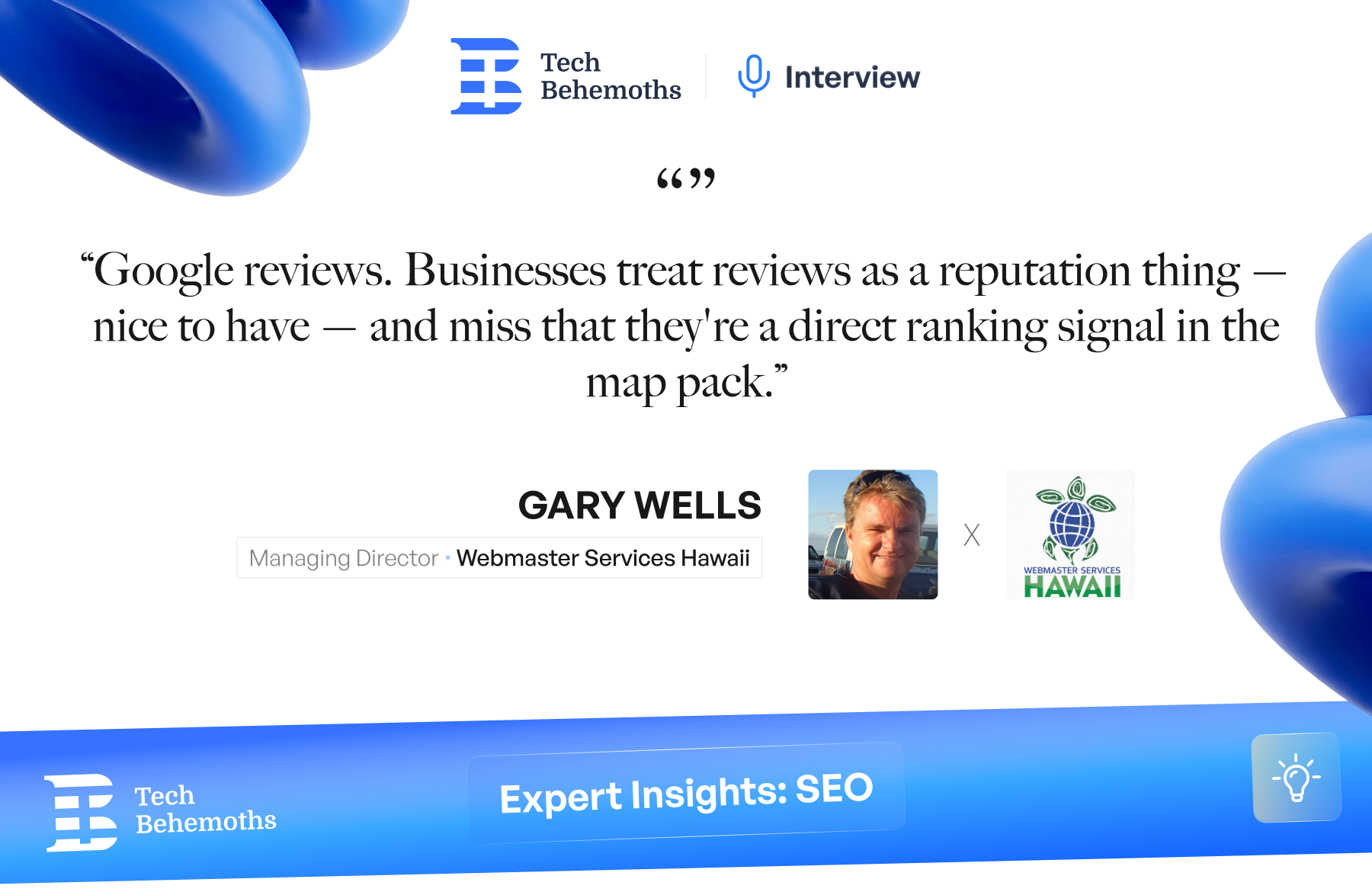
The first is Google reviews. Businesses treat reviews as a reputation thing — nice to have, good for vanity — and miss that they're a direct ranking signal in the map pack. The volume of reviews, how recent they are, how often you're getting new ones, and whether you actually respond to them all feed into how Google ranks you locally. A steady stream of fresh reviews will move you up the local pack faster than almost anything else, and it does double duty: it ranks you higher, and it convinces the person reading them to choose you over the competitor right below. Most companies ask for reviews once in a while and forget about it. The ones that build a consistent, systematic habit of requesting them pull ahead, especially in a small market like Hawaii, where a handful of genuine local reviews carries real weight.
The second is content that actually speaks to the customer. Companies still write for themselves — stuffing in keywords, listing services, talking about how long they've been in business — instead of answering the real questions a customer is asking before they buy. Good content meets people where they are: what does this cost, how does the process work, what makes you different, why should I trust you. When you write that way, you naturally cover the keywords you're trying to rank for, you earn the click, and you give Google's AI Overviews something worth pulling from. Thin, self-focused pages get skipped by both the customer and the algorithm. The businesses that win are the ones treating every page as a real answer to a real question their Hawaii customers are typing in.
Sonia Algaba Benito, IMAP Internet Marketing Agency
Internal linking and content consolidation. Most companies keep publishing new content, but never fix what they already have. Updating old pages, merging thin content, and improving site structure can move rankings faster than creating something new, and it costs far less.
Tareq Bin Ali, Notionhive
The Brand. Ten years in, I am more convinced than ever that brand search and brand authority are the strongest long-term SEO signals there are. Google increasingly rewards entities that people actually look for by name, and you cannot fake that.
And internal linking and content maintenance are the unglamorous work. Everyone wants to publish. Almost nobody wants to prune, update, consolidate, or fix the links between what they already have. A smart internal linking structure can lift a whole section of a site without writing a single new word, and refreshing decaying content often beats producing new content. The other one is search intent. People still write what they want to say instead of what the searcher actually needs in that moment, then wonder why a perfect article does not convert.
How can a company tell if an SEO provider is actually delivering value?
Gary Wells, Webmaster Services Hawaii
The honest test is whether the work is producing measurable results that touch the bottom line — not rankings in isolation, but leads. Phone calls, contact form submissions, quote requests, people actually reaching out. A good provider ties their work back to that. If your form fills and calls are trending up over time and the provider can show you that movement, they're delivering. If they can only point to a keyword that climbed three spots but nothing is happening in your inbox or on your phone, that's a warning sign.
The second piece is valid, transparent reporting. You should be getting regular reports that show real data — where your leads are coming from, which pages and keywords are driving them, how your map pack and organic rankings are moving, and how that all connects to contacts generated. The key word is valid. A lot of providers send reports padded with vanity metrics — impressions, “rankings improved,” traffic numbers with no context — that look impressive but don't tell you whether you're getting business. Good reporting is clear enough that you can look at it and understand exactly what you're paying for and what it returned. If a provider is vague about their reporting, won't give you access to your own Search Console or Google Business Profile data, or can't connect their activity to actual leads, you're likely not getting the value you think you are.
Bottom line: leads you can measure, and reporting you can trust and actually understand. Everything else is secondary.
Sonia Algaba Benito, IMAP Internet Marketing Agency
Look beyond rankings. Are you getting more qualified traffic? More leads? Ask for a clear connection between SEO actions and business results. If your provider can't explain what they did and why it matters, that's a red flag.
Tareq Bin Ali, Notionhive
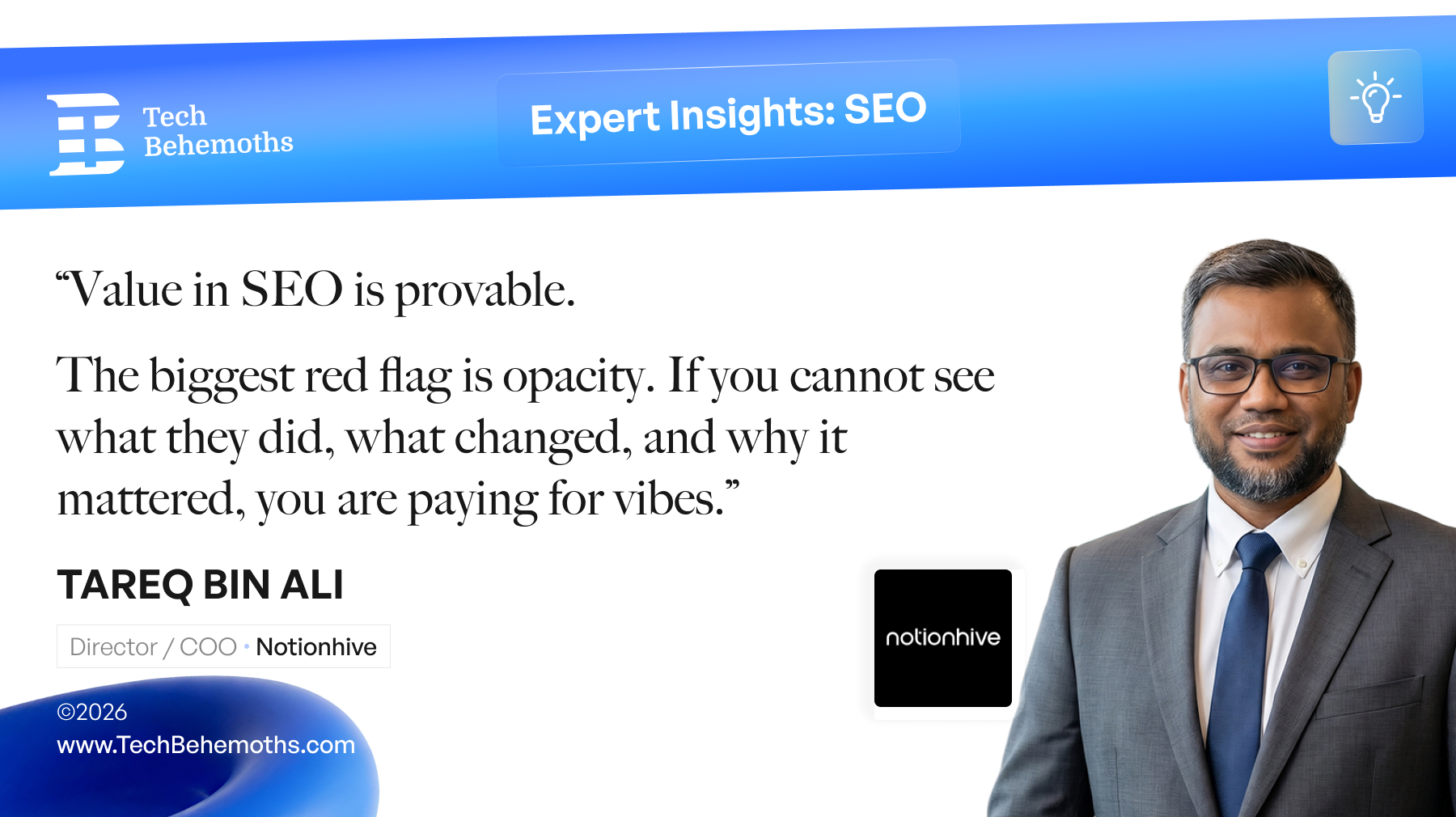
Look at whether they tie their work to business outcomes, not just rankings screenshots. A good provider talks about qualified traffic, conversions, revenue, and pipeline, and they are comfortable showing you the months where things dipped and explaining why. The biggest red flag is opacity. If you cannot see what they did, what changed, and why it mattered, you are paying for vibes.
Ask them to walk you through their reasoning, not just their results. Real practitioners can explain the why behind every recommendation, and they will happily tell you what they are not doing and why. Be wary of anyone guaranteeing rankings, anyone whose deliverable is a pile of low-quality links, and anyone who cannot connect their activity to your bottom line. Value in SEO is provable. If it is not being proven to you, that tells you something.
With AI Overviews taking over search results, what type of content still gets clicks?
Gary Wells, Webmaster Services Hawaii
The content that still earns the click is content that answers real questions the way a real person would ask them. AI Overviews are pulling from question-and-answer content, which makes FAQs more important than they've ever been — but only if they're built right. The mistake most businesses make is writing FAQs for themselves, in stiff, keyword-stuffed phrasing nobody actually types. What gets pulled into an AI Overview is a question framed the way a customer genuinely asks it — “how much does NEMT transportation cost on Oʻahu,” not “NEMT pricing information.” Match the real question, give a clear, direct answer underneath it, and you become the source the AI quotes.
But the deeper point is this: AI Overviews answer the simple, factual stuff at the top of the page, and that's fine — that was never traffic that converted anyway. The clicks still go to the content that the overview can't fully satisfy. When someone needs to compare options, see your specific pricing, understand a process that applies to their situation, look at your work, read your reviews, or actually contact a local business they can trust, they click through. So the winning strategy is two layers working together: well-structured Q&A and FAQ content phrased the way customers really ask, so you get cited and surfaced — and substantial, locally-relevant pages underneath that give the customer a reason to come to your site rather than settle for the summary.
For Hawaii businesses, there's an added edge here. AI Overviews lean on local relevance and trusted local signals, and the islands are a small enough market that genuinely local, specific content — your service areas, your community, real answers to what local customers ask — stands out where generic mainland content gets passed over. The businesses that win in AI search are the ones that sound like they actually serve their island and answer the exact questions their customers are asking.
Sonia Algaba Benito, IMAP Internet Marketing Agency
Content that requires a decision — comparisons, reviews, local services, anything with a human experience behind it. AI can summarize facts, but it can't replace trust. Brands that show real expertise and real opinions still win clicks, because people act on them.
Tareq Bin Ali, Notionhive
This is the question of the moment, and the data is sobering. AI Overviews now appear on roughly half of all queries, up sharply over the past year, and close to 65 percent of Google searches now end without a click at all. But here is the nuance the panic headlines miss. The users who do click through after seeing an AI Overview tend to convert noticeably better, because they have already had their basic questions answered and are seeking depth.
So the content that still earns the click is content that the AI cannot satisfy on its own. Original research, real data, firsthand experience, strong opinions, case studies, tools, and anything with genuine expertise behind it. If your page just rehashes what is already on page one, the Overview replaces you.
If your page is the source the Overview has to cite, you win twice, with visibility in the summary and the high-intent click. My whole strategy now is built around being citable and being irreplaceable. Lead with a clear, direct answer so AI can quote you, then back it with proof and depth no model can synthesize. Surface-level content is dead. Distinctive, evidence-backed expertise is more valuable than it has ever been.
All Three Experts Agreed That:
-
SEO requires patience and long-term commitment.
-
Technical SEO should come first, followed by high-quality, targeted content.
-
Maintaining and improving existing content deserves as much attention as creating new content.
-
Rankings alone don't measure SEO success. Business results do.
-
Original, experience-driven content matters more than ever in AI search.
Thank you to Gary Wells (Webmaster Services Hawaii), Sonia Algaba Benito (IMAP Internet Marketing Agency), and Tareq Bin Ali (Notionhive) for sharing your expertise and contributing to TechBehemoths SEO Expert Insights 2026.
Looking for SEO Company?
Check our list of top SEO companies and find the right partner for your business.
Did you enjoy reading the interview?
I absolutely love embracing new opportunities and connecting with people. Every project is a chance to analyze, create, and work until I am satisfied with the results. Bringing creativity into every aspect of my work offers a fresh perspective on turning ideas into reality. Paying attention to the details is key because it's the little things that truly make all the difference.
Discover more TechBehemoths Insights
Learn practical tips and insights about IT Companies, how to find the right company for your projects.
Read the latest news about Market Trends and fresh Interviews.