How Tech Companies Get Discovered Online in 2026? Survey Insights


Summary
How are customers finding tech companies?
- 88.2% identify Google Search as a customer discovery channel.
- 87.6% have adjusted their SEO and visibility strategies because of AI search.
- 92.4% say potential customers check a company’s website before making contact.
- 77.2% believe AI-powered search will have the greatest impact on customer discovery over the next three years.
The full survey shows which channels bring visibility, what builds customer trust, and where companies plan to invest next.
As more people use AI tools to search for information, tech companies are paying closer attention to how visible they are across different online channels.
They are also looking for ways to appear in Google results, AI Overviews, and recommendations from tools like ChatGPT, Gemini, Claude, and Perplexity.
To understand how customers are finding tech companies today, TechBehemoths surveyed 2,900 industry leaders and professionals from 65 countries between August 17 and 31, 2026.
We asked which channels bring companies the most visibility and new business opportunities, and what has changed over the past 12 months. We also looked at where they plan to invest next, what they expect over the next three years, and what would happen to their customer acquisition if Google Search disappeared tomorrow.
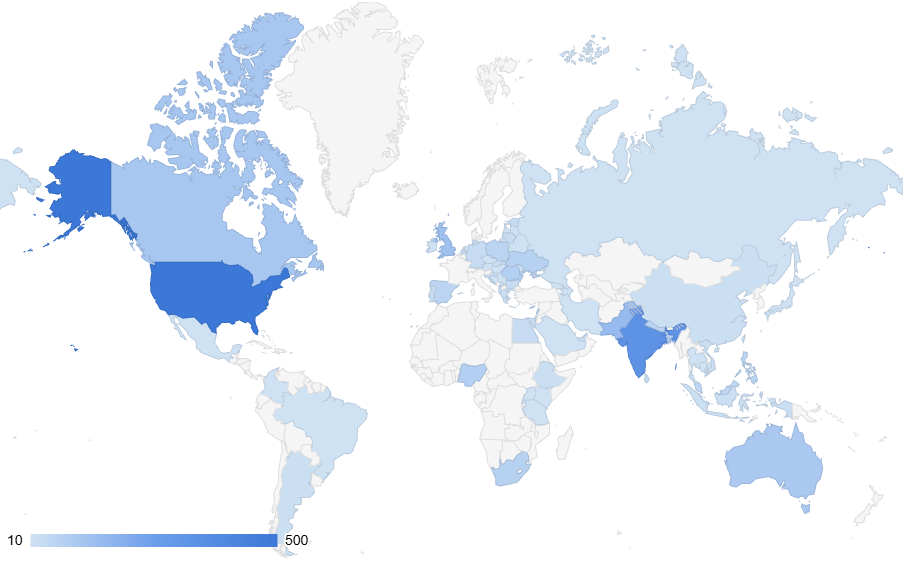
Survey Respondents’ Profile
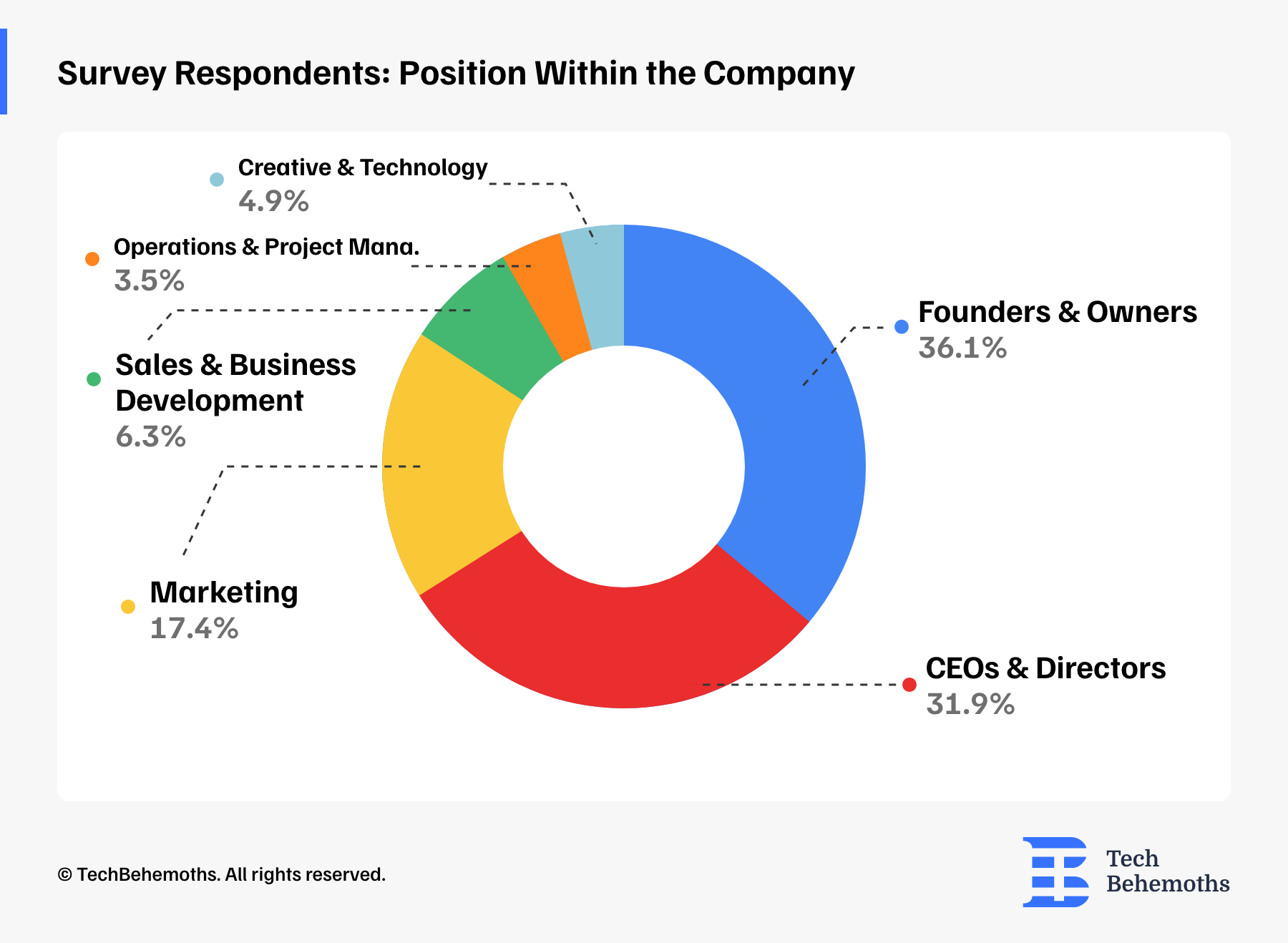
Position Within the Company
Company decision-makers account for 68% of survey respondents:
- 36.1% are founders or owners
- 31.9% are CEOs or directors
Marketing professionals represent 17.4%, while another 14.7% hold roles in sales, operations, creative, and technology.
This gives the survey a strong business perspective. The answers come mainly from people who decide where their companies invest, how they attract customers, and which channels are producing results.
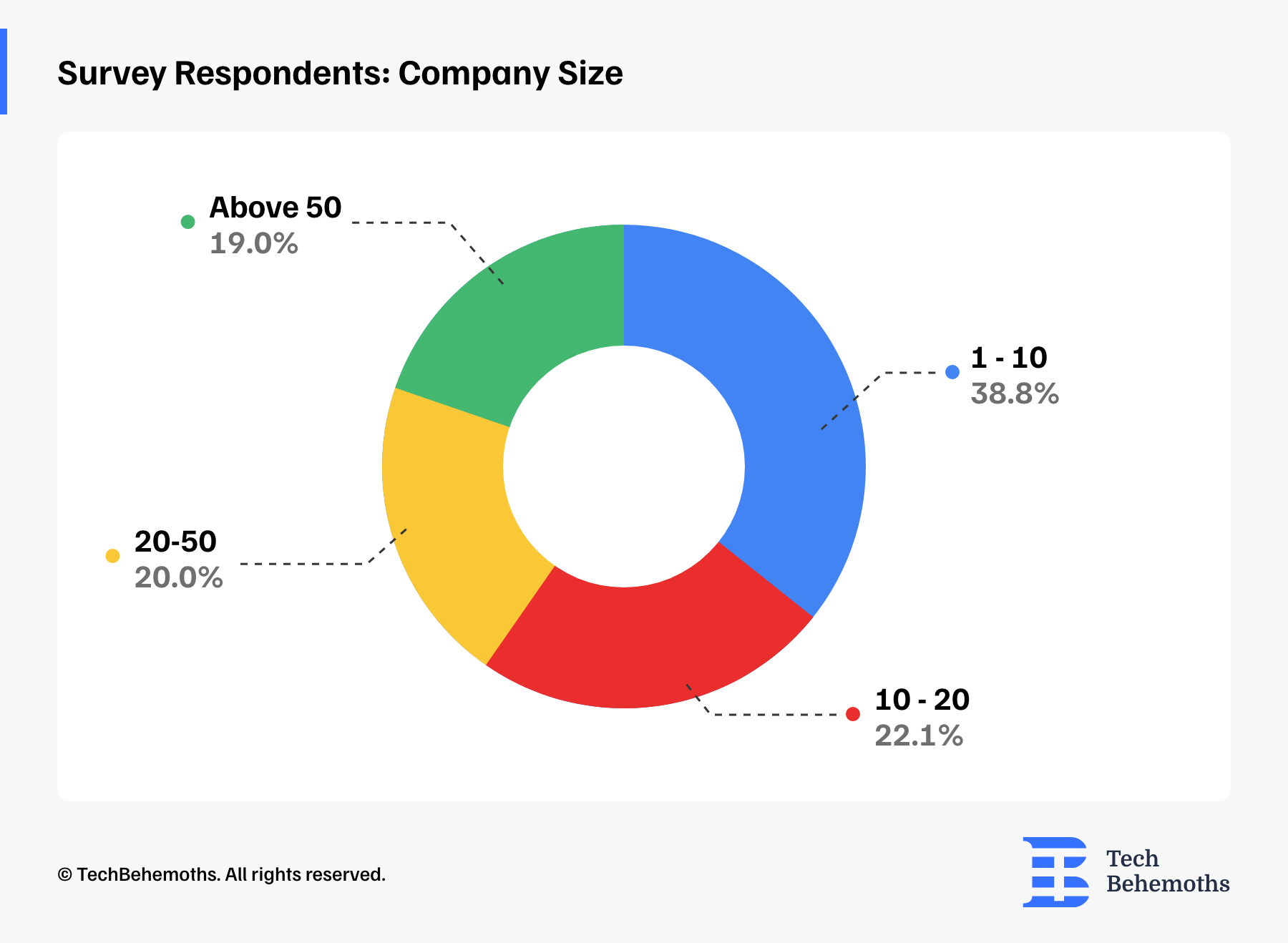
Company Size
Nearly 61% of responding companies have up to 20 employees, while the other 39% includes 20% with teams of 20–50 employees and 19% with more than 50 employees.
The survey captures the experiences of small and growing tech companies, where visibility can significantly influence growth, as well as larger companies with established customer acquisition processes.
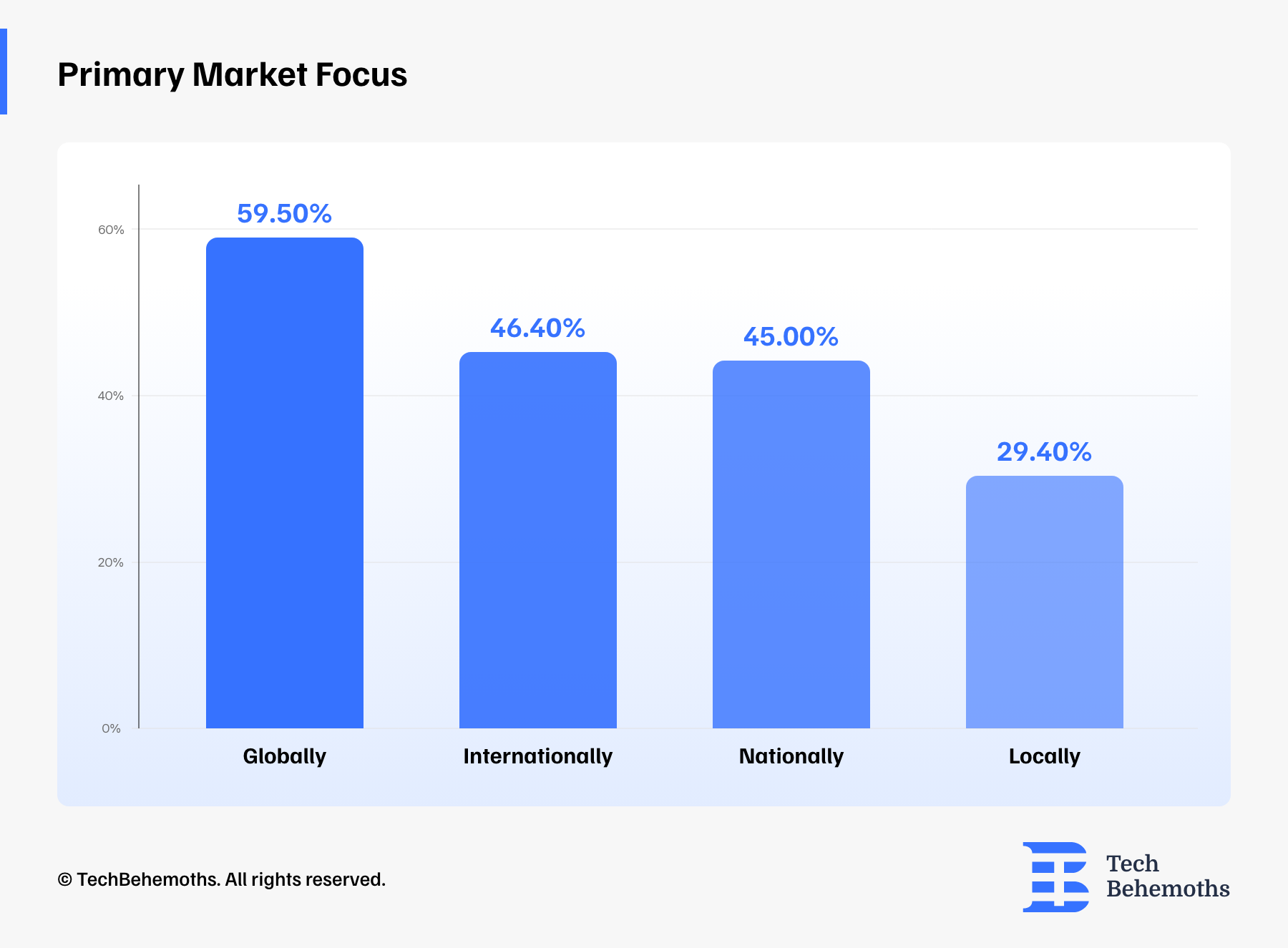
Primary Market Focus
Most responding companies look beyond their home markets. 59.5% operate globally, while 46.4% focus on international markets.
National markets remain almost equally important at 45%. Local markets have the smallest share, with 29.4% of companies focusing on them.
Primary Business Model
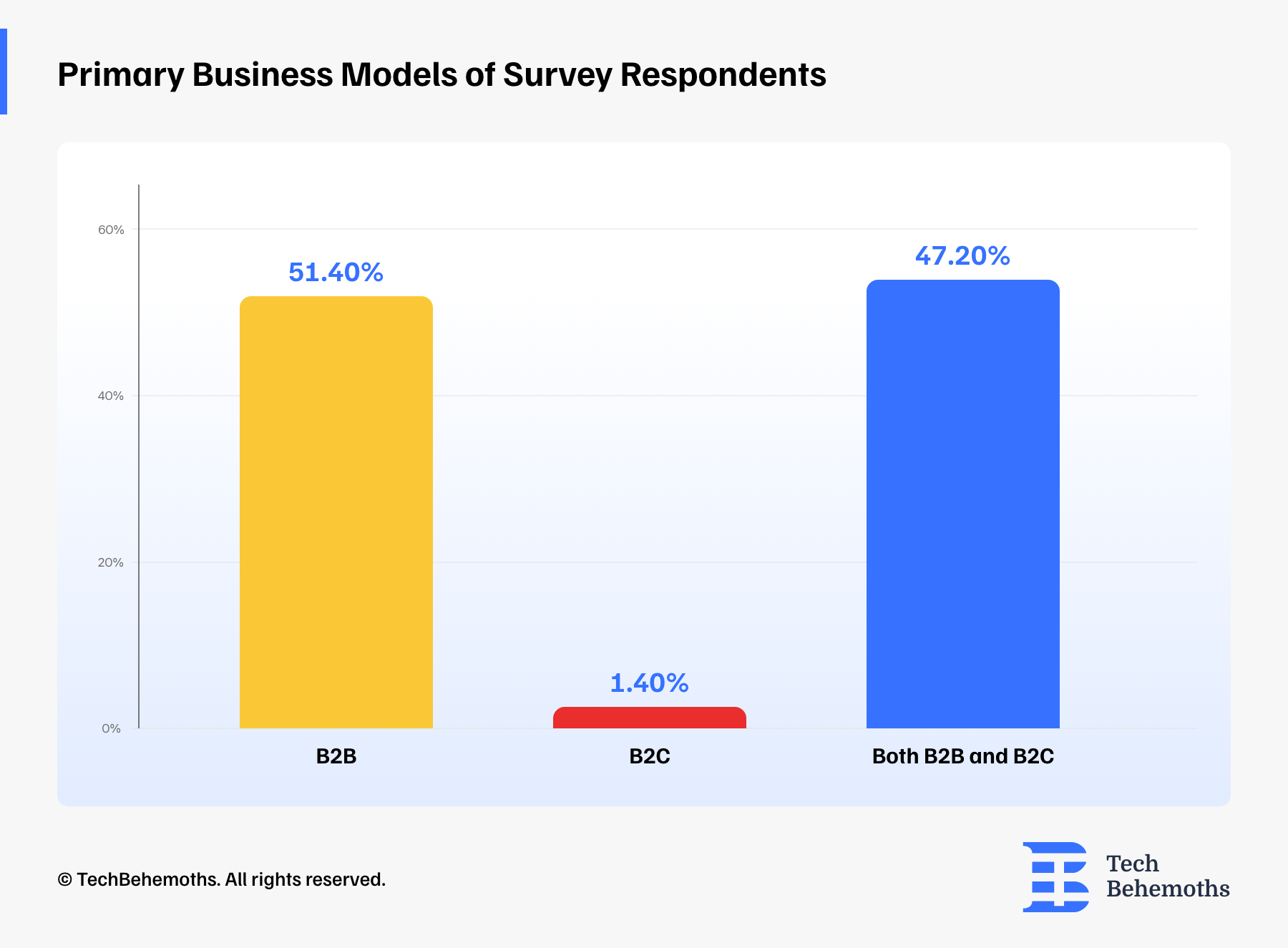
51.4% of respondents represent companies operating exclusively in B2B, while 47.2% serve both businesses and consumers. Only 1.4% focus solely on B2C.
Overall, 98.6% have a B2B component, so the results mainly reflect how companies attract and earn the trust of business clients.
Now that we understand the profile of the participating companies, we can move on to the survey findings.
How Potential Customers Discover Tech Companies
Search, Referrals, and AI Lead the Way in Customer Discovery
Google Search remains the leading discovery channel, selected by 88.2% of respondents.
Referrals and word of mouth rank second at 73.4%, signaling that personal recommendations remain important when choosing a tech partner.
LinkedIn (66.8%) and AI tools (65.4%) are nearly tied. The small gap between them (under 1.5 percentage points) suggests AI-based discovery has reached a level of adoption comparable to an established professional platform.
Around half of respondents mention Google Maps/Google Business Profile (50.5%) and online directories (49.8%), while 44.6% cite review platforms.
These figures may suggest a credibility-checking behavior that happens after initial discovery. Customers may first hear about a company through search, AI, or a recommendation, but they often use third-party sources to check its credibility before making contact.
Among social platforms, LinkedIn leads by a clear margin. Instagram (33.6%) and Facebook (31.8%) play a secondary role, while YouTube (15.2%) and TikTok (10%) are used far less.
Paid channels rank below organic ones: paid search at 26%, paid social at 18.7%.
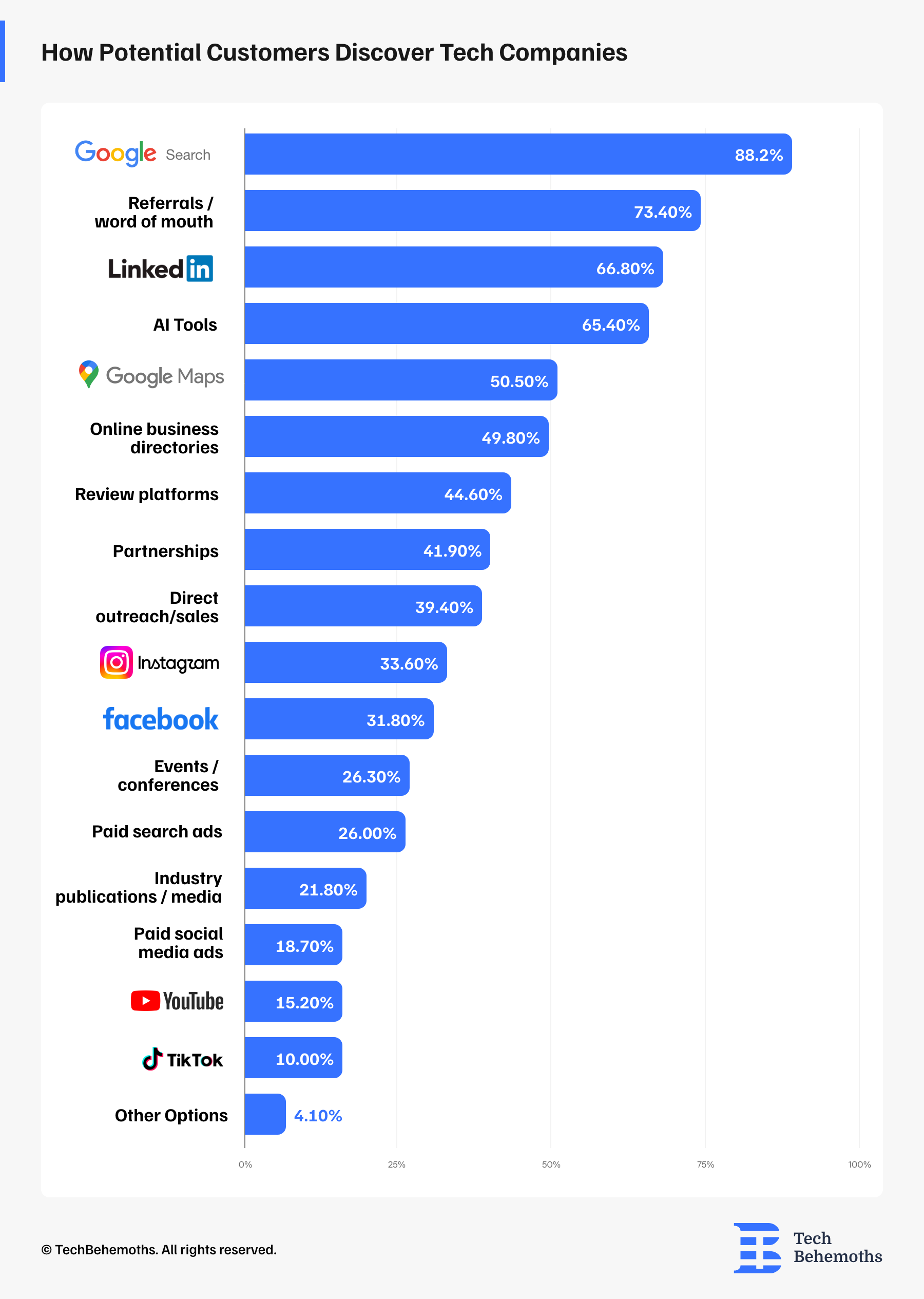
Respondents could select multiple channels, so the percentages do not add up to 100%.
Top Channels Generating New Business Opportunities
55.1% of New Business Opportunities Come from Google Search and Referrals
Being visible through a channel does not mean it will be the main source of new business. Although customers discover companies across many platforms, most opportunities come from just two: Google Search (29.1%) and referrals or word of mouth (26%). Together, they generate the largest share of inquiries, leads, and potential clients.
The reason is likely different for each. Google reaches people who are already searching for a service, while referrals reduce the uncertainty involved in choosing a tech partner. One captures demand, while the other builds trust.
AI tools rank third at 13.1%. This is well below the 65.4% who say customers discover them through AI, suggesting that AI currently plays a larger role in visibility than in generating direct opportunities. It may introduce a company to potential customers without being the final channel they use to make contact.
The same difference is even clearer for LinkedIn. While 66.8% see it as a discovery channel, only 4.5% name it as their main source of new business. LinkedIn appears to support awareness and company research more often than direct customer acquisition.
Google Maps (3.1%), business directories (2.1%), and review platforms (2.1%) also fall below their discovery figures. Their role seems to be supportive: helping potential customers confirm a company’s location, reputation, and credibility before reaching out through another channel.
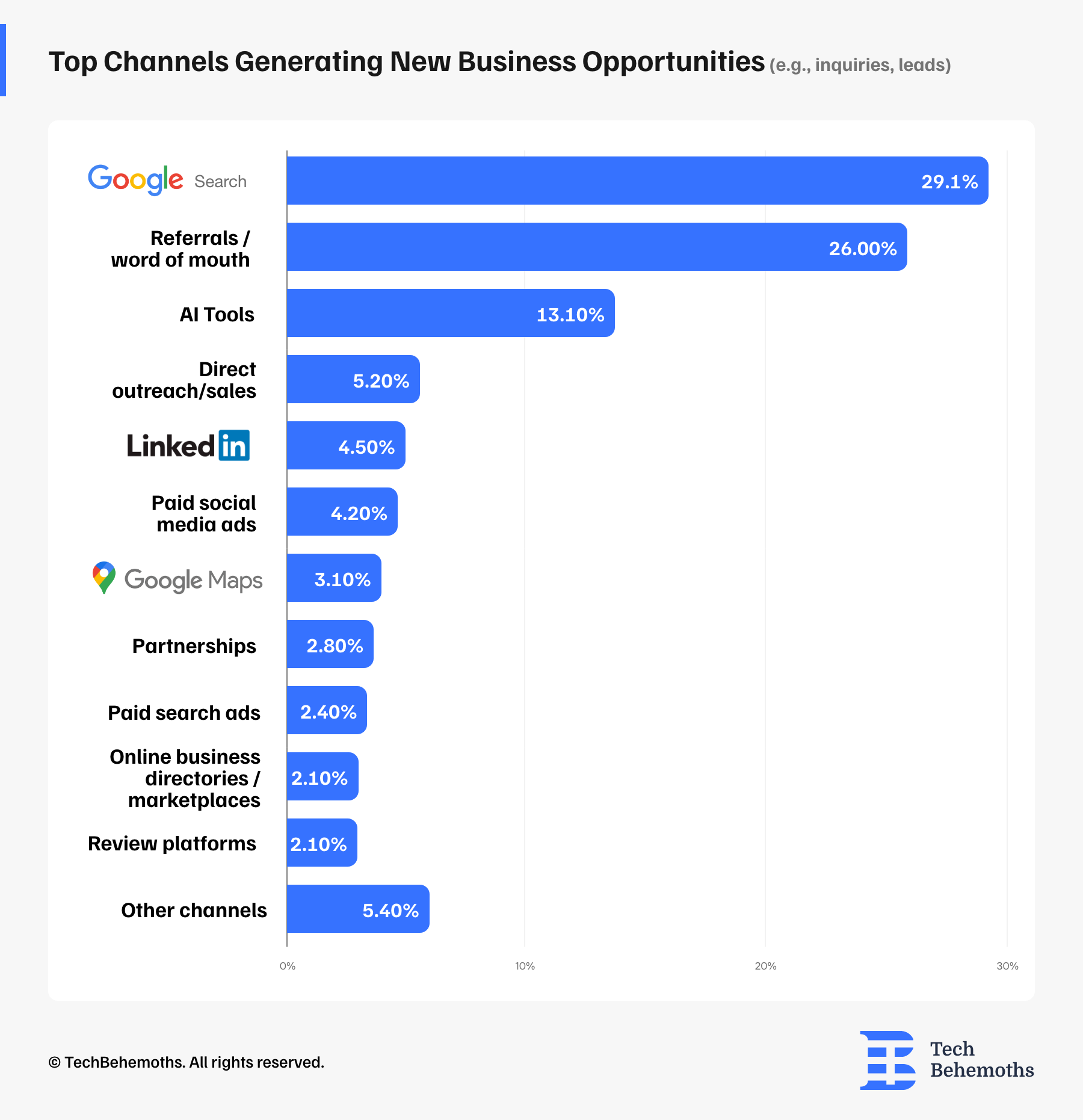
Respondents could select multiple channels, so the percentages do not add up to 100%.
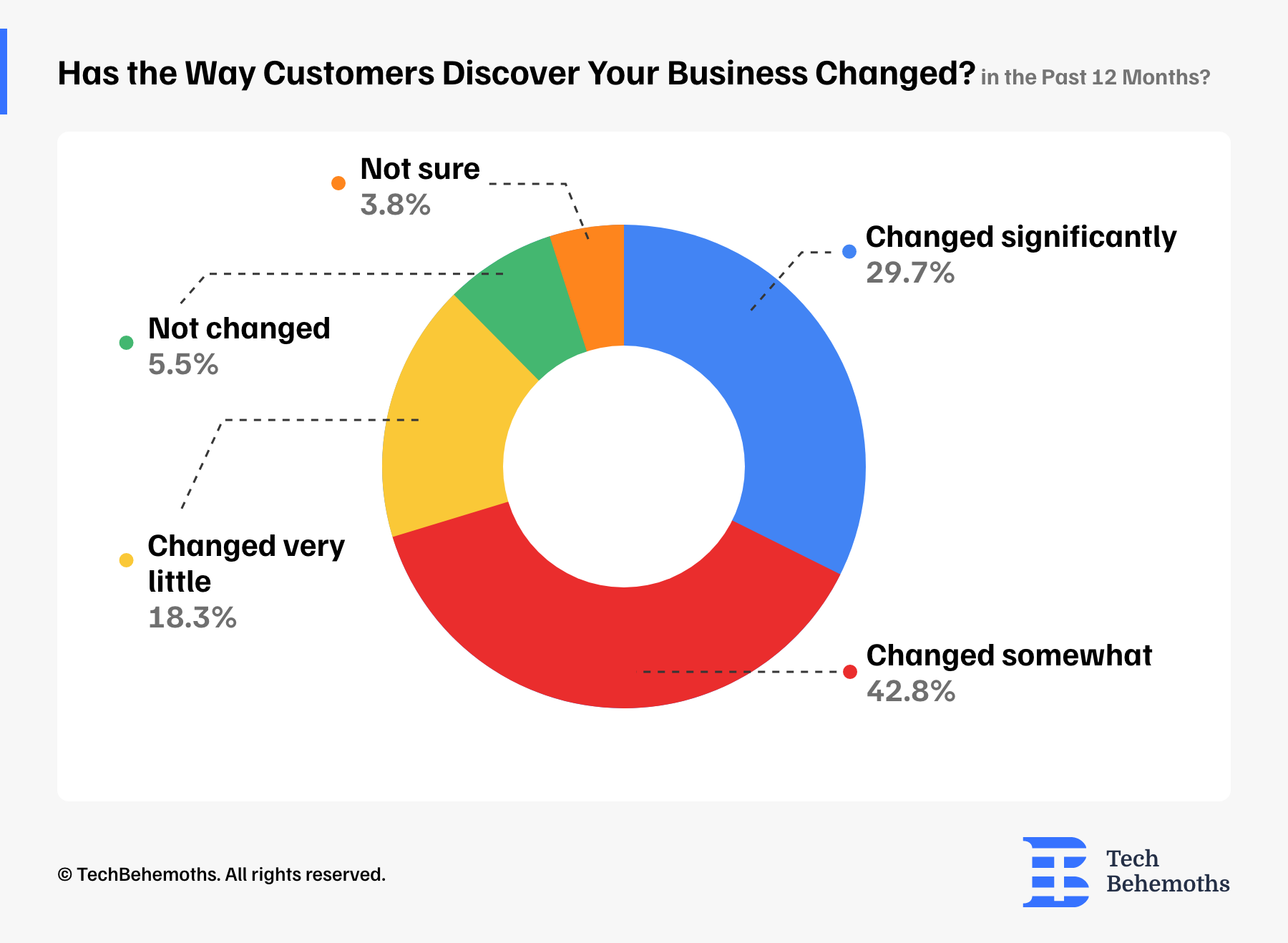
90.8% of Companies Have Seen a Change in How Customers Find Them
When asked whether the way customers discover their business had changed in the past 12 months, 42.8% reported some change, while 29.7% said the change had been significant.
Another 18.3% reported a small change, bringing the total share of companies that noticed a shift to 90.8%. Only 5.5% said nothing had changed, while the remaining 3.8% were unsure.
The results point to a gradual but widespread transition rather than a sudden replacement of established channels. For some companies, the shift is already substantial; for others, discovery habits are still evolving, creating new ways for customers to find and evaluate potential providers.
How Has Customer Discovery Changed Over the Past 12 Months
62.4% Report More Customer Discovery Through AI Tools
The biggest change comes from AI tools. 62.4% of respondents say more customers are discovering their companies through tools such as ChatGPT, Gemini, Claude, and Perplexity. This is more than 20 percentage points above Google Search, making AI the main source of change reported over the past year.
At the same time, 41.7% are seeing more discovery through Google Search. This suggests that AI is not simply replacing Google. Both channels are growing, and customers are using them at different stages of their search.
Referrals have increased for 25.2% of companies, while 21% say customers now check more channels before making contact. A potential client may discover a company through AI or Google, then visit its website, read reviews, check LinkedIn, or look through business directories before reaching out.
Growth through social media stands at 18.3%, while online directories and review platforms each reach 17.2%. Paid advertising has played a greater role for only 10.7%, indicating that the change is being driven more by search, recommendations, and company credibility than by increased paid exposure.
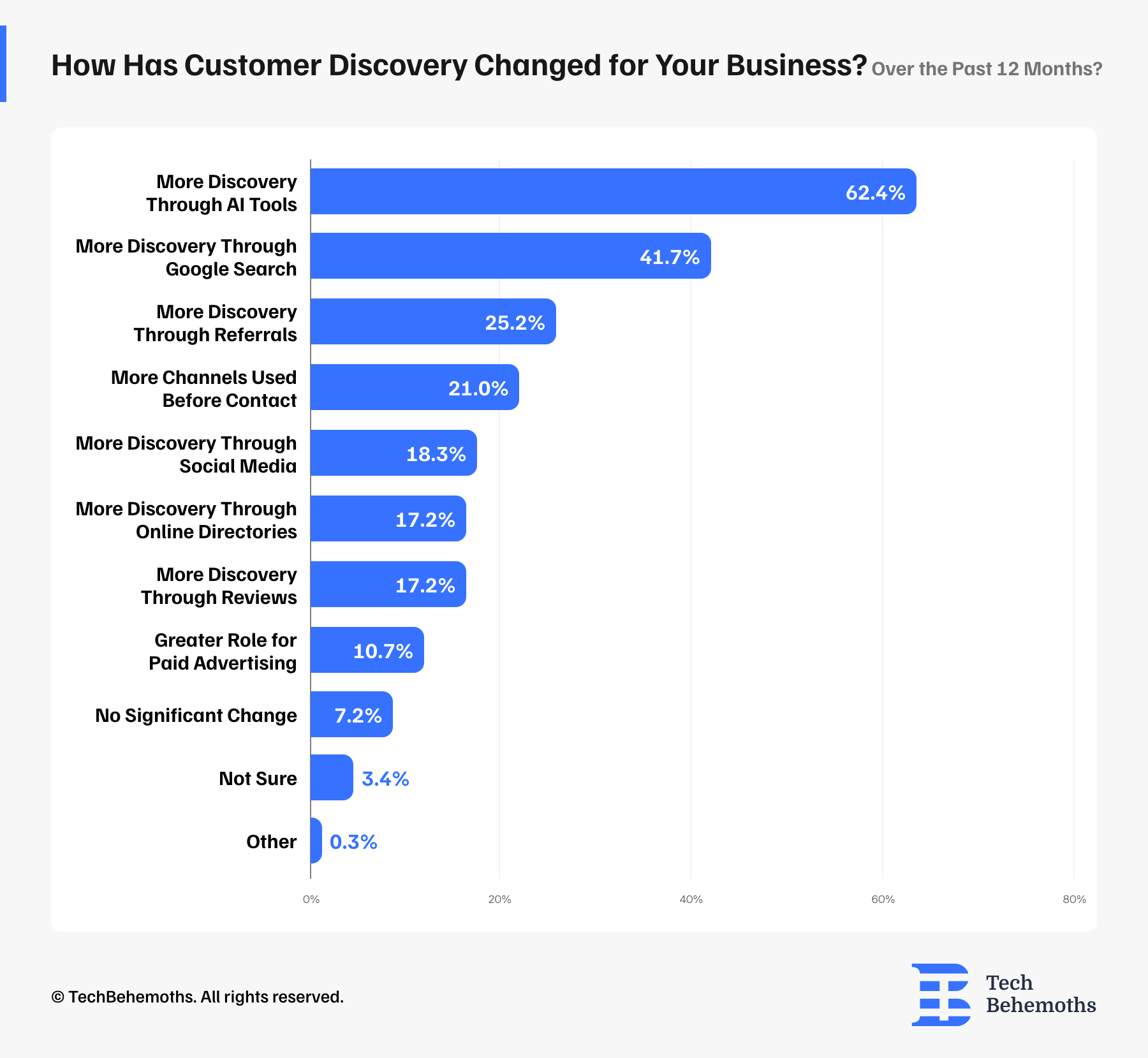
Respondents could select multiple answers, so the percentages do not add up to 100%.
Channels That Have Become Less Important Over the Past 12 Months
32.5% Report Declining Importance of Social Media Outside LinkedIn
According to the survey, social media platforms other than LinkedIn have seen the largest decline in importance over the past 12 months, mentioned by 32.5% of respondents. LinkedIn appears more resilient, although 17% still report a decline in its importance.
Paid advertising ranks second at 19.7%. The survey does not identify the exact reasons, but rising competition, higher customer acquisition costs, and less predictable targeting may help explain the decline.
Business directories and marketplaces (18%), Google Maps (15.2%), events (14.9%), direct outreach (13.8%), and review platforms (11.1%) have also become less important for some companies. This does not mean they are no longer relevant. Several still rank highly in the earlier discovery data, but their role may be changing.
Only 10.4% say Google Search has become less important. Since Google remains both the most common discovery channel and the largest source of new opportunities, its position appears more stable than that of most other established channels.
Another 18.7% selected “Not sure”, meaning that almost one in five companies cannot clearly identify whether the importance of these channels has changed.
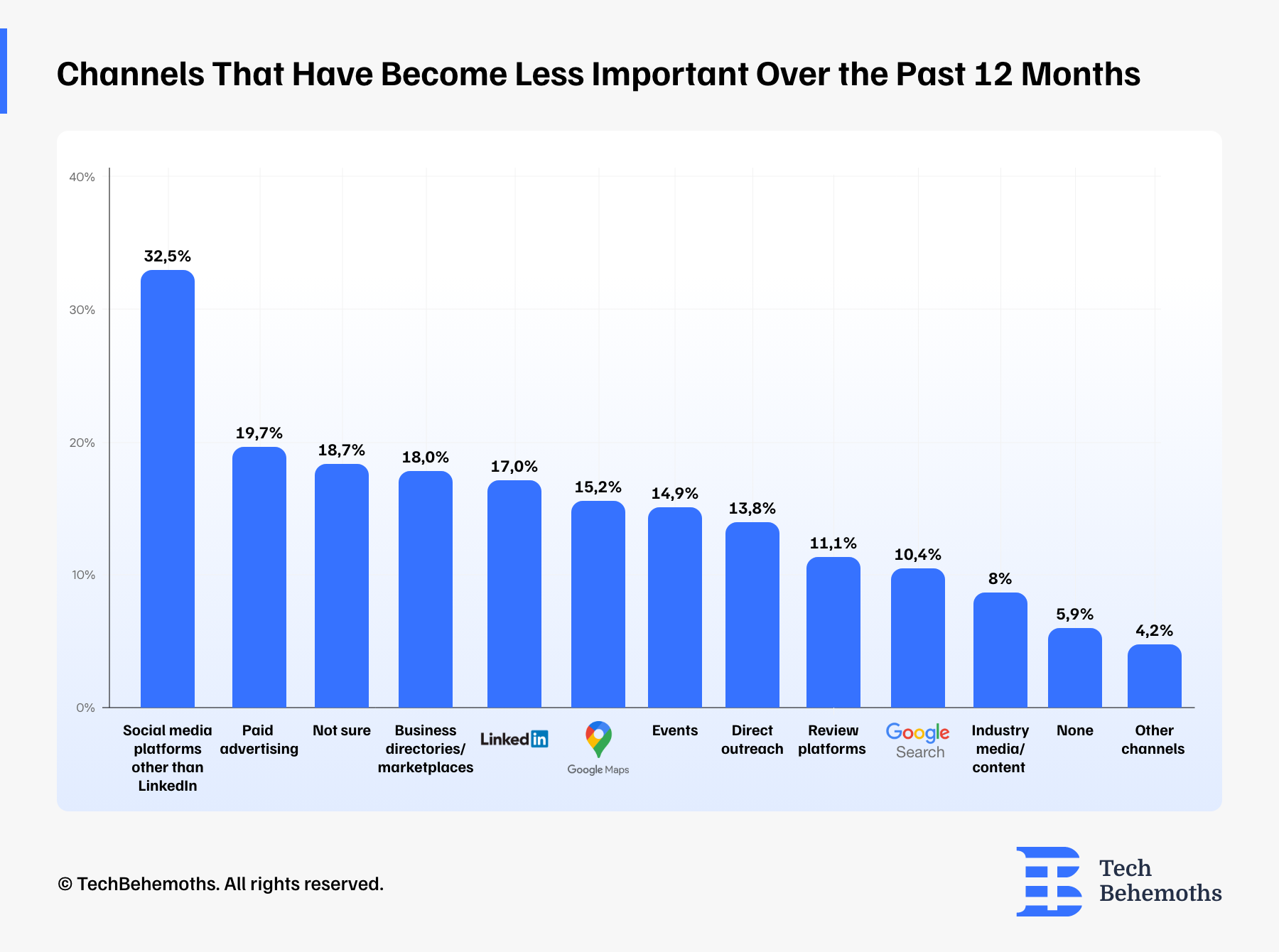
Respondents could select multiple channels, so the percentages do not add up to 100%.
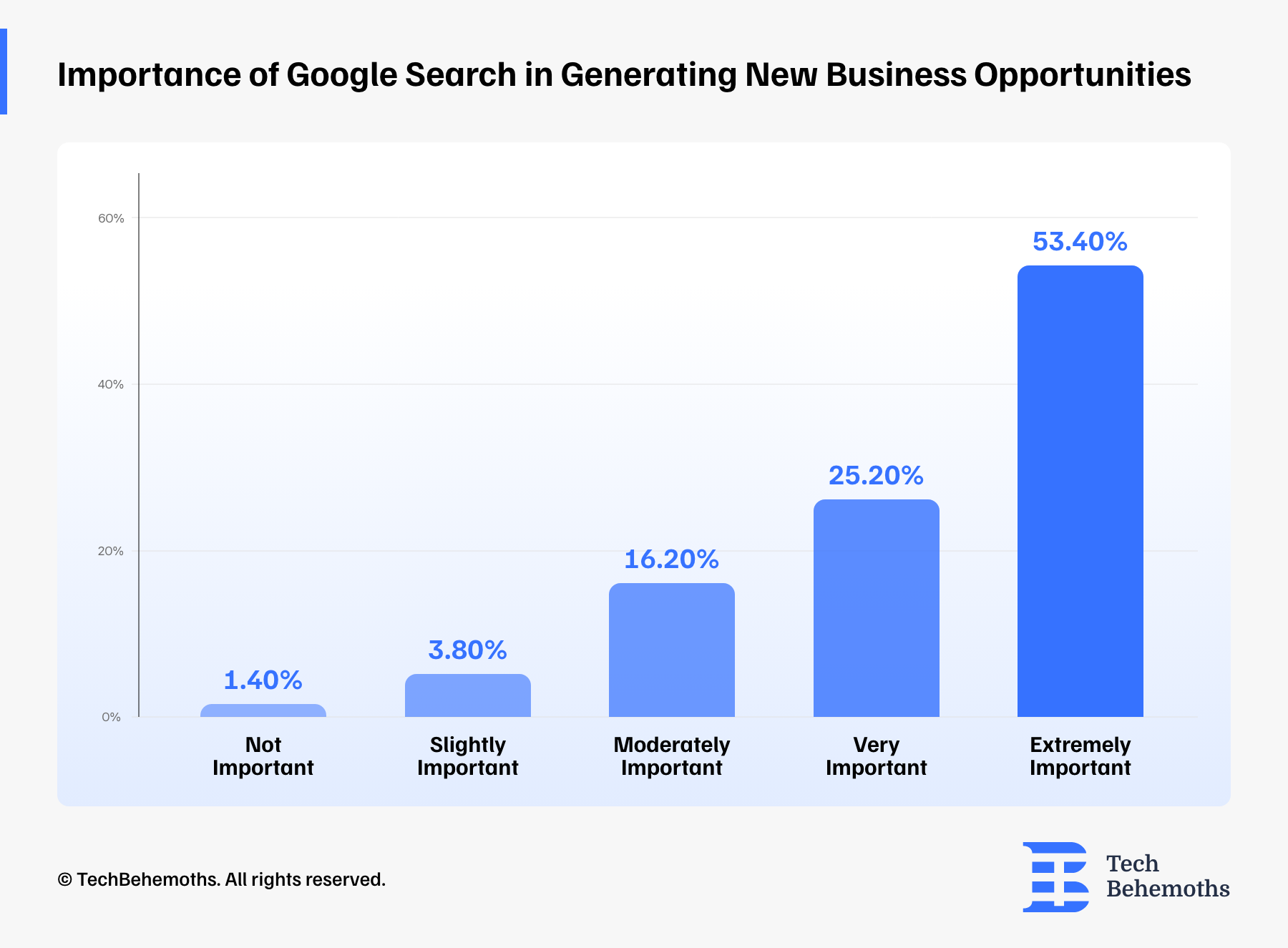
78.6% say Google Search is Very or Extremely Important for New Business Opportunities
Companies consider Google Search essential for generating new business opportunities. More than half (53.4%) rate it as extremely important, while another 25.2% consider it very important.
A further 16.2% rate it as moderately important. Combined, 94.8% consider Google Search at least moderately important, compared with only 5.2% who see it as slightly important or not important.
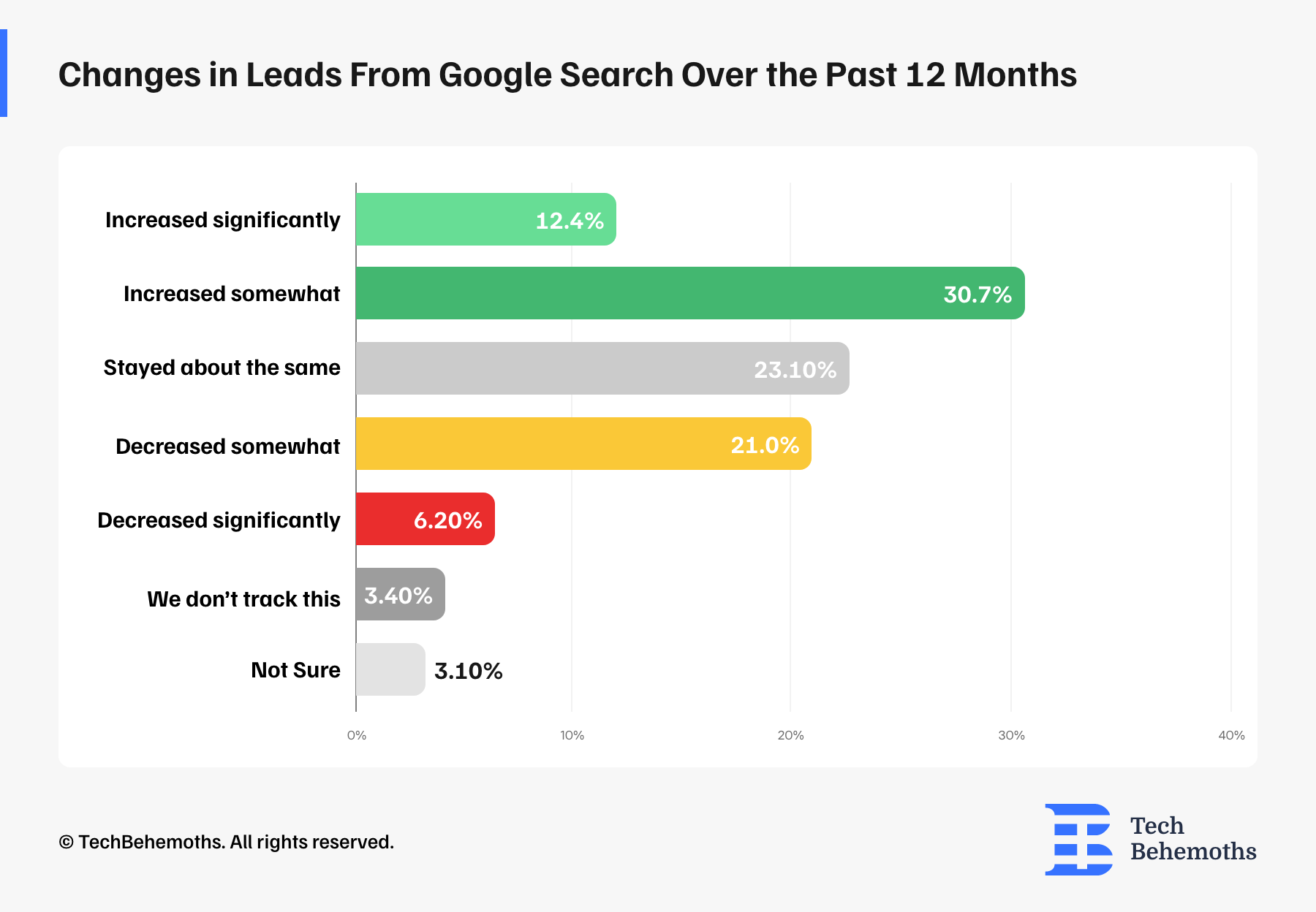
43.1% Report More Leads From Google Search
When asked whether the number of leads or inquiries from Google Search had changed over the past 12 months, 43.1% of respondents reported an increase: 12.4% saw a significant increase, while 30.7% noticed some growth.
At the same time, 27.2% received fewer leads from Google, including 6.2% who experienced a significant decline. Another 23.1% say their results stayed about the same.
Overall, more companies gained leads than lost them, with a difference of almost 16 percentage points between the two groups. Still, the decline reported by more than one in four companies shows that Google’s importance does not guarantee consistent growth.
Note: Another 3.4% do not track leads from Google Search, while 3.1% are unsure.
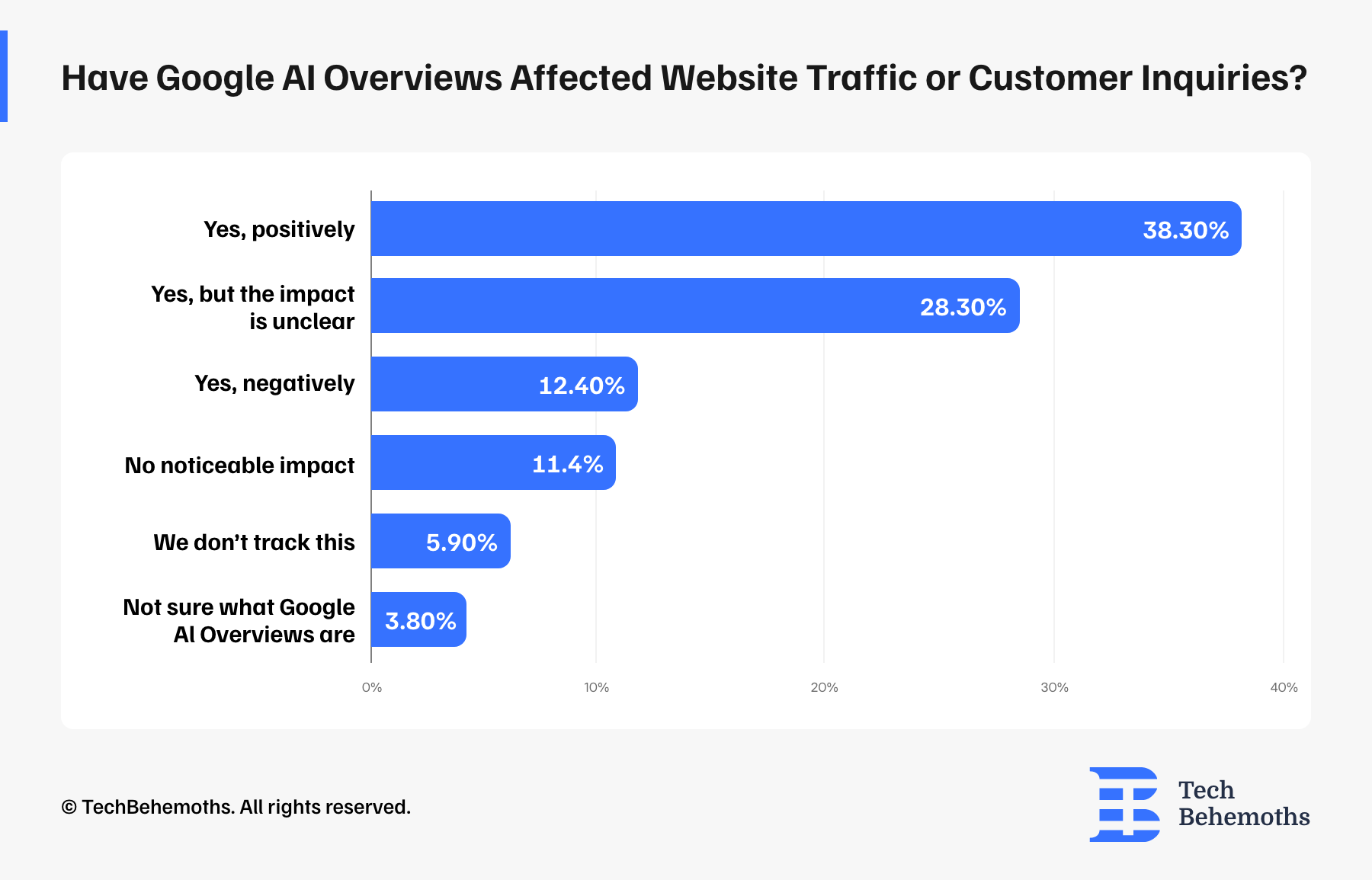
Have Google AI Overviews Affected Website Traffic or Customer Inquiries?
38.3% Report Positive Results from Google AI Overviews, Compared to 12.4% Negative
The largest group of respondents, 38.3%, has seen a positive impact from Google AI Overviews, compared with 12.4% reporting a negative impact. This means positive experiences are more than three times as common as negative ones.
Another 28.3% have noticed an impact but cannot yet determine whether it is positive or negative. One possible reason is that visits and inquiries influenced by AI can be difficult to identify through standard analytics.
Only 11.4% have noticed no impact. Meanwhile, 5.9% do not track it, and 3.8% are unfamiliar with Google AI Overviews.
Overall, the results suggest that AI Overviews are creating more opportunities than losses for companies, although their full impact remains difficult to measure.
79.7% of Companies Frequently or Occasionally Notice Customers Finding Them Through AI Tools
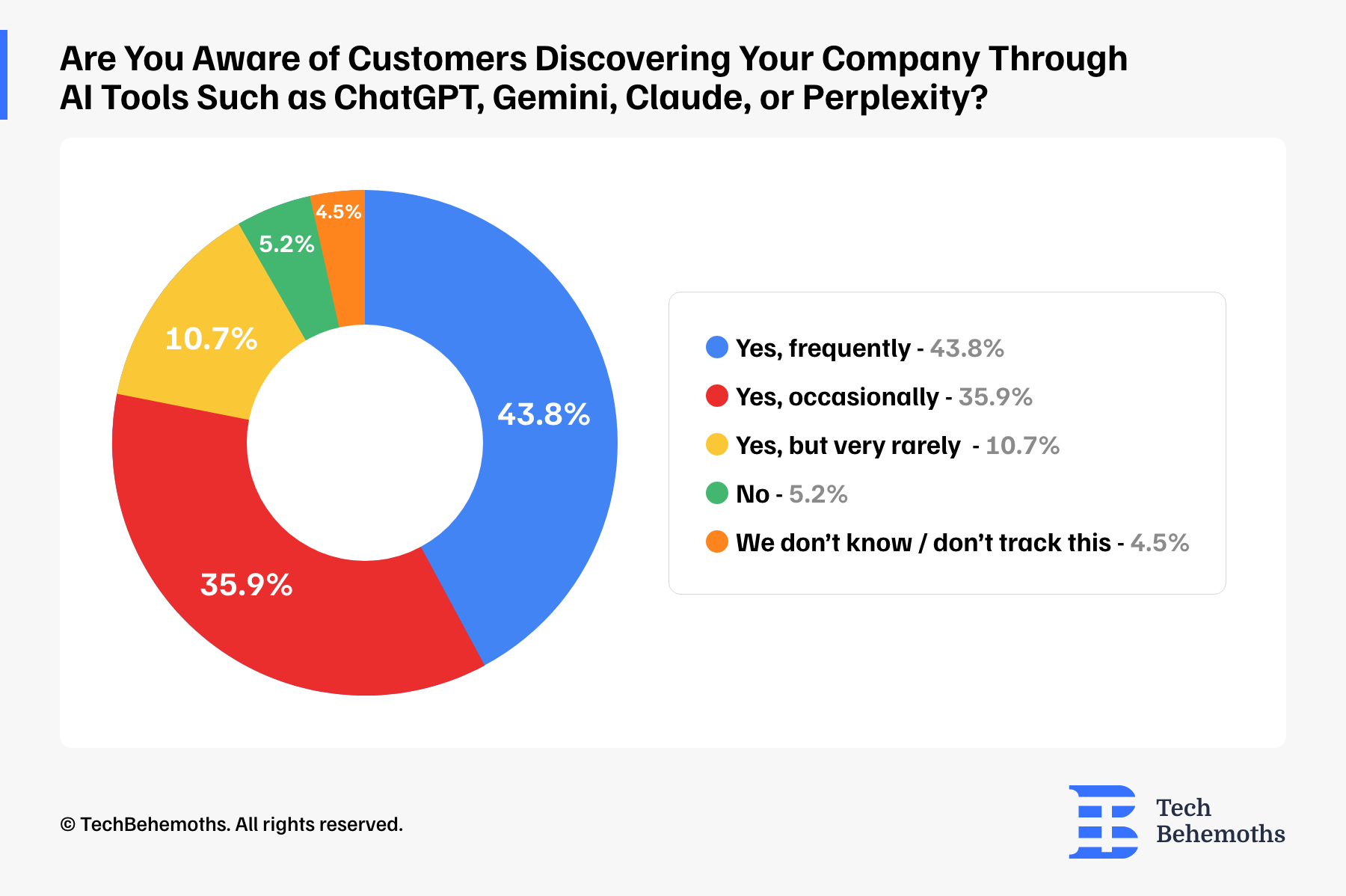
When asked whether they were aware of customers discovering their companies through AI tools, 43.8% said this happens frequently, while another 35.9% said it happens occasionally. Together, they represent 79.7% of respondents.
Another 10.7% have noticed AI-driven discovery, but only very rarely. This means that 90.4% of companies have seen at least some evidence that customers are finding them through tools such as ChatGPT, Gemini, Claude, or Perplexity.
Only 5.2% have not observed this, while 4.5% either do not know or do not track it. The results show that customer discovery through AI tools is already widespread, although its frequency varies considerably between companies.
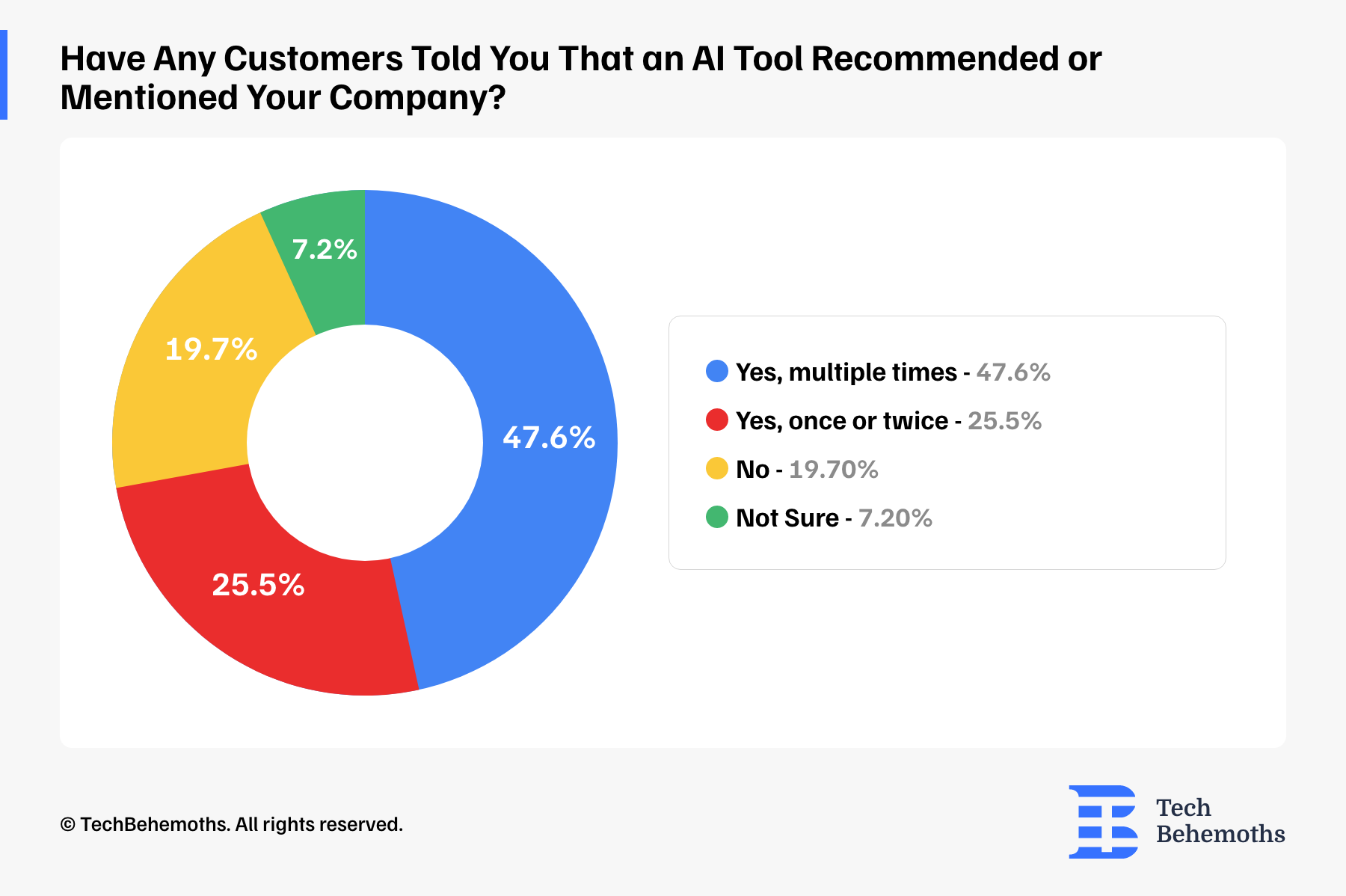
Have Any Customers Told You That an AI Tool Recommended or Mentioned Your Company?
73.1% Have Received Direct Confirmation of AI Recommendations From Customers
The survey data shows that 47.6% of respondents have been told multiple times that an AI tool recommended or mentioned their company, while 25.5% have heard this once or twice. By comparison, 19.7% have not received such feedback, while 7.2% are unsure.
These results support the previous finding that AI-driven discovery is already widespread. It is not based only on analytics or assumptions: 73.1% of companies have heard directly from customers that AI tools helped them discover the business.
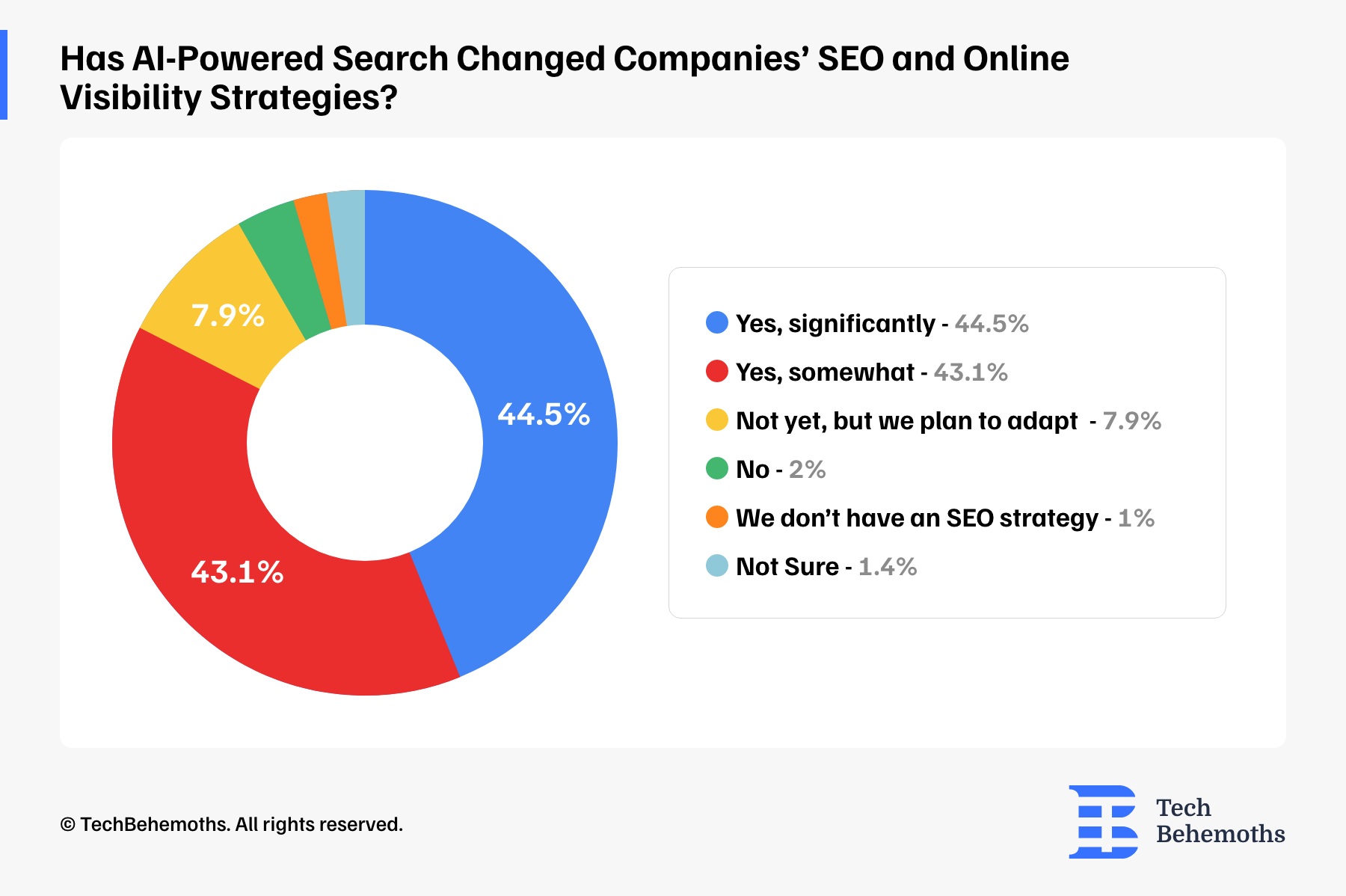
87.6% of Companies Have Changed Their SEO Strategies Because of AI Search
Nearly 44.5% of companies say that AI-powered search has greatly changed their SEO and visibility strategies, and 43.1% have made some changes. That means 87.6% of companies have already adjusted how they approach SEO.
Another 8% have not changed yet but plan to do so, indicating that this shift will likely continue. Only 4.5% of companies have either made no changes, do not have an SEO strategy, or are unsure.
These results show that AI-powered search is no longer a future concern. For most companies, it is already influencing how they approach SEO and online visibility.
Does Your Company Monitor Its Visibility in AI-Generated Answers?
74.2% of Companies Regularly or Occasionally Monitor Their AI Visibility
As companies adapt their SEO strategies to AI-powered search, many are also monitoring how they appear in AI-generated answers and recommendations.
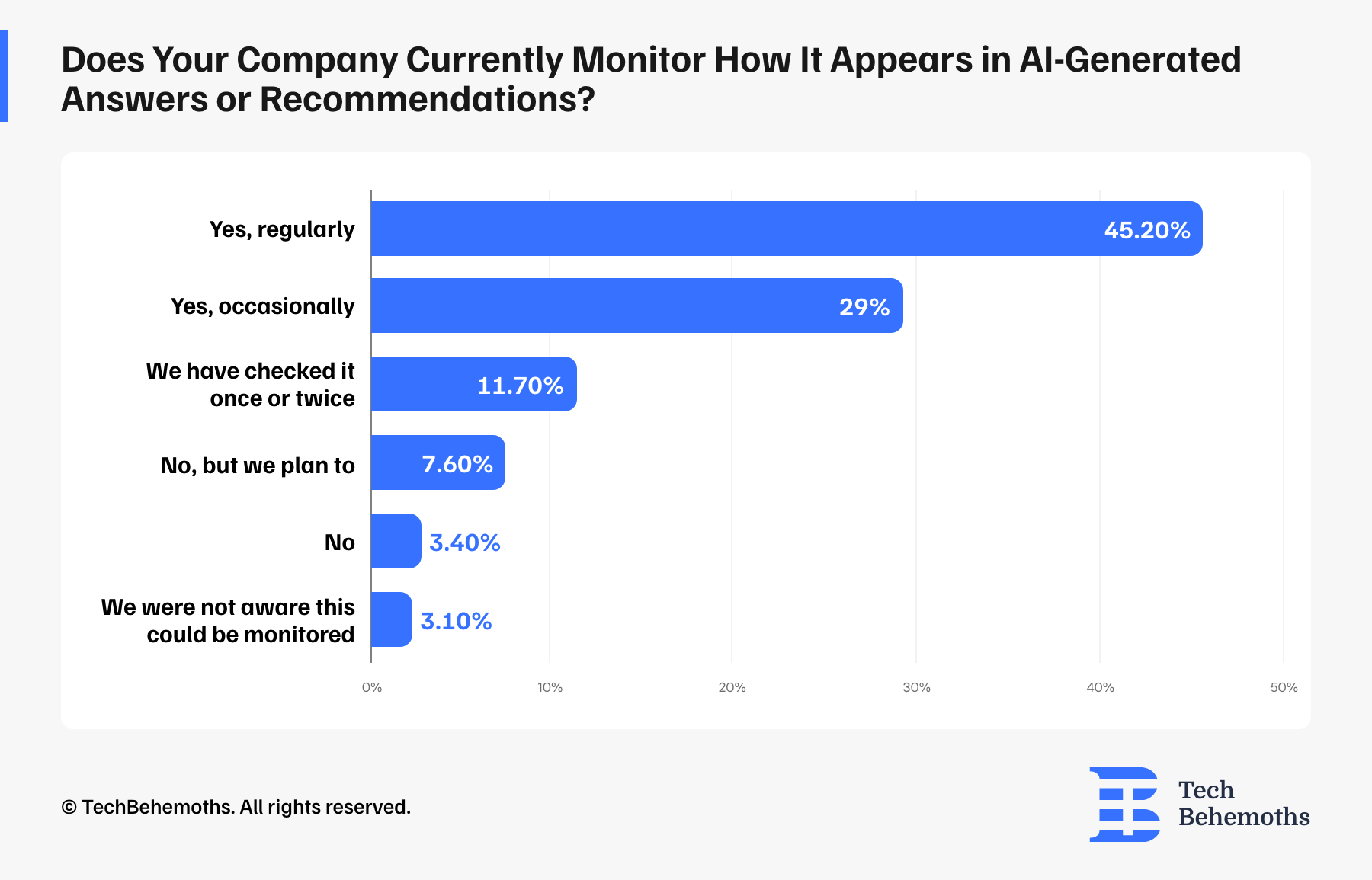
45.2% do so regularly, while 29% monitor their visibility occasionally. Together, they represent 74.2% of respondents. Another 11.7% have checked once or twice.
A further 7.6% have not started yet but plan to do so.
Only 3.4% do not monitor their presence in AI-generated results, while 3.1% were unaware that this could be tracked.
The findings show that monitoring AI visibility is already becoming part of how companies manage their online presence.
Actions Companies Take to Improve Visibility in AI and Search Results
Nearly 60% Prioritize SEO or Original Content to Improve Online Visibility
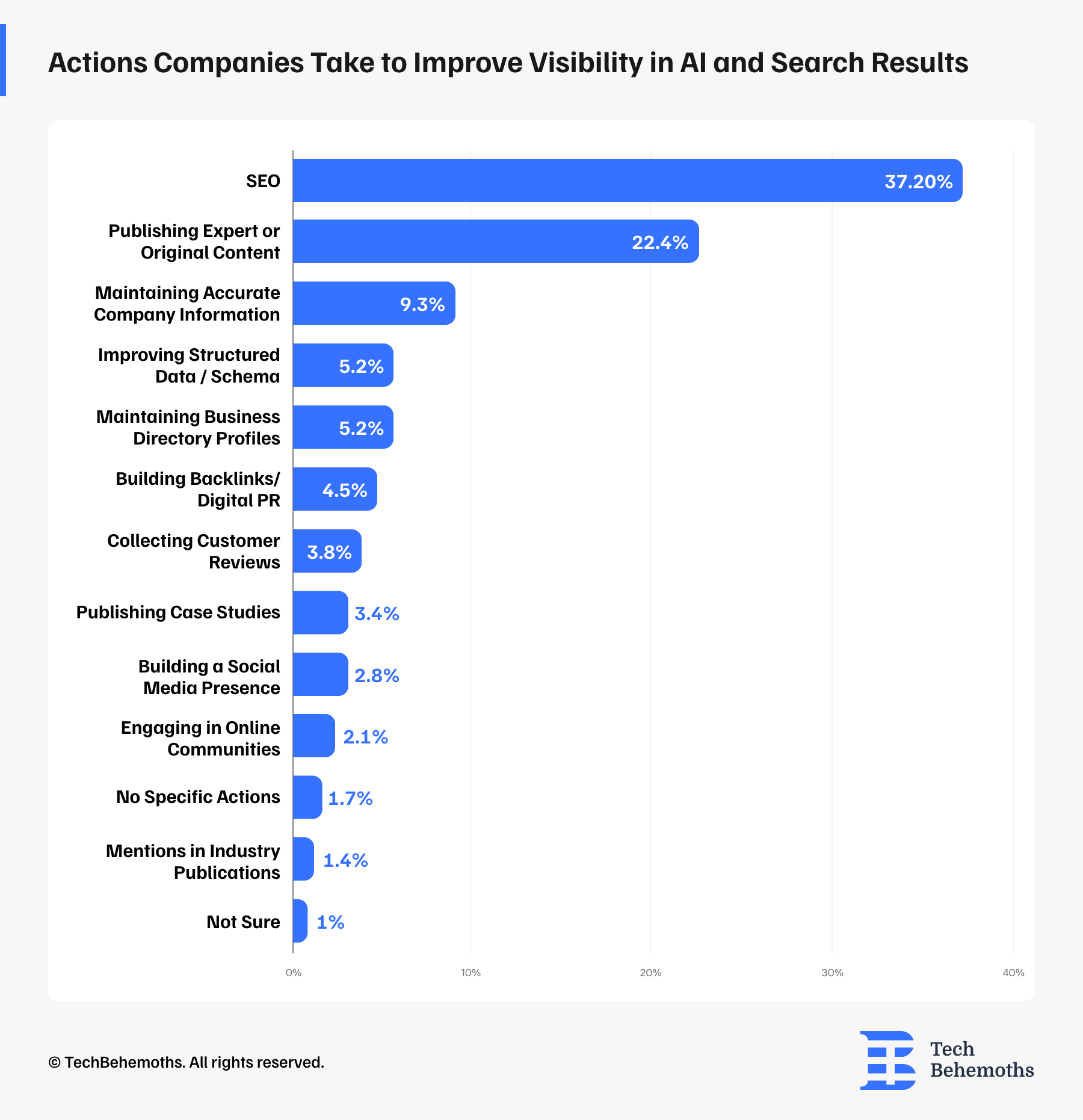
Survey data shows that SEO is the most common approach, selected by 37.2% of respondents, followed by publishing expert or original content at 22.4%. Together, these two strategies account for 59.6% of responses.
Other companies focus on making their business information clearer and more reliable online.
9.3% focus on maintaining accurate company information, while 5.2% improve structured data and schema, and another 5.2% maintain profiles in business directories.
Smaller shares prioritize backlinks and digital PR (4.5%), customer reviews (3.8%), and case studies (3.4%). Social media, online communities, industry publications, and other activities are less common as primary strategies.
Only 1.7% are taking no specific action, while 1% are unsure.
Companies still rely mainly on SEO and original content, while reviews, directories, structured data, and external mentions remain underused.
Most Effective Social Media Platforms for Customer Discovery
LinkedIn Leads Social Media Discovery
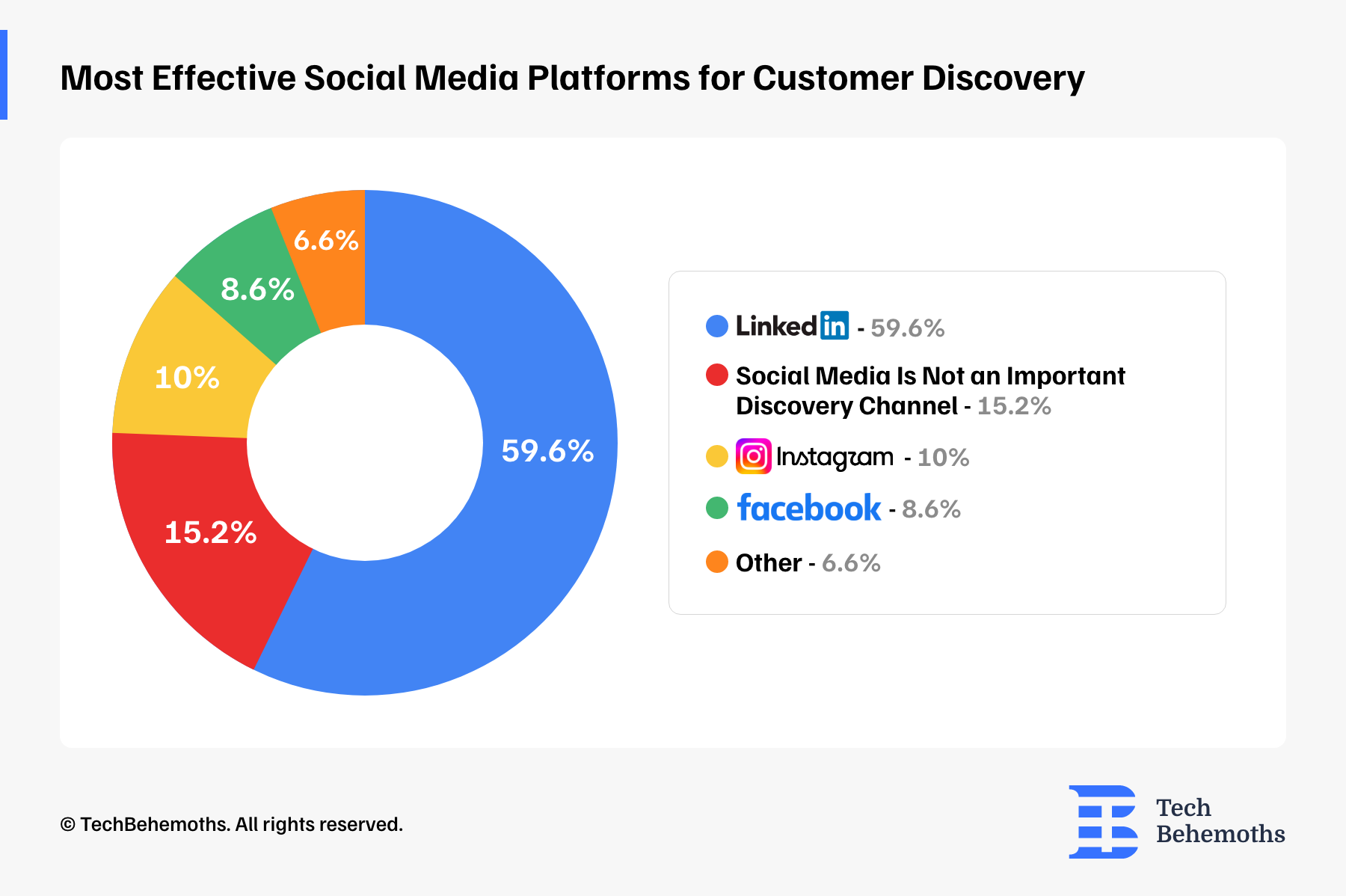
LinkedIn is the most effective social media platform for customer discovery, selected by 59.7% of respondents. This is more than twice the combined share of Instagram, Facebook, and other platforms.
Instagram ranks second at 10%, followed by Facebook at 8.6% and other platforms at 6.6%. Meanwhile, 15.2% do not consider social media an important discovery channel.
Given the survey’s B2B audience, LinkedIn’s strong lead is understandable. The platform helps companies build professional relationships, visibility, and credibility.
What Is the Primary Role of Social Media in Customer Acquisition?
Social Media Mainly Builds Awareness and Trust
For most tech companies, social media helps people become familiar with the brand before they make contact.
38.6% use it mainly to build brand awareness, while 26.6% see its main role as building trust and credibility. Together, these two areas account for 65.2% of responses.
Another 12.4% say social media helps customers discover their company, while 7.2% believe customers use it to learn more before getting in touch.
Only 4.1% see direct lead generation as its main role, and 7.2% say it plays little or no role in customer acquisition.
The results suggest that social media rarely closes the deal by itself, but it helps companies become known and trusted before a customer reaches out.
What Do Potential Customers Check Before Contacting a Company?
The Company Website Is Still the Main Source of Trust
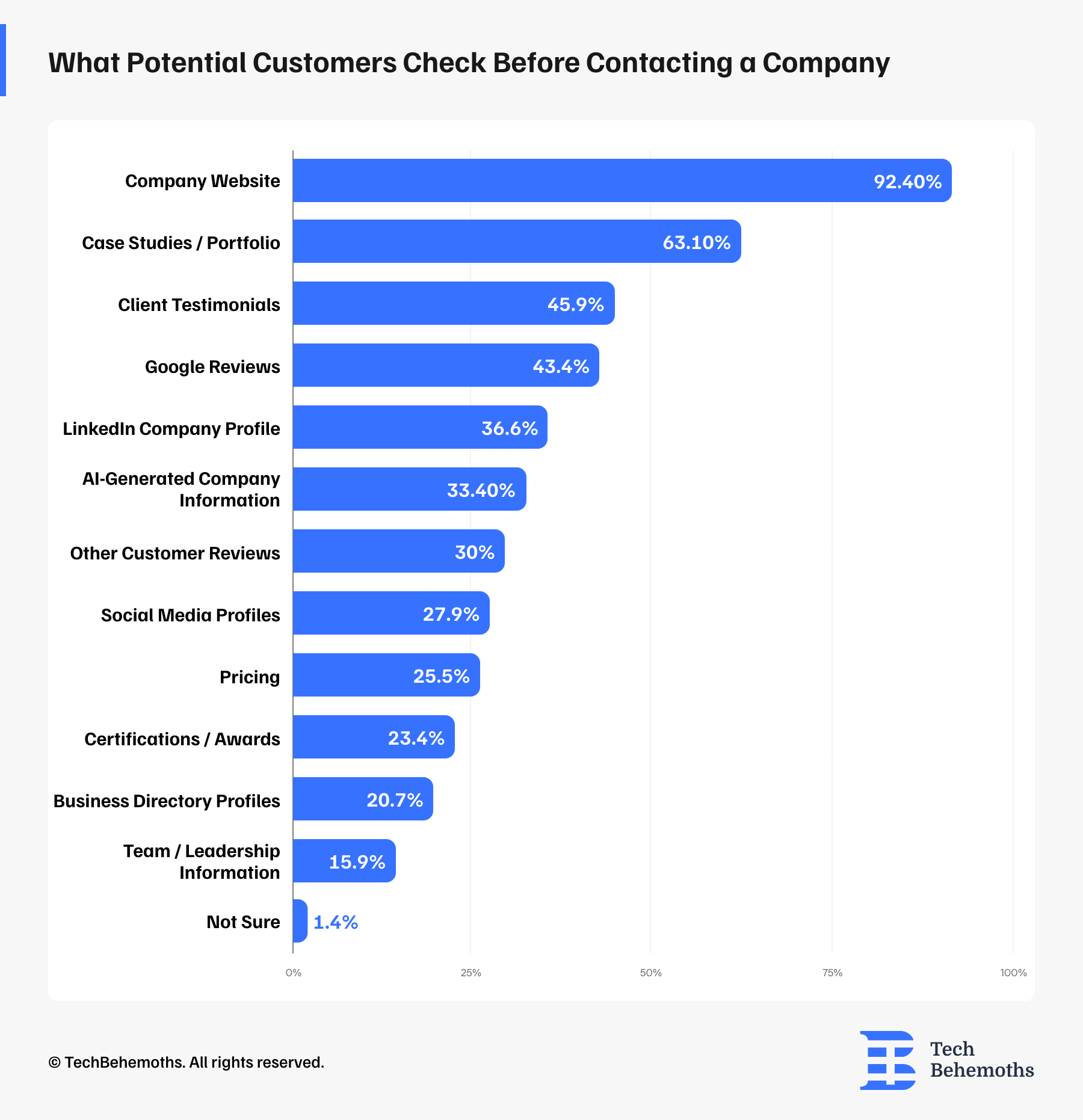
Before making contact, 92.4% of potential customers check the company’s website, making it the most important source. Case studies and portfolios come next at 63.1%, showing that clients want to see evidence of previous work.
Reviews also matter. 45.9% check client testimonials, 43.4% look at Google Reviews, and 30% consult other customer review sources.
Beyond the company’s own website, 36.6% check its LinkedIn profile, while 33.4% review AI-generated information about the business. AI-generated results now rank above social media profiles, pricing, awards, and business directories.
The results show that a strong website may attract attention, but proof of experience and credibility helps customers decide whether to make contact.
Respondents could select multiple channels, so the percentages do not add up to 100%.
How Important Are Online Reviews in Building Customer Trust?
Nearly 85% Say Online Reviews Are Essential to Customer Trust
The previous results show that customers often read reviews before contacting a company.
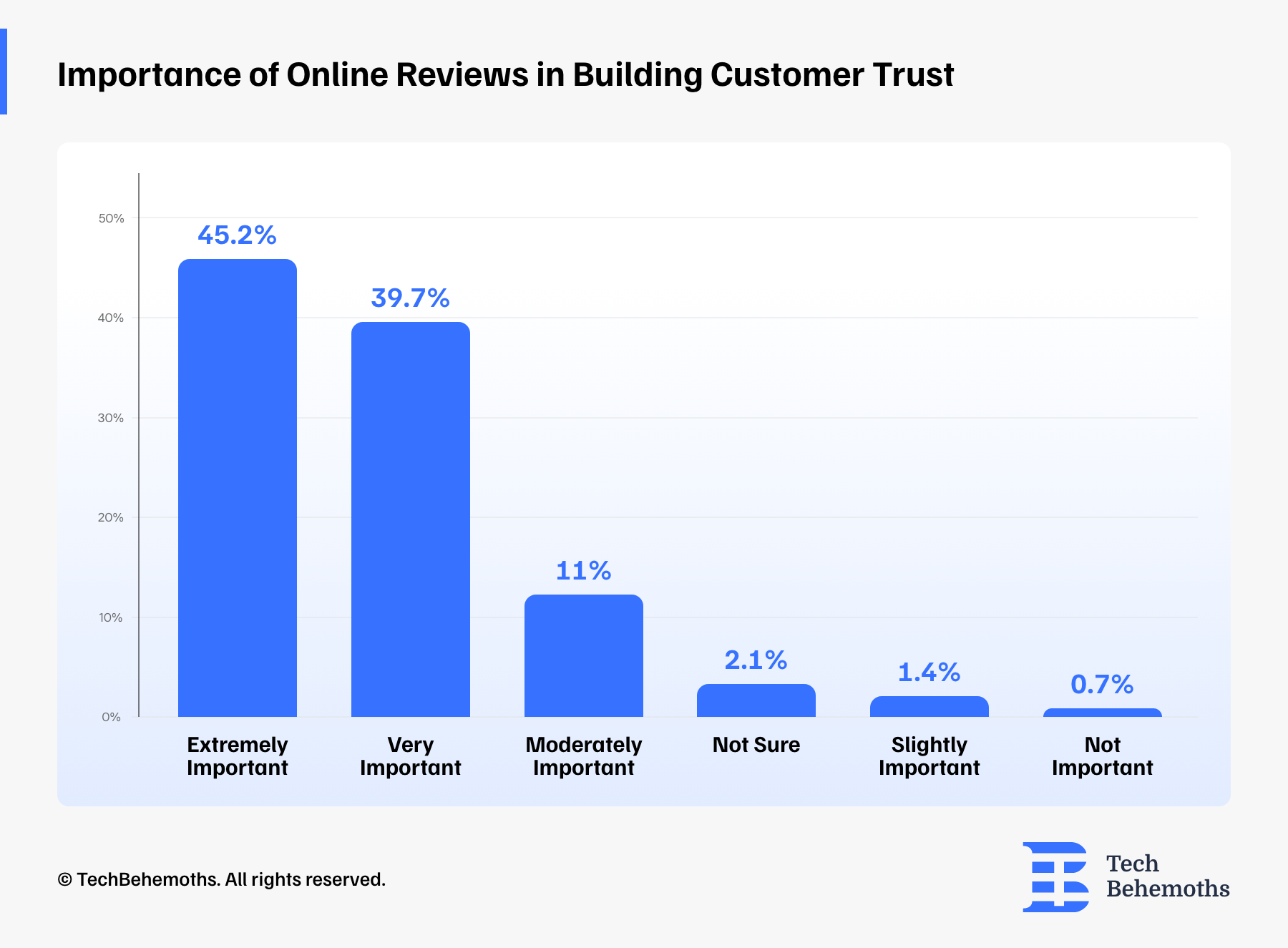
When asked about their importance, 45.2% of respondents consider online reviews extremely important, while 39.7% see them as very important. Together, they represent 84.9% of respondents.
Another 11% consider reviews moderately important. Only 1.4% view them as slightly important, while just 0.7% say they are not important at all.
Reviews are one of the strongest trust signals customers use when assessing a company.
How Important Is It to Be Listed on Reputable Third-Party Websites and Business Directories?
84.5% Consider Third-Party Listings Very or Extremely Important
Third-party websites and business directories also play an important role in how companies build credibility online.
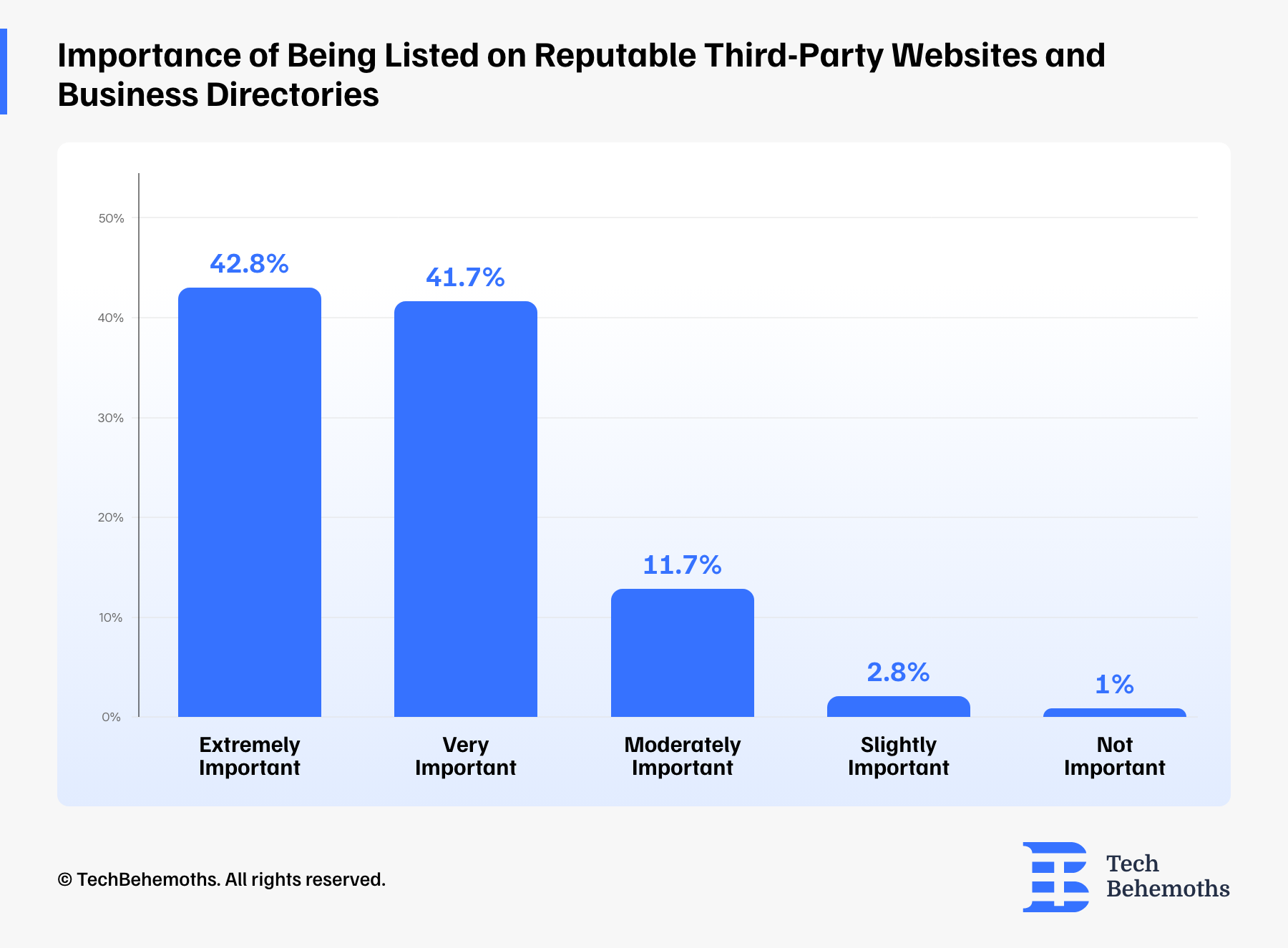
42.8% of respondents consider these listings extremely important, while 41.7% see them as very important. Together, they represent 84.5% of respondents. Another 11.7% consider them moderately important.
Only 2.8% view third-party listings as slightly important, while just 1% say they are not important. The results show that being present on reputable external platforms helps customers verify a company beyond its own website.
Respondents could select multiple channels, so the percentages do not add up to 100%.
Which Channels Will Companies Invest More In Over the Next 12 Months?
AI Search (86.9%) and Traditional SEO (74.5%) Top Future Investment Plans
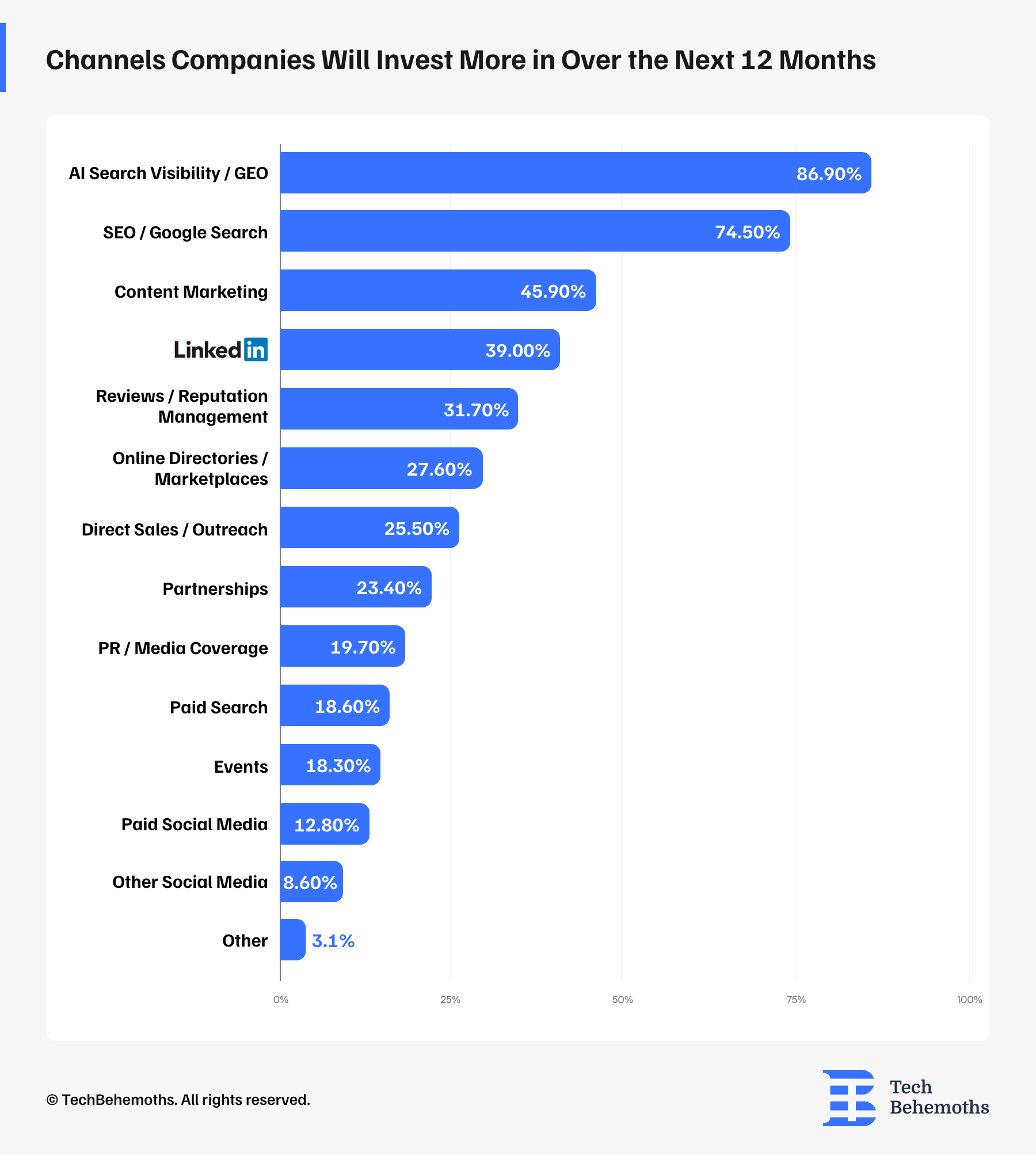
According to the survey, AI search visibility and GEO are the top investment priorities, selected by 86.9% of respondents. Traditional SEO and Google Search follow closely at 74.5%, showing that companies are preparing for AI discovery without moving away from established search channels.
Content marketing ranks third at 45.9%, followed by LinkedIn at 39% and reviews and reputation management at 31.7%. Online directories and marketplaces will receive more investment from 27.6%, while 25.5% plan to increase spending on direct sales and outreach.
Paid channels rank lower. 18.6% plan to invest more in paid search, while 12.8% selected paid social media.
The results point to a clear priority for the next 12 months: companies want to strengthen how they are found and trusted across both AI tools and traditional search.
Respondents could select multiple channels, so the percentages do not add up to 100%.
Channels Expected to Have the Biggest Impact on Customer Discovery Over the Next 3 Years
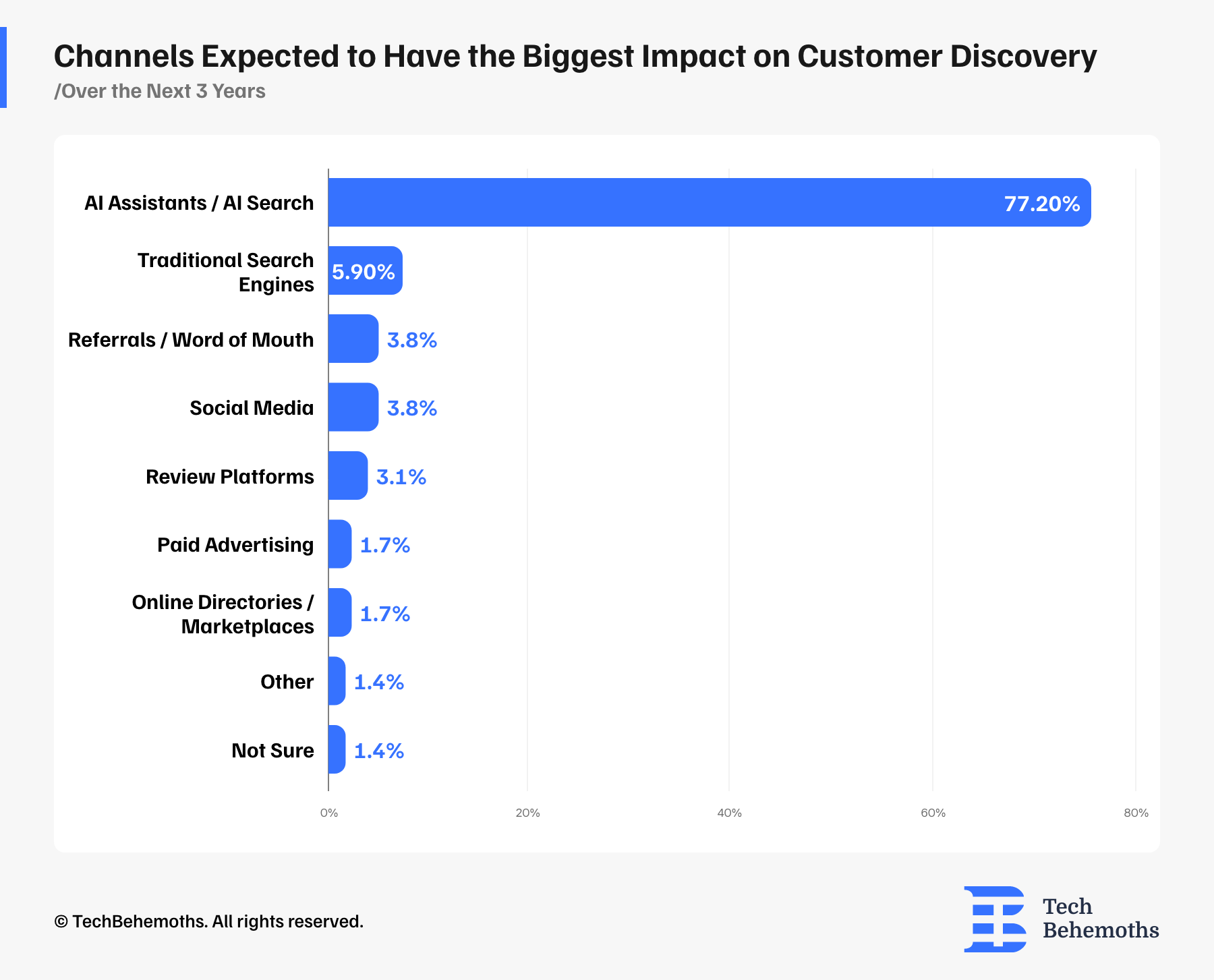
When asked which channel will have the biggest impact on customer discovery over the next three years, 77.2% of respondents believe it will be AI assistants and AI-powered search.
With a difference of 71.3 percentage points, traditional search engines ranked a distant second at 5.9%. Referrals and social media each received 3.8%, followed by review platforms at 3.1%. Paid advertising and online directories were each selected by 1.7%.
The gap shows how strongly companies expect AI to reshape customer discovery in the coming years.
What Would Happen If Google Search Disappeared Tomorrow?
53.5% of Companies Would Face Major Customer Acquisition Disruption Without Google Search
AI search may be growing quickly, but what would happen if Google disappeared tomorrow?
For 21.4% of companies, the effect on customer acquisition would be extreme. Another 32.1% say it would affect them significantly. Together, 53.5% would face a major impact.
A further 25.9% expect a moderate impact, meaning 79.4% of companies would experience at least some serious disruption.
Only 12.4% expect a slight effect, while 5.9% believe their customer acquisition would not be affected at all.
The message is clear: AI may be changing how customers search, but for now, Google remains difficult for most companies to replace.
In Conclusion
The survey shows that customer discovery is no longer a straight path from Google to a company website. Potential clients now move between search engines, AI assistants, referrals, LinkedIn, reviews, directories, and company websites before deciding whom to contact.
AI is the fastest-growing part of this journey. Companies are already being recommended by tools such as ChatGPT, Gemini, Claude, and Perplexity, and most believe AI-powered search will have the greatest impact over the next three years. Still, Google remains the leading source of new business opportunities and would be difficult for most companies to replace.
Being visible is no longer enough. Websites, case studies, reviews, and reputable third-party profiles help turn discovery into trust, and trust into inquiries.
Partner Companies
Our survey reached IT companies and web agencies all around the world, with no limits on region or country. In total, 2900 companies from 65 countries took part. A big thank you to our partner companies who helped spread the word and made these valuable insights possible.
- Mobiteam - Germany
- adnstudio - Lithuania
- Element Media - United States
- BroSolutions - Estonia
- brainsource.network - Romania
- Alpha IT Solutions - Ethiopia
- Seedium - Estonia
- Digicode Europe - Slovakia
- Gogetop Marketing - United Kingdom
- Wild Creek Web Studio - India
- Software Company - India
- Significa - Portugal
- dhero.studio - Romania
- GEEKY Social Ltd - Bangladesh
- Butcher.studio - Israel
- studio Akademia - Russia
- Webtech Nepal Pvt. Ltd. - Nepal
- Commerce Pundit - United States
- Smmpro - Pakistan
- Wdesigna - United Arab Emirates
- Yaali Bizappln Solutions - India
- SCloud - India
- New Perspective Design - South Africa
- StandardTouch - Saudi Arabia
- Hypreom Research - South Africa
- Lollie's Handmade - South Africa
- Zluck Solutions - India
- Webnic Digital - United Arab Emirates
- Unistack Solutions - India
- Freshcode - Bulgaria
- PROCRM - Ukraine
- WebX Nepal Pvt. Ltd. - Nepal
- Digital transformation services - Egypt
- URLAUNCHED LTD - Cyprus
- Softsaro Nepal Private Limited - Nepal
- Teamseven PVT LTD - Pakistan
- Mediaofficers - India
- Differenz System - United States
- Solute TechnoLabs Pvt Ltd - United States
- launchOptions - Cyprus
- Crystal Translation and Content Creation - Lebanon
- FuzionDev LLC - United States
- FloBold - Romania
- The Business Theory - United States
- Envicion Studio Sdn Bhd - Malaysia
- Pixoryflow Agency LLC - United States
- Wavect GmbH - Austria
- RSXigital - United States
- BlackTruck Media + Marketing - United States
- Perera - United Kingdom
- ITForce - Ukraine
- Dignizant Technologies LLP - India
- Graphica Studios CDO - Philippines
- Excella PPC - United States
- Dasweb® - Canada
- Zintix - Pakistan
- Leoceros - Lebanon
- Technostacks - United States
- Zatiq Sol - Pakistan
- InStandart - United Kingdom
- Corpela Inc - Pakistan
- Delante - Poland
- dev.family - United States
- Naturaily - Poland
- Synaryverse - United States
- Budventure Technologies Pvt. Ltd. - India
- MSVE Digital - Ireland
- Syed Ahmer Shah - Pakistan
- Tech Inject - India
- New Wave Devs - United States
- YEAH! Local - United States
- Go International Group Dotcom Pty Ltd - Australia
- DPL - Pakistan
- Tower 25 - United States
- Revolute X Digital - United States
- Pixelbricks Design - United Kingdom
- buinsoft technology sro - Czechia
- Websem - Romania
- webisoft - Canada
- SECL Group - Netherlands
- Leoceros - Lebanon
- Orange Tulip Studio - United States
- ZONE3000 - Global
- Reverbtime Magazine - Lithuania
- Web & App Development, AI-driven Solutions, UI/UX Design, Digital Marketing, and Cloud Deployment Services - Sri Lanka
- Lloyds Digital - Croatia
- Varexa Digital Agency - Germany
- EMONSTER SOLUTIONS LTD. - Canada
- EMONSTER SOLUTIONS LTD. - Canada
- ITS Ltd - Rwanda
- Matcha Design - United States
- firestarterseo.com - United States
- ContentBhai - Bangladesh
- Ktechclans - Pakistan
- ZH it Solutions - Pakistan
- Percept Brand Design Agency - Australia
- Omega Digital - Vietnam
- Graphica Studio - CDO - Philippines
- Burlamaqui Marketing + Strategy - Brazil
- PT Suova Technology Indonesia - Indonesia
- Mackyclyde SEO - Malaysia
- Level Interactive™ - Taiwan
- Neogenio SRL - Romania
- SIXGUN - Australia
- MOON LINES - Lebanon
- Ortus Knights - India
- Ferfar Design LLP - India
- Alverden LLC - Belarus
- Snotor - Latvia
- Timspark - United Kingdom
- Website Developer Tech - Nigeria
- TechTower Innovations Inc - Uganda
- TestFort - United States
- Techcompany - Nigeria
- Next Level Software - Pakistan
- The DM Lab - United Kingdom
- Cored - Albania
- Tecalis - Spain
- Workspace - Croatia
- Knewledge - Luxembourg
- Ronas IT - Estonia
- StudioMeyer - Spain
- GEEKY Social - Bangladesh
- DECODE agency - Croatia
- Nebrion Core Global Digital Solutions - Nigeria
- Cartel Digital Team - Nigeria
- SumatoSoft - United States
- SunHouse Marketing - Canada
- MWIMMERDESIGN - Germany
- BEON.tech - Argentina
- Blue Badger - Canada
- iMiMDesign™ Co. - India
- SAGE Marketing - Israel
- Muse Marketing Group - Canada
- BamBoo.md - Moldova
- morphsites - United Kingdom
- Saivra Technology - Pakistan
- Ministry of Programming - Bosnia and Herzegovina
- Funnel Intelligence Group LLC - United States
- Naestinn - India
- Kuri Graphics - Ethiopia
- Codezela Technologies - Sri Lanka
- Web Synergy - Lebanon
- STechNest - Bangladesh
- Target Medios Colombia SAS - Colombia
- Saint Rollox Digital - Australia
- Lantern Digital - China
- The Generalissimo Media - Nigeria
- Saerin Tech LLC - United States
- Linkedist - Lithuania
- Graphiters - Pakistan
- Idea Maker - United States
- Studio Five - Japan
- Breadnbeyond - Indonesia
- 2N Consulting Group - United States
- Gusta - Spain
- GREEN-i MULTIMEDIA SDN BHD - Malaysia
- Vivasoft Limited - Bangladesh
- ENTERPRISE CO MÉXICO - Mexico
- JBE Digital - Australia
- SEO Expert Gold Coast - Australia
- PRAS - Poland
- Designli - United States
- Leos Media & Interactive - Israel
- Anotny - United States
- BBros LLC - Kosovo
- Bold Online Marketing - South Africa
- Bepro agency - Lebanon
- You are launched - Cyprus
- HiddenMind Solutions - India
- Doowebs - Spain
- Thinkogic - India
- Lasting Dynamics - Spain
- Elite Designs Official - Pakistan
- Blue Square Management - United Kingdom
- Obelisk Infotech - India
- OffRoad Studios - United States
- Eastern Peak - United Kingdom
- Coditive - Poland
- Phaedra Solutions - United Arab Emirates
- Ramani - India
- startuplabs - India
- M. A. Chidiac Studio - Lebanon
- Chill Byte - Serbia
- Webolie Ltd. - Bulgaria
- GEEKY Social Ltd - Bangladesh
- icube events pte ltd - Singapore
- Director - Nepal
- Promatics Technologies - India
- Bravescale - Greece
- Dbuzzz - India
- Musato Technologies - South Africa
- Fulminous Software - United States
- PWN-ALL Auditing, Reviewing & Testing Cyber Risks CO. L.L.C - United Arab Emirates
- YUAL, Inc. - Ukraine
- Abstract Infosys - Nepal
- ACW Soft Solutions - Poland
- APE Technologies - Kenya
- Sfida.PRO - Albania
- Way2net Digital Marketing Agency - Argentina
- My Biz Consulting - United States
- ARITS Limited - Bangladesh
- Aim Infocorp Pvt. Ltd. - India
- Delante - Poland
- Regalia Solutions - Sri Lanka
- ROC.PH - Philippines
- KNOWN DESIGN CO PTY LTD - South Africa
- BRACKETS - Digital Product Studio - Slovakia
- Sievers Creative - United States
- Sulonya Technologies Private Limited - India
- Aqaba Digital - United States
- eMac Media - United States
- Mindcentrix - India
- Launch Flow Inc - Canada
- MZ Medical Billing - United States
- Naestinn - India
- Chapters Digital Solutions - Egypt
- Graphica Studios CDO - Philippines
- Ortem Technologies LLC - United States
- RestoRefine - United Kingdom
- Rovista - India
- Web Activ - Romania
- ZAKFN Labs - Canada
- REM Web Solutions Inc. - Canada
- JAM-Forte Technologies Ltd - Nigeria
- Back2Rank - Bulgaria
- Dot IT - Egypt
- Fast Digital Lab - United States
- Chuckwalla Digital - United States
- One Branding - United States
- Clicta, Inc. - United States
- NTSprint - United States
- big orange planet - United States
- BoBella LLC - United States
- Williams Web Solutions - United States
- zeropoint7 Studio - United States
- Greenhat - Australia
- Intuitive IT - Australia
- Syntactics, Inc. - Philippines
- Wild Creek Web Studio - India
- RETLM BPO - Pakistan
- Imagio Creations Pvt Ltd - Nepal, Australia
- I represent Prolance IT LLP - India
- MOON LINES - Lebanon
- NEWWAVE TECH FOUNDRY - Cambodia
- Aroasis Softech - India
- PROject SEO - Ukraine
- Kelly Tech Concepts - Nigeria
- Navicosoft Pty Ltd - Australia
- Solar DIgital - United Kingdom
- EltexSoft - United States
- Isle Geeks - South Africa
- Titan Blue Australia - Australia
- Sand Studio & Co. - Thailand
- Peeklogic - United States
- Atta Systems - Romania
- molfar.io - Germany
- Roman.ua - Ukraine
- Marketing Agency - United Kingdom
- Euristiq - Canada
- DentiSystems - Bangladesh
- ZeeFrames UI UX Design Agency - United Kingdom
- ZAPTA Technologies - United States
- CML Team - United Kingdom
- Saivra Technology - United States
- GREEN-i MULTIMEDIA SDN BHD - Malaysia
- ArtXtreme and Mudpixel - Philippines
- withus technology company limited - Tanzania
- WEBIMA - Iran
- Naturality Digital - China
- DianApps - Australia
- Konstant Infosolutions - India
- API PILOT - United States
- Stfalcon - Ukraine
- AKDev Group - Georgia
- Apiko - Ukraine
- Buzzvel - Portugal
- BetterQA - Romania
- My Digital Home - Azerbaijan
- Neobot Tech Ltd - Nigeria
- Easify Technologies - Hungary
- EloQ Communications - Vietnam
- Exemplifi - United States
- Webgrams Agency - Greece
- Minarank Studio - Albania
- Wind Song Enterprises - India
- Plan A/B - Spain
- Jextures Sdn. Bhd. - Malaysia
- Idea Maker - United States
- Untile - Portugal
- Nova X Solutions - Nigeria
I absolutely love embracing new opportunities and connecting with people. Every project is a chance to analyze, create, and work until I am satisfied with the results. Bringing creativity into every aspect of my work offers a fresh perspective on turning ideas into reality. Paying attention to the details is key because it's the little things that truly make all the difference.
Discover more TechBehemoths Insights
Learn practical tips and insights about IT Companies, how to find the right company for your projects.
Read the latest news about Market Trends and fresh Interviews.