8 Tips to Retain Great Web Designers


Summary
- The Web Design market is growing steadily, estimated at $61.23 billion in 2025 and projected to reach $92.06 billion in 2031.
- 94% of first impressions of a website are based on its design, and 50 milliseconds are enough to form an opinion.
- Approximately 60% of entry-level Web Design jobs offer remote or hybrid options because companies recognize this ongoing market demand for adaptable creative talent.
- More than 40% of Web Designers rely primarily on design-to-code platforms, such as Figma, Adobe XD, and Sketch.
- Employment of Web Designers is expected to grow 7% from 2024 to 2034 and is also predicted to have about 75,000 or more job openings from 2024 to 2034 in the US.
The Web Design market is growing steadily, estimated at $40+ billion in 2026 and projected to reach $92.06 billion in 2031, according to a Mordor Intelligence report. The growth for this field is driven by a stronger online presence, a surge in E-Commerce, mobile-optimized web pages, and an intense focus on UX/UI design.
Web Designers are in high demand because every modern enterprise needs an original, high-performing digital presence to attract clients online. Despite the influence of AI tools that can generate visual content, Web Designers are surprisingly in higher demand because they create not only aesthetic visuals but also strategies, human-centered design, and responsibility.
What is a Web Designer
A Web Designer is a professional who generates eye-catching websites, deciding how the page works, feels, and looks. These specialists have multiple tasks, and they include the following:
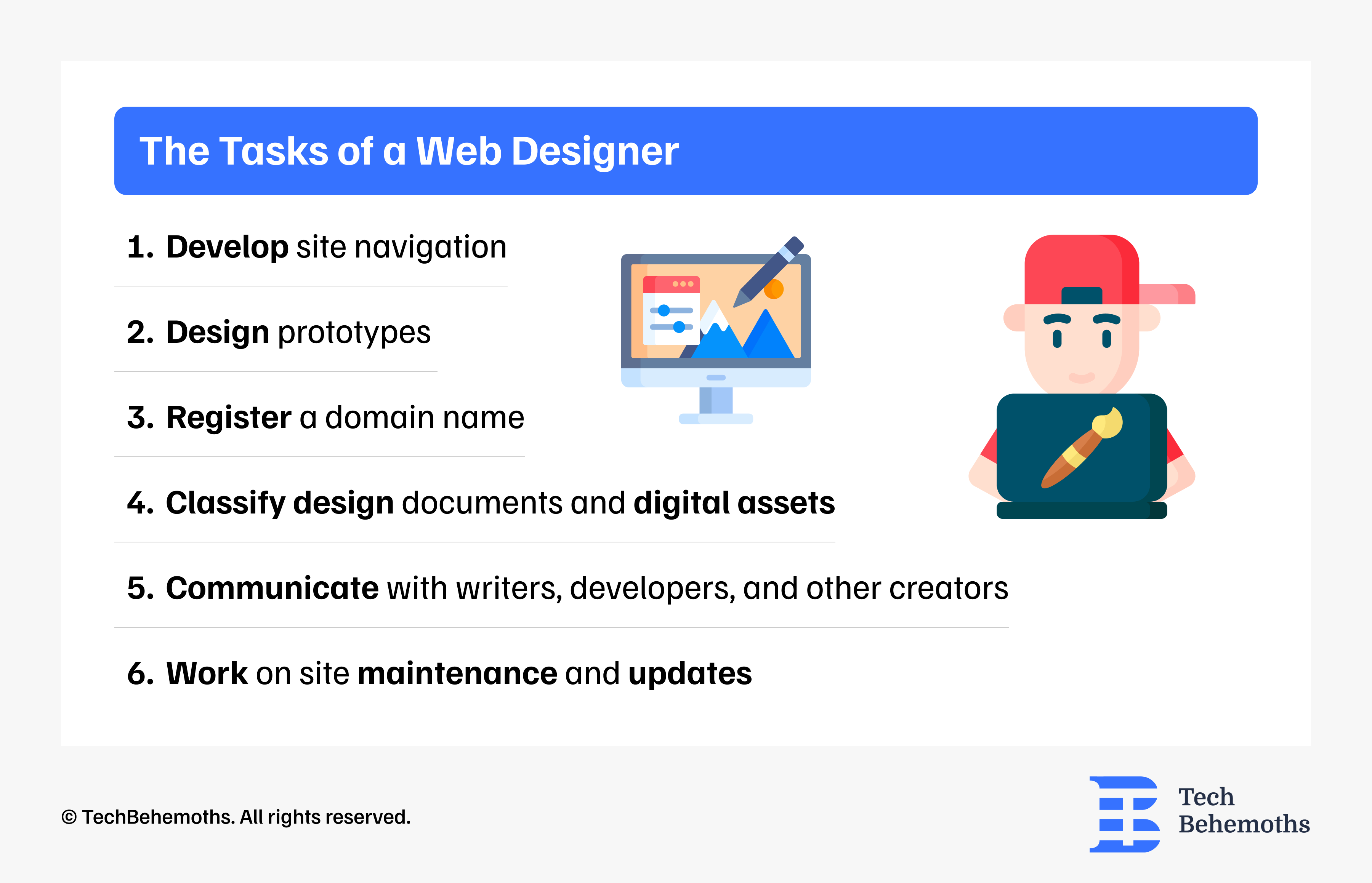
A big advantage for Designers is knowing basic programming languages, allowing them to make minor adjustments and work more efficiently with Developers. Some fundamental programming languages for Web Designers include:
- HTML: It is helpful for creating the framework of a website. It has multiple functions, such as inserting headings, lists, tables, and incorporating videos or sound clips, and many more.
- CSS: Cascading Style Sheets, or CSS, is what gives style to the structure made by HTML, adding color, fonts, and modifying every aspect.
- JavaScript: This language is leveraged with both HTML and CSS to make websites more interactive, generating and controlling elements.
A top Web Designer has both workplace skills, like teamwork and communication, and technical skills including UX design and visual design. The key to success is to combine them for a more efficient workflow and results.
Web Designers should take into consideration the 7 C’s of Web Design that were defined by marketing experts Rayport and Jaworski. They include:
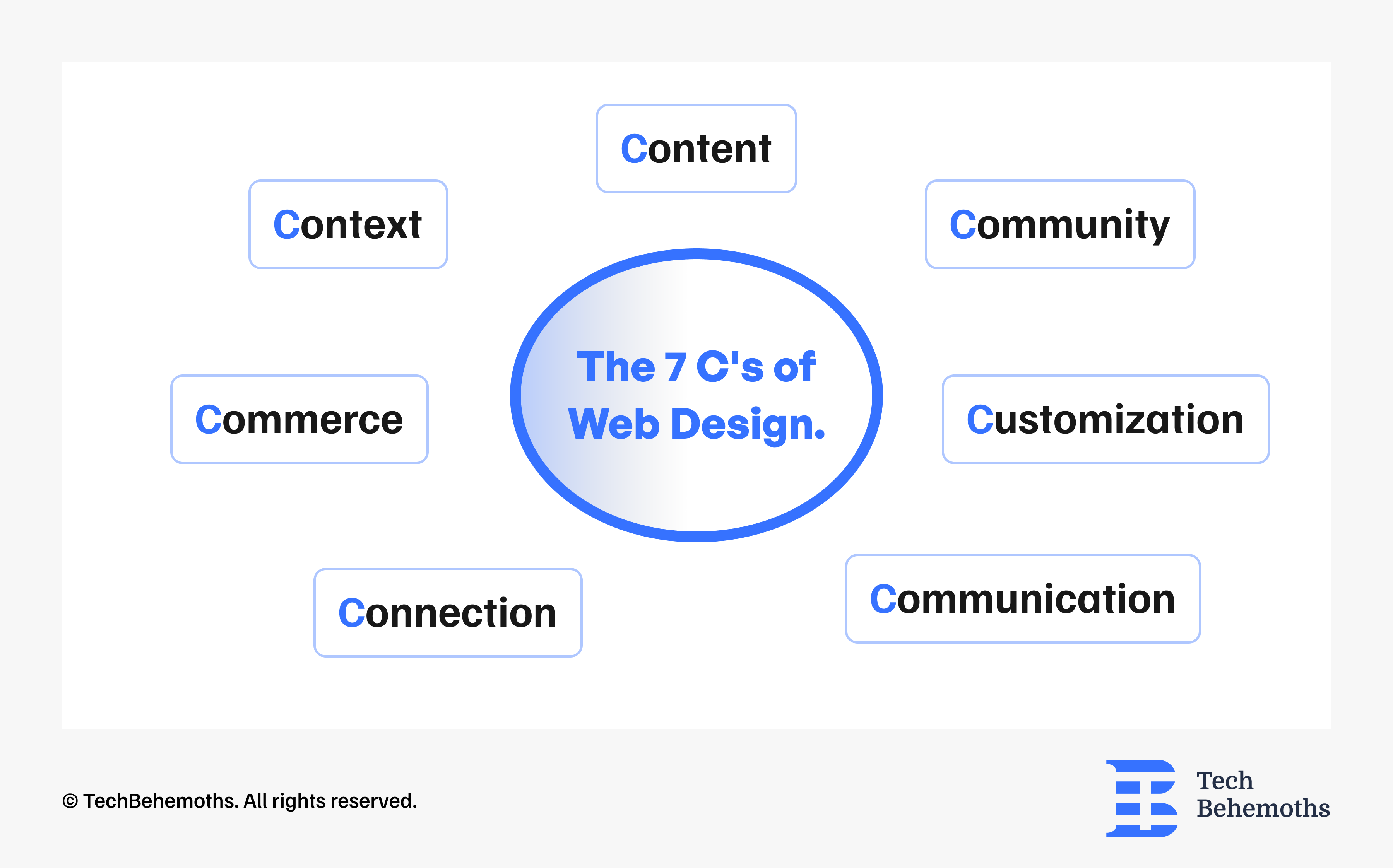
The 7 C’s are crucial for a Web Designer because they give them a structured framework to evaluate and optimize a webpage not only from the visual aspect but also the client’s experience on the website. Context, content, and community make a website more trustworthy. Customization and communication help a site differentiate from others. Also, connection and commerce transform visitors into buyers. The 7 C’s also help a Web Designer address a page’s content, usability, interaction, personalization, and ability to support users in achieving their goals.
Perks of Having a Web Designer For Your Project
Companies' websites should have valuable content, mobile-responsive pages, and provide a positive user experience. This is supported by a study from the ACM Digital Library: 94% of first impressions of a website are based on its design. Also, the same report says that it is enough to take 50 milliseconds to form an opinion. Firms that commit to professional Web Design can get the following benefits:
- Enhanced trust and fidelity.
- Generates a good customer experience.
- Increases the digital presence of a company.
- Increases client engagement
- Optimizes time usage and prevents expensive errors
- Reinforces brand image
- Sustains personalization and scalability
- Boosts ROI and lasting value
- Optimizes safety and credibility
Ultimately, a professional Web Designer can create an organized, well-planned webpage that won’t have structural issues in the future. These sites will also have tailor-made designs and features that are suitable for a specific brand. Additionally, a professional Web Designer will bring meticulous functionality testing, preventive maintenance, and continuous updates to your page.
How to Find Great Web Designers?
Looking for a Web Designer for your company can become a tiresome and resource-consuming task. The following criteria should be considered by firms that want to find the most suitable professional for their projects:
- Portfolio: Review the Designer’s portfolio to not only understand their style, but also their problem-solving skills and versatility. It is also an advantage if they have done projects in your industry. A strong portfolio demonstrates variety, dedication not only to solving problems but also to learning from them, and dedication to future improvements.
- Relevant experience: A Designer who is specific in E-Commerce may not be suitable for your Web Development needs. Look for professionals who specialize in your domain or something similar.
- Client testimonials: Companies can contact past clients specified in the portfolio and ask about how the Designer handled their tasks, reacted to requested edits, and unexpected problems. These reveal details that a portfolio can’t.
- Communication and collaboration: Choose a professional who can communicate transparently. A suitable Web Designer should also be open to collaboration to make sure the client’s ideas are made real more efficiently.
- Analyze the tech stack: The technical skills of a Web Designer should match the required abilities for your projects. They should at least have basic programming language knowledge. This way, they can communicate better with Developers, make small fixes themselves, and understand technical limitations.
- Discuss pricing upfront: Request estimates from various professionals and compare them. Companies can also discuss pricing upfront to find out if they charge hourly, per project, or retainer.
TechBehemoths is a trusted platform that can help you ease your choosing process. It lists more than 31760 Web Design companies across 118+ countries. TechBehemoths also offers a filter option that includes team size, hourly rate, location, tools & technologies, industry focus, profile score, and more. Thus, you can make an informed and optimal decision, finding the right Web Designer for your organization.
8 Suggestions to Retain Web Designers In Your Firm
Multiple factors can help Web Designers stay in a company and work more productively. You can implement these strategies within your organization to help digital professionals not find other job alternatives.
Keep the Firm’s Tech Stack Updated
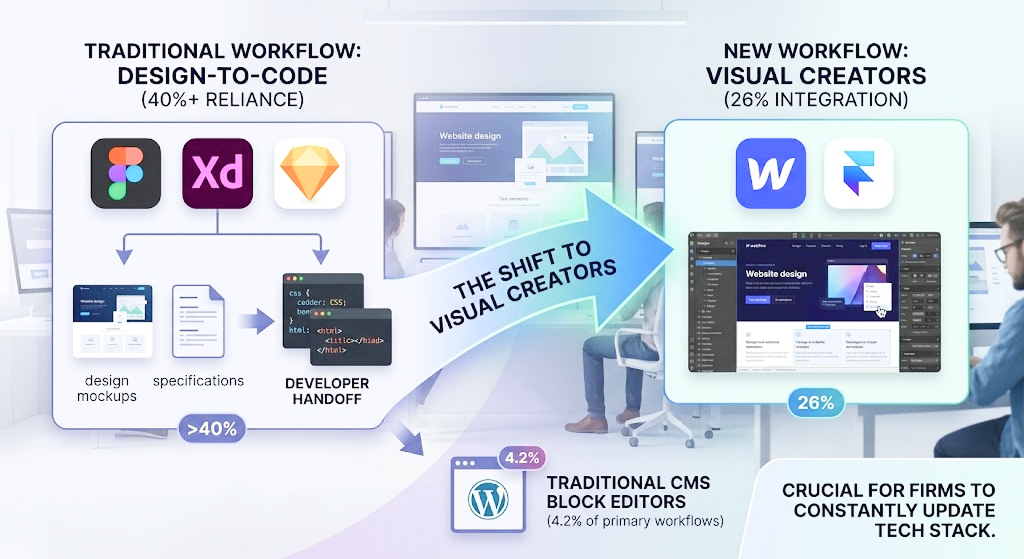
According to the 2026 Web Designer Survey from 2Oi, more than 40% of Web Designers rely primarily on design-to-code platforms, such as Figma, Adobe XD, and Sketch. These apps are a professional standard for this field and are a necessity. These days, there is a transition toward visual creators - software tools that enable professionals to create websites, apps, or digital content leveraging a graphical interface. 26% of Web Designers are fully integrating platforms like Webflow or Framer into their workflows. Taking into consideration that 4.2% of primary workflows are traditional CMS block editors, it is crucial for firms to integrate new tools and technologies into their stack. It is also important to update the already existing ones, because these apps allow Designers to use their speed and adaptability to the maximum.
Have a Clear Career Path
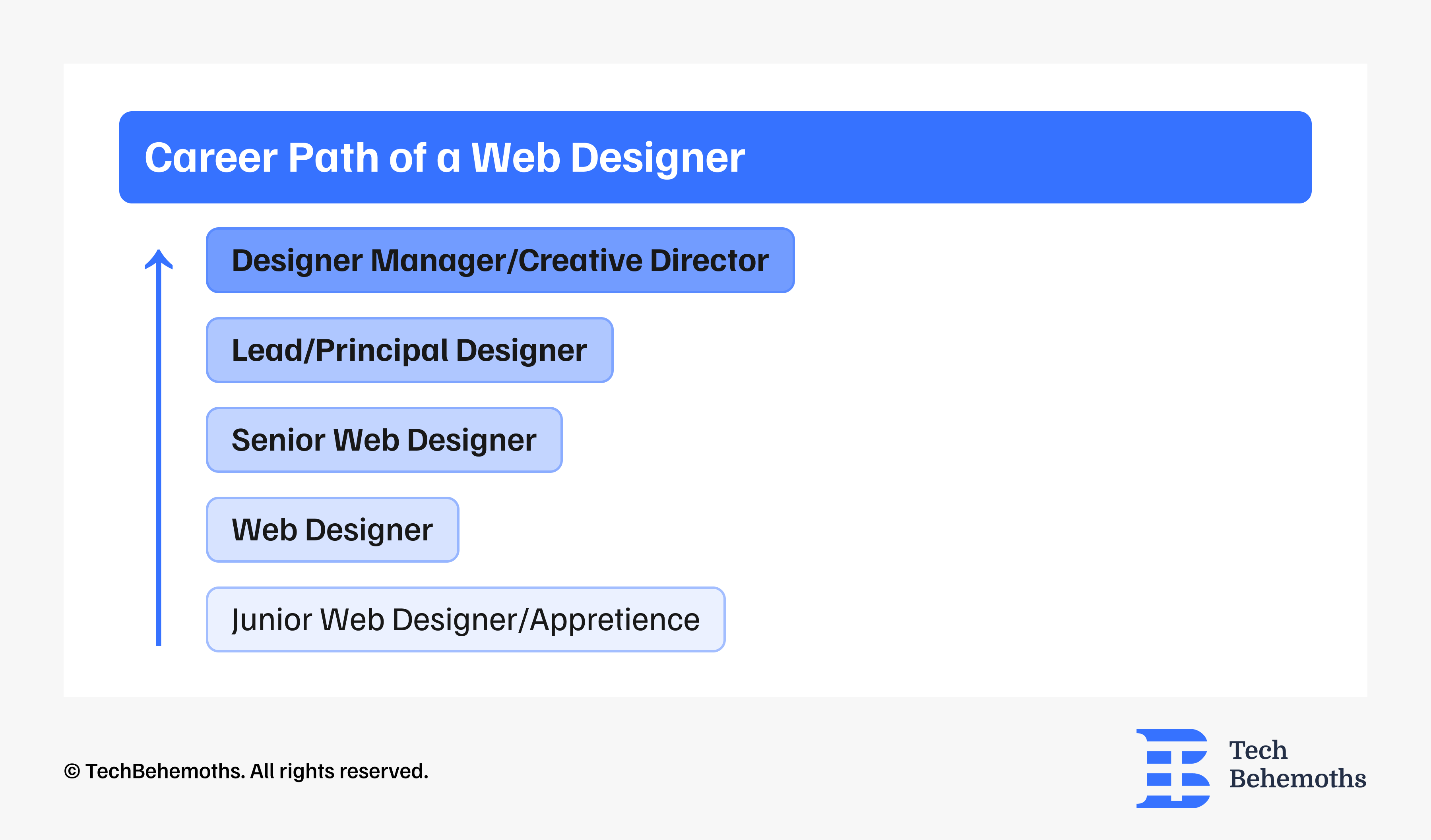
Based on the same report, 54.8% of Web Designers who participated in the survey from 2Oi claim that an unclear progression in their career has been a challenge for them. The most affected professionals are those who work remotely and mid-level Designers, because they don’t have an organized career path that is usually found in a corporate work lifestyle. Without a transparent plan for their professional future, a Web Designer can feel lost or start to look somewhere where they can have visibility on promotions, long-term possibilities, and upskilling. Firms should demonstrate to their Designers a transparent career framework that is also available in a remote and a hybrid environment.
A clear career path for Web Designers should be more than just junior, mid, and senior. A clear progression can be the following:
Flexible Work Environments
A flexible work environment is a necessity for Web Designers because digital creative work thrives on autonomy, varied settings, and adaptable schedules that prevent burnout. Web Design is digital, meaning that physical presence in an office is not required to write code, build layouts, or test user interfaces. Reasons why flexibility is such a need for these professionals include enhanced creativity, global client access, burnout prevention, and a healthy work-life balance. Approximately 60% of entry-level Web Design jobs offer remote or hybrid options because companies recognize this ongoing market demand for adaptable creative talent. Remote Web Design job opportunities depend heavily on niche specialization and the nature of digital workflows. Areas like UI/UX Design support a fully remote work style, while physical prototyping might necessitate onsite work.
Give Them Autonomy Over Creative Projects
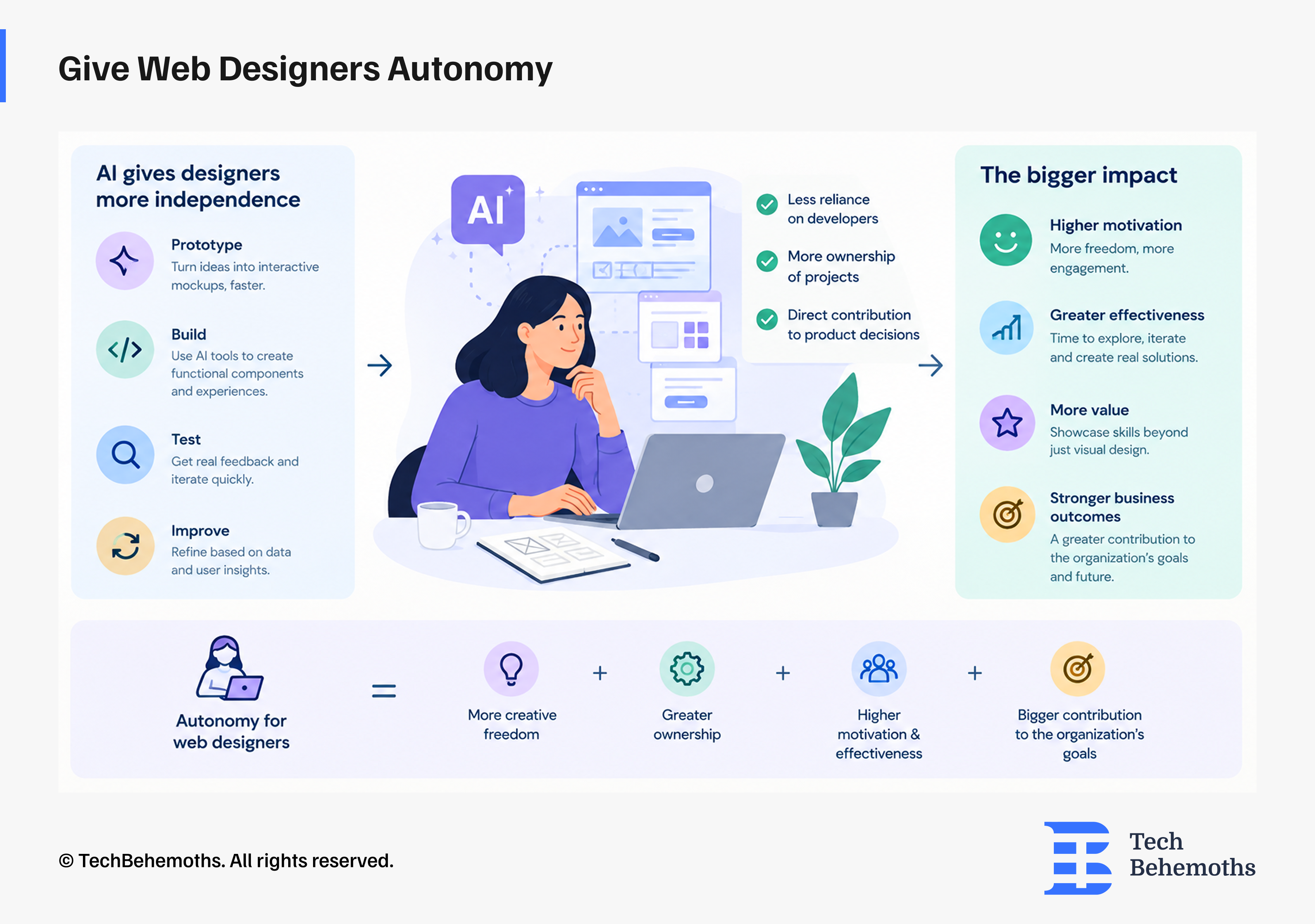
Creative independence has emerged as an essential trait for these experts, especially as AI reshapes how digital products get built. A study by Smashing Magazine demonstrates how these technologies can give Designers greater autonomy or spot deficiencies that are harder to conceal. AI allows Web Designers to prototype, build, test, and improve ideas without a hard reliance on Developers. Thus, they have more independence in their projects and direct contribution to product decisions.
At the same time, when Designers have freedom over their tasks, they can demonstrate their value aside from simply creating visual products. Therefore, firms that offer their Designers freedom and independence have an increased chance to improve not only their motivation and effectiveness, but also to make a bigger contribution to the organization’s goals and future.
Pay Competitively
Websites are not only a business's first impression, but they're also a tool to increase the organization’s revenue. Thus, Web Designers not only make a web page look good, but they also influence the way customers perceive this firm. Modern websites require multiple skills, including:
- UX/UI Design
- Responsive and Mobile Design
- Typography
- Programming languages
- SEO considerations
- Branding
- Etc.
According to Research.com, salaries for Web Design can vary significantly depending on industry, with technology and financial services among the higher-paying sectors and specialized roles such as UX/UI Design and Front-End Development offering strong earning potential.
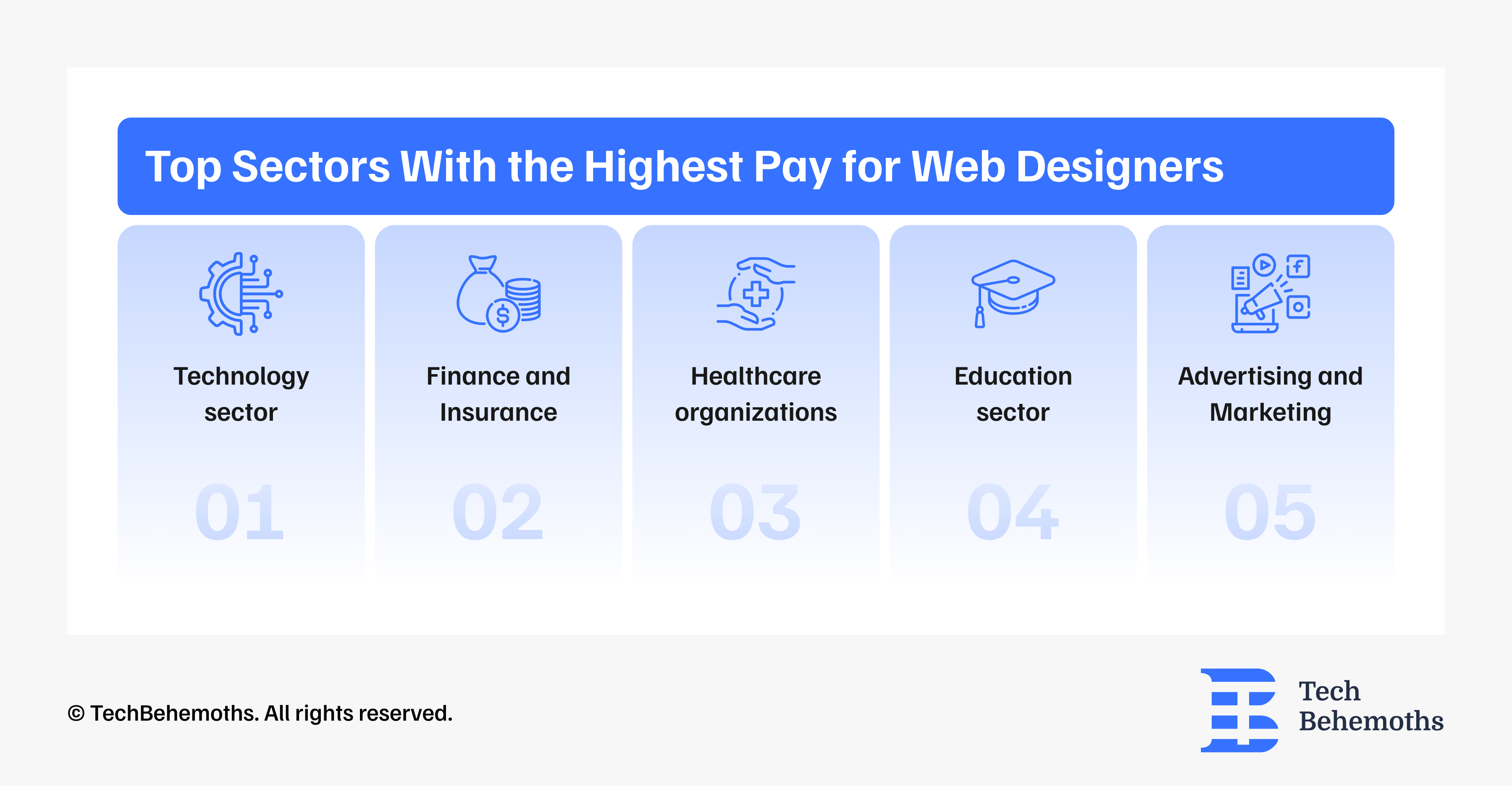
Web Designers combine creativity and technical skills to create webpages that are accessible, user-friendly, and effective. Competitive pay helps businesses attract and retain skilled designers, reduce turnover, and maintain high-quality work. Ultimately, paying Web Designers fairly is an investment in a company’s digital presence, brand reputation, and future success.
Invest in Their Skills
Firms should invest in the skills of their Web Designers because high-quality Design directly improves multiple factors, such as user experience, brand credibility, and business growth. Investing in the skills of Web Designers can provide the following benefits:
- Better user experience
- Higher conversion rates
- Long-term cost savings
- Improved search visibility
Companies that prioritize their professionals’ skills help retain experienced employees while keeping their digital work competitive. When Designers have opportunities to learn new technologies, trends, and tools, they are more likely to see a future with the company. It is especially important in this field to constantly learn something new, because digital tools and technologies change quickly. Focusing on their skills ensures firms can keep valuable talent, reduce turnover, improve the quality of their webpages, and avoid losing experienced knowledge to competitors.
Keep the Workload Organized
Web Designers often face the challenge of unmet deadlines or an overloaded workflow, where their projects can stretch out longer than expected. It leads to emotional frustration, degrading mental health, and lower motivation. Additionally, it leads to deadlines stacking up, other clients getting frustrated, and a feeling of increased pressure.
To have an organized schedule, firms can do the following:
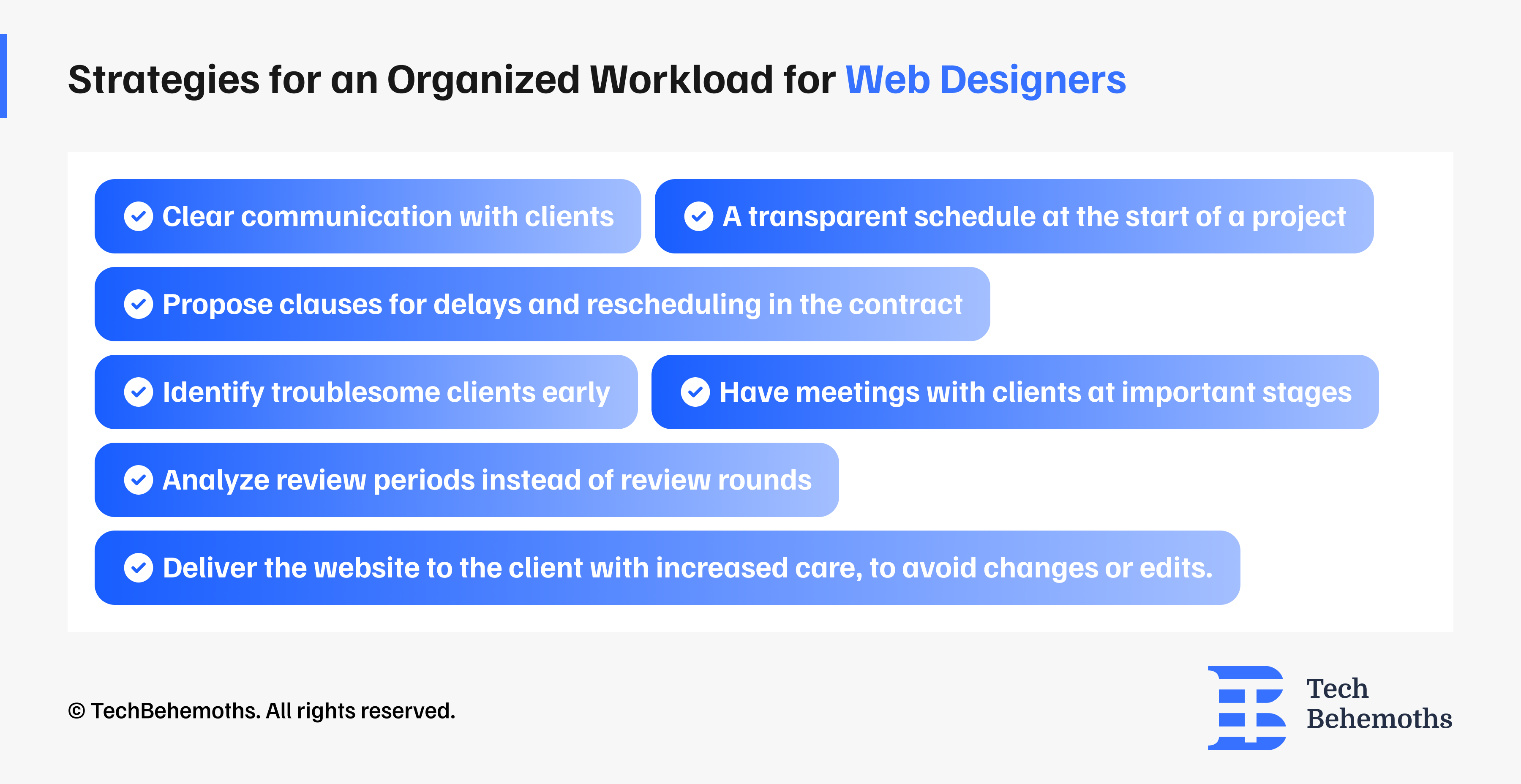
Companies that adopt some of these strategies can offer their Web Designers a more structured volume of work. This will help them prevent burnout, increase their motivation, meet deadlines on time, and have an overall healthy work environment.
Take Into Consideration Feedback
Listening to employees enables firms to identify problems before they lead to dissatisfaction and resignation. About 42% of employees who voluntarily left claimed that their employer or manager could have done something to prevent them from leaving. For Web Designers, responding to feedback can also make them feel valued, respected, and involved in decisions that positively affect their work. Companies should encourage regular employee feedback and take into consideration employees’ suggestions to improve satisfaction and reduce turnover. Overall, firms that listen to and act on Web Designers’ feedback can build trust, optimize work conditions, increase engagement, and ultimately retain skilled Designers for longer.
Are Web Designers Still In Demand?
In 2026, Web Designers are not only still in demand, but the demand has grown, especially for professionals with strong UX/UI and technical skills. In the US, O*NET classifies Web and Digital Interface Designers as a “Bright Outlook”. This category is based on employment criteria, which are expected to grow 7% from 2024 to 2034, much faster than average. It is also expected to have about 75,000 or more job openings over 2024-2034 in the US.
AI and improved Web Development tools may change the profession, but that does not mean Web Designers will disappear. U.S. Bureau of Labor Statistics notes that these technologies could make workers more productive and reduce demand for some basic tasks. Additionally, organizations still need professionals who can handle more complex Design, usability, and UX friction.
Overall, Web Designers are still in demand, but the nature of the job is evolving. Firms have a reason to retain and continuously invest in skilled Designers, because these professionals who can combine creativity, UX knowledge, new technology, and flexibility can offer more value than someone who performs only basic website-building tasks.
Wrapping up
In 2026, the market for Web Design isn’t slowing down, but it's expanding, with new tools and platforms. What is changing is what firms need from Web Designers, not if they need them. AI and no-code tools are helping them get rid of repetitive tasks, but they can’t replace what real humans have: strategic thinking, UX intuition, and the ability to translate a brand’s identity into an experience that users trust within 50 milliseconds of landing on their page.
For companies, it means that the stakes of keeping a Web Designer are growing. Losing a skilled professional means losing someone who understands your users and also your product, not just a set of tech skills and tools. The eight strategies above are a foundation for keeping talent that’s harder to find and gets more expensive to replace every year.
Firms that treat their Design professionals as a commodity will lose the people who have context of their brand and who create the first impression for clients. Organizations that invest in Web Designers will keep the digital presence that converts into profit and success.
Related Questions & Answers
How Much Do Web Designers Actually Earn?
What Share of Web Designers Work as Freelancers Rather Than In-house?
How is AI Adoption Affecting Freelance Web Designers Specifically?
Are Firms Actually Struggling to Hire Web Designers, or is the Talent Pool Sufficient?
How Big is the US Web Design Market Compared to the Global Figure?
I am an enthusiastic Biomedical Engineering Researcher and love learning about various domains. One of the biggest treasures that we, people, have is knowledge because it's hard to achieve and it depends only on human will. And it can be shared with others, that's why I like to find something new and share it with the world.
Discover more TechBehemoths Insights
Learn practical tips and insights about IT Companies, how to find the right company for your projects.
Read the latest news about Market Trends and fresh Interviews.