The Cost of 'Free' Code: Why AI Tools Are Not Production-Ready in 2026 (Yet)


Summary
AI-generated code may seem free and instant, but it comes with significant hidden costs: technical debt, security vulnerabilities, and poor performance.
AI excels at syntax and rapid prototyping, but it can’t replace the architectural thinking and systems decisions of an experienced engineer. Used strategically - with human oversight and clear structure - AI becomes a powerful multiplier for development teams. Without these, “free” quickly becomes expensive.
This article explores why vibe-coded apps are far from free. It analyzes the critical risks of deploying AI-generated code without architectural oversight. Learn the ideal roadmap to add AI-generated code tools into your workflow.
There is No “Free” in AI-Driven Development
Free or accessible AI-driven software development is at an all-time high . From an industry perspective, the idea of more production and hype around it is beneficial; however, this practice is becoming too common, leading to undesirable roadblocks. Software development takes years to master through real-world experience with products, clients, and even just hours of coding for the sake of it on a Saturday afternoon. That does not mean innovative tools like AI-driven coding can’t shorten the learning curve; it's the nature of any industry.
At the moment, the issue is AI makes code generation feel instant and costless, and that is far from reality. Code isn't always costly, but it will be if it's not made with the future in mind. So when it's time to scale or time to check your technical debt, "costless" will be an understatement. AI code without a plan and with speed as a driver has a delayed cost, hidden at the beginning but accumulative at the end of the day.
Speed Without Structure: The New Technical Debt Model
The mobile-app ecosystem is undergoing an aggressive expansion, where founders who used to take their time developing an idea are now launching it much faster. Overemphasizing speed has never been a reliable approach when it comes to software development; commonly, it is a direct way to technical debt. Think of it this way:
-
Traditional development: takes time but makes intentional and substantial decisions
-
AI coding: Fast delivery, but with limited architectural and systems thinking.
As code evolves with AI, so does technical debt. Piling up debt is no longer just a case of wrong decisions but also of unmade choices. This is why any project developed with AI that is going for the long run should be supervised from the beginning by a proficient developer or engineer; that's how you use speed as an actual benefit.
AI Still Falls Short for Full Development
Let's be clear: AI is a permanent fixture in our workflow, evolving every day, and honestly, it's a positive development. The importance here is understanding its best use and being curious and analytical.
AI excels at syntax; it understands perfectly how to execute code under specific parameters and follow basic logical patterns. But that's just the beginning, and using AI code for syntax will indeed save you some precious time. However, a human must thoroughly check whatever AI creates when it comes to system designs.
This stage is more about understanding logic and problem-solving. It's when you ensure you are building towards a scalable product with a beneficial data flow that provides long-term maintenance. How should you integrate this functionality into your workflow? AI code is a boost followed by clear instructions, and architecture is only achieved by precise human decisions.
|
Feature |
What AI-generated Code Provides |
What Production Requires |
|---|---|---|
|
UX/UI |
Polished, interactive mockups. |
Edge-case handling and accessibility. |
|
Data Flow |
Basic "save/load" logic. |
Encryption, auditing, and redundancy. |
|
Security |
Standard auth patterns. |
Pen-tested, secret-managed infra. |
|
Logic |
Easy path execution. |
Exception handling and logging. |
The Hidden Cost of AI-Generated Code
Seeking shortcuts or skipping steps in development often leads to negative outcomes. It’s vital for any founder out there to understand the potential cost of launching an AI code without a structured plan.
-
Maintenance Cost: AI-generated code can vary, either clean and functional or difficult to read and full of inconsistencies. This scenario translates to debugging complexity with no clear logic ownership, resulting in a frustrated developer asking, “Why was the code written this way?
-
Security Debt: AI code prioritizes speed and completion around a prompt, which can lead to alarming issues like hardcoded secrets exposed without you even noticing when pushing code live. AI models are trained on massive databases; you can't guarantee the foundation is 100% safe.
-
Performance Inefficiency: The cost of the process can vary depending on the tool you choose, but you will inevitably encounter a wall when you overuse memory, employ poor database patterns, and discover that your code is not optimized for real usage.
Case Study: McHire Hire Platform
Even the big companies out there can experience serious issues with AI-generated code. For example, in July 2025 security researchers discovered McDonald's AI-powered McHire platform left over 64 million job applications exposed due to default admin credentials (123456/123456) and insecure direct object references.
The AI company behind the platform likely relied heavily on quickly generated AI code , but the end result is a product that isn't very secure or well-structured. Fixing this type of emergency ends up as a higher cost because of the public exposure and legal risk.
AI Coding is Here to Stay
While we have focused on the risks of AI-generated code, these liabilities can transform into assets when the tools are used with architectural intent rather than merely generating code.
Currently AI adds massive value to any development roadmap; we are looking at tools that excel at prototyping, as internal tools, speeding development, documentation, and testing assistance. It has become a serious multiplier for development teams, and with clear direction, you have the best acceleration tool. This phenomenon changes everything for non-technical founders, who not so long ago had to wait months to even see a prototype; now they can develop their own and start validating their product. At Designli, we believe that integrating AI strategically enhances internal processes. By automating our roadmaps and accelerating knowledge-sharing, we empower our tech leads to build with both speed and precision.
What is the Most Useful Approach for Vibe Coding?
Treat AI-generated code as an energy drink; take advantage of what it provides but respect its limitations. Right now you can create amazing demos, prototypes, and even low-tier MVPs; you don't have to wait so long to test the feasibility of an idea. That's the magic of it; with a clear structure, you are optimizing time and resources like never before.
When you're prepared to elevate your project and incorporate AI tools for a successful launch, it's essential to approach it strategically.
AI + architectural thinking → scalability
AI + structured systems → security
When you apply these best practices and follow a clear roadmap, you are more likely to develop a modular architecture, deploy proper testing, ensure security layers, and have clear ownership of your project. In 2026, the true winners are not just taking advantage of AI; strategic users are establishing effective systems that allow AI to maximize speed and enable humans to make final decisions.
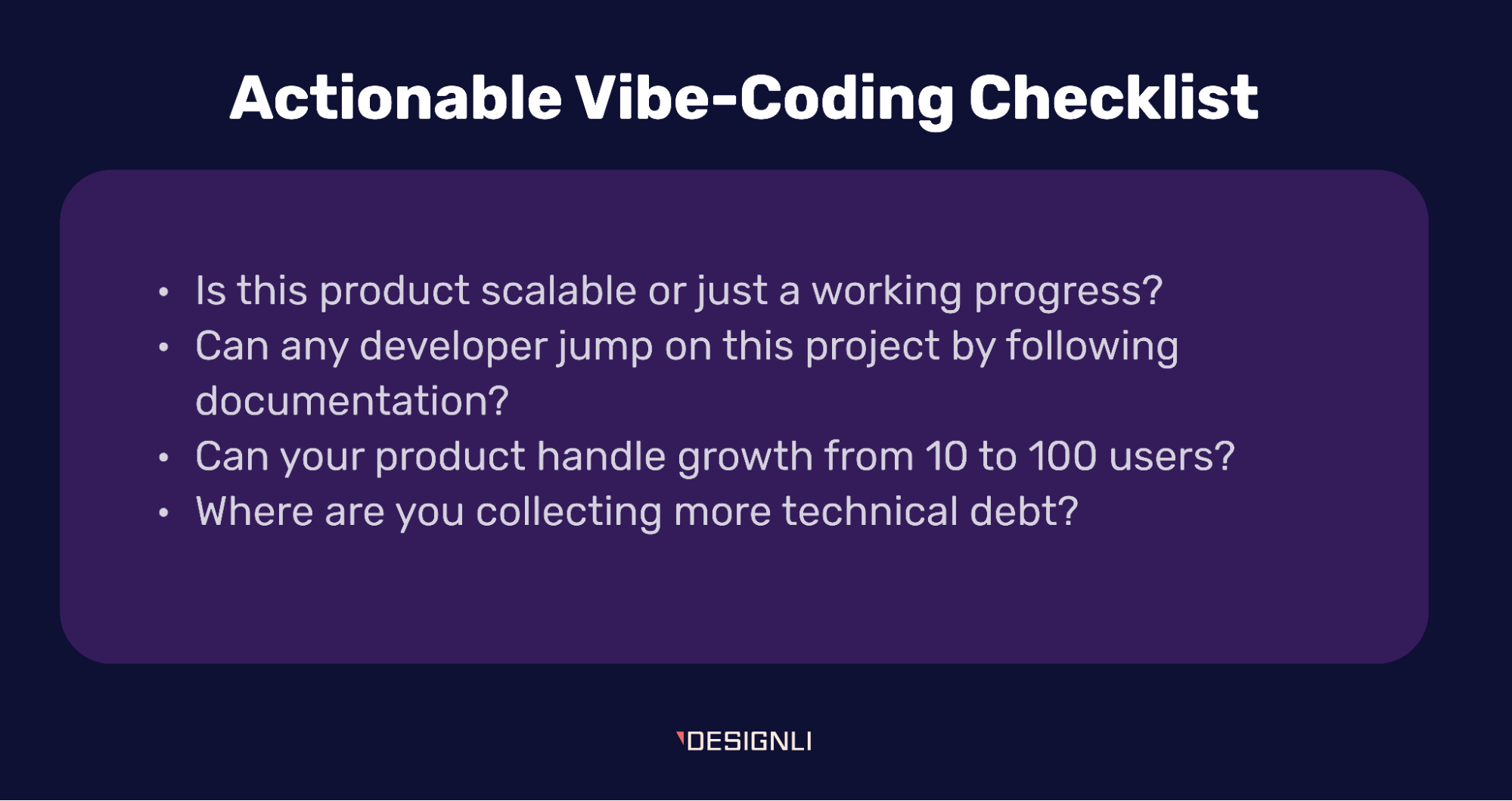
Vibe-Coding: Effective, but Never Free
Working with AI-generated tools can be a productive, time-saving investment; you just need to make every step of the process actionable. For a vibe project to work, limitations have to be clear and best practices applied. From that point onwards, the majority of these tools guided by an experienced developer can turn any idea into a scalable, well-engineered product.
Related Questions & Answers
Is vibe-coding a viable strategy to develop an MVP?
Why does AI-generated code increase technical debt?
What is the hybrid model for AI development in 2026?
Keith Shields is the CEO and Co-founder of Designli, a leading software and web development company. Keith is passionate about creating impactful digital experiences for non-technical founders. He co-founded Applits, a startup recognized as the "Coolest College Startup of 2014" by Inc.com, and has since led hundreds of successful projects at Designli. As a serial entrepreneur, Keith is committed to helping non-technical founders launch transformative digital products through Designli’s proprietary SolutionLab process.
Discover more TechBehemoths Insights
Learn practical tips and insights about IT Companies, how to find the right company for your projects.
Read the latest news about Market Trends and fresh Interviews.