
There are 1 Companies in Zambia
that provide Online Reputation Management Services!
In Zambia’s IT market, sectors like the digital financial services, with increased internet penetration and mobile connections, are driving Zambia’s tech market growth. Major opportunities exist in fields like Software Development, ICT parks, Data Storage, and Cloud Computing.
Discover Top IT Companies in Zambia specialized in Online Reputation Management and other related services. Find the best IT service providers for your projects.
Online reputation management (ORM) is the practice of strategically controlling and enhancing the way a brand, business, or individual is perceived online. It plays a vital role in building customer trust, establishing industry credibility, and driving sales. Key aspects of ORM include effectively responding to negative feedback, getting positive reviews, and closely monitoring brand mentions on various platforms.
Handpicked companies • No obligation to hire • 100% risk-free
Explore Top Online Reputation Management Companies in Zambia

We are a brand design + advertising agency: brand management, campaign design, precise media buying and performance optimization — plus auxiliary work
Filter Online Reputation Management Companies in Zambia by Cities
Find the right tech company near you or from a specific city. Some of the best companies might be located in smaller cities.
Find more Online Reputation Management companies around the world
TechBehemoths is the world's most advanced and user-friendly platform to match IT Companies with real clients without hustle.
ICT in Zambia: Data, Companies, and Predictions
The market of IT services in Zambia is expected to reach a revenue of $301.47 million in 2025, and among its segments, Business Process Outsourcing (BPO) is dominating. IT is rising at a rate of 9.7% and reflects a growth trajectory underlining the increased demand for IT services. Zambian tech companies spend an average of over $40 per employee, offering insights on their investments in IT services.
Sectors like the digital financial services, with increased internet penetration and mobile connections, are driving Zambia’s tech market growth. Major opportunities exist in fields like Software Development, ICT parks, Data Storage, and Cloud Computing.
The government is working to improve the infrastructure, especially in rural areas. Its initiatives, such as SMART Zambia and the 2023-2026 National Electronic Government Plan, aim to fully digitize government systems, processes, services, and procedures. Despite the remarkable improvements Zambia has accomplished in its IT sector, it is still in need of more investment and overcoming connectivity challenges.
What Are The Benefits of Working With a Zambia-based Company?
Zambia has made active investments in education, especially in engineering, technology, and business. This caused a growing talent pool of skilled tech experts. Because the official language in this country is English, the work communication is easier with fewer issues and misunderstandings.
According to ZICTA, the number of active mobile cellular subscriptions increased significantly by 9.5% to 23.3 million in 2024. This was influenced by the adoption of digital financial services. The government also implemented initiatives to expand digital access through the launches of public free WI-FI services and the introduction of Zambia’s National Artificial Intelligence (AI) Strategy, designed for safe AI technology adoption.
Google also made a partnership with the Zambian government, resulting in the establishment of an AI Centre of Excellence at the University of Zambia to enhance digital skills. The country also experienced an optimization in cybersecurity, with the Global Cybersecurity Index (GCI) score rising 92.6%. A growing tech market, lower hiring costs, and support from the government are advantages of collaborating with a tech organization from Zambia, fostering further advancements in the IT industry and your project.
What You Should Be Aware of When Working With Zambia-based Tech Companies?
Zambia’s tech sector experienced significant growth, but working with tech firms from this country may bring some challenges or complexities in the work process. Its unstable power supply and frequent outages affect the telecom framework and weaken the internet connectivity. Access to the internet isn’t available everywhere in Zambia, mostly in the urban areas, while the rural zones often have poor or unreliable connectivity.
There is also a limit on the internal expertise or human resource capacity, with reports from many small and medium enterprises (SMEs). Additionally, most ICT equipment is imported, which leads to higher rates. For small firms, investing in ICT is often considered too expensive. This is why they use old hardware, minimal maintenance, and lower-cost staff, which can degrade performance and security.
Are Zambia's IT Companies Reliable?
The question of reliability in the tech companies in Zambia is uneven, as it depends on each firm. Several factors can also provide insights about this matter, for example, the rising number of licensed ICT operators and tech employees. Additionally, there are increased regulations of the ICT sector, such as initiatives by the regulatory authority, Zambia Information and Communication Technology Authority (ZICTA), that foster security and organization. The growth in the tech scene, which is influenced by the contribution made by the regional IT companies, underlines their dedication and increases the overall rate of reliability.
Comparing Zambia's IT industry with Neighboring Countries
Zambia is interconnected with other countries through a national fibre-optic network that links all provinces, with some of the international connectivity routes going through neighboring states, enabling the country to access the global internet. There are active cross-border fibre-route projects, e.g., between Zambia and Malawi, that improve regional connectivity and data transfer. Zambia has collaborations in the educational sector, like the UbuntuNet Alliance, which connects universities and research institutions across Eastern & Southern Africa, including Zambia. Through this network, the country’s institutions are linked to other facilities in other countries, enabling collaboration and data sharing.
What is Online Reputation Management and what are its benefits for your projects?
Online reputation management (ORM) is the practice of strategically controlling and enhancing the way a brand, business, or individual is perceived online. It plays a vital role in building customer trust, establishing industry credibility, and driving sales. Key aspects of ORM include effectively responding to negative feedback, getting positive reviews, and closely monitoring brand mentions on various platforms.
Are you aware that 75% of businesses consider online reviews, comments, and forum posts crucial for their financial stability and reputation?
Why online reputation management is important for your business
-
The way your brand appears online can significantly impact purchasing decisions.
In fact, studies show that 59% of shoppers conduct online research before making a purchase, and a whopping 97% of consumers consult product reviews before buying. This means that if your brand doesn't present itself positively online, you risk losing potential customers.
-
Managing negative reviews is essential for any business.
While negative reviews are unavoidable, actively monitoring and responding to them can have a positive impact on your online reputation. Research has shown that customers who had their complaints addressed within five minutes on social media were more likely to continue making purchases with the company in the future.
-
It provides valuable feedback.
Customer reviews offer valuable feedback that can help identify and address potential issues in your products, services, or overall customer experience. By analyzing and reading through multiple reviews, you can gather useful insights that highlight recurring complaints and guide improvements.
Factors that Contribute to ORM
While every business uses a unique mix to maintain its online reputation, effective ORM should involve combining the following strategies:
-
Owned media - Experiences of both employees and customers, user-generated material, assessments, online seminars, and brand-generated content.
-
Paid media - Lead generation, affiliate programs, native advertising, and sponsored social media postings.
-
Earned media - Public relations, media relations, and influencer marketing.
-
Shared media - Community service and collaborations, co-branding campaigns, and organic social media content.
What is the role of online brand reputation manager
A brand reputation manager maintains a positive online image for a brand. They utilize various online resources to monitor and influence public perception of the brand. This involves analyzing reviews, tracking online mentions, and measuring brand sentiment. By actively managing the brand's online presence, they ensure that the brand maintains a positive reputation among its audience.
TechBehemoths lists over 900 online reputation management service providers. Use the smart filters to find and select the companies you need. You can view their profiles and reach out to them for collaboration or submit your project.
The system will match your peoject requirements with the best brand strategy service providers. Lastly, you can find out more about what is online reputation management and how to develop effectively on TechBehemoths blog.
Where to track your brand mentions and what tools to use?
The web is vast, so finding mentions about your brand requires specific tools. You can monitor your brand mentions and sentiment on different platforms like:
-
Social media - Facebook, Linkedin, Twitter (X)
-
Web and news sites - niche websites/blogs and news sites.
-
Review sites - Trustpilot, Google reviews
-
AI chatbots - ChatGPT, Perplexity,
-
Communities and forums - Reddit, Quora, niche forums
Examples of tools you can use to track the mentions of your brand:
- Social media, community, review sites - BrandMentions, Brand24, Mention.com
- Web and news - Ahrefs, BrandMentions, Brand24
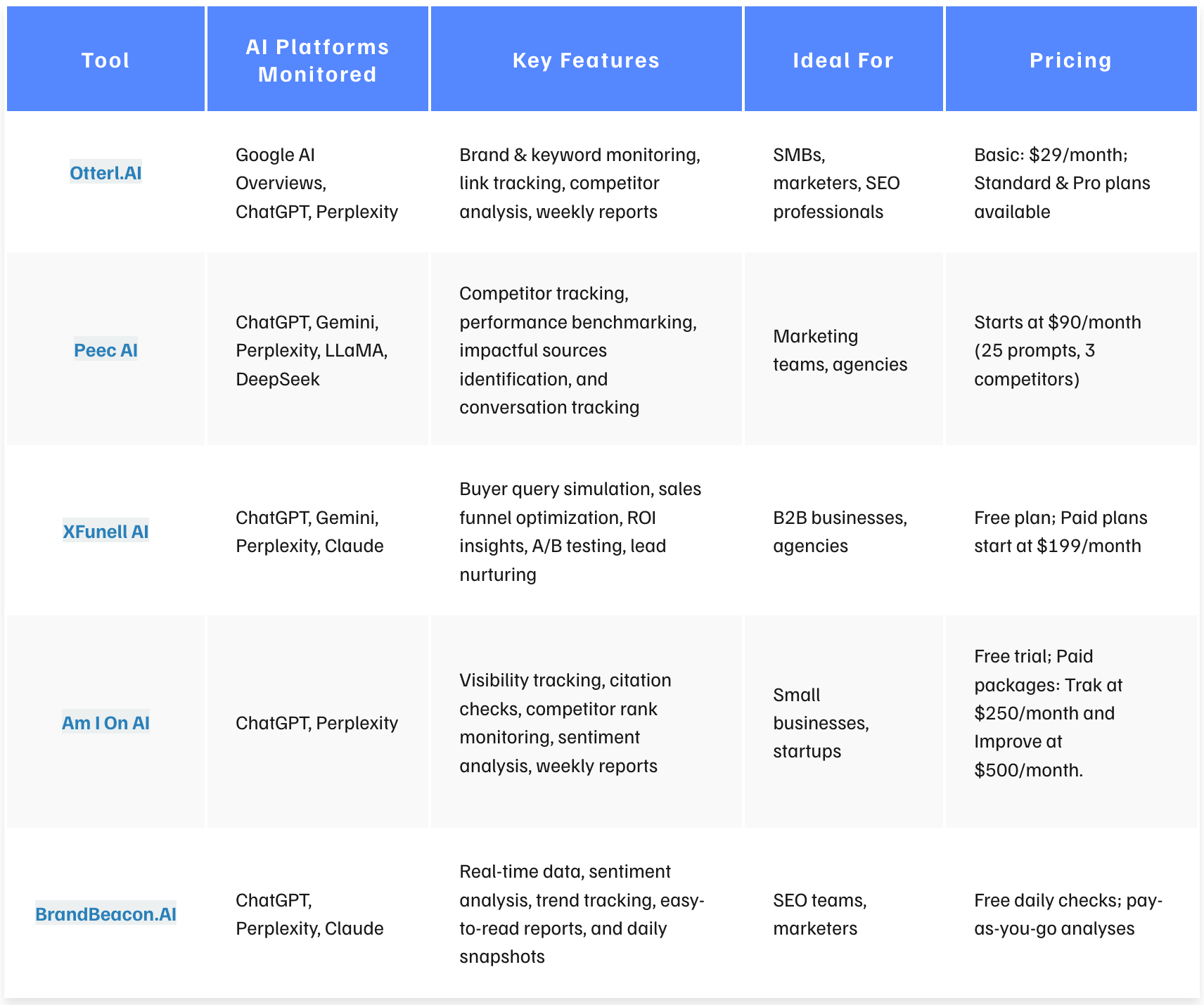
- AI chatbots - Peec AI, Otterly.AI, BrandBeacon.Ai
Most recently, AI chatbots like ChatGPT are gaining fast user adoption and are transforming how people search for and access information. Users are asking more complex questions instead of searching keywords, and the process is more conversational.
AI chatbots aren’t like Google, they don’t rank content traditionally. Instead, they serve and recommend content and websites based on users questions, context, quality, and relevance.
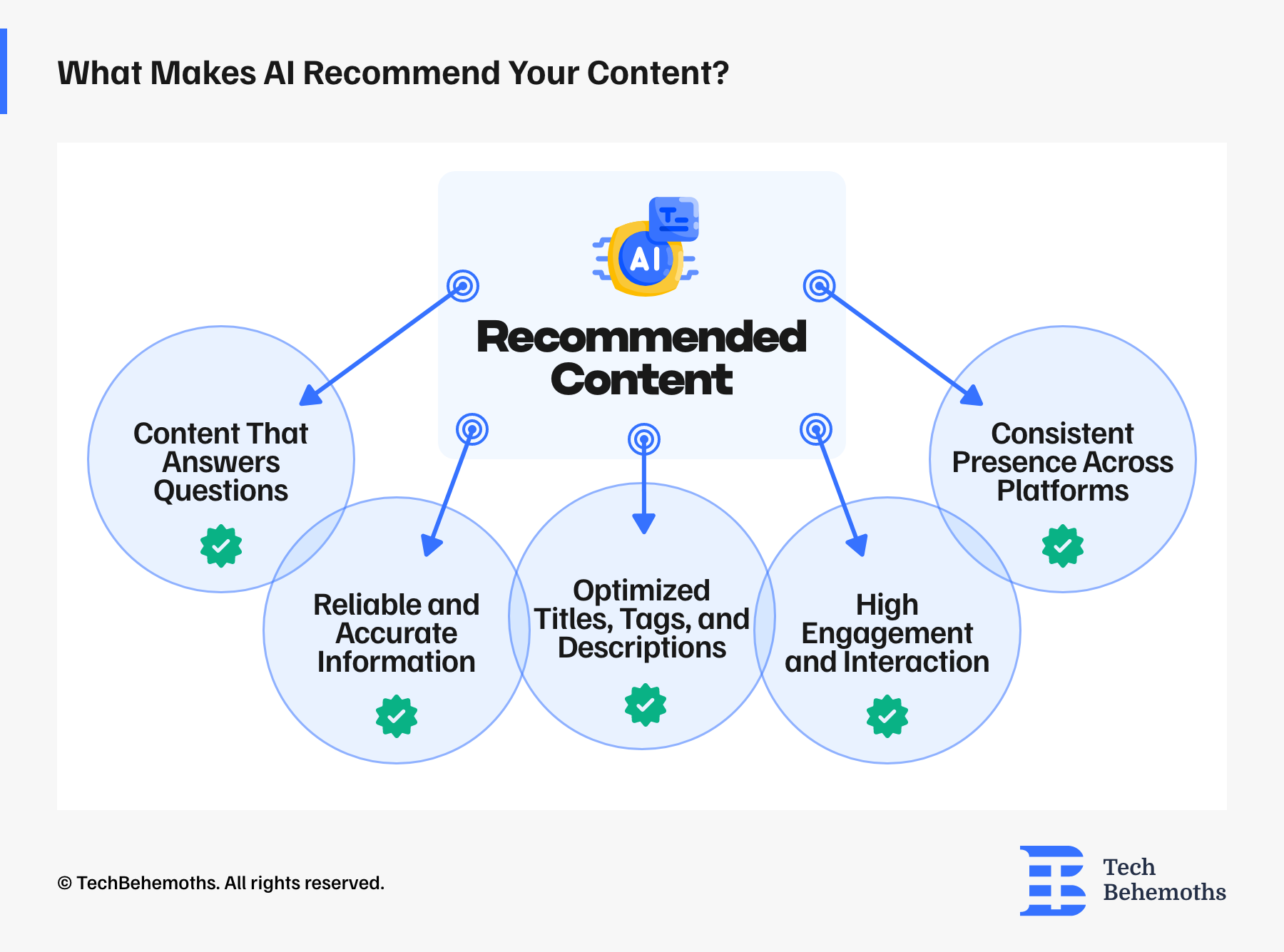
Knowing how good your brand is performing in chatbots and the general sentiment of users when they ask questions about your brand/content is important for your business. This data can help you adjust your marketing activities accordingly and react to possible negative feedback or reviews.
Here is a comparison of some AI chatbot visibility tools:
Key elements for an efficient reputation management strategy
Here are some practical considerations for a successful online reputation management strategy:
1. Define your unique values
Ask yourself some of these questions: what problem are you solving for your customers, why would they want to buy from you and not your competitors? Then tailor your answers/actions to these values
2. Monitor your brand mentions
Use the tools mentioned earlier to track the mentions about your brand on different platforms. Be proactive and respond to positive and negative feedback, reviews, etc.
3. Listen to your customers
Social media platforms, review sites along with your site are feedback channels for your customers. It’s important to listen to your customers' frustrations and positive experiences to adjust your product/service accordingly and communicate in a professional manner.
4. Monitor your competitors
Tracking the online mentions of your competitors is a good way to stay up to date with what’s happening with your competitors and get ideas of new marketing campaigns.
5. Define the key elements
Consider the key elements that are part of your online reputation management:
-
A clear statement of your brand mission/unique value proposition, and social media activities to support them
-
Regular brand related updates using high-quality content
-
Up-to-date positive feedback from customers
-
Internal documentation on how to answer to positive/negative reviews and feedback
-
Fake reviews and spam management rules
-
List of possible reputation risks and how to manage them.
-
Responsibilities distribution among sales, marketing, and support teams. Who is doing what?
If you need help with ORM, consider finding the right agency for your needs, using the Submit your project option on TechBehemoths. It’s free, and there is no obligation to hire.