
There are 2 Companies in Zambia
that provide Email Marketing Services!
In Zambia’s IT market, sectors like the digital financial services, with increased internet penetration and mobile connections, are driving Zambia’s tech market growth. Major opportunities exist in fields like Software Development, ICT parks, Data Storage, and Cloud Computing.
Discover Top IT Companies in Zambia specialized in Email Marketing to help you generate more leads and sales and ultimately grow your business.
Email Marketing is a digital marketing strategy used by businesses to connect with their prospects/clients and promote their services or products via emails.
Email is actually older than the Internet and was invented in the early 70s, it’s still one of the most widely used forms of communication on the web, especially for business purposes.
Handpicked companies • No obligation to hire • 100% risk-free
Explore Top Email Marketing Companies in Zambia

MikeBase Group Ecosystem is a software company created to deliver small companies with the best tech support

Yamfumu is the Best Technology, Digital Marketing, Brand Development, Creative Graphic Design, Website Development, and App Development.
Filter Email Marketing Companies in Zambia by Cities
Find the right tech company near you or from a specific city. Some of the best companies might be located in smaller cities.
Find more Email Marketing companies around the world
TechBehemoths is the world's most advanced and user-friendly platform to match IT Companies with real clients without hustle.
ICT in Zambia: Data, Companies, and Predictions
The market of IT services in Zambia is expected to reach a revenue of $301.47 million in 2025, and among its segments, Business Process Outsourcing (BPO) is dominating. IT is rising at a rate of 9.7% and reflects a growth trajectory underlining the increased demand for IT services. Zambian tech companies spend an average of over $40 per employee, offering insights on their investments in IT services.
Sectors like the digital financial services, with increased internet penetration and mobile connections, are driving Zambia’s tech market growth. Major opportunities exist in fields like Software Development, ICT parks, Data Storage, and Cloud Computing.
The government is working to improve the infrastructure, especially in rural areas. Its initiatives, such as SMART Zambia and the 2023-2026 National Electronic Government Plan, aim to fully digitize government systems, processes, services, and procedures. Despite the remarkable improvements Zambia has accomplished in its IT sector, it is still in need of more investment and overcoming connectivity challenges.
What Are The Benefits of Working With a Zambia-based Company?
Zambia has made active investments in education, especially in engineering, technology, and business. This caused a growing talent pool of skilled tech experts. Because the official language in this country is English, the work communication is easier with fewer issues and misunderstandings.
According to ZICTA, the number of active mobile cellular subscriptions increased significantly by 9.5% to 23.3 million in 2024. This was influenced by the adoption of digital financial services. The government also implemented initiatives to expand digital access through the launches of public free WI-FI services and the introduction of Zambia’s National Artificial Intelligence (AI) Strategy, designed for safe AI technology adoption.
Google also made a partnership with the Zambian government, resulting in the establishment of an AI Centre of Excellence at the University of Zambia to enhance digital skills. The country also experienced an optimization in cybersecurity, with the Global Cybersecurity Index (GCI) score rising 92.6%. A growing tech market, lower hiring costs, and support from the government are advantages of collaborating with a tech organization from Zambia, fostering further advancements in the IT industry and your project.
What You Should Be Aware of When Working With Zambia-based Tech Companies?
Zambia’s tech sector experienced significant growth, but working with tech firms from this country may bring some challenges or complexities in the work process. Its unstable power supply and frequent outages affect the telecom framework and weaken the internet connectivity. Access to the internet isn’t available everywhere in Zambia, mostly in the urban areas, while the rural zones often have poor or unreliable connectivity.
There is also a limit on the internal expertise or human resource capacity, with reports from many small and medium enterprises (SMEs). Additionally, most ICT equipment is imported, which leads to higher rates. For small firms, investing in ICT is often considered too expensive. This is why they use old hardware, minimal maintenance, and lower-cost staff, which can degrade performance and security.
Are Zambia's IT Companies Reliable?
The question of reliability in the tech companies in Zambia is uneven, as it depends on each firm. Several factors can also provide insights about this matter, for example, the rising number of licensed ICT operators and tech employees. Additionally, there are increased regulations of the ICT sector, such as initiatives by the regulatory authority, Zambia Information and Communication Technology Authority (ZICTA), that foster security and organization. The growth in the tech scene, which is influenced by the contribution made by the regional IT companies, underlines their dedication and increases the overall rate of reliability.
Comparing Zambia's IT industry with Neighboring Countries
Zambia is interconnected with other countries through a national fibre-optic network that links all provinces, with some of the international connectivity routes going through neighboring states, enabling the country to access the global internet. There are active cross-border fibre-route projects, e.g., between Zambia and Malawi, that improve regional connectivity and data transfer. Zambia has collaborations in the educational sector, like the UbuntuNet Alliance, which connects universities and research institutions across Eastern & Southern Africa, including Zambia. Through this network, the country’s institutions are linked to other facilities in other countries, enabling collaboration and data sharing.
What is Email Marketing and what are its benefits for your projects?
Email Marketing is a digital marketing strategy used by businesses to connect with their prospects/clients and promote their services or products via emails.
Email is actually older than the Internet and was invented in the early 70s, it’s still one of the most widely used forms of communication on the web, especially for business purposes.
A significant number of businesses rely on email marketing to increase their revenue, as it’s an efficient channel when it comes to lead and sales generation. 27% of IT companies surveyed by TechBehemoths mentioned that email marketing is one of their top marketing strategies.
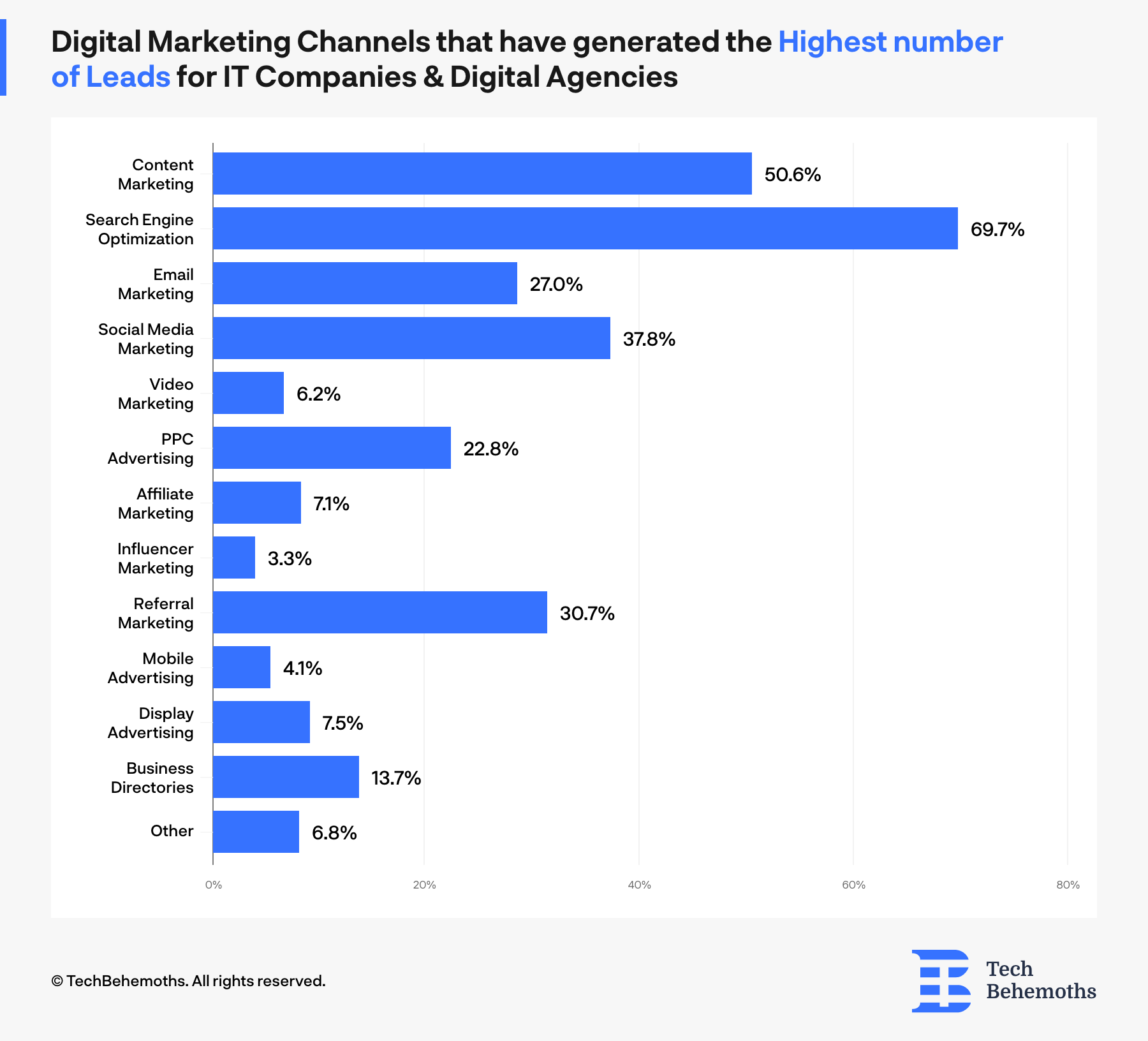
Here are some of the benefits of email marketing for businesses:
- Increases your brand awareness
- Generates leads and sales
- Has a higher conversion rate
- Builds brand loyalty
- Is a great channel for upselling
- Delivers personalized content and messages
- Generates results fast
There are multiple email marketing tools on the market for self service advertising like Mailchimp, Hubspot, Zoho campaigns. They include a wide set of advanced features like automation, segmentation, email templates, ecommerce options, A/B testing, etc.
However, for a more holistic approach and scalable results with email marketing, you might want to get help from service providers who have proven expertise and advanced knowledge/techniques.
If you’re considering hiring an email marketing agency, here are some things to look for:
- Experience
- Location
- Team size
- Price range
- Portfolio
- Approach & techniques
- Communication & reporting
- Customer reviews
You can choose from more than 8,000 email marketing service providers on TechBehemoths. To ease the selection process, we’ve created a powerful filter to help you narrow down the list of companies based on your exact project requirements.
Browse the company profiles you think are a good fit and contact them for possible collaborations.
Is email marketing still an effective strategy?
Yes, email marketing is still one of the most effective and popular types of digital marketing.
Email marketing means sending informative, promotional or commercial emails to a target group of potential customers.
Here are some common use cases for email marketing. Business usually send emails on these occasions:
-
launch a new product/service
-
refresh your website
-
thank you note, confirmation message, or notification
-
host an event
-
have new offers
Emails are also a direct channel of communication with customers, which allows businesses to increase their brand awareness and build stronger relationships with their customers.
Below are a few common types of email marketing:
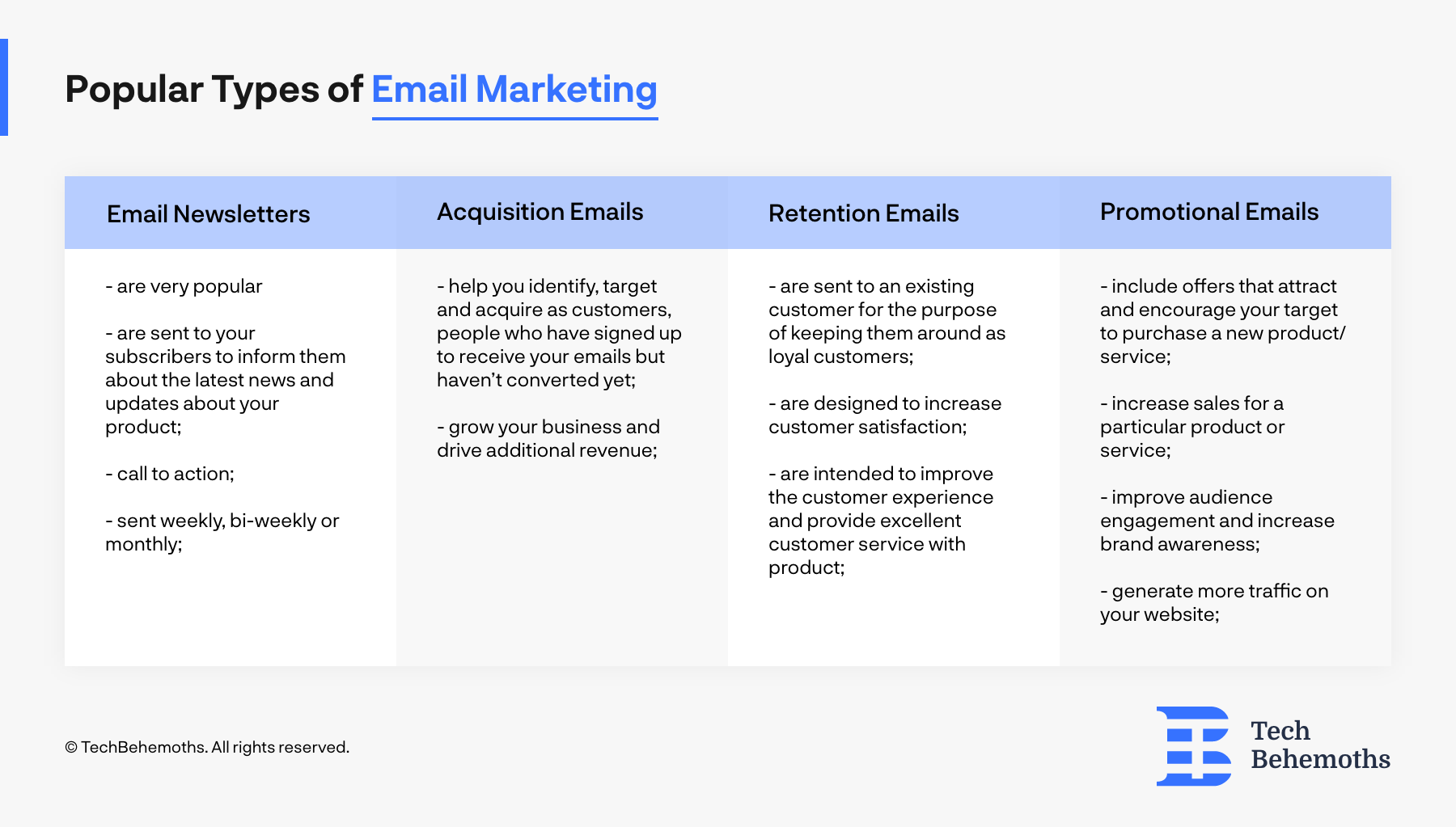
What essential skills should email marketers have?
When looking to hire an email marketing agency, keep in mind the following required skills:
1. Strategy Development & Planification
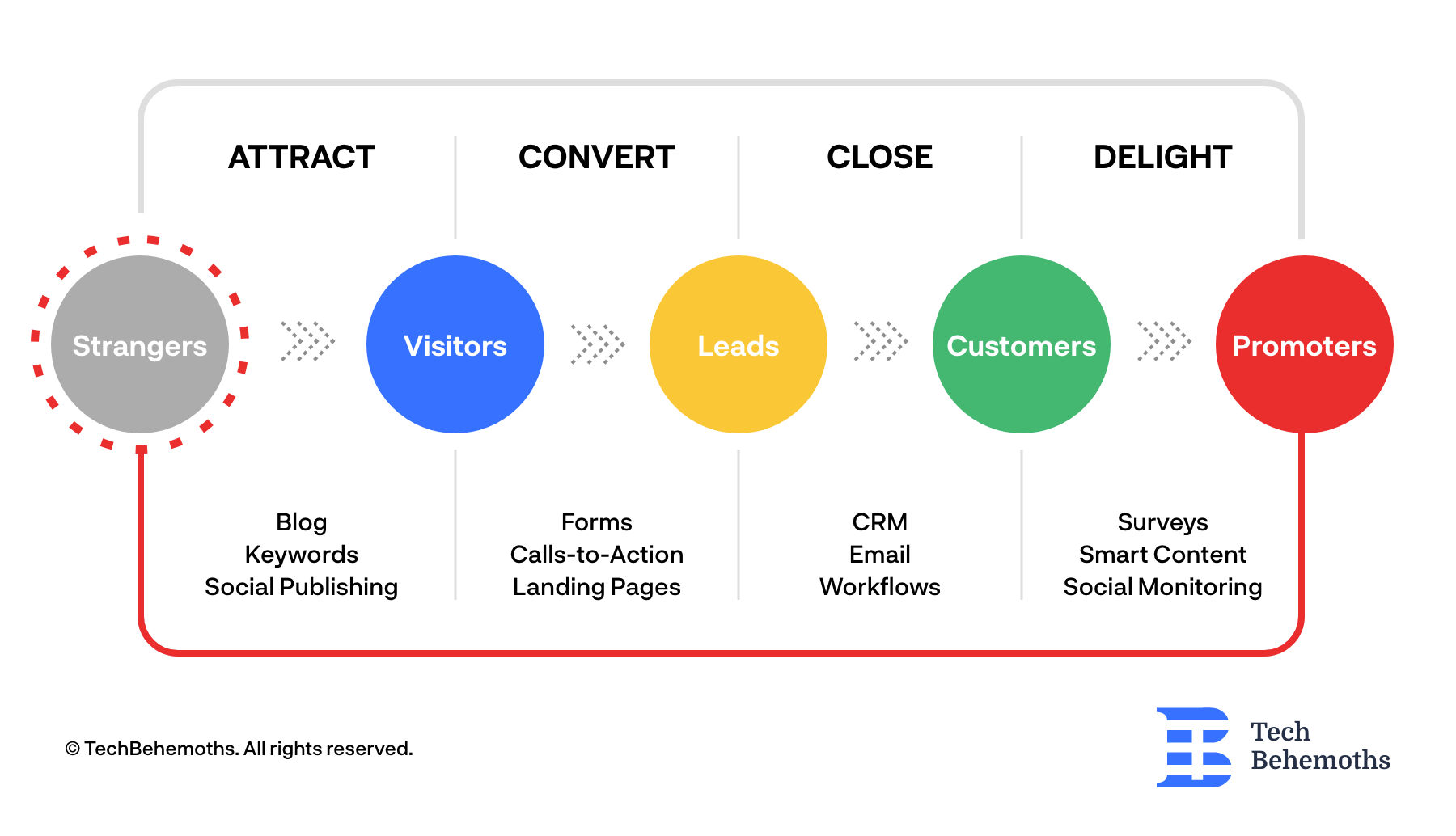
Email marketing must be based on a strategy and plan. You need to understand the various subscriber life-cycle stages and how to engage them as part of your strategic thinking. A successful email marketer should know what campaigns work well for every stage.
2. Automation
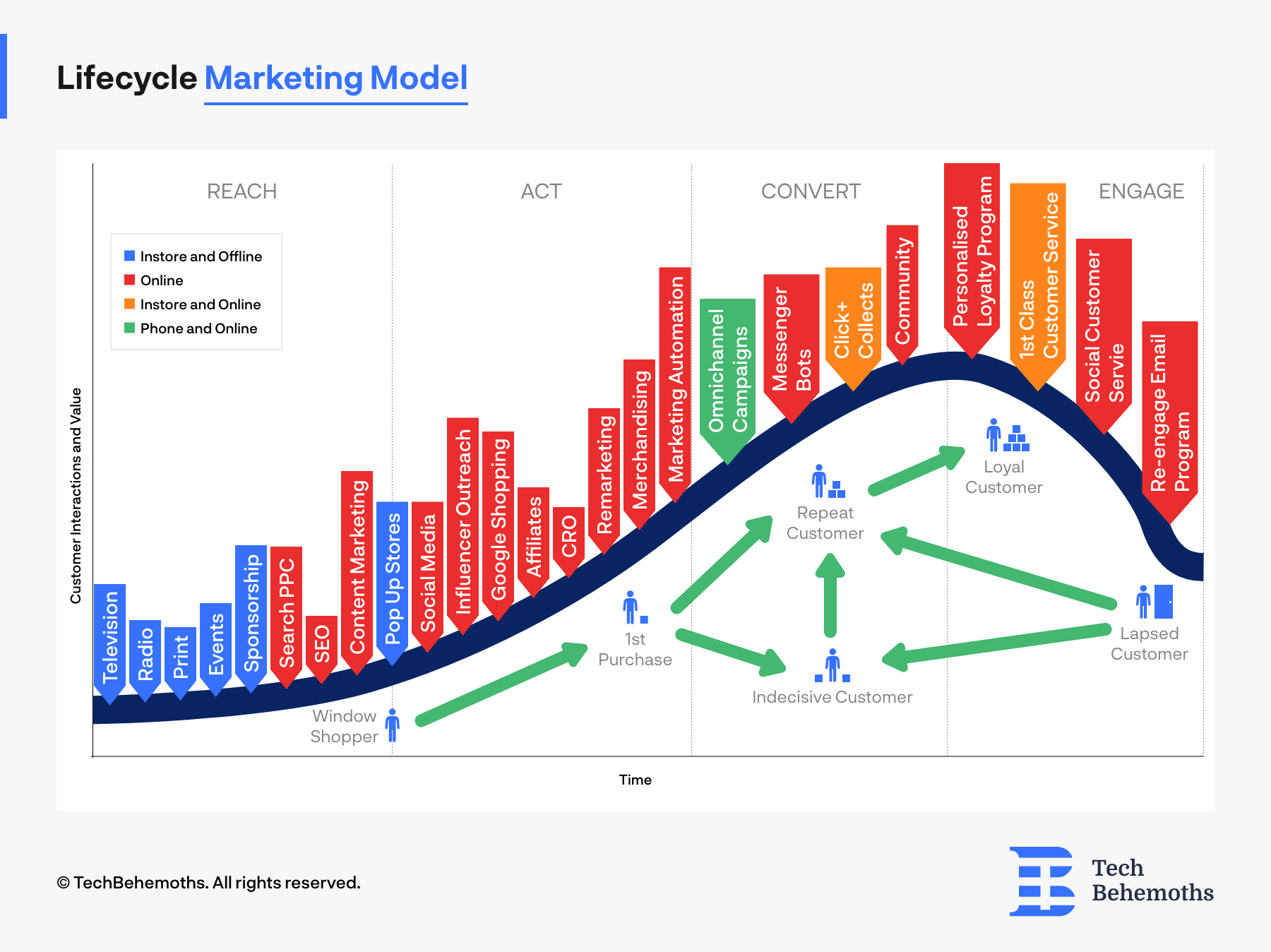
One of the best things you can do to save time and increase your email campaigns' ROI is to automate lead nurturing processes. Email marketing automation includes both lead nurturing and lifecycle emails. Here’s what each means:
-
Lead nurturing - implies sending emails to try to convert potential customers
-
Lifecycle emails - imply sending highly relevant emails at the right time, based on the buyer’s sales journey stage (lead, new customer, existing customer, etc.)
3. Segmentation
Email segmentation is a technique that categorizes your contacts into different groups in order to deliver targeted and personalized emails.
Here are a few examples of user segments based on who they are or what they did:
-
Customers
-
Followers
-
Downloaders
-
Free trial users
You can segment your email lists based on other fields like:
-
Demographical data: gender, age, job, income, marital status, etc.
-
Geographical data: country, city, language, etc.
-
Activity data: previous purchase, website browsing, engagement, etc.
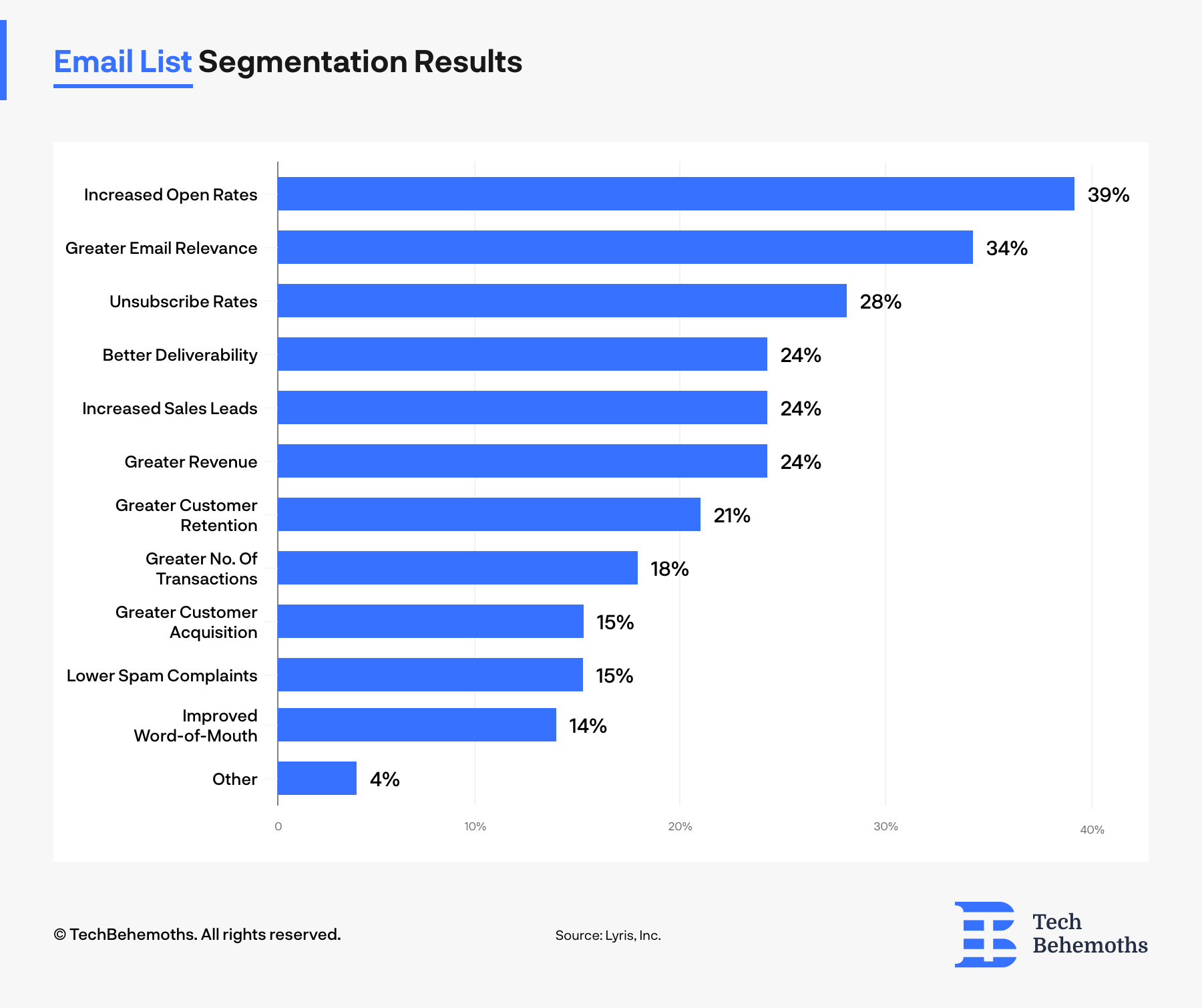
Here is how email list segmentation can help you achieve better results:
4. Copywriting
Email copywriting is the process of writing content for an email that is intended to convince a user to do a specific action: visit a web page, download a resource, buy a product, etc.
Email copywriting principles are similar to any other type of copywriting and is meant to encourage some of the following actions:
-
Share or link to a web page
-
Read your new article
-
Follow your social media
-
Book a meeting
-
Invite to a podcast
Great email copywriting has multiple business advantages:
-
Higher open and conversion rates
-
Increased ROI [1]
-
Stronger relationships with your target audience
-
Higher customers loyalty
-
Better email reply rate => potential new meetings
[1] According to Litmus, when your email copywriting is on point, you can expect a return on investment (ROI) of up to $36 per dollar spent.
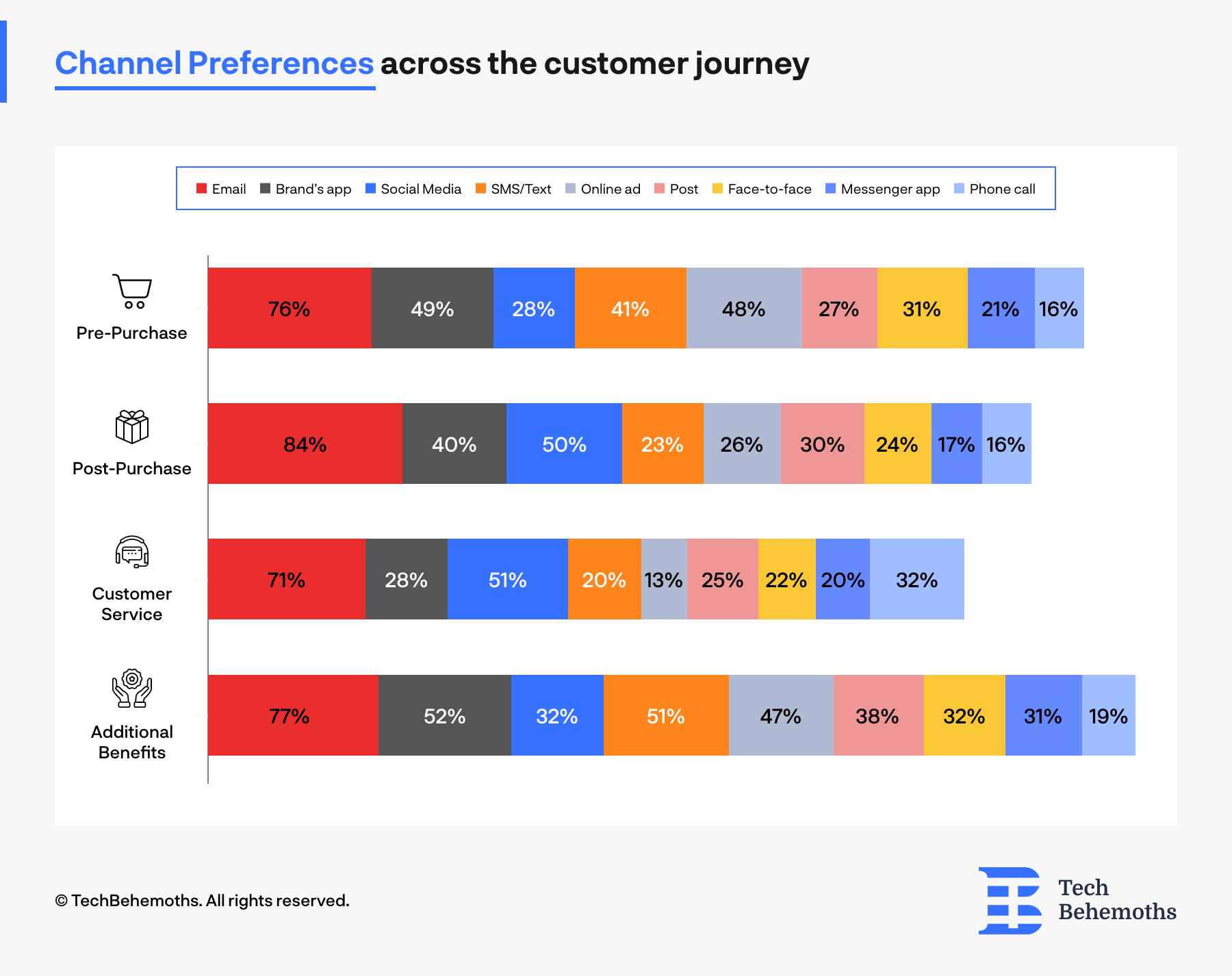
5. Analytics & Testing
It’s essential to understand the most important metrics and how to measure the effectiveness of email marketing campaigns.
Here are some email marketing KPIs for reference. Average email open rate and clicks rate is highly dependent on your industry, but if your email open rate is about 10-15% that’s already a great result.
To find the right email marketing agency for your projects, use the Project submission tool on TechBehemots. Simply describe your business needs and the system will match you with the best possible service providers.