
There are 21 Companies in Nepal
that provide CRM Consulting Services!
The IT sector in Nepal is an emerging area of the country. It is one of the priorities for the Nepalese government. This country specializes in web and mobile apps development, they have a lot of new startups, but also big companies like Verisk, Leapfrog, or Brain Digit IT Solutions, and of course, many of the companies in Nepal are providing services for other companies in Europe, America, and other countries in Asia.
Discover Top IT Companies in Nepal specialized in CRM Consulting including Hubspot, IBM CRM, Microsoft Dynamics CRM, Marketo, Salesforce, Sugar CRM, Zoho CRM and more.
Customer relationship management (CRM) lies at the heart of any successful business strategy, enabling companies to cultivate meaningful connections with their customers and drive sustainable growth. However, implementing and optimizing a CRM system can be a complex endeavor without the right expertise. CRM Consulting services offer invaluable guidance and support, helping businesses harness the full potential of CRM solutions. Below we explore the realm of CRM Consulting and how getting these services can be useful (or not) for your business.
Handpicked companies • No obligation to hire • 100% risk-free
Featured Companies in Nepal
This month, the following CRM Consulting companies managed to provide an outstanding service and support. It's worth taking a look.

Pagoda Labs is a digital-first agency blending creativity and technology to deliver flexible IT solutions for today’s evolving digital landscape.

We have helped brands go from unnoticed to unforgettable through bold design, smart strategy and innovative digital experiences.
Neo software provides a variety services to help businesses in any industry implement and optimize their ERP systems.
Explore Top CRM Consulting Companies in Nepal

Digital Consulting Ventures helps companies expand into Nepal by providing market entry advisory, outsourced talent, & end-to-end compliance support.
Rewa Soft strives to provide expert web and app development services that are suited to the individual needs of its global customers.
Infinite IT Solutions Nepal is software development firm which builds professional top class web & mobile applications IT firm in Biratnagar Nepal

SobizTrend is a cutting-edge technology company that specializes in developing innovative solutions for businesses since 2012 by Binod Bhattarai.

Chaitanya Design: Dynamic branding & digital marketing in Nepal since 2018. Young, vibrant team, innovative solutions, client success commitment.
Gripas Tech builds custom software, ERP, SaaS, data, AI and workflow automation solutions for businesses in Nepal and worldwide.

AI Development, Custom Software, Web Development
Pace Infosys offers IT, web, mobile, design, engineering, electrical, and architectural solutions for complete digital and technical support.
Services:

We provide complete web development services and digital marketing services.

Lacspace builds scalable SaaS and pass platforms, combining real business insight with engineering to deliver high-impact, production-ready solutions.

Sofixs delivers scalable IT solutions in web, software, and digital transformation for startups and global businesses.

Social Wave Agency helps brands grow through AI-powered marketing and tailored IT solutions.

Providhy is a powerful ERP software built for Nepali businesses that offers a complete, easy-to-use ERP solution to manage daily business operations.

Awecode is on a mission to help businesses and entrepreneurs succeed by delivering high-quality, tailored software solutions.


Software Company providing IT related services to small, mid and corporate businesses. Located in heart of Pokhara City, Nepal.

Mero Network is the leading Digital Marketing,Consulting,Web design company in Nepal offering effective and proficient service relating IT sector.

Creative IT Agency based in Kathmandu Nepal. Services: Creative Graphic, Digital Marketing, Website Development, Event Management, Outdoor (All).
Filter CRM Consulting Companies in Nepal by Cities
Find the right tech company near you or from a specific city. Some of the best companies might be located in smaller cities.
Find more CRM Consulting companies around the world
TechBehemoths is the world's most advanced and user-friendly platform to match IT Companies with real clients without hustle.
The IT Industry in Nepal: Companies, Data & Insights
The IT sector in Nepal is an emerging area of the country. It is one of the priorities for the Nepalese government. This country specializes in web and mobile apps development, they have a lot of new startups, but also big companies like Verisk, Leapfrog, or Brain Digit IT Solutions, and of course, many of the companies in Nepal are providing services for other companies in Europe, America, and other countries in Asia. Also, the government of this country identified the high demand for IT students and professionals from other developed countries, and they started offering different opportunities for being able to become an IT professional. In order to achieve these requirements, many institutions, universities, and colleges are providing various courses and degrees, for example, BCA, CSIT, or BSc.
Right now, a big challenge for the industry is the high competition that is going on in the sector, which is growing very fast, especially because right now, a company can hire employees from every part of the world, and that makes the level required to keep growing.
The IT industry in Nepal has more potential, but due to the lack of laws in relation to IT topics, it’s a bit stalled in some sectors like e-commerce, online transactions, and cyber law.
Why Should Somebody Work With Nepalese Companies?
Some of the best advantages that this country has are the following, low cost, affordable workers, and high profitability, and this is because, there’s a minimum wage of NPR 19,550 a month, and that’s $138.81, which stands out when looking for outsourcing services or products to another country for being a really strong point when choosing which country you should work with.
Another strong point of Nepal is the accessible bureaucracy and its higher education in IT topics such as mobile app development, data science, or web development, as the most important ones. The number of people interested in IT in this country is growing year after year because of the popularity and the job opportunities that can be found in this sector, in Nepal, and outside of Nepal. Some of the best universities and institutions to learn this discipline are Nepal Engineering College, Kathmandu University, and Himalaya Engineering College. Each year, approximately 5000 students graduate from Nepalese universities in the IT sector.
Business Process Outsourcing (BPO) in Nepal is very popular, and they are providing these services all over the world, but especially in European countries like Germany, the Netherlands, and France. And of course, the ICT Policy from 2015 has a special and separate section focused on the delivery and good use of ICT. Some of the political sectors that are involved in the law creation in relation to the ICT BPO are the Ministry of Information and Communication, the Ministry of Science, Technology, and Environment, the Nepal Telecommunication Authority, and the Department of Information Technology of the government.
What Should Somebody Be Aware of When Working With IT Companies From Nepal?
Nepal is well-known for being a low-cost destination for Outsourcing projects, and this country has some interesting data about professionals graduating each year in IT topics in the universities of Nepal, but there’s not a majority of professionals that went through this educational background and that can also lead to finding a lot of non-professional workers in Nepal, due to the difficulties to be able to study properly or the difficulties for almost the 25% of the population that are living with 50 cents of Euro a day. This can cause many people who are not well prepared to try to find their career in this sector, which looks highly successful and profitable, but without the basics that support the knowledge required to develop and outsource software, services, or apps.
Also, it is important to say that Nepal, being outside of the European Union, doesn’t have to comply with the laws and agreements that are currently being used in the countries that are part of the EU. This is important because the quality standards may not always be similar between the country of origin and destination during the Outsourcing process. Also, there are cultural aspects such as the possibility of finding companies and workers with a low level of English, which can be dangerous for the relationship between the two parties in terms of the goals and the way to achieve them.
There are also some aspects in relation to the laws and agreements that are currently being used in Nepal that can be dangerous, and this is the lack of laws in some aspects, such as e-commerce, e-transactions, or cybercrime laws.
The poverty levels in this country are an important factor to take into account, and this can lead to companies trying to sell the BPO services but not being able to achieve the expected standards of quality required by some countries in the most developed countries. This doesn’t mean that Nepal is a country of low-quality BPO companies, but it’s more possible to find them than in other places due to some of its socio-economic problems.
The last thing that is important to talk about is the stability of the country. Nepal is a country that is affected by some natural disasters more often than is desirable. In fact, it is a very vulnerable country when talking about natural disasters such as earthquakes, floods, landslides, and Avalanches due to its high mountains and altitude. This, in addition to the socio-economic situation, is two very important things to take into account when working with Nepalese companies, because the instability can be more frequent than it is desirable.
How Reliable Are IT Companies From Nepal?
Continuing with the previous point, there are Nepalese companies that are very reliable, but also others that cannot be so reliable due to some specific situations and characteristics of this country, such as poverty. Nepal is one of the poorest and least developed countries in some aspects, so you can find services offered that don’t correspond to the quality required due to the difficult situation of some people.
Also, there’s an important trend in the IT sector in Nepal, which is about cybercrimes and a lack of system security. It's popular to have one ethical hacker in a company because it’s popular to hack public and private websites, and companies need to avoid this, which is a problem for Nepal’s IT industry.
Also, the lack of awareness of cybercrimes in business firms and brands is a big concern nowadays. And this is related to the lack of cybercrime laws, which can also affect Nepalese companies’ reliability.
As in past articles about the IT industry reliability in other countries, you should always work with companies of proven quality and experience to avoid scams as much as possible. There’s always a risk when outsourcing services to another country, but with Nepal, this risk is more notorious than with other European countries due to the difficult situations that we talked about in this section.
How is the IT Industry in Nepal in Relation to the Neighboring Regions/Countries?
Nepal is over India and under China, which are two powerful countries in terms of the IT/ICT industry, especially China, which has a widely established ICT market in its country, as they are the home country of brands like Huawei, Xiaomi, or Honor. China, is the second-largest ICT market and in the year 2025 the sector’s production outperformed the country’s GDP with technologies like Big Data, IoT, or AI (Artificial Intelligence), their project is to reach 8.1$ trillion dollars representing 55% of China’s GDP, and this is also because in this country they have their own phone brands, social media apps and networks, and of course one of the biggest competition centers for making the best hardware and software for their products.
On the other hand, India is a well-known and number 1 BPO destination country, with a very strong industry, well-educated professionals, and low costs for companies. Also, living costs in India, rents, and profitability really stand out for their price-quality when compared to Nepal, and this is one reason why many Nepalese qualified workers choose to go and develop their career in this country. Both are very powerful competitors.
Conclusion
Nepal can be a good outsourcing destination for some companies that put the low prices first and the quality or the stability in second place, even when you can find very well-prepared professionals and companies. Some aspects of the law and agreements related to cybersecurity and cybercrimes are also a big weak point. The strong points are low costs, high profitability, and a good number of graduate students in IT-related fields every year. Taking these aspects into account, we can conclude that Nepal can be a good Outsourcing destination for its production prices, but it’s not very good in other aspects, such as law, protection for the company that wants to outsource its services. This can be beneficial for companies looking to reduce their costs to the maximum.
What is CRM Consulting and what are its benefits for your projects?
Customer relationship management (CRM) is one of the key elements of any successful business strategy, enabling companies to enable meaningful connections with their customers and drive sustainable growth. However, implementing and optimizing a CRM system can be a complex task without the right expertise. CRM Consulting services offer valuable guidance and support, helping businesses benefit from the full potential of CRM solutions. Below we explore CRM Consulting and how getting these services can be useful for your business.
CRM consulting services provide a wide range of expert solutions designed to help businesses enhance customer interactions, streamline processes, and boost overall sales and marketing efficiency. From CRM strategy development to system integration and customization, CRM Consulting caters to the entire CRM implementation lifecycle. Key services related to CRM Consulting include CRM assessment and planning, CRM customization and integration, data migration, user training, and ongoing support.
To provide better CRM Consulting services, companies leverage a variety of tools and technologies. These may include popular CRM platforms such as Salesforce, Microsoft Dynamics 365, HubSpot, and Zoho CRM. Additionally, integration tools, data migration solutions, and analytics software play a crucial role in optimizing CRM implementation and performance.
Companies seeking CRM Consulting services have the flexibility to choose between specialized IT companies and digital agencies. Specialized IT companies often have deep expertise in CRM technologies and provide niche solutions for CRM implementation and optimization. Digital agencies, on the other hand, may offer a broader suite of services, including CRM Consulting, making them a suitable option for businesses seeking comprehensive digital transformation.
Contracting CRM Consulting services may bring a set of advantages for businesses aiming to strengthen customer relationships and achieve sustainable growth. By implementing an effective CRM system, companies can centralize customer data, enabling a 360-degree view of their interactions. This enhanced visibility empowers sales and marketing teams to deliver personalized and targeted campaigns, resulting in improved customer satisfaction and increased sales. Moreover, CRM Consulting streamlines processes, enhances productivity, and facilitates data-driven decision-making, ultimately driving long-term profitability.
Selecting the right CRM Consulting partner is crucial to ensure a successful project. Consider the following criteria:
-
Expertise and Experience: Look for a provider with proven experience in CRM implementation, integration, and support, ideally with a track record in your industry
-
Customization: Ensure the provider can tailor CRM solutions to meet your specific business needs and processes.
-
Scalability: Choose a partner who can support your business as it grows and evolves.
-
Client References: Request client references to gain insights into the provider's performance and customer satisfaction.
TechBehemoths is your go-to platform for finding the best CRM Consulting companies worldwide. With over 982 companies listed across 70+ countries and territories, the platform offers a vast selection of reliable consulting partners. TechBehemoths provides valuable information such as client reviews, ratings, and detailed profiles, enabling you to make an informed decision and select the right CRM Consulting provider for your project.
What type of CRM systems do businesses use?
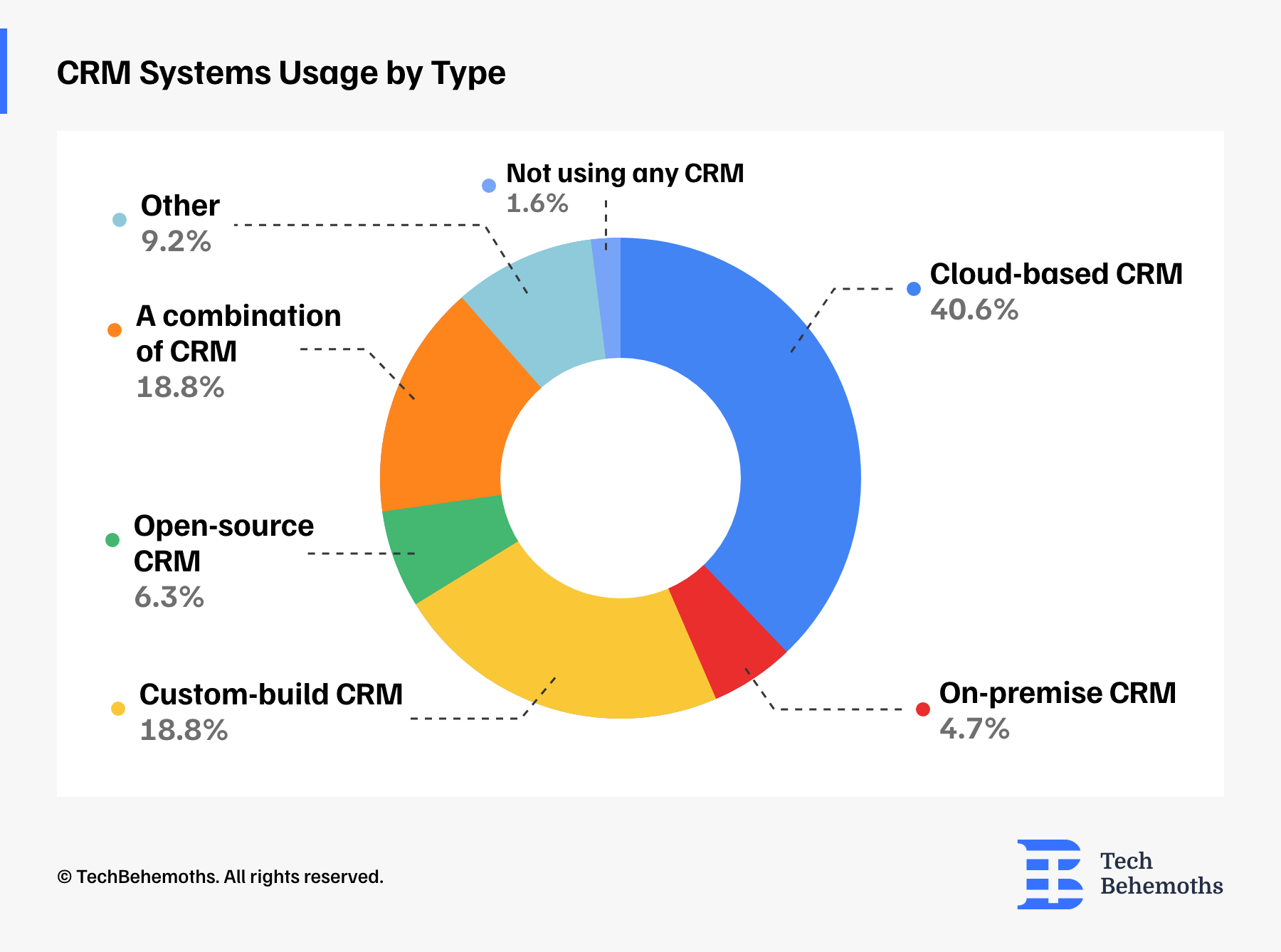
According to a recent survey, over 40% of businesses prefer to use cloud-based CRM systems, due to scalability, ease of integration, and automatic updates. Examples include Salesforce, HubSpot CRM, and Zoho CRM.
Around 19% of businesses use custom built CRMs and 1.6% don’t use any CRMs. This means that about 20% of businesses need flexible solutions to address their unique workflows and integrate seamlessly with their existing systems.
How long have companies been using CRMs?
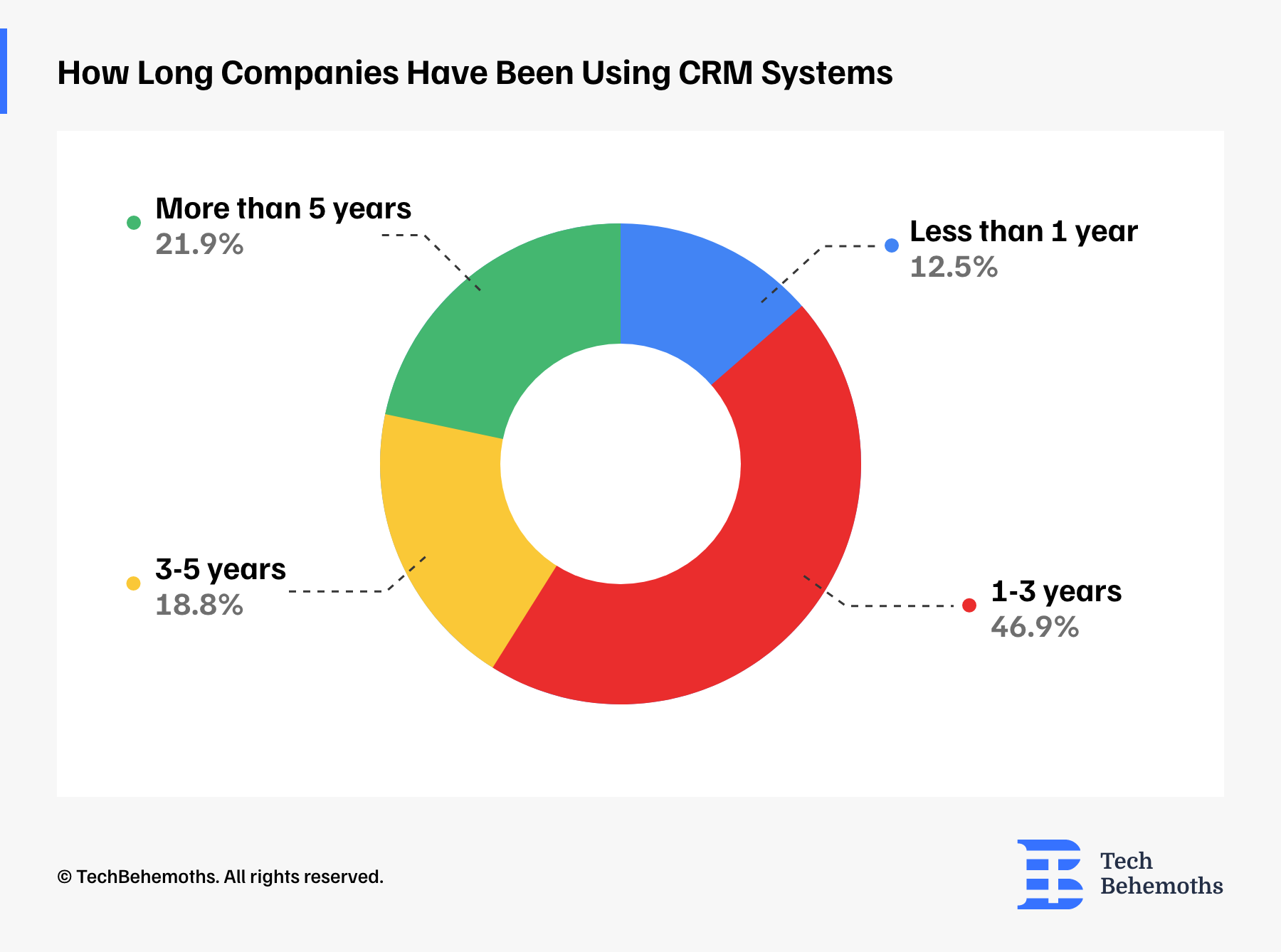
The survey data shows that CRM adoption is still work in progress for many tech companies. The largest group of respondents , around 47% have been using CRM systems for 1-3 years. Another 12 % have been using CRM systems for less than 1 year, meaning that some companies are just getting started with CRM.
Why do tech businesses use CRMs?
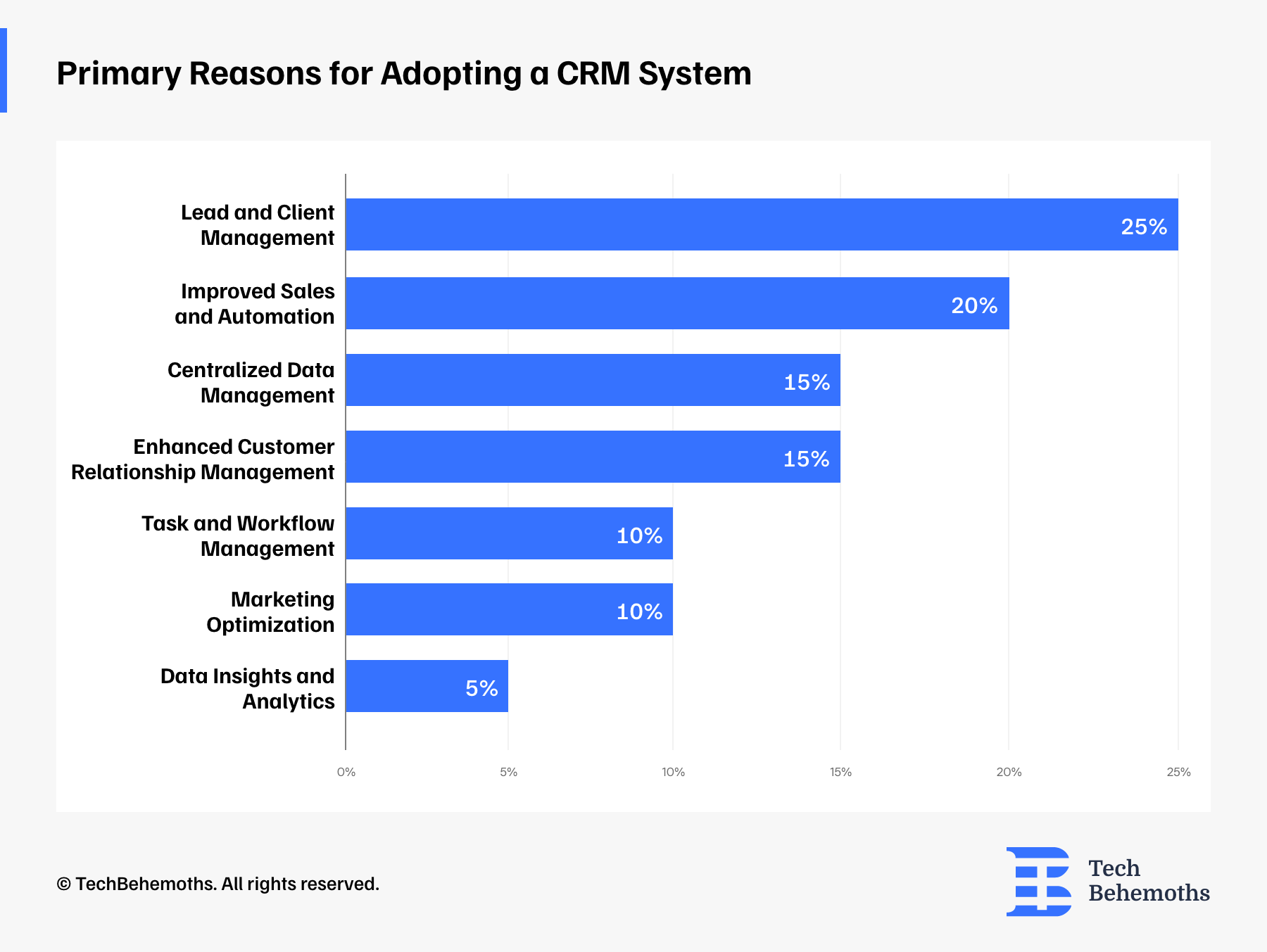
Many professionals think that CRM systems are essential for lead and client management. They help track contacts, organize information, and effectively strengthen customer relationships.
How to measure the success of a CRM system?
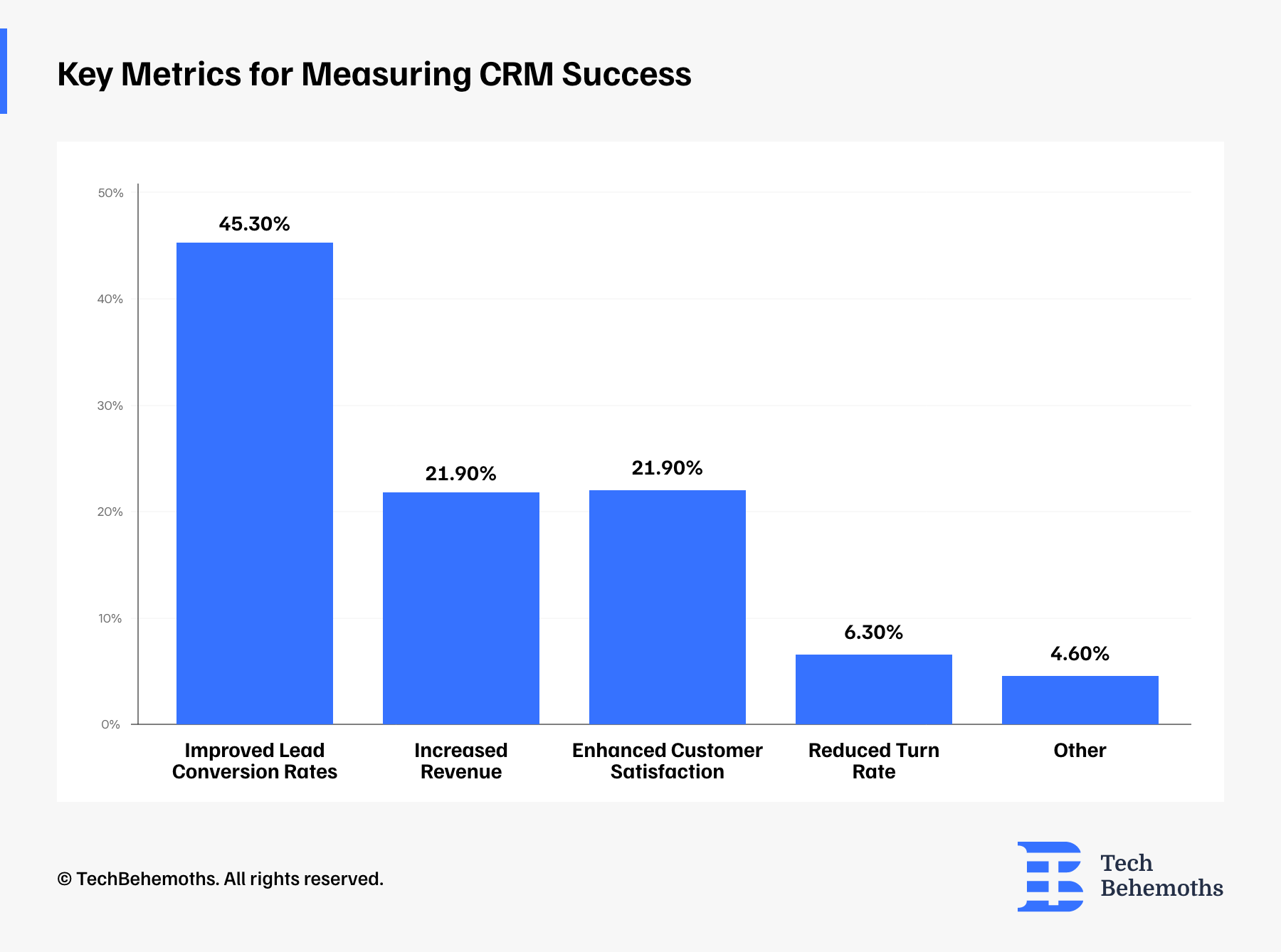
Here are some metrics that you can use to measure the success of your CRM system, based on survey data.
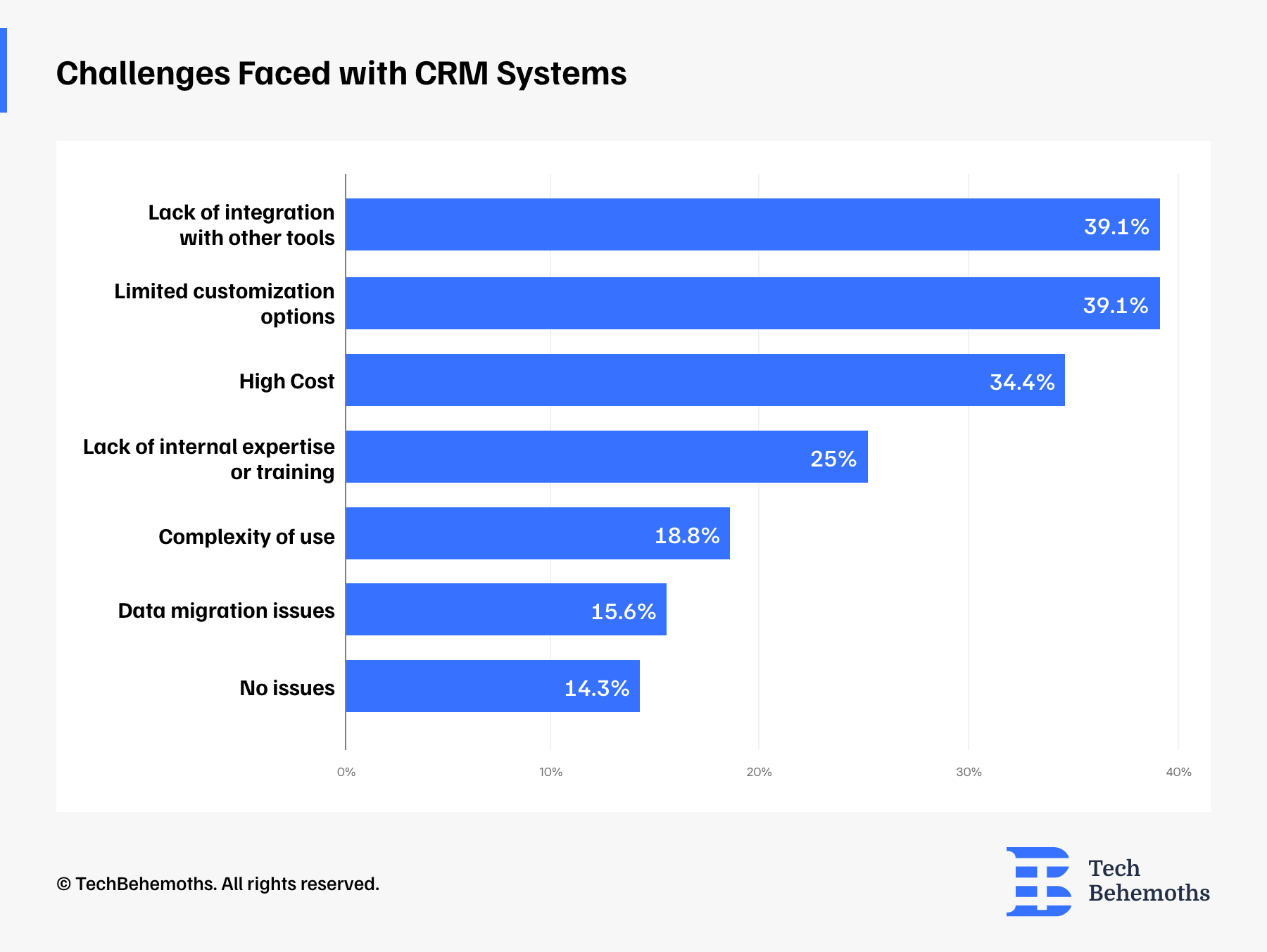
Almost 40% of IT businesses struggle with CRM integration/customization
Most survey respondents noted that lack of integrations with other tools and limited customization options are major issues. This might be an opportunity to work with the right CRM consulting partners that will map the right tools and processes when implementing a CRM system.
Another challenge is the high cost of CRM systems, and the lack of in-house expertise or training. This highlights the need for user-friendly designs and training programs to help users.
Complexity is also an issue, affecting 19% of respondents who find CRMs hard to use. Data migration problems concern around 16% of users when switching to new systems.
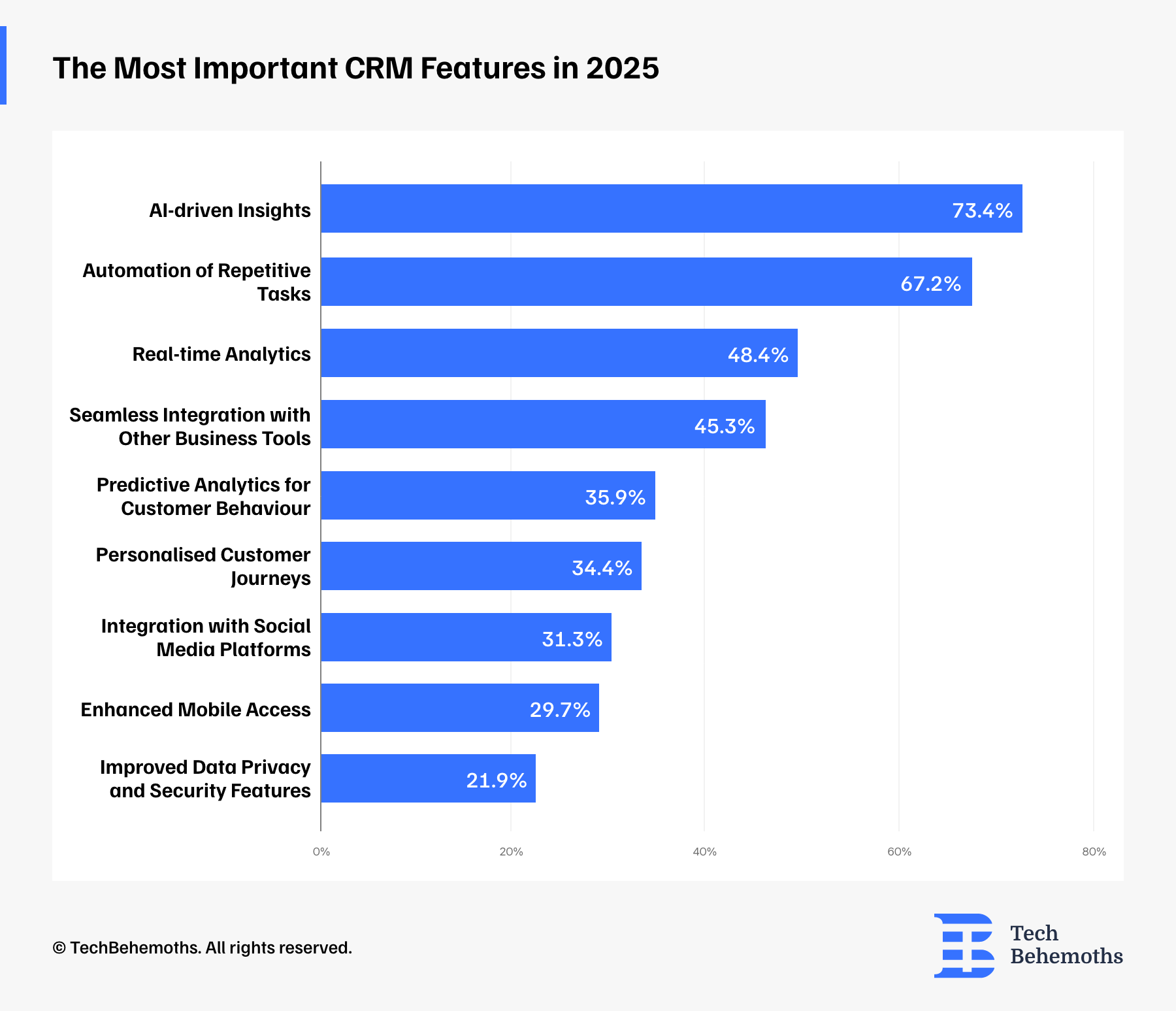
What to look for when choosing a CRM?
The most important CRM features reflect a strong focus on innovation, efficiency, and connectivity. AI-driven insights, automation, real-time analytics are among the top desired features for efficient CRMs.
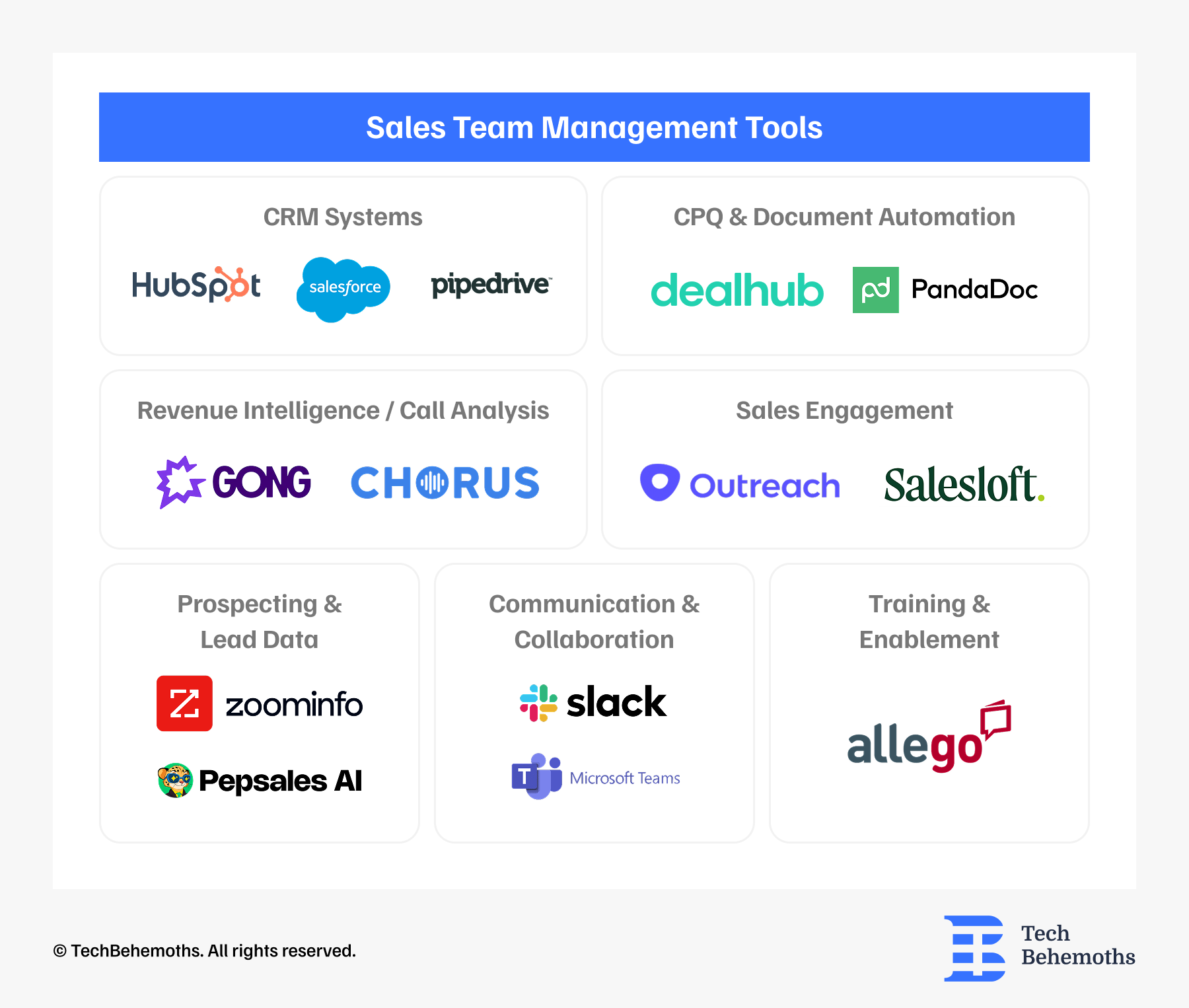
Useful CRM and other tools for sales teams
Here is the recommended list of tools that will help you monitor, manage and properly evaluate all sales processes and details, including communication and customer service of the sales team.
1. CRM Systems
These are the systems that keep track of all your customers and offers in one place. Examples: Salesforce, HubSpot, Pipedrive
2. CPQ & Document Automation
These tools automatically generate prices, offers, and contracts, saving you time spent on manually created PDFs. Examples: DealHub, PandaDoc
3. Revenue Intelligence / Call Analysis
These are programs that record and analyze sales calls, so you can see what works and better estimate the chances of closing deals. Examples: Gong, Chorus.ai
4. Sales Engagement
Tools that help automate messages, follow-ups, and contact sequences with potential customers. Examples: Outreach.io, SalesLoft
5. Prospecting & Lead Data
Platforms that find and verify potential customers (including emails, positions, company, etc.). Examples: ZoomInfo, Pepsales AI
6. Training & Enablement
Platforms for training the sales team, which provide materials, coaching and examples of best practices. Examples: Allego
Use advanced filters on TechBehemoths platform or submit your project requirements to get relevant service providers for your next CRM related integrations or customizations.