
There are 1 Companies in Burundi
that provide CRM Consulting Services!
Burundi, officially the Republic of Burundi, is a landlocked nation in East Africa’s Great Lakes region with Gitega as its capital and Bujumbura as its economic hub. It is home to over 13 million people and is bordered by Rwanda, Tanzania, and the DRC. The IT Services sector in Burundi includes services for design, development, installation, management, and maintenance of IT infrastructure and software applications for enterprises.
Discover Top IT Companies in Burundi specialized in CRM Consulting including Hubspot, IBM CRM, Microsoft Dynamics CRM, Marketo, Salesforce, Sugar CRM, Zoho CRM and more.
Customer relationship management (CRM) lies at the heart of any successful business strategy, enabling companies to cultivate meaningful connections with their customers and drive sustainable growth. However, implementing and optimizing a CRM system can be a complex endeavor without the right expertise. CRM Consulting services offer invaluable guidance and support, helping businesses harness the full potential of CRM solutions. Below we explore the realm of CRM Consulting and how getting these services can be useful (or not) for your business.
Handpicked companies • No obligation to hire • 100% risk-free
Explore Top CRM Consulting Companies in Burundi

Senovara builds custom software, websites, SEO, digital marketing, Wi-Fi & CCTV installs and IT consulting to help businesses grow securely.
Filter CRM Consulting Companies in Burundi by Cities
Find the right tech company near you or from a specific city. Some of the best companies might be located in smaller cities.
Find more CRM Consulting companies around the world
TechBehemoths is the world's most advanced and user-friendly platform to match IT Companies with real clients without hustle.
The IT Industry in Burundi: Genuine Data & Profile
Burundi, officially the Republic of Burundi, is a landlocked nation in East Africa’s Great Lakes region with Gitega as its capital and Bujumbura as its economic hub. It is home to over 13 million people and is bordered by Rwanda, Tanzania, and the DRC. The IT Services sector in Burundi includes services for design, development, installation, management, and maintenance of IT infrastructure and software applications for enterprises. This field comprises several companies that provide products for Software Application Development, Software testing, Big Data, Networking, Security, Virtualization, and many more.
Burundi’s IT field is still in the early stages of development and has been building its digital infrastructure, such as the Burundi Backbone Systems (BBS). This is a national fiber-optic network connecting all provinces and key institutions, which supports broadband and data services. However, difficulties remain, including a low internet penetration with only around 12.5% of the population online in 2025.
What Are the Perks of Working With a Tech Company from Burundi?
A collaboration with an IT firm from Burundi could bring several advantages for your organisation or project. This location is especially attractive for individuals who are looking for competitive prices and opportunities to support emerging markets. Other benefits include:
- Cost-effective costs: In Burundi, labor and operating prices are relatively low compared to other markets.
- Flexibility and local market insight: Local companies often offer customized and adapted solutions for East African contexts.
- Innovation potential: Although this sector is still emerging, innovation is encouraged through initiatives like digital hubs, bootcamps, and hackathons that link tech talent with business challenges.
- Growing talent pool: Burundi has an expansive talent pool with many IT graduates motivated to expand their practical skills. The young workforce also has proficiency in French, Kirundi, and often English.
Collaborating with a Burundian tech firm can be cost-effective, a change to bring innovation and have an impact on a developing tech industry.
What You Should Pay Attention To When Working With Tech Firms from Burundi?
Alongside benefits, working with tech companies from Burundi can include several difficulties. One of them includes the country’s low internet penetration and unreliable connectivity, which affects business operations and remote partnerships. The local workforce is limited in practical experience, partly due to shortages of equipment and insufficient training for graduates. Burundi’s regulatory frameworks about Digital Services, Cybersecurity, and e-commerce are still developing, and clear standards may not always exist. The market needs robust rules for things like digital ID, secure transactions, or data protection.
Are IT Companies from Burundi Reliable?
The IT sector in Burundi is still emerging, with a relatively small number of software and tech firms that are still developing. While several IT firms focus on small-to-medium business solutions that match the current business demand and infrastructure. For example, some established ICT firms like CBINET provide reliable internet access and networking services in Burundi and help build a national benchmark for the internet infrastructure in the country.
How is Burundi’s IT Industry Related to Neighboring Countries?
Burundi’s tech sector is linked with its neighbors, which are Rwanda, Tanzania, and the Democratic Republic of Congo. Because Burundi is landlocked, it has no direct access to undersea fiber-optic cables and relies on its neighbors. The Tanzania-Kenya route provides most of Burundi’s internet capacity through terrestrial fiber-optic cables. There are also cross-border projects with Zambia and Vietnam that aim to further strengthen these cross-border digital corridors to reduce costs. Additionally, Burundi has joined the EAC One Network Area, which allows the local population to travel to Rwanda, Kenya, Uganda, South Sudan, and Tanzania to use their mobile phones at local rates.
What is CRM Consulting and what are its benefits for your projects?
Customer relationship management (CRM) is one of the key elements of any successful business strategy, enabling companies to enable meaningful connections with their customers and drive sustainable growth. However, implementing and optimizing a CRM system can be a complex task without the right expertise. CRM Consulting services offer valuable guidance and support, helping businesses benefit from the full potential of CRM solutions. Below we explore CRM Consulting and how getting these services can be useful for your business.
CRM consulting services provide a wide range of expert solutions designed to help businesses enhance customer interactions, streamline processes, and boost overall sales and marketing efficiency. From CRM strategy development to system integration and customization, CRM Consulting caters to the entire CRM implementation lifecycle. Key services related to CRM Consulting include CRM assessment and planning, CRM customization and integration, data migration, user training, and ongoing support.
To provide better CRM Consulting services, companies leverage a variety of tools and technologies. These may include popular CRM platforms such as Salesforce, Microsoft Dynamics 365, HubSpot, and Zoho CRM. Additionally, integration tools, data migration solutions, and analytics software play a crucial role in optimizing CRM implementation and performance.
Companies seeking CRM Consulting services have the flexibility to choose between specialized IT companies and digital agencies. Specialized IT companies often have deep expertise in CRM technologies and provide niche solutions for CRM implementation and optimization. Digital agencies, on the other hand, may offer a broader suite of services, including CRM Consulting, making them a suitable option for businesses seeking comprehensive digital transformation.
Contracting CRM Consulting services may bring a set of advantages for businesses aiming to strengthen customer relationships and achieve sustainable growth. By implementing an effective CRM system, companies can centralize customer data, enabling a 360-degree view of their interactions. This enhanced visibility empowers sales and marketing teams to deliver personalized and targeted campaigns, resulting in improved customer satisfaction and increased sales. Moreover, CRM Consulting streamlines processes, enhances productivity, and facilitates data-driven decision-making, ultimately driving long-term profitability.
Selecting the right CRM Consulting partner is crucial to ensure a successful project. Consider the following criteria:
-
Expertise and Experience: Look for a provider with proven experience in CRM implementation, integration, and support, ideally with a track record in your industry
-
Customization: Ensure the provider can tailor CRM solutions to meet your specific business needs and processes.
-
Scalability: Choose a partner who can support your business as it grows and evolves.
-
Client References: Request client references to gain insights into the provider's performance and customer satisfaction.
TechBehemoths is your go-to platform for finding the best CRM Consulting companies worldwide. With over 982 companies listed across 70+ countries and territories, the platform offers a vast selection of reliable consulting partners. TechBehemoths provides valuable information such as client reviews, ratings, and detailed profiles, enabling you to make an informed decision and select the right CRM Consulting provider for your project.
What type of CRM systems do businesses use?
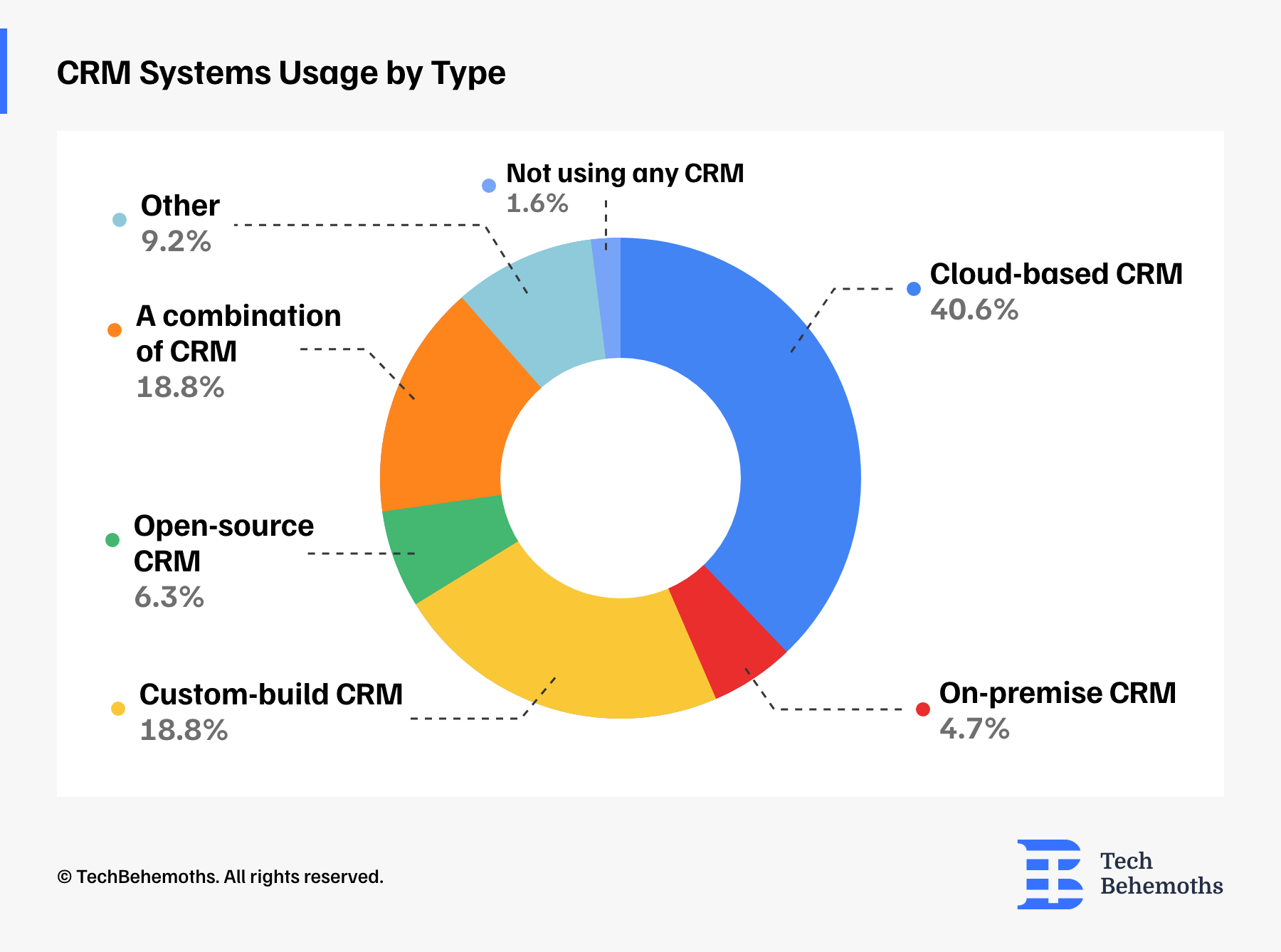
According to a recent survey, over 40% of businesses prefer to use cloud-based CRM systems, due to scalability, ease of integration, and automatic updates. Examples include Salesforce, HubSpot CRM, and Zoho CRM.
Around 19% of businesses use custom built CRMs and 1.6% don’t use any CRMs. This means that about 20% of businesses need flexible solutions to address their unique workflows and integrate seamlessly with their existing systems.
How long have companies been using CRMs?
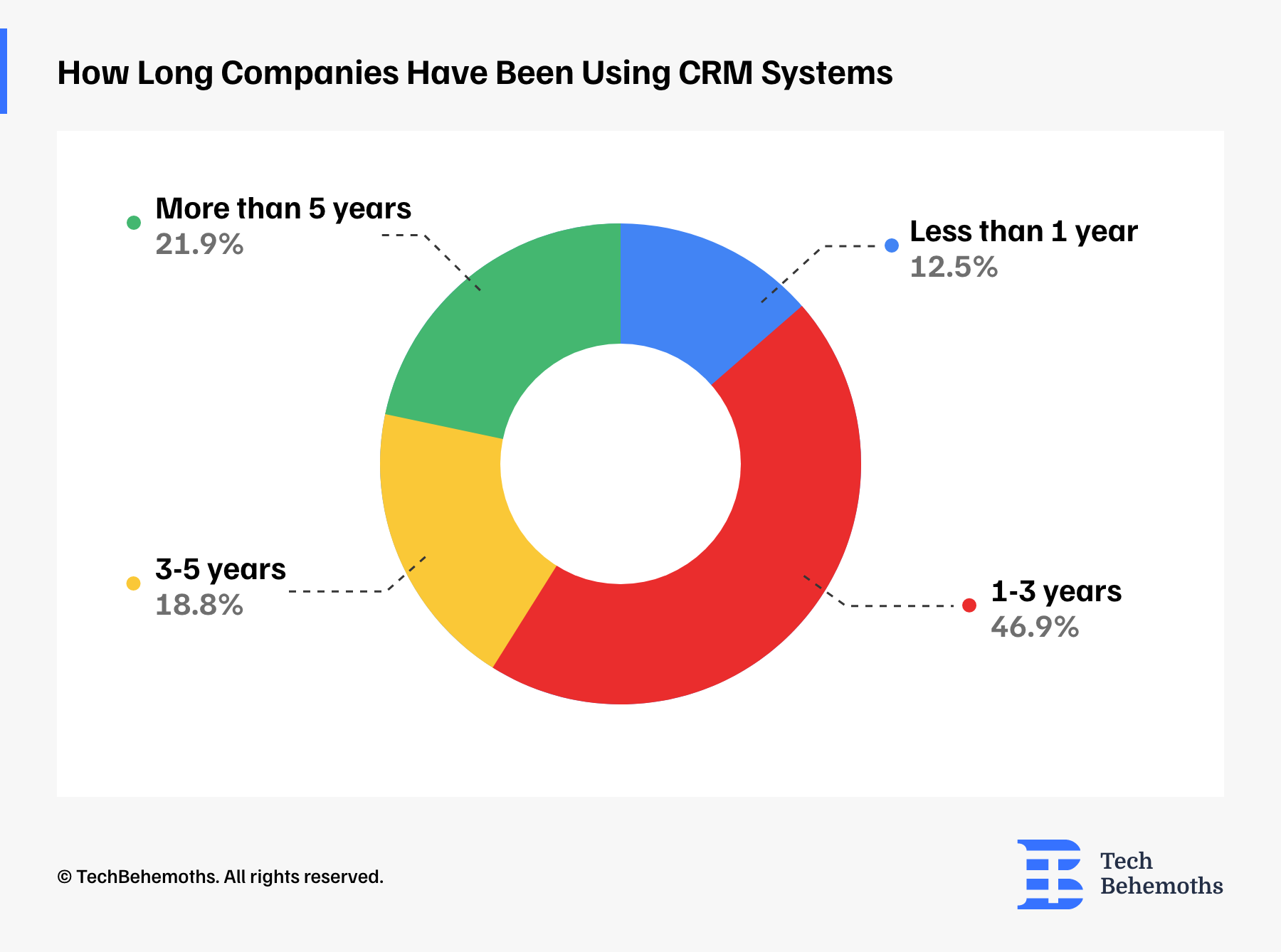
The survey data shows that CRM adoption is still work in progress for many tech companies. The largest group of respondents , around 47% have been using CRM systems for 1-3 years. Another 12 % have been using CRM systems for less than 1 year, meaning that some companies are just getting started with CRM.
Why do tech businesses use CRMs?
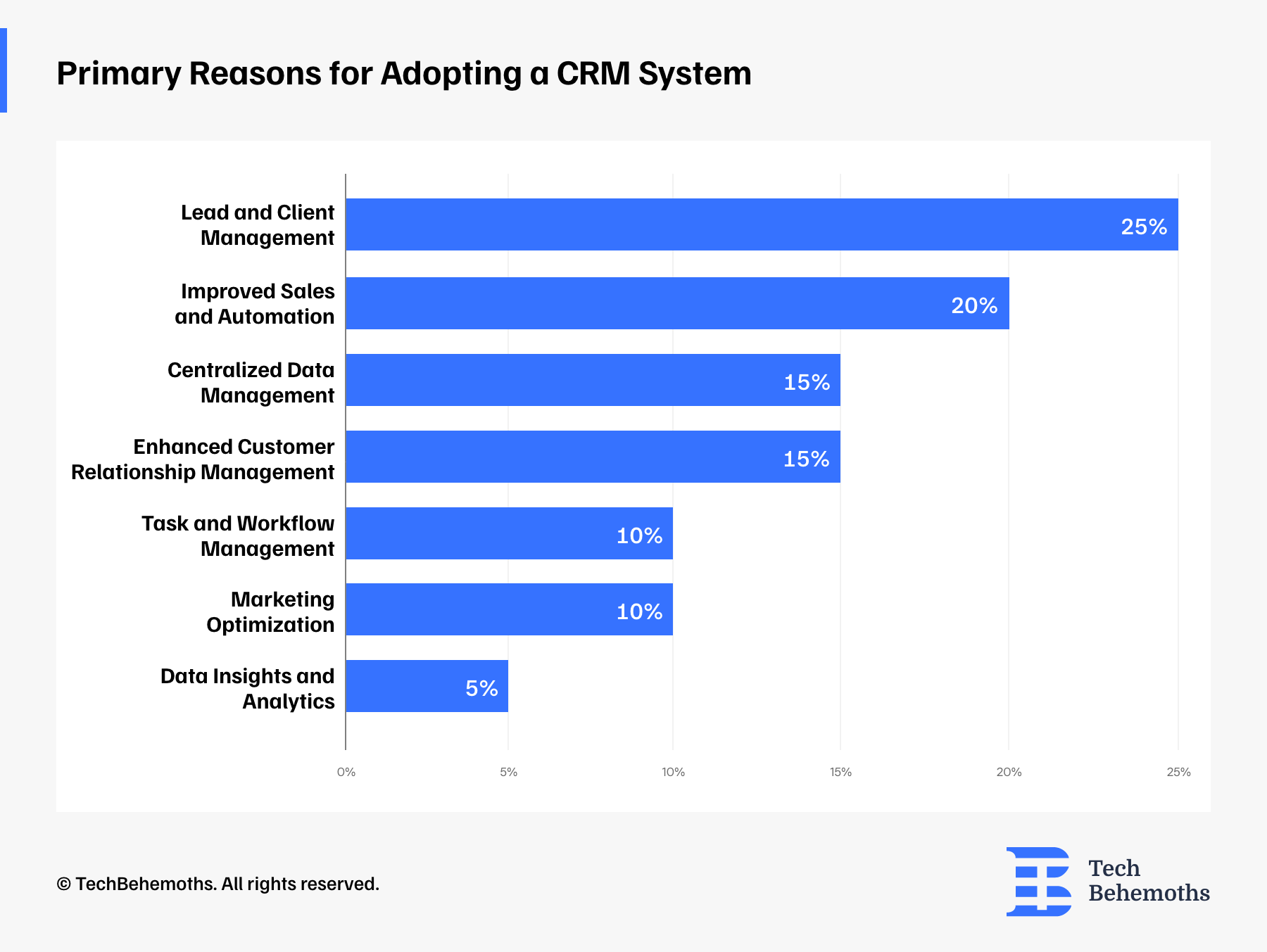
Many professionals think that CRM systems are essential for lead and client management. They help track contacts, organize information, and effectively strengthen customer relationships.
How to measure the success of a CRM system?
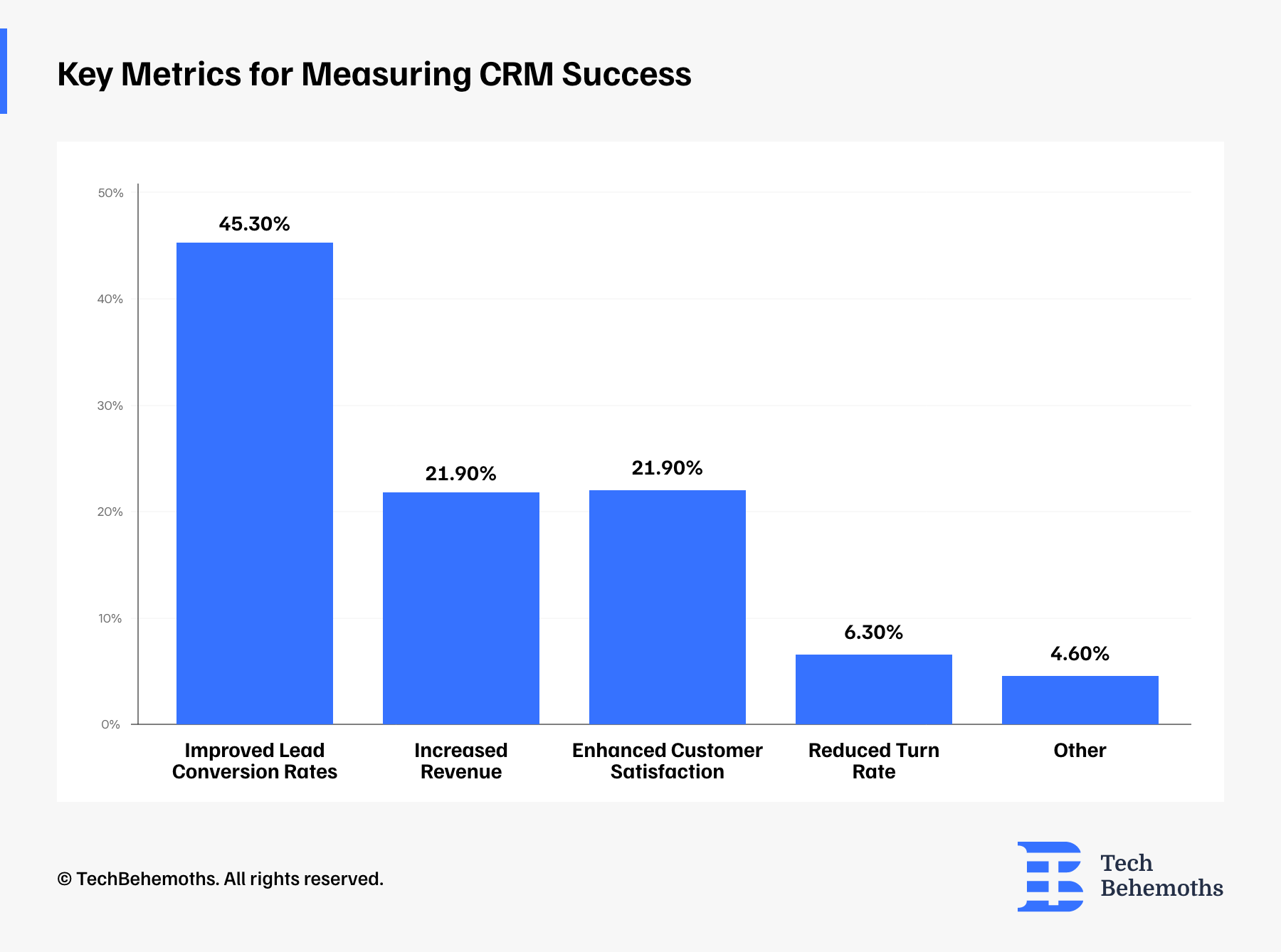
Here are some metrics that you can use to measure the success of your CRM system, based on survey data.
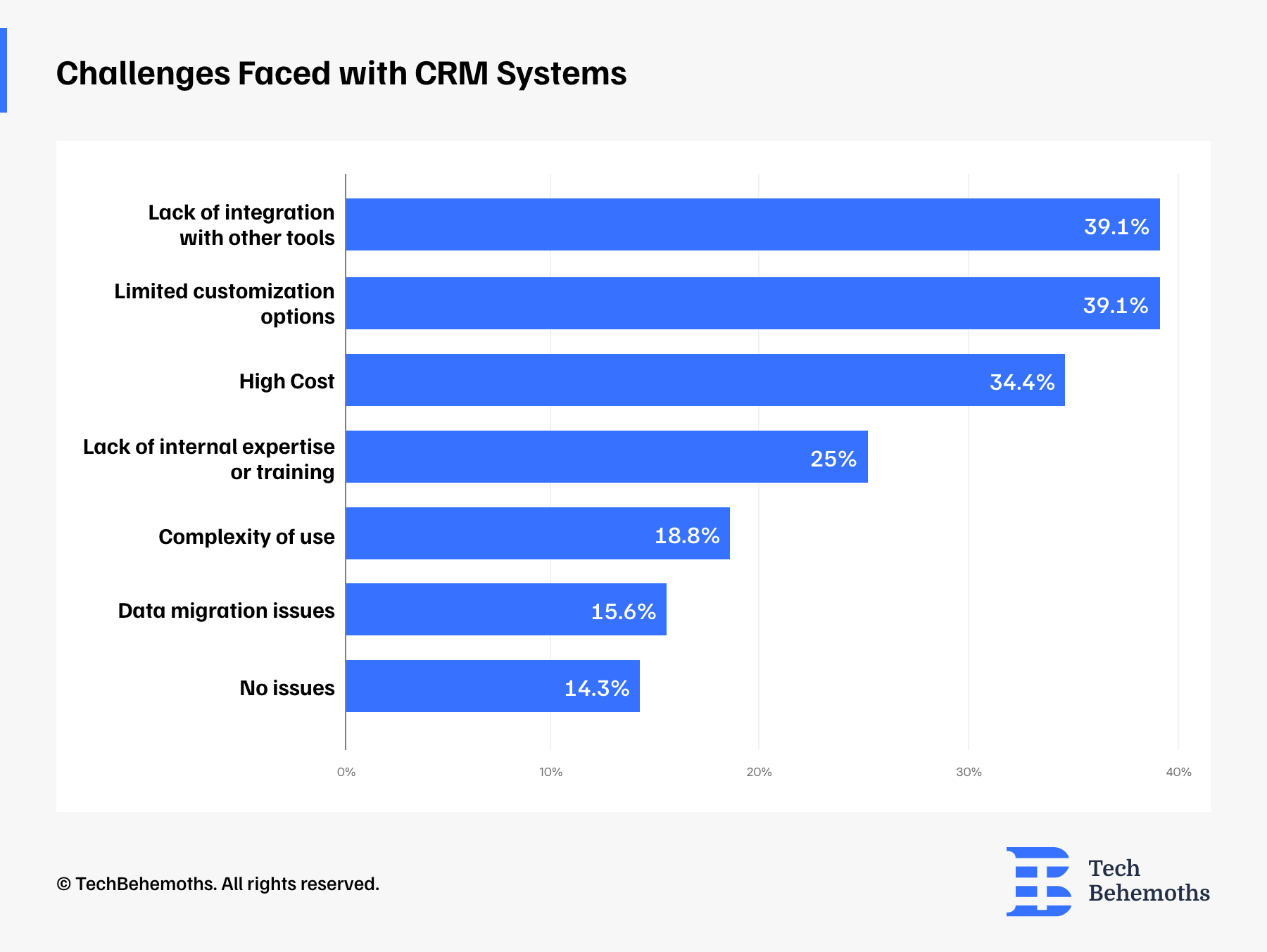
Almost 40% of IT businesses struggle with CRM integration/customization
Most survey respondents noted that lack of integrations with other tools and limited customization options are major issues. This might be an opportunity to work with the right CRM consulting partners that will map the right tools and processes when implementing a CRM system.
Another challenge is the high cost of CRM systems, and the lack of in-house expertise or training. This highlights the need for user-friendly designs and training programs to help users.
Complexity is also an issue, affecting 19% of respondents who find CRMs hard to use. Data migration problems concern around 16% of users when switching to new systems.
What to look for when choosing a CRM?
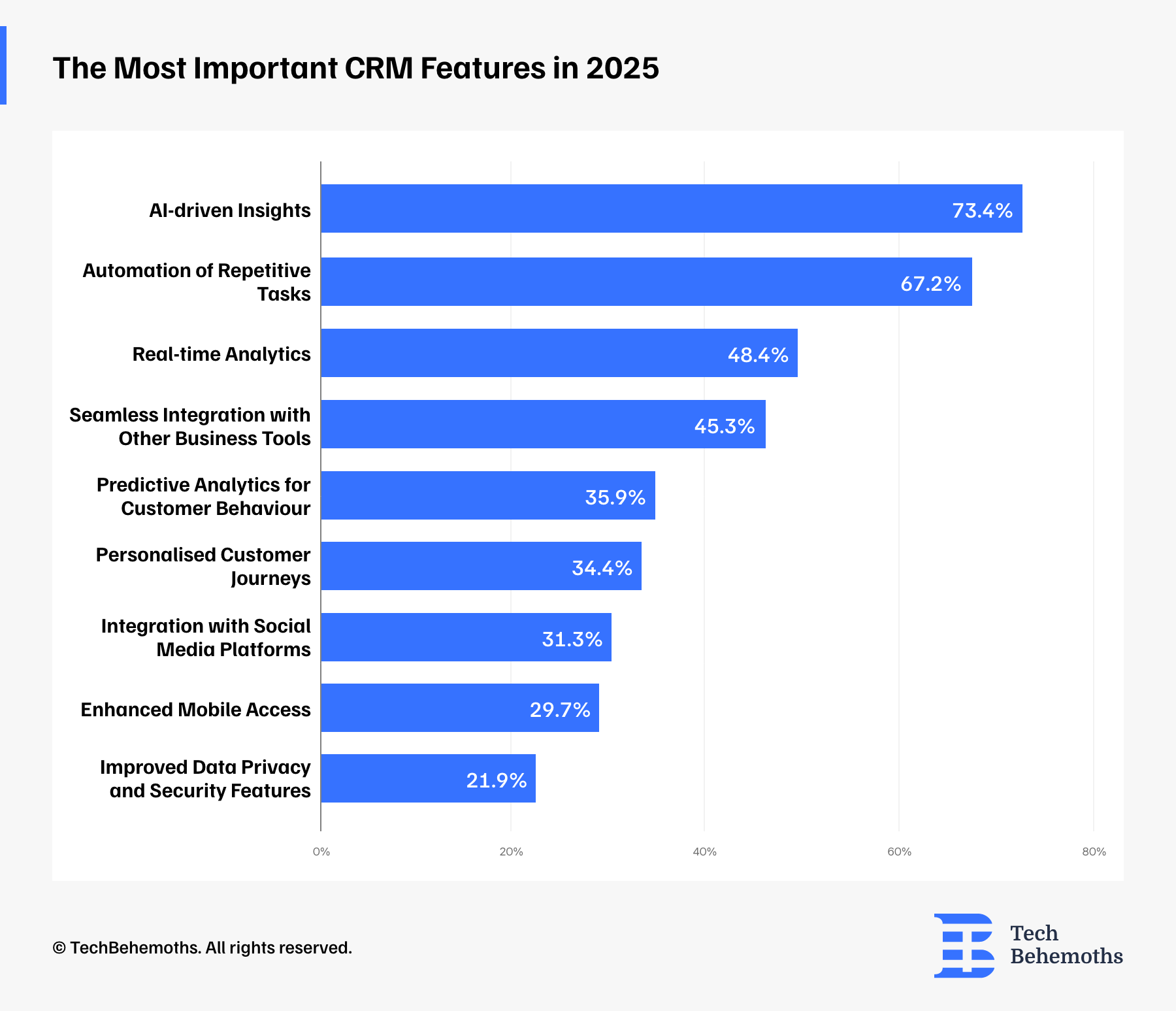
The most important CRM features reflect a strong focus on innovation, efficiency, and connectivity. AI-driven insights, automation, real-time analytics are among the top desired features for efficient CRMs.
Useful CRM and other tools for sales teams
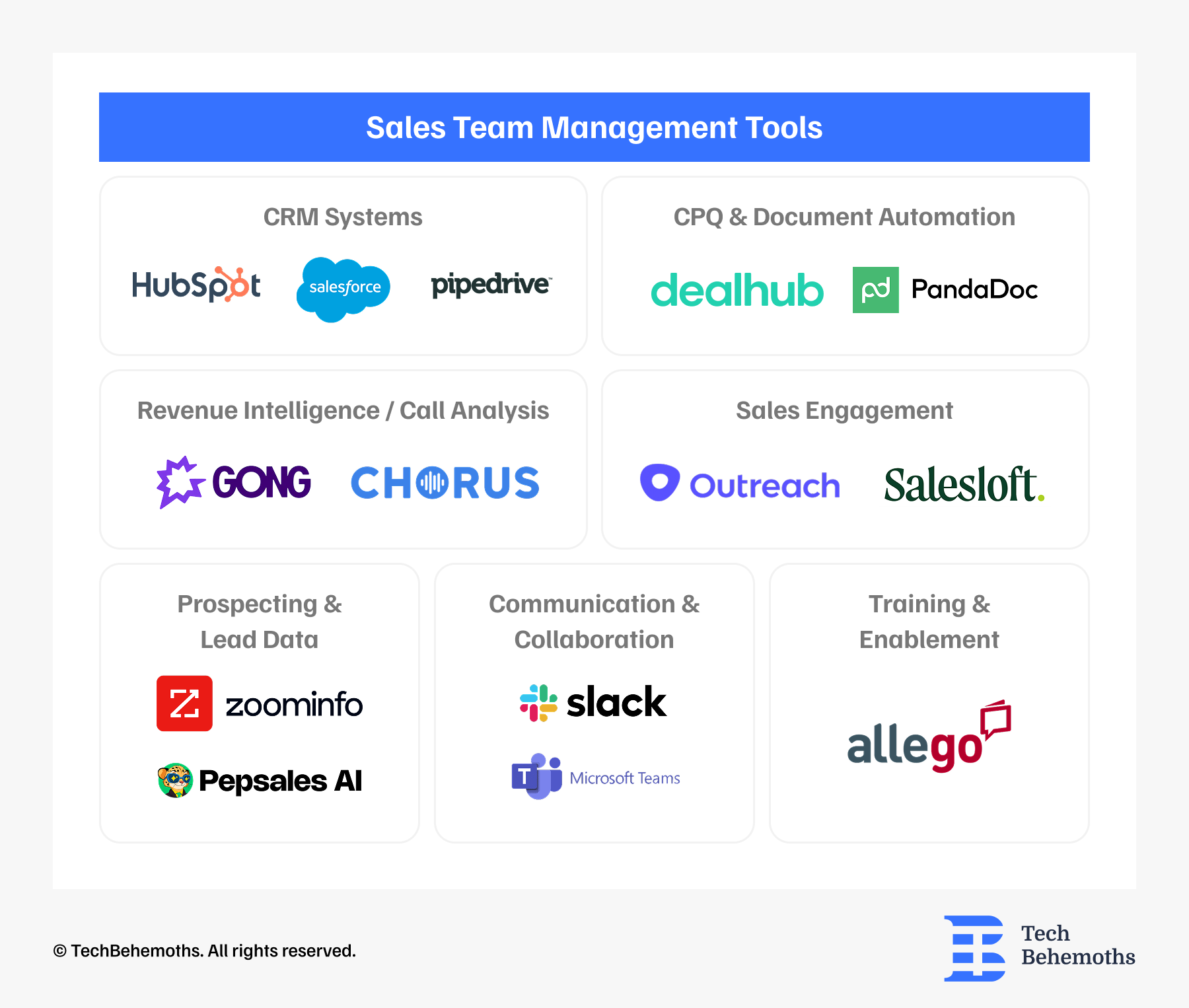
Here is the recommended list of tools that will help you monitor, manage and properly evaluate all sales processes and details, including communication and customer service of the sales team.
1. CRM Systems
These are the systems that keep track of all your customers and offers in one place. Examples: Salesforce, HubSpot, Pipedrive
2. CPQ & Document Automation
These tools automatically generate prices, offers, and contracts, saving you time spent on manually created PDFs. Examples: DealHub, PandaDoc
3. Revenue Intelligence / Call Analysis
These are programs that record and analyze sales calls, so you can see what works and better estimate the chances of closing deals. Examples: Gong, Chorus.ai
4. Sales Engagement
Tools that help automate messages, follow-ups, and contact sequences with potential customers. Examples: Outreach.io, SalesLoft
5. Prospecting & Lead Data
Platforms that find and verify potential customers (including emails, positions, company, etc.). Examples: ZoomInfo, Pepsales AI
6. Training & Enablement
Platforms for training the sales team, which provide materials, coaching and examples of best practices. Examples: Allego
Use advanced filters on TechBehemoths platform or submit your project requirements to get relevant service providers for your next CRM related integrations or customizations.