
There are 9 Companies in Zimbabwe
that provide CRM Consulting Services!
Zimbabwe’s combination of relatively stable governance, strategic location, and young and innovative population has made it an attractive destination for multinational companies. Zimbabwe’s ICT sector was worth an estimated $3.85 billion in 2025.
Discover Top IT Companies in Zimbabwe specialized in CRM Consulting including Hubspot, IBM CRM, Microsoft Dynamics CRM, Marketo, Salesforce, Sugar CRM, Zoho CRM and more.
Customer relationship management (CRM) lies at the heart of any successful business strategy, enabling companies to cultivate meaningful connections with their customers and drive sustainable growth. However, implementing and optimizing a CRM system can be a complex endeavor without the right expertise. CRM Consulting services offer invaluable guidance and support, helping businesses harness the full potential of CRM solutions. Below we explore the realm of CRM Consulting and how getting these services can be useful (or not) for your business.
Handpicked companies • No obligation to hire • 100% risk-free
Featured Companies in Zimbabwe
This month, the following CRM Consulting companies managed to provide an outstanding service and support. It's worth taking a look.

Pique Squid transcends the ordinary. This elite IT and marketing firm leverages its cutting-edge approach and unmatched proficiency to elevate.
Zimbabwean digital agency building websites, branding, SEO, marketing, and business automation solutions for African businesses.

Hakili is a premier technology, web design, and branding firm based in Bulawayo, delivering innovative digital solutions.
Explore Top CRM Consulting Companies in Zimbabwe
Tyflex Investments is a Zimbabwean conglomerate offering cutting-edge tech solutions, including ERP, VoIP, and POS systems

We empower businesses with a comprehensive range of cloud-based solutions designed to improve operational efficiency and drive strategic growth.

Trusted software develoment company with over a decade of experience.
At Niakazi, we are passionate about delivering cutting-edge solutions that enhance productivity, solve real-world problems, and drive business growth
Specialist in Web design, Web hosting, Software Development Digital Marketing, SEO, Social Media Management, Microsoft 365 Licensing

Work Smarter with Adonai Business process automation
Filter CRM Consulting Companies in Zimbabwe by Cities
Find the right tech company near you or from a specific city. Some of the best companies might be located in smaller cities.
Find more CRM Consulting companies around the world
TechBehemoths is the world's most advanced and user-friendly platform to match IT Companies with real clients without hustle.
The IT Industry in Zimbabwe: Companies, Insights & Data
Zimbabwe’s ICT sector was worth an estimated $3.85 billion in 2025. The telecommunications segment accounts for the vast majority of this, at around $256.8 million in 2024. Other important contributors are broadcasting, data center services, cloud, IT, and BPO.
Zimbabwe’s combination of relatively stable governance, strategic location, and young and innovative population has made it an attractive destination for multinational companies. Several notable firms, such as Deloitte and Orange, have offices in Harare, and some have based their entire African operations on these offices.
Why You Should Work With Zimbabwean IT Companies
Digital service providers in the cloud and BPO markets are primarily involved in the provision, rather than the development, of services, whereas Zimbabwean firms are more prevalent in the fintech and e-commerce markets. The physical technology required for the delivery of digital services is typically imported, and it is not clear that Zimbabwe could produce these products more efficiently.
A key strength in the digital services market is the acceptance of mobile services. Any consumer solution entering the market would have to be mobile-compatible. Mobile healthcare services are expected to grow particularly rapidly as the sophistication of these offerings increases.
What to Pay Attention to When Working With Zimbabwean IT Companies And Web Agencies
On the consumer side, it is vital that any proposed digital service offering be mobile-compatible due to the prevalence of mobile usage in Zimbabwe. Furthermore, smartphone penetration in the region is steadily increasing, thus increasing the sophistication of viable digital service offerings.
Given the acceptance of fintech by the Zimbabwean population, a possible route to entry in the consumer market is to acquire one of the many smaller fintech firms in the industry. This would resolve some of the primary barriers to entry, most specifically bureaucratic red tape and a lack of local knowledge.
On the corporate side, the most effective route to entry is likely through partnerships with smaller local resellers. This model is already popular in the Zimbabwean market. A key differentiating feature here will be how well the service adapts to the Zimbabwean market.
How Reliable Are Zimbabwean-based IT Companies?
Considered to be one of the biggest African IT hubs, Zimbabwean web agencies and IT companies compete only with Ethiopian ones in terms of reliability. As many foreign companies have already invested and thus developed the local IT infrastructure and industry overall, Zimbabwean IT companies find it easier than other neighboring countries to enter the global market and provide their services at accessible prices.
How Does the Zimbabwean IT Industry Relate to the Neighboring Countries?
Zimbabwe is actively trying to establish itself as a key ICT hub in the East African region. The country appears to be making good progress in this regard, helped by having a strong connectivity infrastructure and a young, innovative population. Despite this, the country currently faces considerable political uncertainty, and issues surrounding the transparency of tenders remain a major barrier to growth.
Although Zimbabwe’s score on the Global Innovation Index 2024 is not high in absolute terms, it ranks 118th in the world. This supports the conjecture that businesses, government, and consumers will be receptive to new technologies, as ICT has already had a substantial impact on the Zimbabwean economy.
Is Zimbabwe's Tech Industry Ready for 2025?
At the end of 2021, Zimbabwe announced big plans for the Global Entrepreneurship Week that boosted the startup scene in the country for 2022. The name of the program that gives hope to tech entrepreneurs from Zimbabwe is Startup Huddle, and it already has a location in Harare.
In 2025, the startup ecosystem in Zimbabwe suffered some challenges, for example, its drop to the 117th position in the StartupBlink Global Startup Ecosystem Index. Despite that, Zimbabwe makes efforts to improve it with various tech events, including Innovation Week Zimbabwe and initiatives like the Value Creation Challenge.
What is CRM Consulting and what are its benefits for your projects?
Customer relationship management (CRM) is one of the key elements of any successful business strategy, enabling companies to enable meaningful connections with their customers and drive sustainable growth. However, implementing and optimizing a CRM system can be a complex task without the right expertise. CRM Consulting services offer valuable guidance and support, helping businesses benefit from the full potential of CRM solutions. Below we explore CRM Consulting and how getting these services can be useful for your business.
CRM consulting services provide a wide range of expert solutions designed to help businesses enhance customer interactions, streamline processes, and boost overall sales and marketing efficiency. From CRM strategy development to system integration and customization, CRM Consulting caters to the entire CRM implementation lifecycle. Key services related to CRM Consulting include CRM assessment and planning, CRM customization and integration, data migration, user training, and ongoing support.
To provide better CRM Consulting services, companies leverage a variety of tools and technologies. These may include popular CRM platforms such as Salesforce, Microsoft Dynamics 365, HubSpot, and Zoho CRM. Additionally, integration tools, data migration solutions, and analytics software play a crucial role in optimizing CRM implementation and performance.
Companies seeking CRM Consulting services have the flexibility to choose between specialized IT companies and digital agencies. Specialized IT companies often have deep expertise in CRM technologies and provide niche solutions for CRM implementation and optimization. Digital agencies, on the other hand, may offer a broader suite of services, including CRM Consulting, making them a suitable option for businesses seeking comprehensive digital transformation.
Contracting CRM Consulting services may bring a set of advantages for businesses aiming to strengthen customer relationships and achieve sustainable growth. By implementing an effective CRM system, companies can centralize customer data, enabling a 360-degree view of their interactions. This enhanced visibility empowers sales and marketing teams to deliver personalized and targeted campaigns, resulting in improved customer satisfaction and increased sales. Moreover, CRM Consulting streamlines processes, enhances productivity, and facilitates data-driven decision-making, ultimately driving long-term profitability.
Selecting the right CRM Consulting partner is crucial to ensure a successful project. Consider the following criteria:
-
Expertise and Experience: Look for a provider with proven experience in CRM implementation, integration, and support, ideally with a track record in your industry
-
Customization: Ensure the provider can tailor CRM solutions to meet your specific business needs and processes.
-
Scalability: Choose a partner who can support your business as it grows and evolves.
-
Client References: Request client references to gain insights into the provider's performance and customer satisfaction.
TechBehemoths is your go-to platform for finding the best CRM Consulting companies worldwide. With over 982 companies listed across 70+ countries and territories, the platform offers a vast selection of reliable consulting partners. TechBehemoths provides valuable information such as client reviews, ratings, and detailed profiles, enabling you to make an informed decision and select the right CRM Consulting provider for your project.
What type of CRM systems do businesses use?
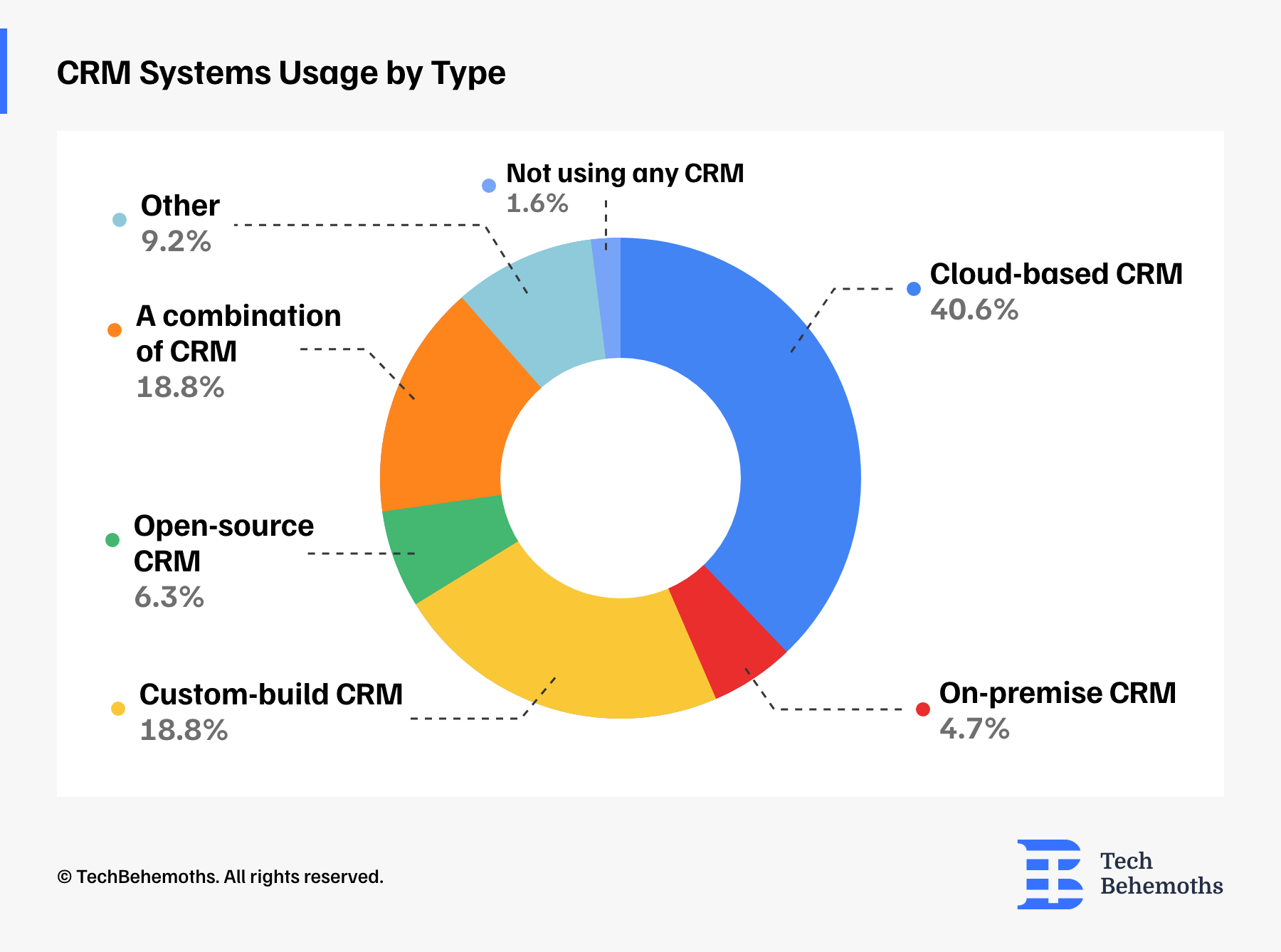
According to a recent survey, over 40% of businesses prefer to use cloud-based CRM systems, due to scalability, ease of integration, and automatic updates. Examples include Salesforce, HubSpot CRM, and Zoho CRM.
Around 19% of businesses use custom built CRMs and 1.6% don’t use any CRMs. This means that about 20% of businesses need flexible solutions to address their unique workflows and integrate seamlessly with their existing systems.
How long have companies been using CRMs?
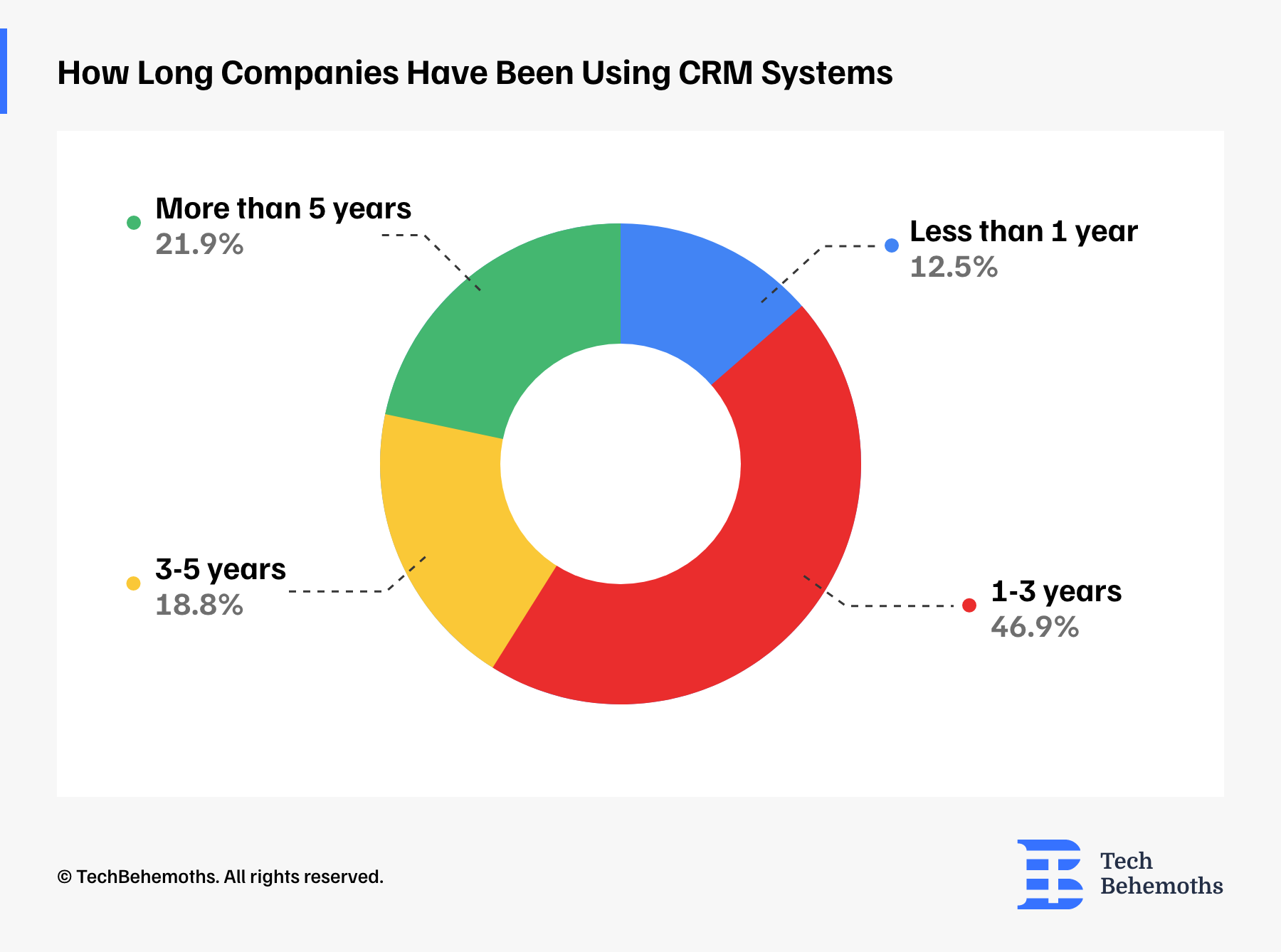
The survey data shows that CRM adoption is still work in progress for many tech companies. The largest group of respondents , around 47% have been using CRM systems for 1-3 years. Another 12 % have been using CRM systems for less than 1 year, meaning that some companies are just getting started with CRM.
Why do tech businesses use CRMs?
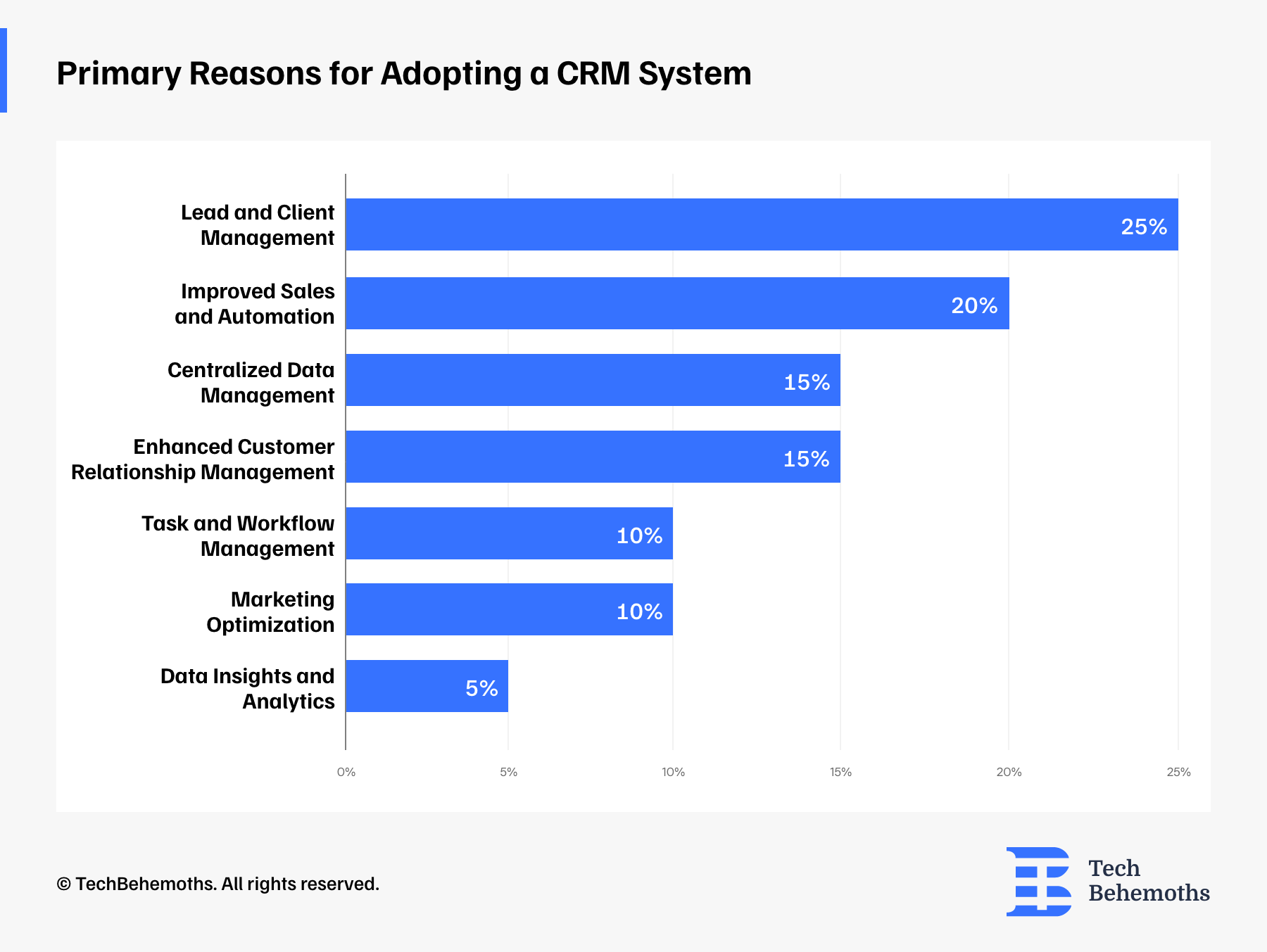
Many professionals think that CRM systems are essential for lead and client management. They help track contacts, organize information, and effectively strengthen customer relationships.
How to measure the success of a CRM system?
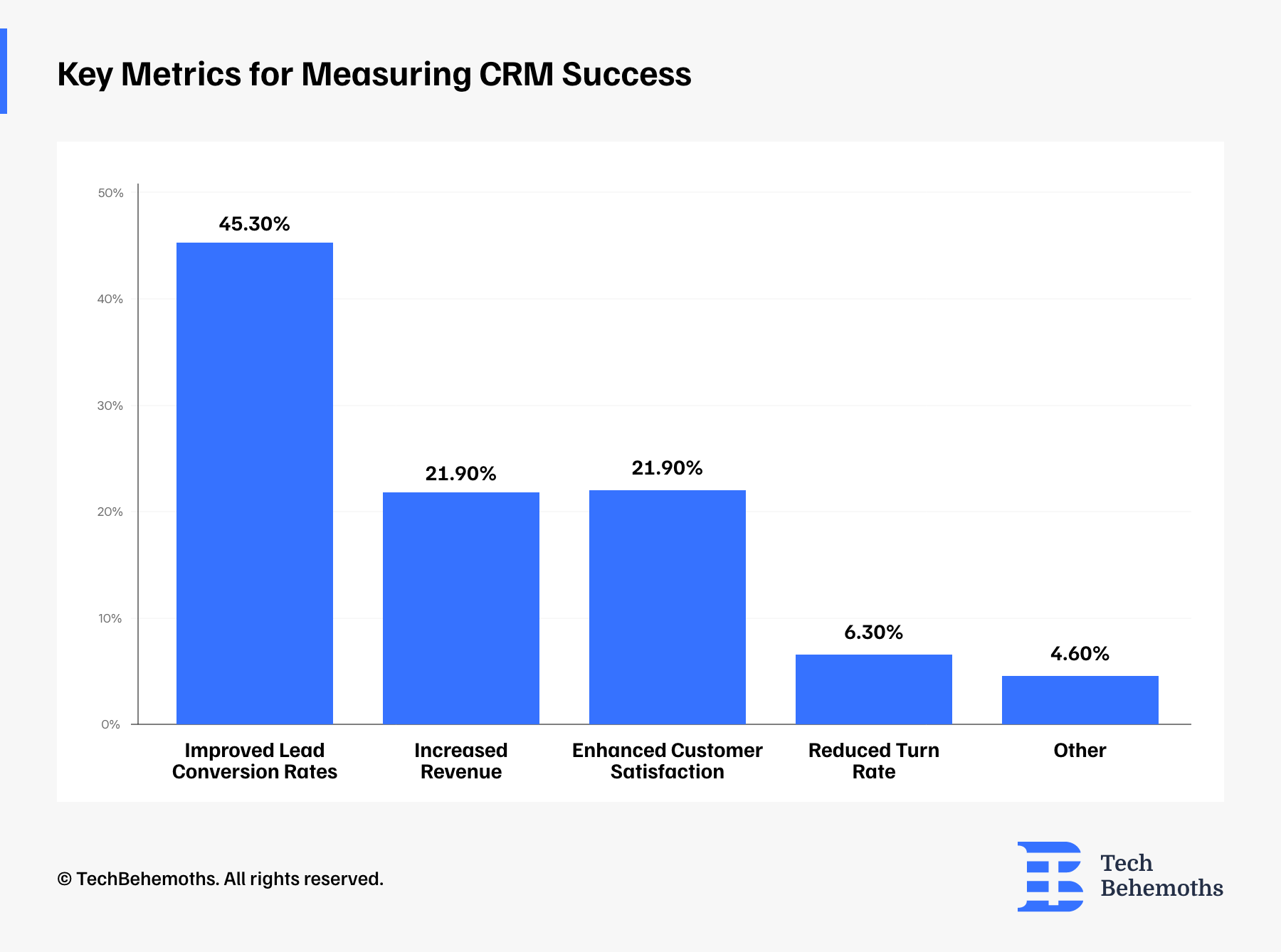
Here are some metrics that you can use to measure the success of your CRM system, based on survey data.
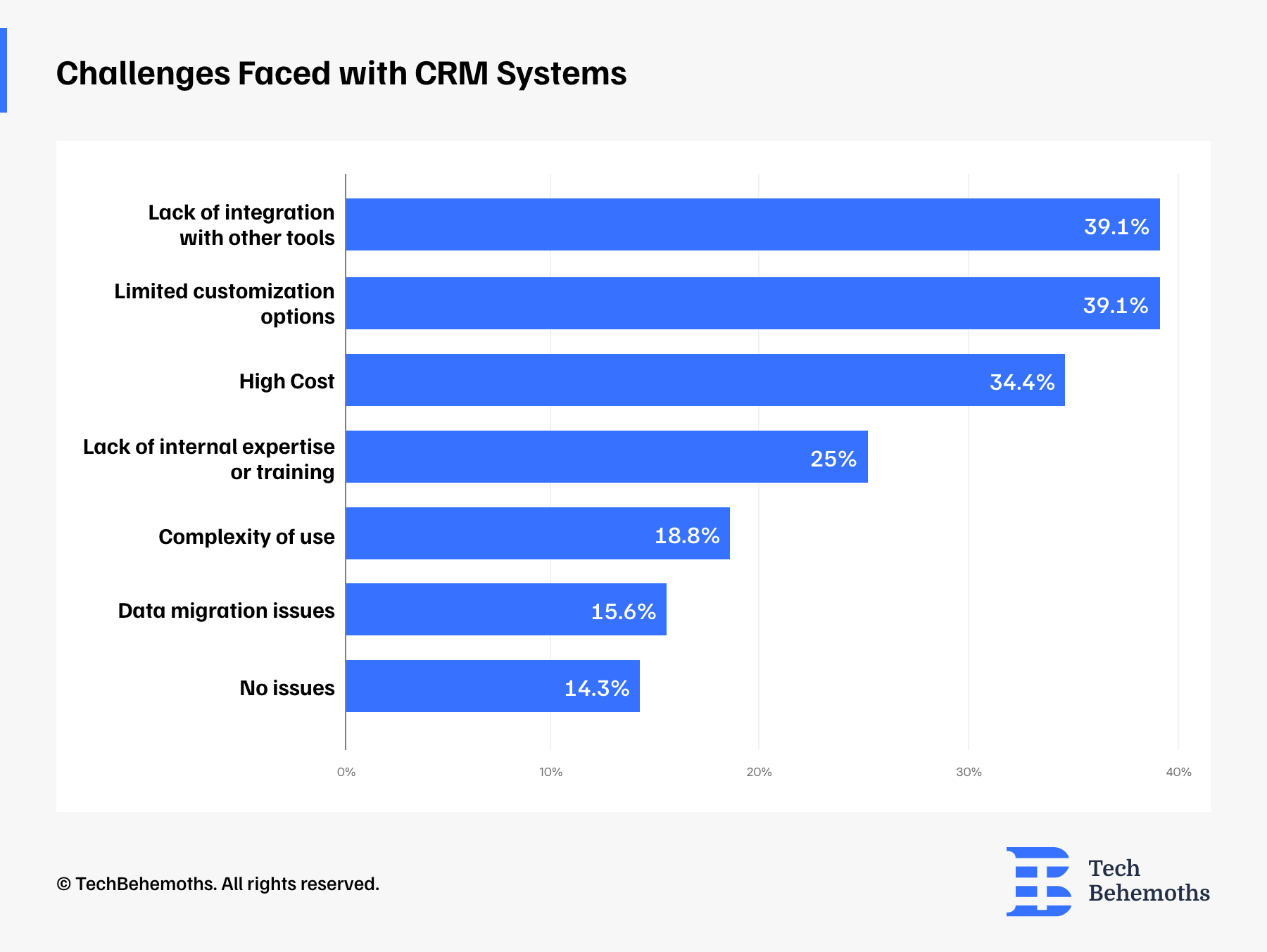
Almost 40% of IT businesses struggle with CRM integration/customization
Most survey respondents noted that lack of integrations with other tools and limited customization options are major issues. This might be an opportunity to work with the right CRM consulting partners that will map the right tools and processes when implementing a CRM system.
Another challenge is the high cost of CRM systems, and the lack of in-house expertise or training. This highlights the need for user-friendly designs and training programs to help users.
Complexity is also an issue, affecting 19% of respondents who find CRMs hard to use. Data migration problems concern around 16% of users when switching to new systems.
What to look for when choosing a CRM?
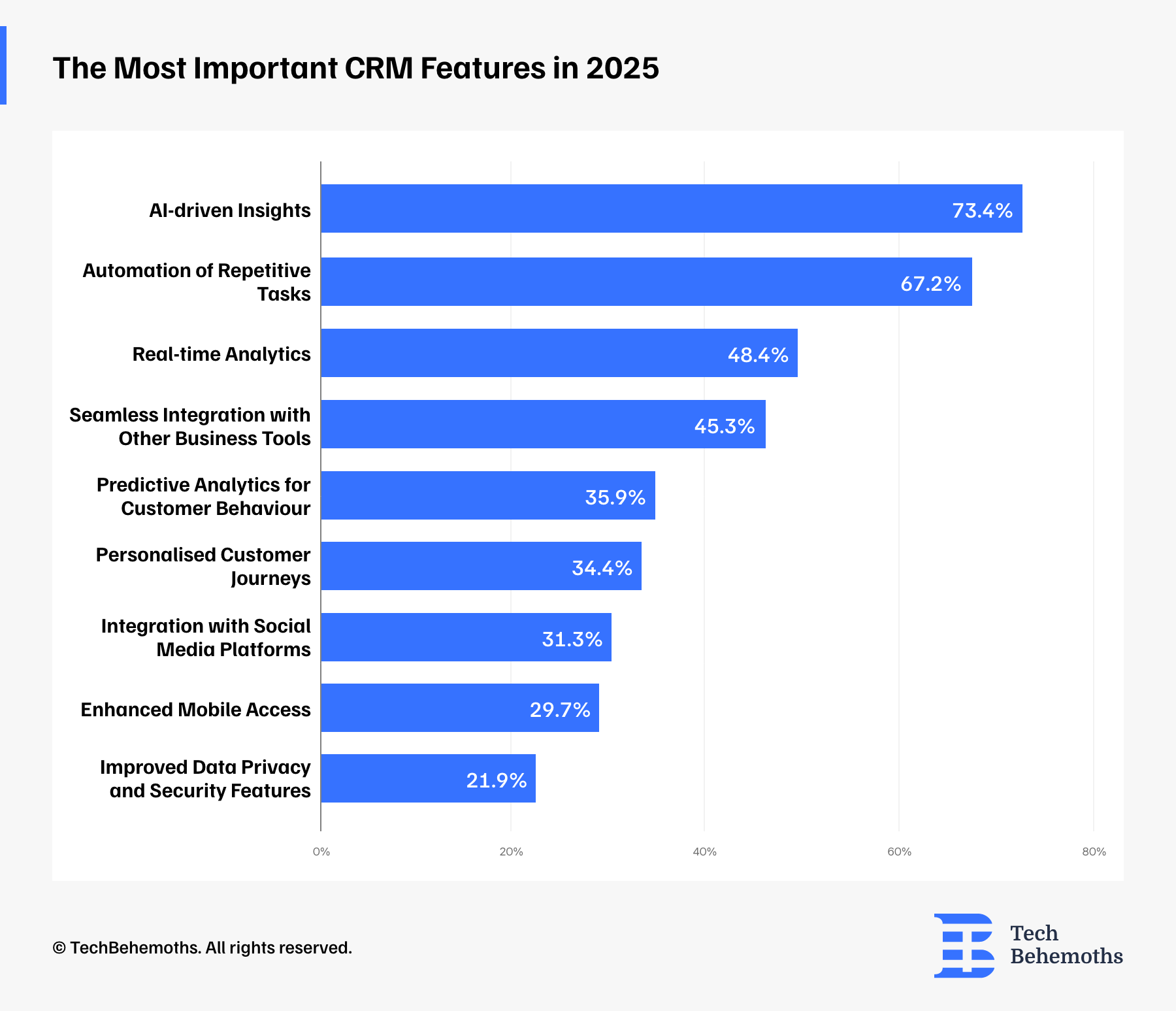
The most important CRM features reflect a strong focus on innovation, efficiency, and connectivity. AI-driven insights, automation, real-time analytics are among the top desired features for efficient CRMs.
Useful CRM and other tools for sales teams
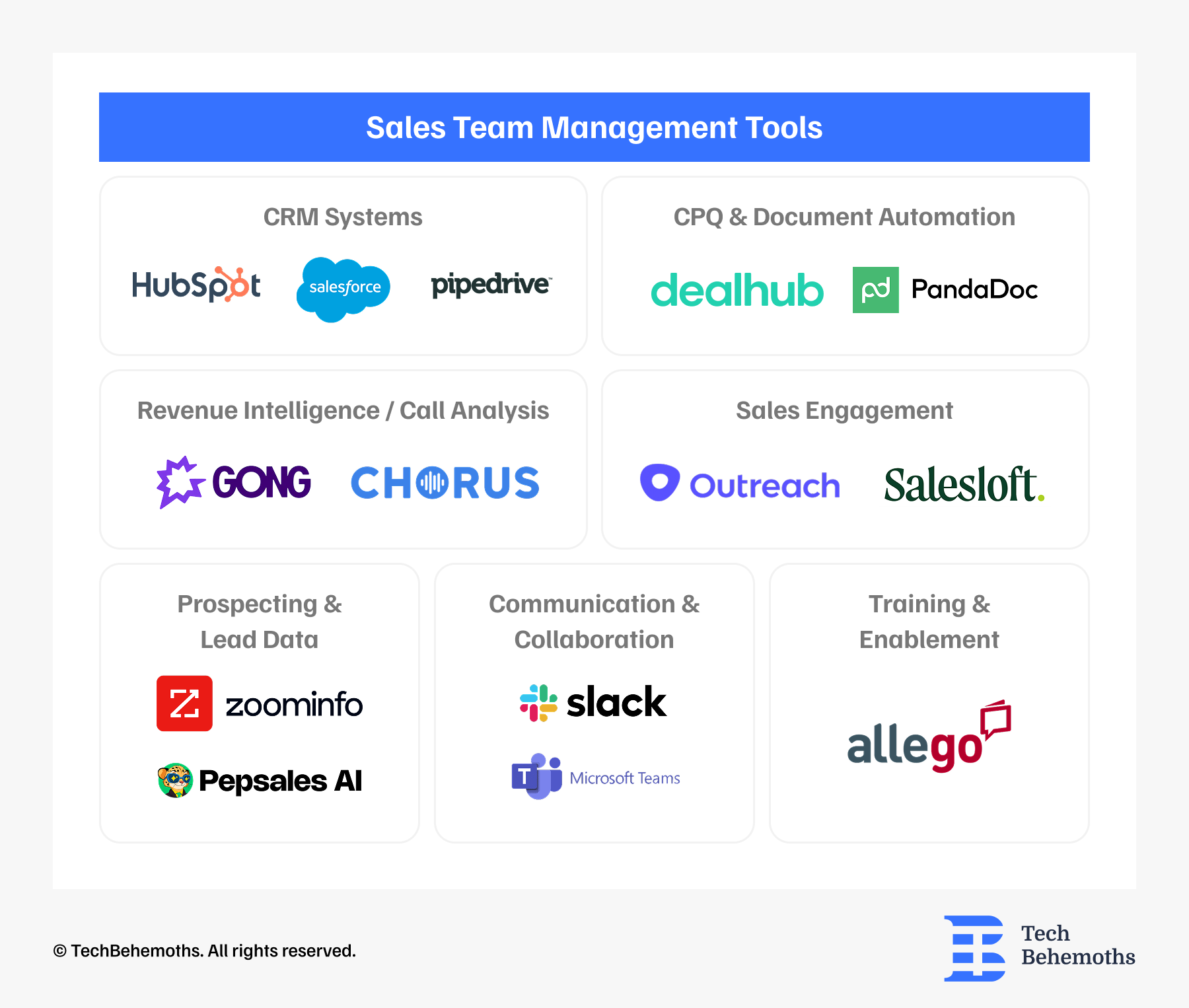
Here is the recommended list of tools that will help you monitor, manage and properly evaluate all sales processes and details, including communication and customer service of the sales team.
1. CRM Systems
These are the systems that keep track of all your customers and offers in one place. Examples: Salesforce, HubSpot, Pipedrive
2. CPQ & Document Automation
These tools automatically generate prices, offers, and contracts, saving you time spent on manually created PDFs. Examples: DealHub, PandaDoc
3. Revenue Intelligence / Call Analysis
These are programs that record and analyze sales calls, so you can see what works and better estimate the chances of closing deals. Examples: Gong, Chorus.ai
4. Sales Engagement
Tools that help automate messages, follow-ups, and contact sequences with potential customers. Examples: Outreach.io, SalesLoft
5. Prospecting & Lead Data
Platforms that find and verify potential customers (including emails, positions, company, etc.). Examples: ZoomInfo, Pepsales AI
6. Training & Enablement
Platforms for training the sales team, which provide materials, coaching and examples of best practices. Examples: Allego
Use advanced filters on TechBehemoths platform or submit your project requirements to get relevant service providers for your next CRM related integrations or customizations.