SEO Pricing Models Explained: How to Choose the Right One for Your Business


Summary
Companies may spend a few hundred to thousands of dollars monthly on SEO, but understanding what you're paying for and which pricing model suits your business can be complex.
This article breaks down the four main SEO pricing models used by agencies today: hourly, monthly retainer, project-based, and performance-based pricing.
It also explores what influences SEO costs, how much companies typically spend on SEO services in 2026, and how to choose the right pricing structure for your business goals and budget.
The rise of AI-generated search summaries like Google AI Overviews, voice search, and zero-click results has made organic visibility more strategic than ever.
SEO remains one of the most valuable long-term investments a business can make. That’s why it’s so important to understand how SEO pricing works.
Whether you are a company looking to hire an SEO agency or an agency structuring its services, this article will help you understand the most common SEO pricing models, what influences SEO costs in 2026, and how to choose the right approach for your goals.
Why SEO Pricing Is Not One-Size-Fits-All
SEO itself is a complex and highly customized service. The price depends largely on the scale and complexity of the project. For example, a local bakery competing in a single city has completely different SEO needs than a SaaS company aiming to target global corporate clients.
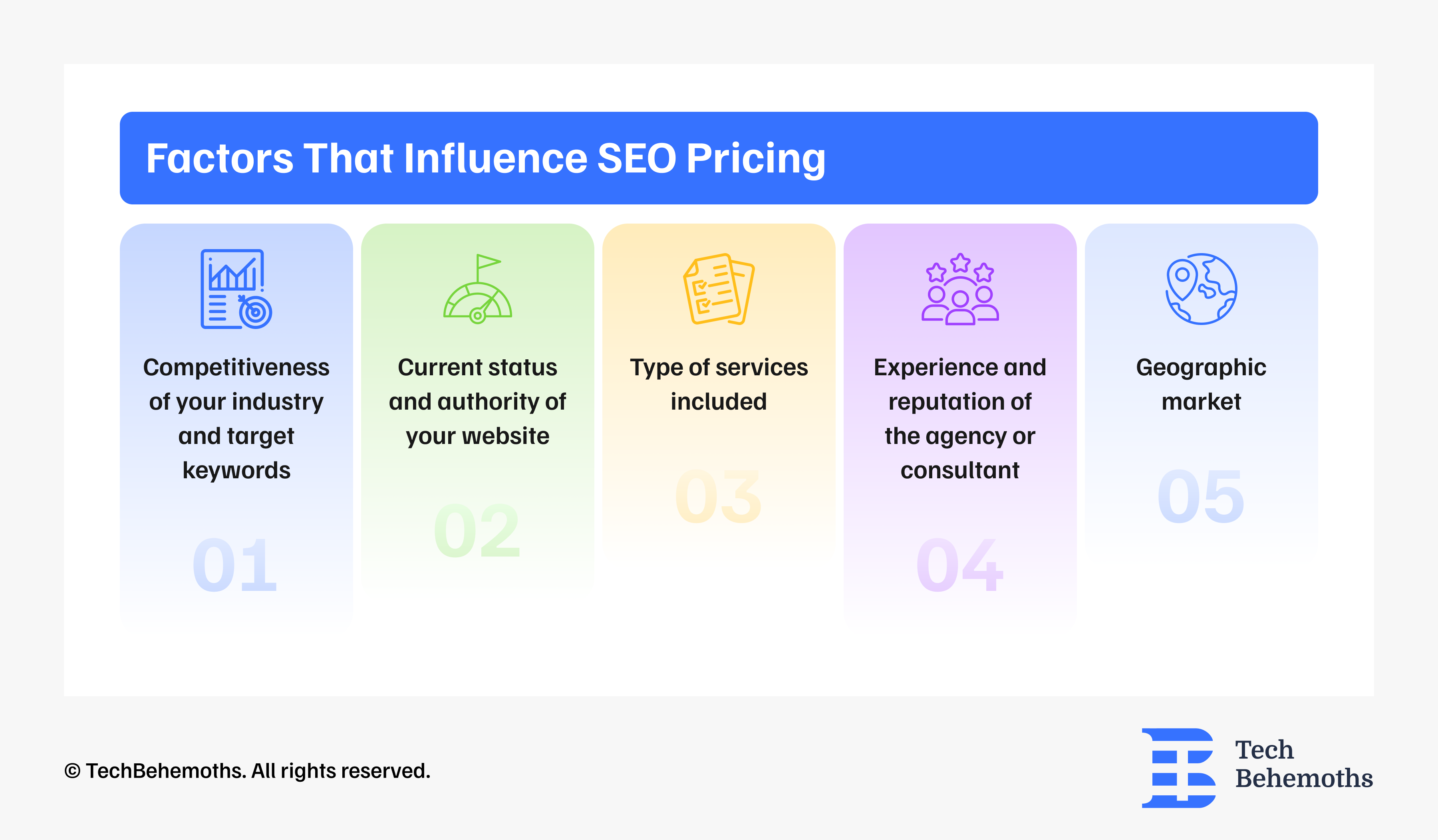
What actually influences the price of SEO services?
Here is a list of factors to consider:
- Competitiveness of your industry and target keywords
- Current status and authority of your website
- Type of services included, such as technical SEO, content creation, on-page optimization, or link building
- Experience and reputation of the agency or consultant
- Geographic market - agencies in the US or UK often charge higher prices than teams in Eastern Europe or Southeast Asia
The 4 Main SEO Pricing Models
SEO agencies structure their pricing in 4 common ways. Let’s take a look at the pros, cons, and ideal use cases for each.
1. Hourly Rate
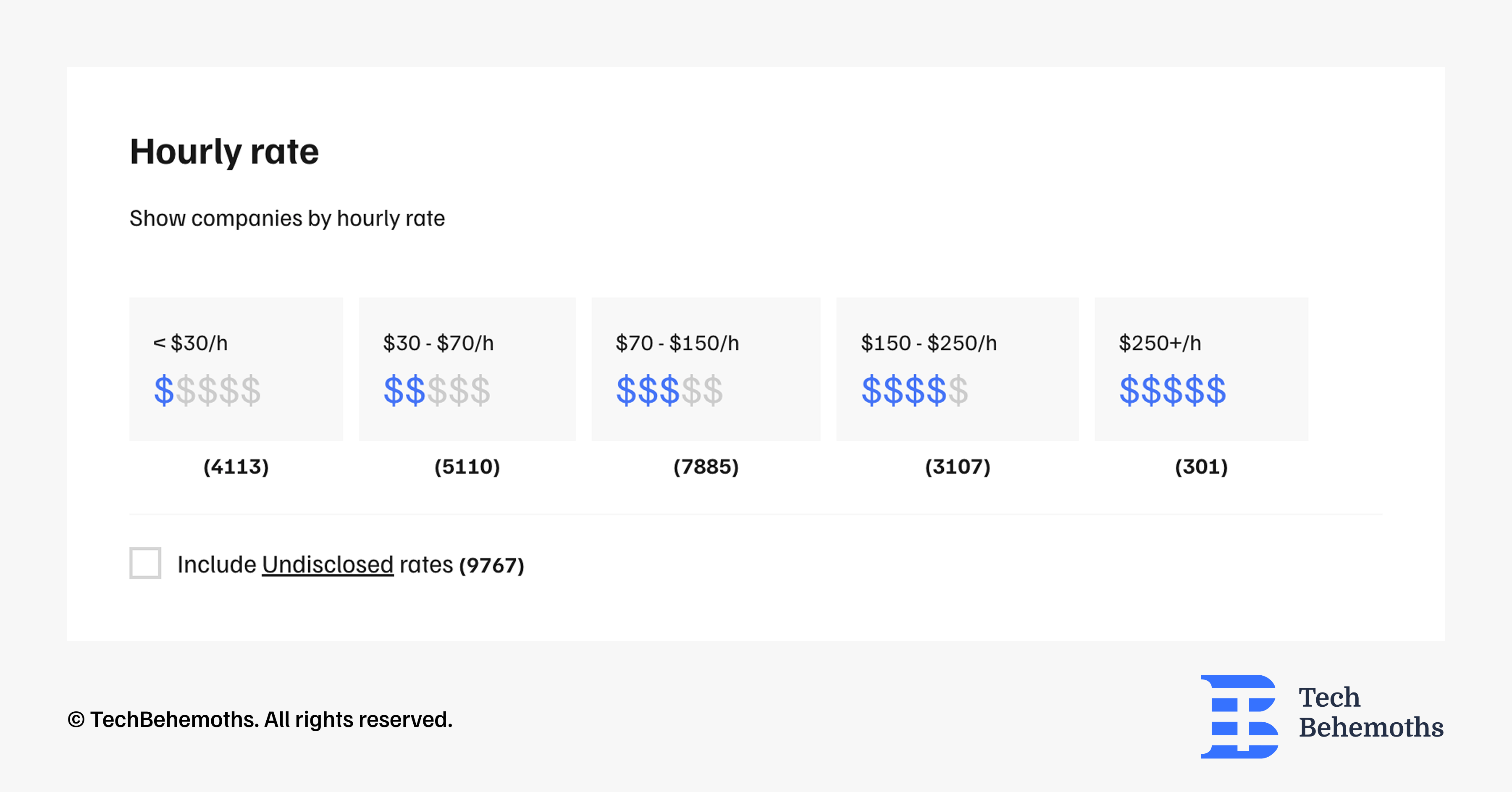
The hourly pricing model is simple: the agency or SEO consultant bills you for each hour of work performed. Rates can vary enormously depending on the provider's experience, location, and specialization.
Best for: One-off audits, SEO consultations, technical fixes, or specific tasks where you need expert support without a long-term commitment.
Pros: High transparency on what you are paying for; easy to scale up or down depending on your needs.
Cons: Costs can become difficult to predict over time, especially for larger projects. Since SEO is an ongoing process, hourly engagements alone do not always deliver the strongest long-term results.
TechBehemoths Insight
2. Monthly Retainer
The monthly payment is the most popular pricing model in the SEO industry. The client pays a fixed monthly fee in exchange for an agreed-upon set of ongoing services. Contract sizes vary widely by provider, from a few hundred dollars with a freelancer to tens of thousands with a top agency.
Best for: Businesses that need ongoing SEO support, including regular content publishing, link building, technical maintenance, and monthly reporting.
Pros: Predictable budgeting, long-term strategy alignment, and a stable relationship with a dedicated team.
Cons: Requires trust, clear communication, and a well-defined scope of work. Without transparent deliverables or reporting, clients may feel uncertain about the value they are receiving.
According to TechBehemoths, monthly SEO rates can vary significantly depending on agency size, expertise, and project complexity. Smaller agencies and freelancers can charge between $500 and $1,500 per month, while mid-sized agencies typically charge $2,000 to $6,000 per month. Enterprise-level SEO partnerships can easily exceed $10,000 per month.
| Agency Type | Avg. Hourly Rate | Estimated Monthly Hours | Estimated Monthly Retainer |
|---|---|---|---|
| Freelancer / Small Agency | $30–$60/h | 15–25 h | ~$500–$1,500 |
| Mid-Sized Agency | $75–$150/h | 20–40 h | ~$2,000–$6,000 |
| Premium / Enterprise SEO Agency | $150–$300+/h | 40–80 h | $8,000–$20,000+ |
Need Help with SEO?
Compare top-rated SEO companies worldwide and connect with the right agency for your business goals
3. Project-Based Pricing
With project-based pricing, the agency defines a fixed scope of work and charges a fixed fee for it. Common examples include a full website SEO audit, a content strategy plan, or a link-building campaign.
Best for: Companies with a specific goal and a clearly defined budget, such as launching a new website, fixing technical SEO issues, or recovering from a Google penalty, or companies that have an in-house team to execute daily tasks but need outside expertise for a heavy technical lift.
Pros: Clear deliverables, predictable costs, and no long-term commitment.
Cons: Less flexibility if the scope changes mid-project. Since SEO results usually take time, one-time projects may not generate a visible business impact quickly enough to justify the investment.
According to industry surveys from Ahrefs and SE Ranking, professional one-off SEO projects typically fall between $2,500 and $10,000, although enterprise-level projects can cost significantly more.
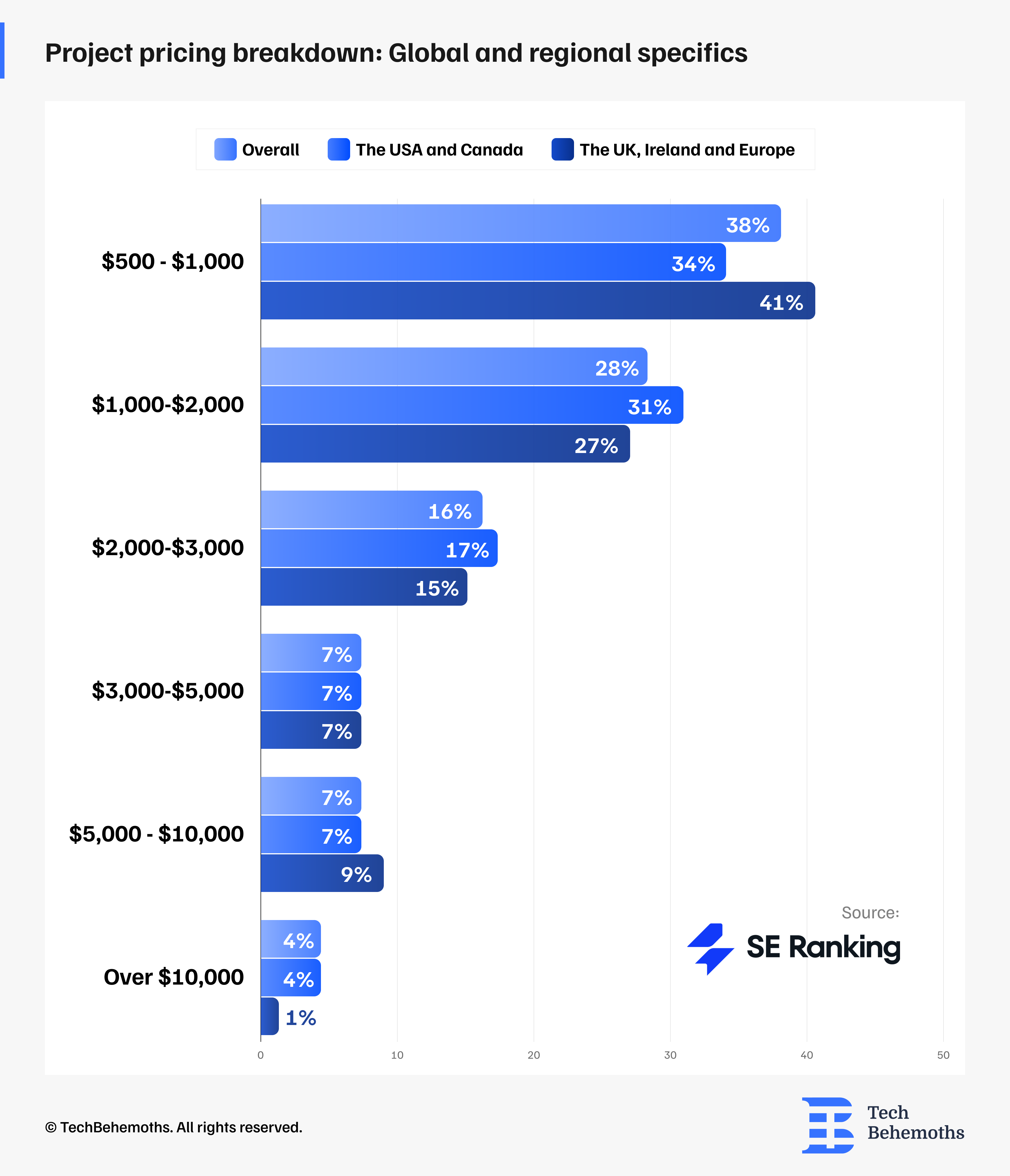
It's important to note that even when clients receive a fixed quote, agencies typically calculate costs internally based on estimated hours, team expertise, project complexity, and additional software or tool expenses.
For example, a complex website migration requiring around 40 hours of work at an average agency rate of $150/hour, plus additional crawling and auditing tools, could easily result in a final quote of around $6,000–$7,000.
4. Performance-Based Pricing
This model involves a fee that is partially based on the agency's rankings, organic traffic growth, or leads generated. Targets can either be paid as a base fee or given as an entirely variable bonus. Additionally, there may be other payment options.
Best for: Businesses focused on ROI measurement, especially eCommerce companies or lead-generation businesses where conversions and revenue are easy to measure.
Pros: Stronger alignment between agency incentives and client business objectives.
Cons: Defining and measuring “performance” can be challenging. SEO results are influenced by many external factors, including algorithm updates, seasonality, website quality, and sales processes. In some cases, agencies may prioritize short-term ranking gains over long-term business growth.
In practice, performance-based SEO contracts often combine a fixed monthly commission with additional bonuses tied to results.
SEO Pricing Models at a Glance
| Model | Typical Price Range | Main Advantage | Main Challenge |
|---|---|---|---|
| Hourly | $50–$300/hr | Flexible, transparent | Unpredictable costs |
| Monthly Retainer | $500–$10,000+/mo | Consistent, scalable | Ongoing commitment |
| Project-Based | $1,000–$30,000 | Clear scope & budget | Less flexible mid-project |
| Performance-Based | Variable / % of results | Low risk for the client | Hard to define KPIs |
How Much Do Companies Spend on SEO in 2026?
According to a market study by TechBehemoths, tech companies spend differently on SEO.
One in three tech companies spends $300 or less each month on SEO services. This amount is usually only enough for basic maintenance or SEO tools.
Also, 42.6% of companies spend between $1,000 and $5,000 a year on wider customer acquisition strategies, which usually include SEO along with other marketing efforts.
How to Choose the Right Pricing Model?
There is no universal “best” pricing model. It all depends on the expectations and needs of your business, as well as the available budget.
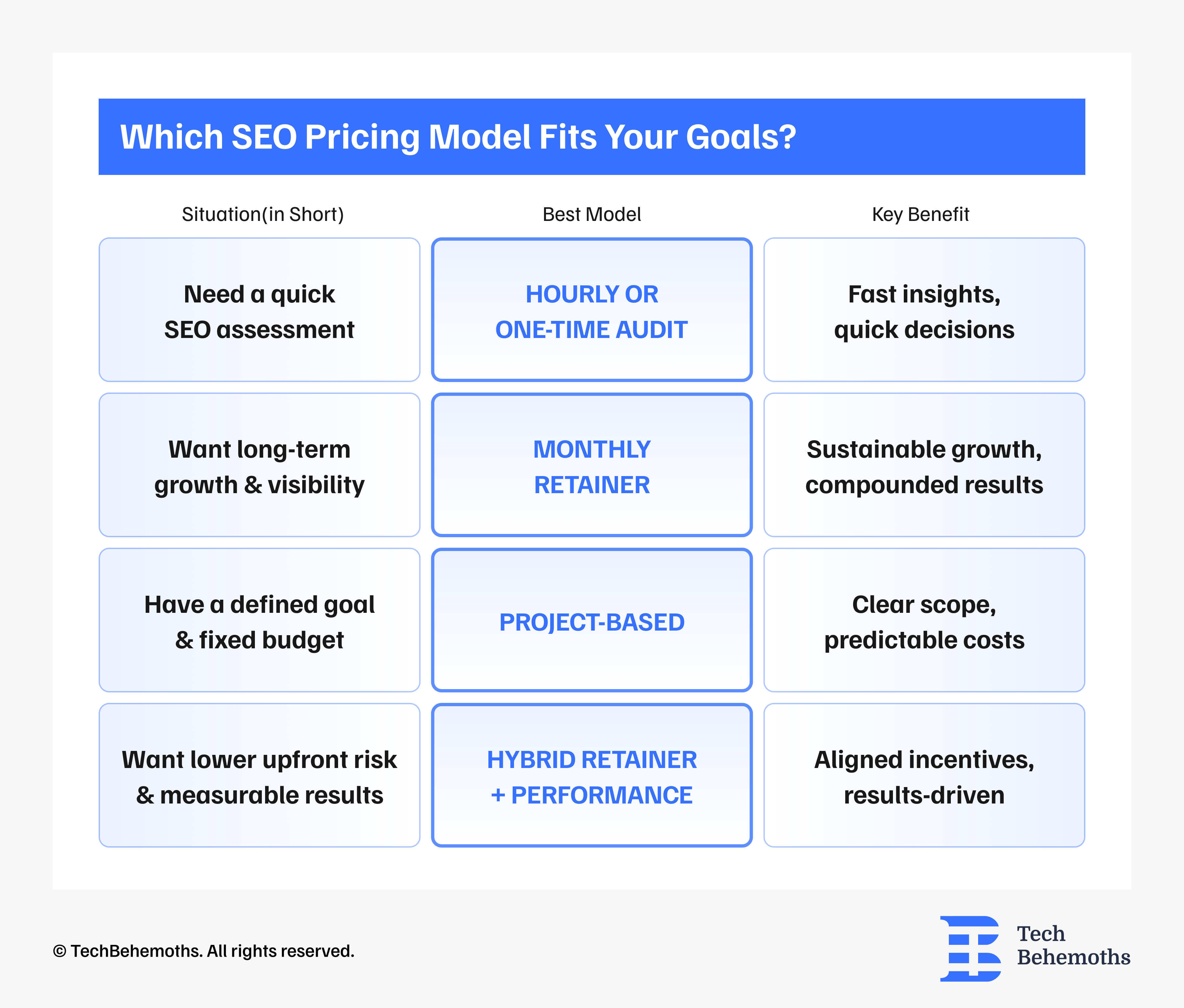
- If you need a quick evaluation of your website’s SEO condition, an hourly consultation or one-time SEO audit is often the best option.
- If your goal is to build long-term organic visibility and sustainable growth, a monthly retainer is usually the smartest investment.
- If you have a clearly defined objective and a fixed budget, project-based pricing offers better cost predictability and scope clarity.
- If you want to reduce upfront risk and align costs more closely with measurable business outcomes, a hybrid retainer + performance model may be worth considering.
The best SEO pricing model is not necessarily the cheapest one. It is the model that aligns with your resources and long-term business goals.
Red Flags to Watch Out For
Regardless of the pricing model, there are warning signs that should make you think twice before signing a contract, namely, if the company promises:
- Guaranteed #1 rankings
- “1,000 backlinks for $99” offers
- No reporting or transparency
- Locked contracts without performance benchmarks
- No case studies or methodology explanations
- Fast SEO results with unrealistic timelines
No ethical SEO agency can fully guarantee rankings because search algorithms constantly evolve. At the same time, SEO should be treated as a strategic growth investment, certainly not a shortcut.
Client tip
Final Thoughts
Understanding the four main models: hourly, retainer, project-based, and performance-based gives both clients and agencies a common language to structure fair, productive partnerships.
In 2026, SEO pricing should reflect: strategy, technical expertise, business alignment, scalability, and long-term acquisition potential.
The right SEO partner should help your business build sustainable visibility, not just temporary rankings.
Get Matched with SEO Companies
Submit your project and connect with SEO companies that fit your goals, budget, and timeline
Related Questions & Answers
Can I find a list of SEO services with transparent pricing online?
What is the 80/20 rule for SEO?
What are the most common SEO pricing models used by digital marketing firms?
Is SEO dead or evolving in 2026?
I absolutely love embracing new opportunities and connecting with people. Every project is a chance to analyze, create, and work until I am satisfied with the results. Bringing creativity into every aspect of my work offers a fresh perspective on turning ideas into reality. Paying attention to the details is key because it's the little things that truly make all the difference.
Discover more TechBehemoths Insights
Learn practical tips and insights about IT Companies, how to find the right company for your projects.
Read the latest news about Market Trends and fresh Interviews.