Why is AI both a Friend and Enemy in Tech Hiring?


Summary
Artificial Intelligence is transforming how companies hire talent and how businesses choose the right tech partner.
It speeds up screening, improves matching, and supports smarter decisions, but it can also introduce bias, reduce transparency, and hide real expertise behind polished outputs.
In this article, you’ll learn where AI truly helps, where it creates risks, and how to combine automation with human judgment to choose the right partner with confidence.
Unbelievable, perhaps, is the fact that Artificial Intelligence has been part of recruitment for decades.
In the early 1990s, this was evident through basic keyword searches in résumé databases. In 2025, 45% of companies adopted AI in recruitment, and 92% of companies are planning to invest more in AI in the next three years.
Today, generative AI tools not only draft job descriptions and simulate interview questions but also help companies predict the skills they’ll need in the future to achieve long-term strategies.
And yet, is AI more a friend, an enemy, or both at the same time? Let’s analyze its positive and negative aspects, with a focus on tech hiring, from two perspectives: IT companies offering services, and businesses seeking the right tech firm.
AI - Friend or Enemy?
To be honest, from the very beginning, artificial intelligence can be both helpful and challenging. It’s important to understand this dual nature so we can benefit from using AI while avoiding its not-so-great sides.
AI as a Friend
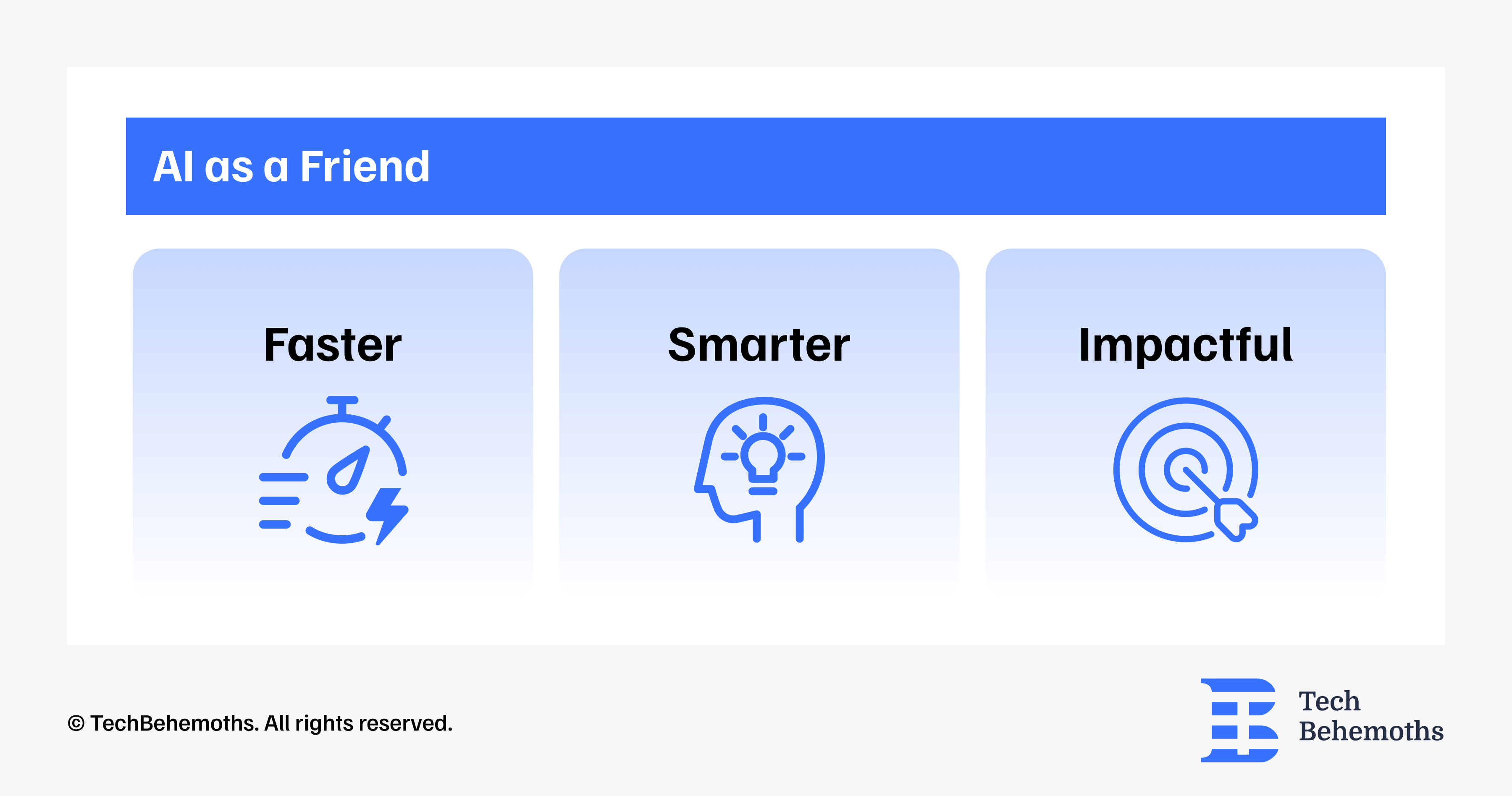
Artificial intelligence helps improve many processes, making them faster, smarter, and more impactful. How does this happen?
For IT Companies:
-
Accelerate hiring cycles and save time: Artificial Intelligence can review thousands of résumés in minutes, automating early screening and shortlisting and, in many cases, significantly reducing time-to-hire (sometimes by up to 75%).
-
Boost productivity and scale recruiter impact: AI screening tools help recruiters work more efficiently by allowing them to manage multiple open roles simultaneously, increasing productivity by 8 to 14 roles per month. Instead of spending time filtering CVs, recruiters can focus on evaluation, communication, and candidate experience.
-
Predict insights: AI can analyze skills, career journey, identify patterns, and make decisions based on data, helping companies anticipate talent gaps, while keeping up with technological trends.
-
Improve fairness and consistency: AI can ensure more consistent talent selections, reducing randomness and improving comparability between candidates.
For companies seeking services:
-
Describe your project clearly: AI helps transform project ideas into structured requirements, making it easier to clarify your goals and turn your ideas into clear action steps.
-
Find better matches: Matching algorithms connect you with providers whose expertise, industry focus, and past work align with your needs.
-
Plan budgets wisely: AI helps you compare costs, timelines, and project scope, allowing you to set realistic expectations before starting.
-
Support confident, informed choices: AI makes choosing providers easier. It gathers data, comparisons, and performance signals to help you make informed decisions instead of just searching for options.
Submit your project requirements
Match with the right technical partner
Overall, a shared benefit for both IT providers and companies looking for services is a smoother communication experience. AI chatbots enable 24/7 engagement, answering common questions and scheduling interviews instantly, which helps reduce candidate frustration, shorten response times, and lower dropout rates.
This shift is part of a wider transformation: Google Cloud predicts that 40% of enterprise applications will include AI agents by the end of 2026, up from less than 5% today.
AI as an Enemy
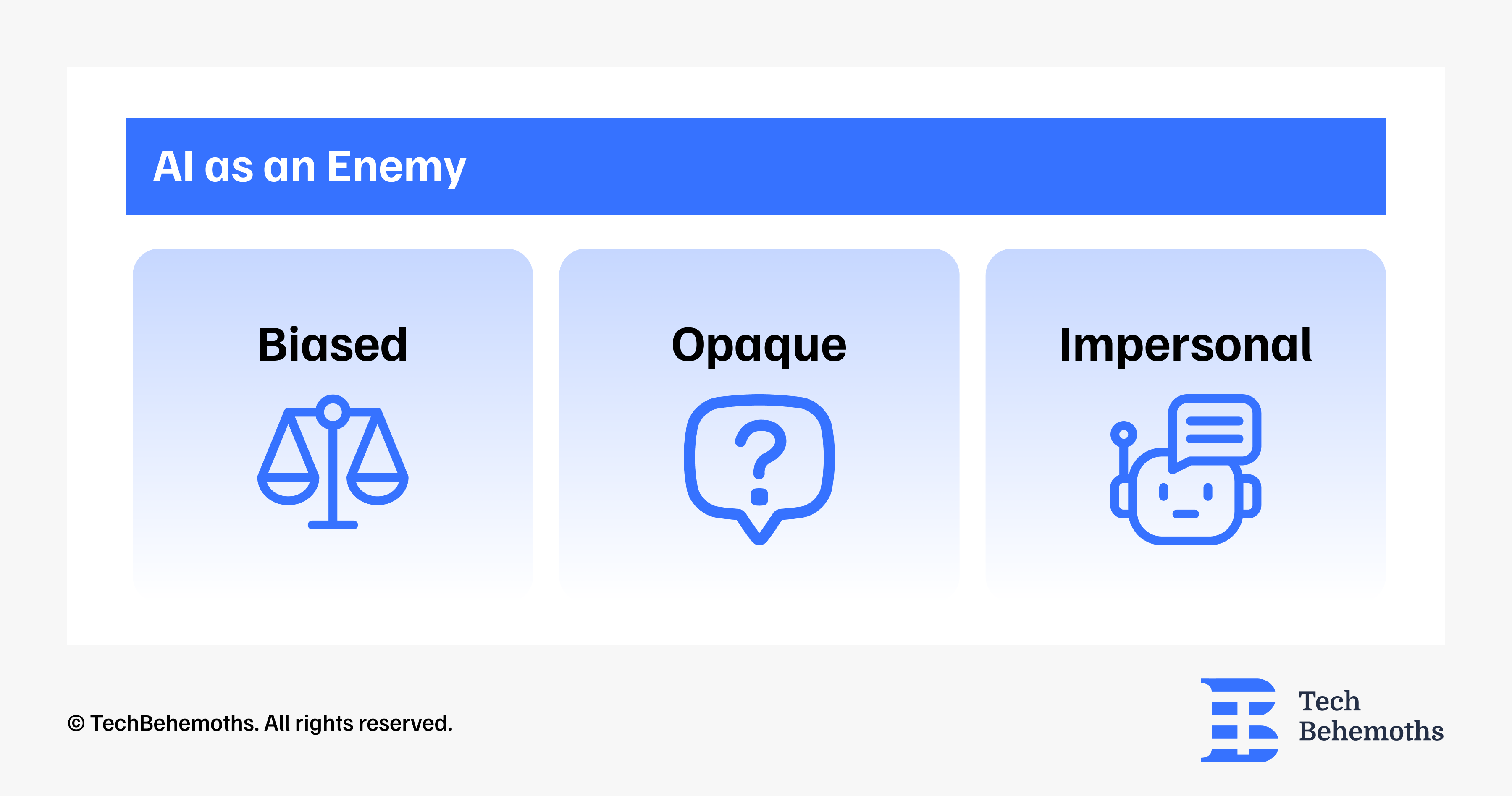
Artificial intelligence also has its share of shadows, reflected in the provision of imperfect data. Some decisions can be difficult to explain, reducing trust and transparency, and excessive automation can weaken the human connection in hiring. When does this happen?
For IT companies:
-
Bias in the data: 75% of organizations struggle with bias and fairness issues in AI hiring, while 67% report serious data quality problems.
-
Rigid profile filtering: Strong candidates with non-traditional backgrounds may be overlooked if their profiles do not match the expected wording or formats.
-
Decision opacity: Many AI systems operate as “black boxes,” making it difficult to explain how decisions are made.
For companies seeking services:
-
Inaccurate matching: Over-reliance on AI matching can exclude unconventional but highly capable providers whose strengths may not be fully captured by algorithmic criteria. When selection depends too heavily on predefined patterns or data signals, strong candidates or suitable partners may be overlooked.
-
Cultural fit risks: AI still struggles to assess soft skills, creativity, and adaptability, factors that often determine long-term partnership success.
-
Impersonal processes: Excessive automation can weaken human interaction, leading to poorer experience, lower engagement, little or no response or feedback, weakening human connection, and affecting morale and long-term retention.
| Role of AI | Explanation/ Impact |
|---|---|
| Friend |
- Faster screening - Consistent evaluation - Better engagement via chatbots - Predictive insights for talent gaps |
| Enemy |
- Bias reinforcement - Keyword dependency excludes nontraditional talent - Lack of transparency (“black box” decisions) - Impersonal candidate experience |
Even AI can make hiring smarter and faster, but if not carefully managed, it risks excluding great talent and undermining fairness. The true challenge lies in finding the right balance between automation and human judgment.
How to Balance AI and Human Judgment in Hiring Processes?
Balancing AI and human judgment in hiring creates efficient, fair processes. AI handles volume screening (5x faster) and data analysis, while humans add empathy, context, and ethics.
AI should be used as support, not a replacement.
5 Tips to Follow
-
Use AI in the early stage for resume screening, candidate matching, and predictive analytics to shortlist the top 10-20%.
-
Always have final decisions by recruiters, review AI outputs, assess cultural fit, and conduct behavioral interviews.
-
Inform candidates about AI use, explain decisions, and collect feedback to build trust.
-
Audit algorithms regularly, use diverse training data, and add fairness constraints.
-
Train recruiters to interpret AI insights and focus on soft skills like emotional intelligence.
| Aspect | AI Role | Human Role |
|---|---|---|
| Efficency | Screens 1000s of apps | Deep evaluations |
| Fairness | Data patterns | Context and nuance |
| Trust | Predictive matching | Empathy and ethics |
According to Forbes, this hybrid model cuts bias risks and improves hires by 30%. But making this model work depends on people having the right skills.
Core Skills Needed for the Future of Work With AI
As artificial intelligence becomes part of everyday workflows, success depends on how well we learn to collaborate with it.
Teams need to understand how AI makes recommendations, when to question them, and how to add human context where algorithms fall short.
The future of work with AI is therefore less about technical mastery alone and more about combining technology with human judgment, ethical thinking, creativity, responsibility, and collaboration across different contexts.
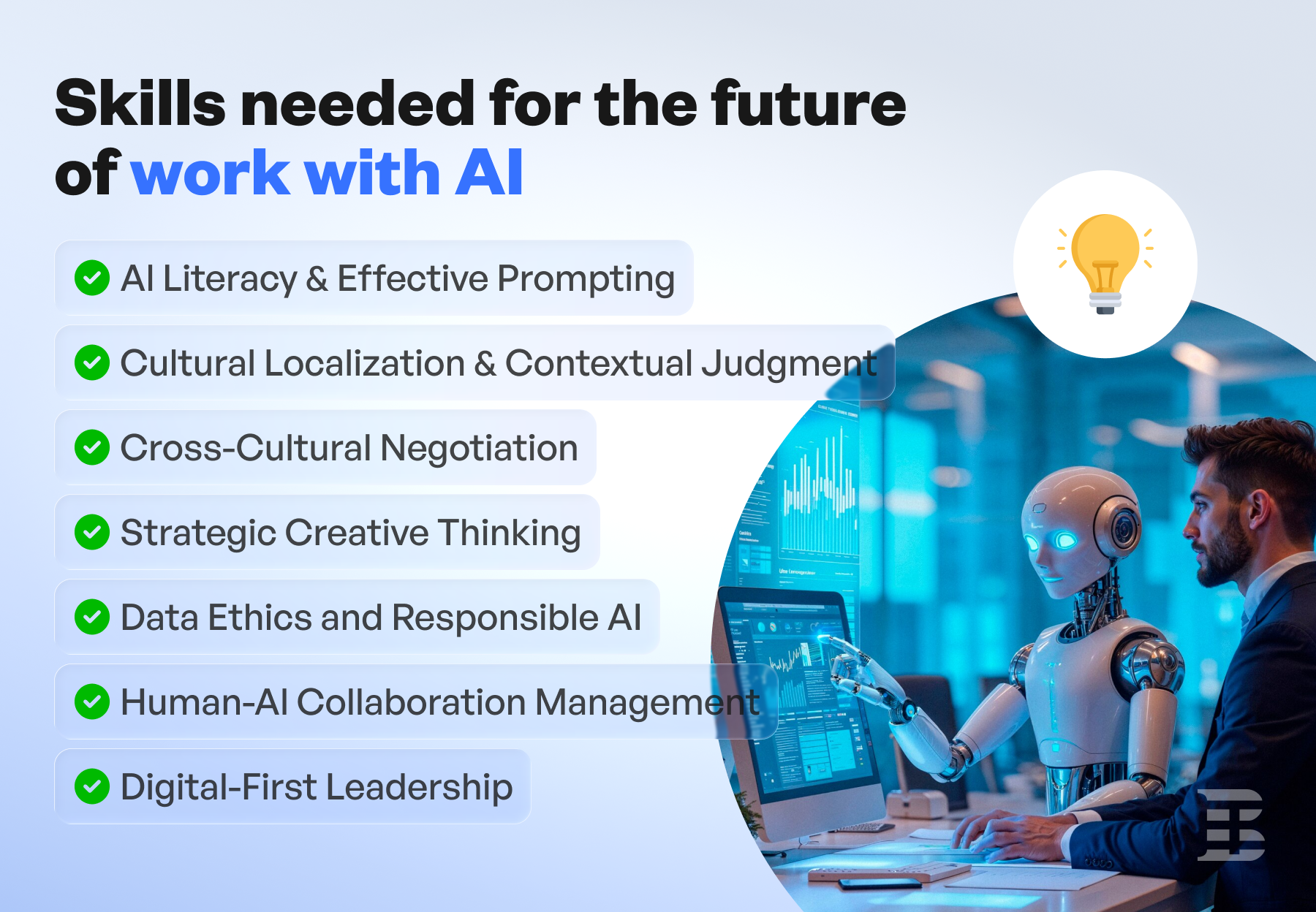
Source: Global Skill Development Council (GSDC)
How to Choose a Tech Partner in the Age of AI
The way companies evaluate agencies and developers is changing. For sure, AI can improve efficiency, but it can also polish weak portfolios and create the illusion of expertise where little exists.
That is why it is important to choose wisely from the plenty of options.
Find your Tech Partner Using a Different Approach
1. Ask about process, not just results
Instead of focusing only on outcomes, ask how those outcomes were achieved.
2. Verify how involved the team is
Who actually works on the project? Senior experts or junior staff supported by AI tools?
3. Look for consistent results
One impressive case study means little. Consistency across multiple industries and projects matters more.
4. Test strategic thinking
Ask scenario-based questions. AI can assist with execution, but strategic clarity is harder to fake.
5. Evaluate communication transparency
In long-term partnerships, clarity and responsiveness matter more than perfectly written proposals.
Ultimately, the real challenge is not finding options but making confident decisions among them.
Wrapping up
AI is not here to replace human judgment in hiring, but to sharpen it.
The companies that will win are not those that automate the most, but those that combine data with discernment, speed with empathy, and technology with real human understanding.
Related Questions & Answers
What are the top AI tools used for tech hiring?
How can AI improve candidate screening in tech recruitment?
How do AI algorithms reduce bias in tech hiring processes?
How should companies evaluate a tech partner when AI is involved in the hiring process?
I absolutely love embracing new opportunities and connecting with people. Every project is a chance to analyze, create, and work until I am satisfied with the results. Bringing creativity into every aspect of my work offers a fresh perspective on turning ideas into reality. Paying attention to the details is key because it's the little things that truly make all the difference.
Discover more TechBehemoths Insights
Learn practical tips and insights about IT Companies, how to find the right company for your projects.
Read the latest news about Market Trends and fresh Interviews.