
There are 2 Companies in Burundi
that provide Cybersecurity Services!
Burundi, officially the Republic of Burundi, is a landlocked nation in East Africa’s Great Lakes region with Gitega as its capital and Bujumbura as its economic hub. It is home to over 13 million people and is bordered by Rwanda, Tanzania, and the DRC. The IT Services sector in Burundi includes services for design, development, installation, management, and maintenance of IT infrastructure and software applications for enterprises.
Discover Top IT Companies in Burundi specialized in Cybersecurity including Breach Detection & Incident Response, Digital Forensics & Auditing, Threat/Attack Simulations and more.
Cybersecurity Services are like having guardians that protect your digital world from sneaky hackers and cyber threats. Just like a castle needs strong walls to keep intruders out, your business needs robust cybersecurity to safeguard your data and sensitive information.
These services include various measures and strategies to protect your digital assets from cyberattacks. It involves tasks such as network security, data encryption, threat detection, risk assessment, and incident response. Think of Cybersecurity Services as the ultimate shield that keeps your digital fortress safe from cyber villains!
Handpicked companies • No obligation to hire • 100% risk-free
Explore Top Cybersecurity Companies in Burundi

Cybersecurity services, products and consultancy

Filter Cybersecurity Companies in Burundi by Cities
Find the right tech company near you or from a specific city. Some of the best companies might be located in smaller cities.
Find more Cybersecurity companies around the world
TechBehemoths is the world's most advanced and user-friendly platform to match IT Companies with real clients without hustle.
The IT Industry in Burundi: Genuine Data & Profile
Burundi, officially the Republic of Burundi, is a landlocked nation in East Africa’s Great Lakes region with Gitega as its capital and Bujumbura as its economic hub. It is home to over 13 million people and is bordered by Rwanda, Tanzania, and the DRC. The IT Services sector in Burundi includes services for design, development, installation, management, and maintenance of IT infrastructure and software applications for enterprises. This field comprises several companies that provide products for Software Application Development, Software testing, Big Data, Networking, Security, Virtualization, and many more.
Burundi’s IT field is still in the early stages of development and has been building its digital infrastructure, such as the Burundi Backbone Systems (BBS). This is a national fiber-optic network connecting all provinces and key institutions, which supports broadband and data services. However, difficulties remain, including a low internet penetration with only around 12.5% of the population online in 2025.
What Are the Perks of Working With a Tech Company from Burundi?
A collaboration with an IT firm from Burundi could bring several advantages for your organisation or project. This location is especially attractive for individuals who are looking for competitive prices and opportunities to support emerging markets. Other benefits include:
- Cost-effective costs: In Burundi, labor and operating prices are relatively low compared to other markets.
- Flexibility and local market insight: Local companies often offer customized and adapted solutions for East African contexts.
- Innovation potential: Although this sector is still emerging, innovation is encouraged through initiatives like digital hubs, bootcamps, and hackathons that link tech talent with business challenges.
- Growing talent pool: Burundi has an expansive talent pool with many IT graduates motivated to expand their practical skills. The young workforce also has proficiency in French, Kirundi, and often English.
Collaborating with a Burundian tech firm can be cost-effective, a change to bring innovation and have an impact on a developing tech industry.
What You Should Pay Attention To When Working With Tech Firms from Burundi?
Alongside benefits, working with tech companies from Burundi can include several difficulties. One of them includes the country’s low internet penetration and unreliable connectivity, which affects business operations and remote partnerships. The local workforce is limited in practical experience, partly due to shortages of equipment and insufficient training for graduates. Burundi’s regulatory frameworks about Digital Services, Cybersecurity, and e-commerce are still developing, and clear standards may not always exist. The market needs robust rules for things like digital ID, secure transactions, or data protection.
Are IT Companies from Burundi Reliable?
The IT sector in Burundi is still emerging, with a relatively small number of software and tech firms that are still developing. While several IT firms focus on small-to-medium business solutions that match the current business demand and infrastructure. For example, some established ICT firms like CBINET provide reliable internet access and networking services in Burundi and help build a national benchmark for the internet infrastructure in the country.
How is Burundi’s IT Industry Related to Neighboring Countries?
Burundi’s tech sector is linked with its neighbors, which are Rwanda, Tanzania, and the Democratic Republic of Congo. Because Burundi is landlocked, it has no direct access to undersea fiber-optic cables and relies on its neighbors. The Tanzania-Kenya route provides most of Burundi’s internet capacity through terrestrial fiber-optic cables. There are also cross-border projects with Zambia and Vietnam that aim to further strengthen these cross-border digital corridors to reduce costs. Additionally, Burundi has joined the EAC One Network Area, which allows the local population to travel to Rwanda, Kenya, Uganda, South Sudan, and Tanzania to use their mobile phones at local rates.
What is Cybersecurity and what are its benefits for your projects?
Cybersecurity Services are like having guardians that protect your digital world from sneaky hackers and cyber threats. Just like a castle needs strong walls to keep intruders out, your business needs robust cybersecurity to safeguard your data and sensitive information.
These services include various measures and strategies to protect your digital assets from cyberattacks. It involves tasks such as network security, data encryption, threat detection, risk assessment, and incident response. Think of Cybersecurity Services as the ultimate shield that keeps your digital fortress safe from cyber villains.
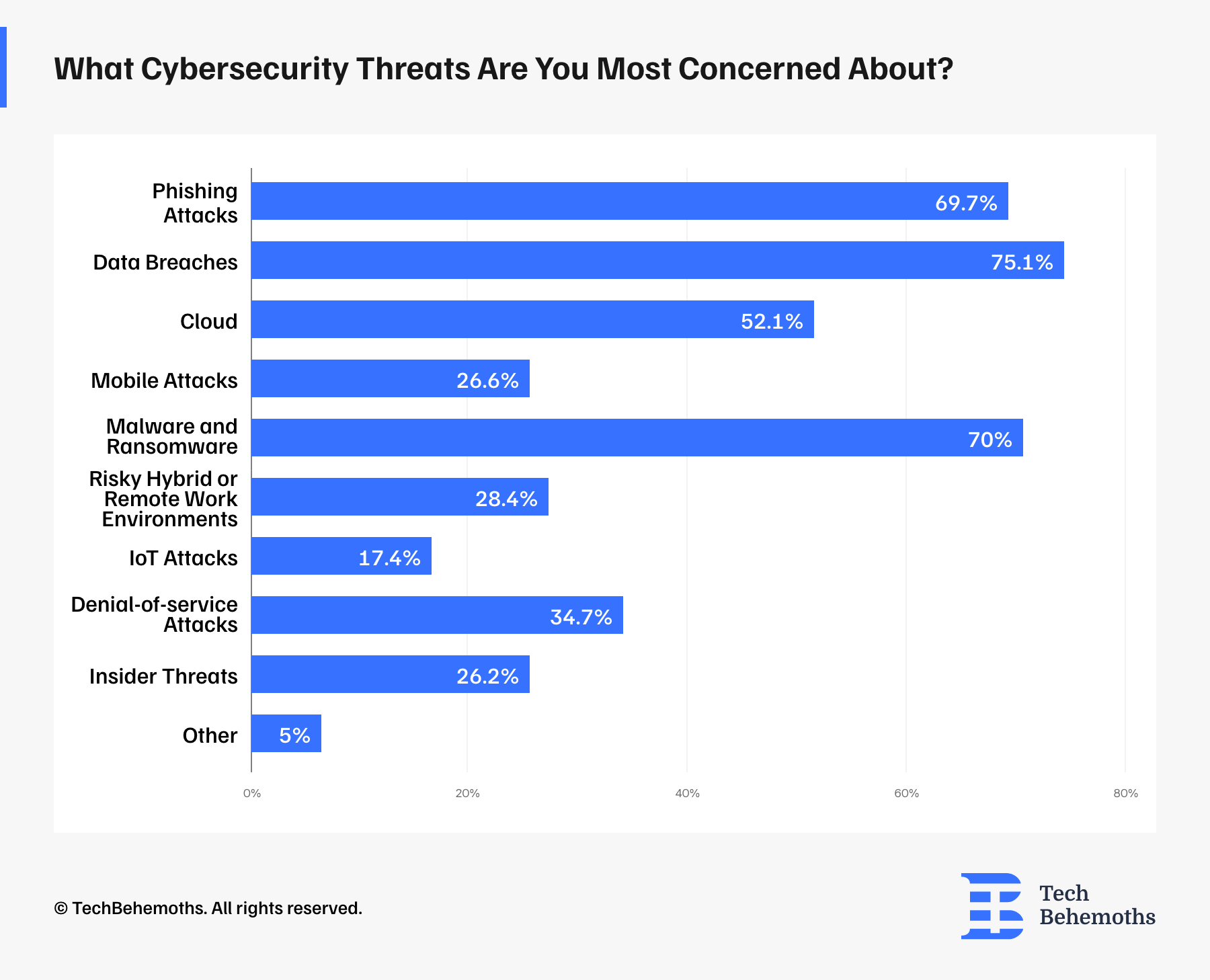
Companies providing Cybersecurity Services use powerful tools and technologies to defend your digital kingdom. They deploy firewalls to block unauthorized access to your network and use antivirus software to catch and eliminate malicious software (malware).
They also use encryption tools to protect your sensitive data, making it unreadable to unauthorized eyes. Cybersecurity experts use advanced monitoring systems and artificial intelligence to detect and respond to potential threats swiftly.
When your company needs Cybersecurity Services, you have several options to choose from:
- Cybersecurity Companies: Specialized IT companies that focus solely on providing cybersecurity solutions and support.
- Managed Security Service Providers (MSSPs): These companies offer comprehensive cybersecurity services and monitor your digital assets 24/7.
- Digital Agencies: Some digital agencies also offer cybersecurity services as part of their technology solutions.
Taking Cybersecurity Services from a specialized IT company or digital agency offers several benefits for businesses:
- Data Protection: Cybersecurity Services keep your valuable data safe from cyber threats and breaches, ensuring your business's confidentiality and integrity.
- Reputation Protection: A strong cybersecurity defense helps build trust with your customers, clients, and partners, protecting your reputation.
- Compliance and Regulations: Cybersecurity services help you comply with industry regulations and data protection laws, avoiding potential penalties.
To choose the best Cybersecurity Services provider for your project, consider the following criteria:
- Expertise: Look for a provider with a proven track record in providing cybersecurity solutions and experience in handling cybersecurity challenges.
- Industry Focus: Choose a provider that understands the specific cybersecurity needs and challenges of your industry.
- Proactive Approach: Opt for a provider that takes a proactive approach to cybersecurity, with continuous monitoring and threat hunting.
TechBehemoths is an excellent resource for finding Cybersecurity Services companies. With over 2,300 companies listed on the platform providing Cybersecurity services across 72+ countries, you can easily find a suitable provider for your business needs.
The platform offers detailed company profiles, client reviews, and ratings, helping you make an informed decision. TechBehemoths.com simplifies the process of finding a reliable and trustworthy Cybersecurity Services provider for your business.
What industries are targeted the most by cyber attacks?
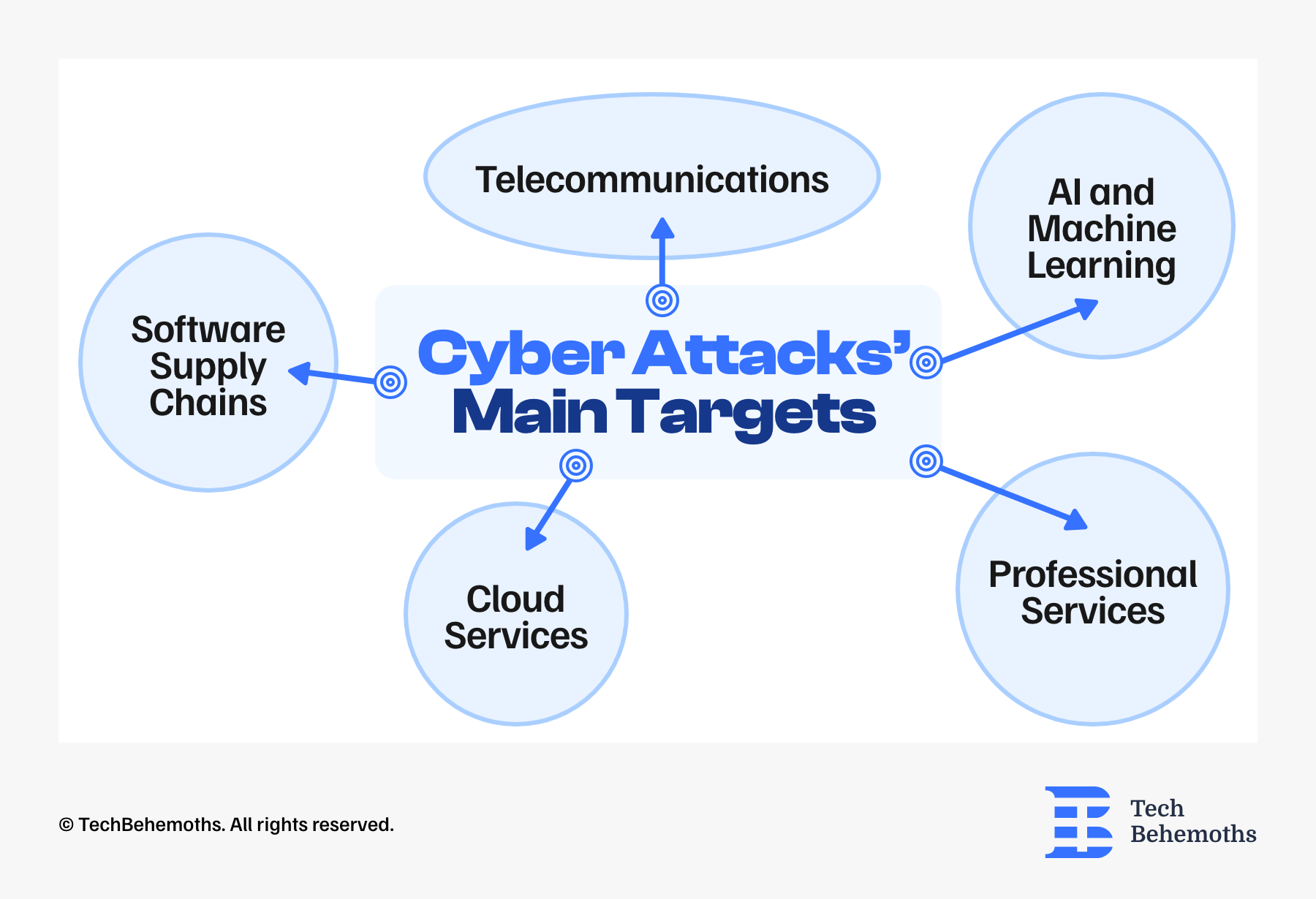
No industry is completely safe from cyber attacks, but here are the most vulnerable ones in terms of number of attacks:
-
Cloud services
-
Software supply chains
-
Telecommunications
-
AI and machine learning
-
Professional services
Cybersecurity in the era of AI
AI is both a powerful business tool and a cyber threat, so don’t ignore the risks. AI cyberattacks are much more sophisticated than traditional digital threads. It can adapt in real time, can be very personalized, and powered by deepfake audio/video.
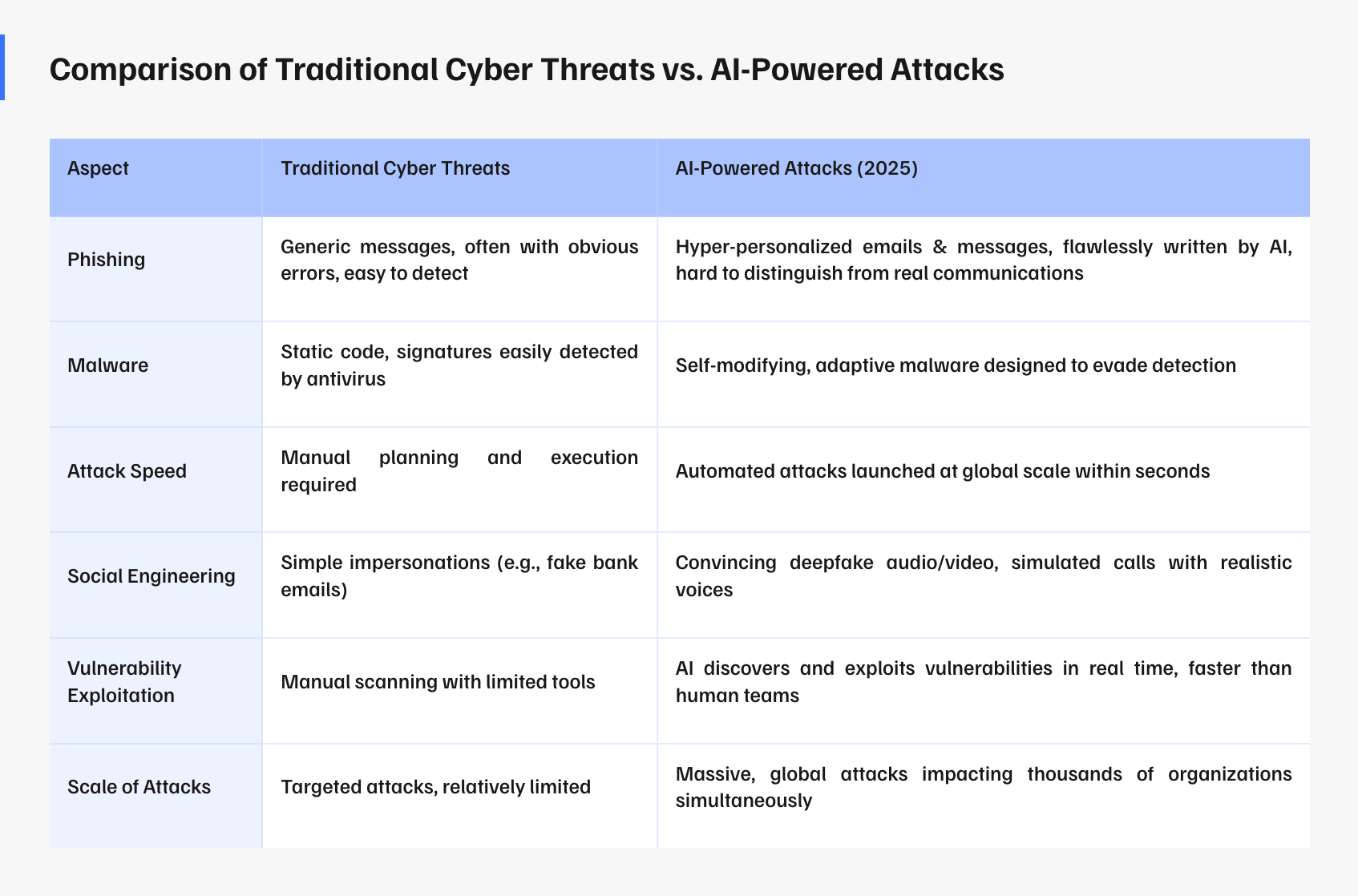
It’s important for companies to stay vigilant, and try to protect their team/data from possible vulnerabilities and cyber attacks.
Here is an example of a large-scale data breach where over 1 million sensitive records have been exposed.
Data security best practices
Below are some best practices that your business can implement to strategically secure its data and information.
1. Data encryption and privacy
Your business must ensure that sensitive information is secured while stored or sent.
2. Access management and identity security
Apply the principle of least privilege and multi-factor authentication to reduce the risk of unauthorized access.
3. Secure AI training data
Train your AI with clean data sources, maintain logs for all data sets, use data masking or synthetic data where possible.
4. Continuous monitoring & incident response
Constant allows you to quickly identify incidents, so there must be clear guidelines and automated alerts that can deliver an instant and controlled response.
5. Data lifecycle management
Comprehensive data management ensures long-term compliance and security. Hence, make sure you automate secure deletion and document data flows.
6. Compliance & regulatory alignment
Compliance with regulations provides the company protection and builds reputation + trust.