
There are 6 Companies in San Diego
that provide AR/VR Development Services!
San Diego’s tech hub has more than 2,000 companies generating $56 billion in 2025, driven by biotech, Artificial Intelligence, and healthcare, and attracts $3.6 billion in venture capital. This city produces more STEM graduates than universities like Stanford and Berkley combined.
Discover Top IT Companies in San Diego specialized in AR/VR Development including a wide range of AR/VR solutions for businesses and clients.
AR/VR development services are at the lead of technological innovation, enabling businesses to create immersive and interactive experiences for their customers. AR overlays virtual content in the real world, while VR provides users with a simulated environment. These services are closely related to other emerging technologies like Artificial Intelligence and Game development, to name a few
According to Markets And Markets, the AR/VR market size is expected to reach by 2027, $114.5 billion, with a CAGR of 23.5%
Handpicked companies • No obligation to hire • 100% risk-free
Explore Top AR/VR Development Companies in San Diego

TechGropse Pvt. Ltd. Verified Company
San Diego, United States Head office in: United Arab Emirates
Techgropse is a leading Mobile App and Web Development Company, dedicated to turning innovative ideas into remarkable digital solutions. 500+ Clients

Discover GalaxyonKnowledge, your ultimate resource for Javascript, HTML, DHTML, JQuery, Python, Data Science, Photoshop, Illustrator, InDesign, SEO.

Premier Software Solution Provider for Businesses

Effective digital products for your business goals

Award-Winning Web Developer! •Ex-Sony Web Developer •Ex-SunTrust Bank Web Developer Do you know of any companies hiring web developers?

Origami Studios Verified Company
San Diego, United States Head office in: United States
Fueling Digital Products with Innovation
Filter AR/VR Development Companies in Cities near San Diego
Find the right tech company near you or from a specific city. Some of the best companies might be located in smaller cities.
Find more AR/VR Development companies around the world
TechBehemoths is the world's most advanced and user-friendly platform to match IT Companies with real clients without hustle.
San Diego ICT Industry: Data & Insights
As a serious competitor on the US West Coast and even on a national level, San Diego probably has an important ace up its sleeve when it comes to the IT industry and companies. And since human resources are the main battleground for IT companies, San Diego has already managed to attract 15,000 IT companies from various subsectors providing services such as web and app development, software engineering, cybersecurity, FinTech, and more.
According to Tech Report 2.0 provided by Cushman and Wakefield, San Diego had the ninth-highest percentage of tech jobs in the US compared to the overall employment makeup. In front are only Boston, San Francisco, and Seattle. In 2025, San Diego has 78,800 tech professionals with a median salary of almost $141,000, working at major companies in fintech, cybersecurity, and AI.
San Diego’s tech hub has more than 2,000 companies generating $56 billion in 2025, driven by biotech, Artificial Intelligence, and healthcare, and attracts $3.6 billion in venture capital. This city produces more STEM graduates than universities like Stanford and Berkley combined. The tech environment in San Diego is fueled by partnerships between startups, educational facilities, and government to transform this city into a major powerhouse across different tech sectors.
In the long run, San Diego is expected to become California’s second-largest tech hub, with huge development potential and a great IT infrastructure, which is the core of the nowadays development of the entire region.
For potential clients, IT companies from San Diego are attractive and reliable, with a longstanding reputation, a well-developed business environment, and one of the largest talent pools in the US.
What is AR/VR Development and what are its benefits for your projects?
AR/VR development services are at the lead of technological innovation, enabling businesses to create immersive and interactive experiences for their customers. AR overlays virtual content in the real world, while VR provides users with a simulated environment. These services are closely related to other emerging technologies like Artificial Intelligence and Game development, to name a few
According to Markets And Markets, the AR/VR market size is expected to reach by 2027, $114.5 billion, with a CAGR of 23.5%
In terms of advantages, businesses can reap numerous benefits by leveraging AR/VR development services from specialized IT companies. Here are some of the most significant benefits:
- Enhanced Customer Engagement: AR/VR experiences captivate customers, driving increased interaction and brand loyalty.
- Virtual Product Visualization: AR/VR enables customers to visualize products in their physical space before making a purchase, improving decision-making.
- Immersive Training and Simulation: AR/VR simulations provide realistic training environments, reducing costs and enhancing employee performance.
- Streamlined Design and Prototyping: AR/VR facilitates rapid prototyping and visualization, enabling businesses to iterate and refine designs efficiently.
- Interactive Marketing and Advertising: AR/VR campaigns create memorable and interactive experiences, leaving a lasting impression on customers.
When selecting an AR/VR development service provider for a project, it is recommended to consider the following criteria:
- Expertise and Portfolio: Look for companies with demonstrated experience in developing AR/VR applications relevant to your industry and desired use cases.
- Technology Capabilities: Assess the provider's proficiency in AR/VR development tools, platforms, and frameworks to ensure compatibility with your project requirements.
- User Experience Design: Consider companies that prioritize intuitive and immersive user experiences, ensuring seamless interactions and engagement.
TechBehemoths.com can be a valuable resource in choosing the best AR/VR development companies for your projects. With a comprehensive directory of over 1,400 IT companies offering AR/VR development services, it simplifies the search process. The platform provides detailed profiles, client reviews, and a meritocratic scoring system to help you evaluate and compare different service providers. You can leverage the advanced search filters to find companies with expertise in specific industries or project requirements, ensuring a tailored match for your AR/VR development needs.
How VR influences various industries
In architecture and construction for example, virtual and augmented reality tools can offer immersive experiences that are changing how properties are designed, built and viewed. VR/AR allows for 3D modelling and virtual walkthroughs of buildings before ground is even broken.
This helps identify design flaws, reduces costly reworks and provides an opportunity for collaboration in a shared virtual space. Developers and owners can also showcase planned or unfinished projects with highly realistic rendered visuals, helping to market, sell or lease properties earlier in the development cycle.
For viewing existing spaces, VR property tours allow potential buyers or tenants to remotely explore properties from anywhere in the world through an immersive 3D experience. They provide a sense of depth and dimension impossible to achieve with 2D photos and videos alone, and are ideal for showcasing luxury properties to give estate agencies an edge over competitors.
Augmented reality layers virtual information and visuals over the real-world view through a smartphone or smart glass devices. This enables useful features like virtual furniture placement within empty rooms and interactive remodelling previews.
IKEA has successfully integrated AR/VR features in their mobile app and web interface, allowing you to scan your room with a smartphone and see in 3D how furniture from their store might fit and look in your apartment or house.
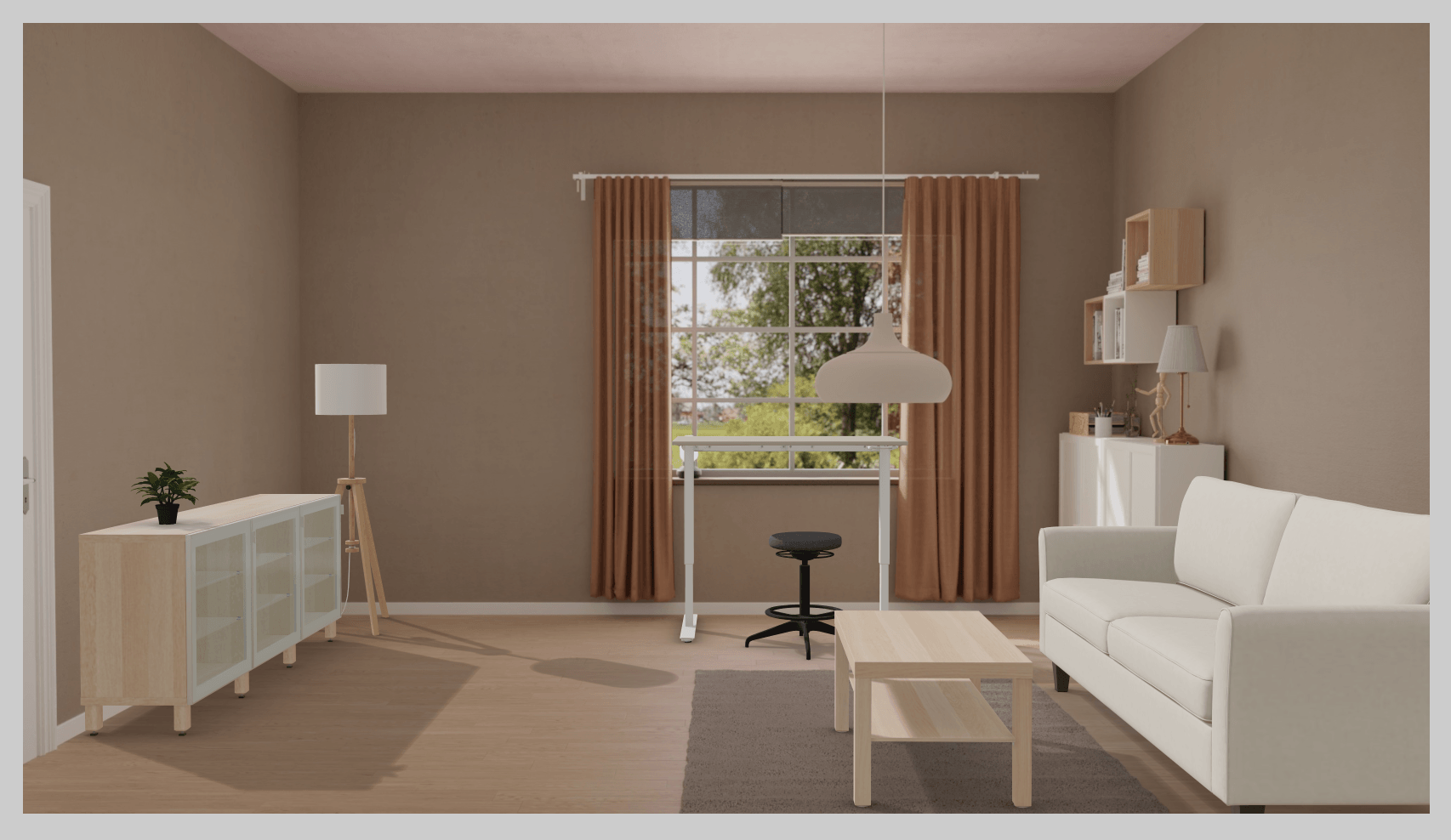
Image source IKEA
By facilitating fully remote yet highly realistic viewing and virtual design experiences, VR/AR technology solves issues around limited in-person availability and scheduling for both owners and prospective buyers or tenants. It also taps into the expectations of an increasingly tech-savvy customer base.