TechBehemoths Pay Per Click Expert Insights 2026


Summary
PPC can generate fast results, but without the right offer, tracking, and sales process, it can just as quickly waste your budget.
In this Expert Insights edition, find out when PPC is the right investment, what businesses should expect during the first 90 days, and which metrics reveal whether campaigns are generating profitable customers.
Pay-per-click advertising gives businesses immediate access to potential customers, but buying traffic alone does not guarantee results.
To help businesses understand what effective PPC really looks like, we spoke with Joel Brooker, Founder of JBE Digital, and Anahit Khachatryan, Founder of SEOPLUS.AM. They share practical insights into when businesses should invest in PPC, why campaigns often fail, what buyers should expect from an agency, and why profitability matters more than clicks or cheap leads.
Meet the Experts
Joel Brooker is the Founder of JBE Digital, a performance marketing agency based in Melbourne. With over 15 years of experience in digital marketing, he helps established businesses grow through Google Ads, paid social, SEO, AI search visibility, and conversion-focused strategies.
Joel has managed tens of millions of dollars in advertising spend and generated hundreds of thousands of leads. His work is centred on measurable commercial outcomes, connecting paid media, search, content, conversion, and tracking into one accountable growth system.
Anahit Khachatryan is the Founder of SEOPLUS.AM, an SEO and digital marketing agency based in Armenia. With experience in SEO, analytics, paid advertising, and web design, she helps businesses improve their online visibility and achieve sustainable growth through tailored digital strategies.
Anahit has worked across account management, SEO, digital marketing, and website optimization. Her work focuses on combining search optimization, paid advertising, conversion-focused landing pages, and advanced analytics to deliver measurable results and help clients compete across different markets.
Let’s begin with our first question.
When is PPC the right investment for a business?
Joel Brooker, JBE Digital
It depends on the job you're asking PPC to do, because paid traffic does two very different jobs. The first is testing. A small, capped budget with clear kill criteria is one of the fastest ways to find out whether an offer has real demand.
You get an honest signal in weeks, which beats months of guessing. The second job is scaling, and the bar there is higher. The offer needs to be proven, the website needs to convert the traffic it already gets, the team needs capacity to handle inbound leads, and the customer value needs to support a realistic cost per acquisition. If any of those pieces are missing, adding paid traffic just makes the problem more expensive.
The businesses that get burnt are the ones that blur the two jobs. They launch a test, it sort of works, and the spend rolls on for six months against a half-validated offer. A test has an end date and a decision attached. Scaling has a system behind it. Knowing which one you're running is most of the answer.
Anahit Khachatryan, SEOPLUS.AM
PPC (Pay-Per-Click), such as Google Ads, is the right investment when three things are true:
A. People are actively searching for what you sell
Ask: Are potential customers already looking for this solution?
Examples where PPC works very well: lawyers, dentists, HVAC, plumbers, med spas, accountants, e-commerce with known products.
Search intent is strong:
- “immigration lawyer near me”
- “best dentist in Glendale”
- “buy Apple AirPods Pro”
That demand already exists—PPC helps capture it.
B. Customer value is high enough
If you make $50 profit per customer and clicks cost $20, PPC may not be worth it.
If one client is worth:
- $500
- $2,000
- $10,000
PPC becomes much more attractive.
A law firm, for example, can profit heavily from even a few good leads.
C. You can convert leads efficiently
Many businesses blame ads when the real issue is operations.
Ask:
- Do you answer calls fast?
- Is someone following up?
- Is your sales process strong?
If leads sit untouched for hours, even great PPC will underperform.
What should buyers expect from a PPC agency in the first 90 days?
Joel Brooker, JBE Digital
The first 30 days should be about measurement. Most accounts we take over have tracking problems the previous agency never mentioned, from conversions firing twice to lead forms that report nothing at all. Until the data can be trusted, optimising is guesswork, so fixing measurement comes before anything else.
Days 30 to 60 are when the account gets cleaned up. Wasted spend gets cut, junk search terms get excluded, and the structure gets rebuilt around what actually drives revenue rather than what looks good in a dashboard. By day 90, buyers should see clear directional movement: cost per lead trending the right way, lead quality improving, and a pipeline the sales team can feel.
Communication matters as much as the work. Expect weekly updates and a monthly strategic review, with the agency able to explain every change in plain language. What buyers shouldn't expect is a hockey stick in week two. Any agency promising that is either overpromising or about to burn the account chasing it.
Anahit Khachatryan, SEOPLUS.AM
The first 90 days should not be judged only by “number of leads.” A good PPC agency should follow 3 phases.
Days 1–30: Setup & Research
Expect:
- account audit or setup
- keyword research
- competitor analysis
- tracking installation
- campaign launch
- negative keyword setup
- landing page review
Red flag: Agency launches ads without understanding your business.
Days 31–60: Data Collection
Now the agency learns:
- which keywords convert
- which ads get clicks
- which audiences perform
- where budget leaks
Expect:
- keyword pruning
- ad testing
- bid adjustments
- search term analysis
This phase often looks messy, and that’s normal.
Days 61–90: Optimization
By now you should start seeing clearer patterns.
Expect improvements in:
- conversion rate
- CPA (cost per acquisition)
- lead quality
- wasted spend reduction
By day 90, a good agency should answer: Where does profit come from, and where are we wasting money? Not just: Here are your clicks.
What is the most common reason PPC campaigns fail?
Joel Brooker, JBE Digital
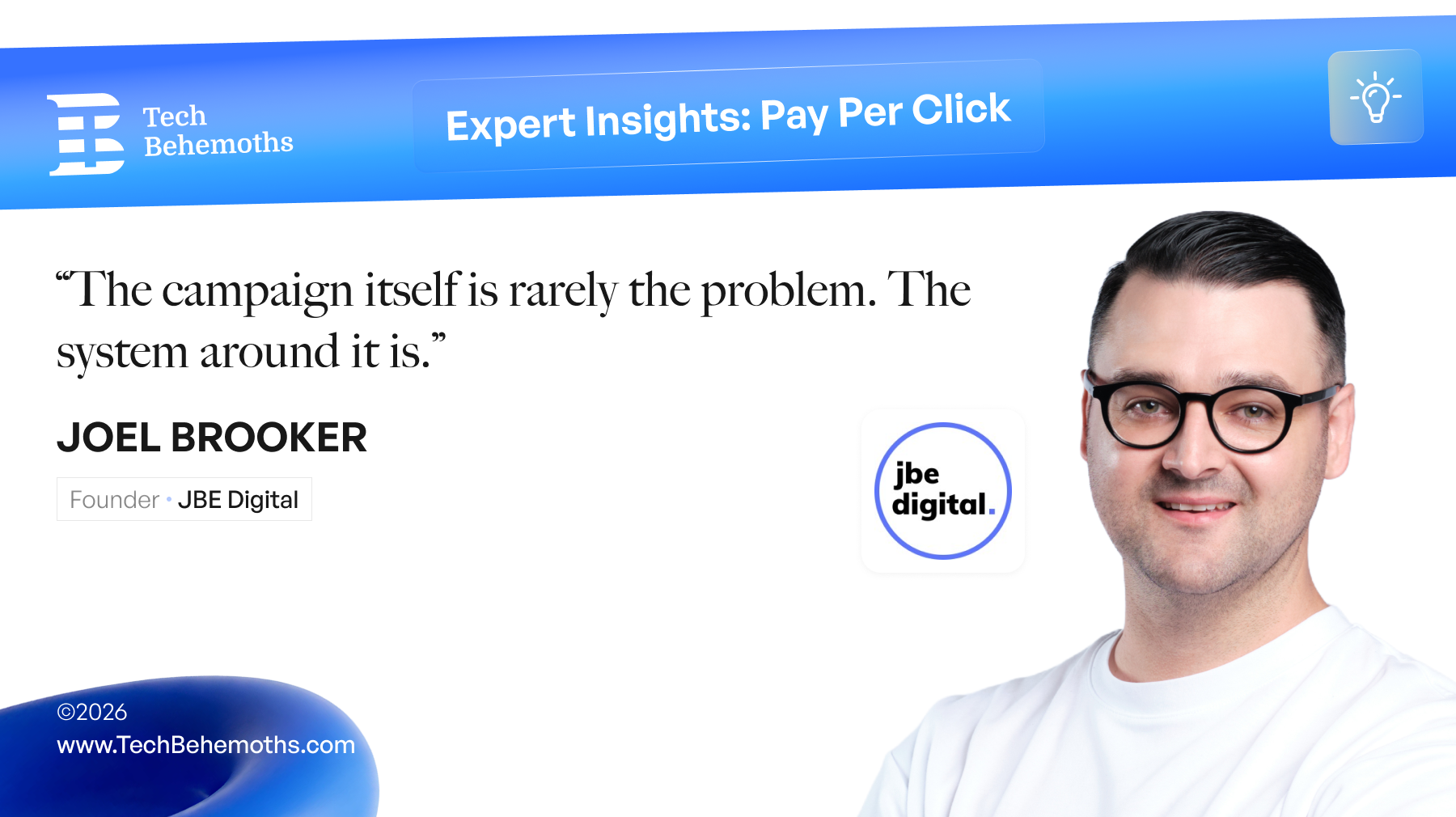
The campaign itself is rarely the problem. The system around it is. We see the same pattern constantly: a reasonable ad account feeding a weak landing page, tracking that misreports what's happening, and no follow-up process once leads arrive. Money goes in, leads come out, nothing closes, and the ads take the blame for a failure that happened three steps downstream.
The second most common cause is optimising for the wrong outcome. An account tuned to produce the cheapest possible leads will do exactly that, and cheap leads are often cheap because nobody with real intent is behind them. The dashboard reads well while the revenue never arrives.
Underneath both problems sits a missing feedback loop. When the sales team's outcomes never make it back into the ad account, the agency is optimising blind. The campaigns that perform over the long term are the ones where closed deals inform the targeting, so budget keeps flowing toward the leads that become customers.
Anahit Khachatryan, SEOPLUS.AM
The most common reason is surprisingly not bad ads.
It’s this: Bad offer + weak funnel
Businesses often think: If we get traffic, sales will come. Not necessarily.
PPC fails when:
- landing page is poor
- offer is weak
- no trust signals
- no clear CTA
- slow follow-up
Example:
Two law firms buy the same traffic.
Firm A:
- answers in 30 seconds
- has intake team
- strong reviews
Firm B:
- voicemail
- replies next day
Same PPC. Very different results.
What are the biggest warning signs that the ad budget is being wasted?
Joel Brooker, JBE Digital
The biggest warning sign is that you can't directly tell which customers came from your ads. If tracking can't draw a straight line from ad spend to actual customers, every decision in the account is guesswork and every report is describing activity rather than results. This is the most common state we find accounts in, and it's usually the root cause of the waste.
The secondary signs follow from there. Rising cost per lead with falling lead quality means the account is drifting. A search terms report full of the same irrelevant queries month after month means nobody is managing it. Reports built around clicks and CTR with no mention of revenue usually look that way because the connection to revenue was never built.
The simplest test costs nothing: ask your agency which campaigns produced actual customers last quarter. A good agency answers immediately. A vague answer means the tracking isn't there, and neither is the accountability.
Anahit Khachatryan, SEOPLUS.AM
Warning Sign 1: Lots of clicks, few conversions
This often means:
- wrong keywords
- poor targeting
- misleading ads
- weak landing page
Traffic alone means nothing.
Warning Sign 2: Agency reports only vanity metrics
Be careful if reports focus mostly on:
- impressions
- clicks
- CTR
Important—but not enough.
Ask:
How many qualified leads?
How many sales?
What revenue?
Warning Sign 3: No conversion tracking
Huge red flag. If nobody can tell you:
- which keyword produced leads
- which campaign produced revenue
…you’re flying blind.
Warning Sign 4: Broad irrelevant traffic
Example: You’re a premium immigration attorney.
But traffic includes:
- free legal help
- legal jobs
- DIY immigration forms
That’s wasted spend. Negative keywords matter a lot.
Warning Sign 5: High CPL but low-quality leads
Cheap leads can be expensive.
Example:
- Lead cost = $15
- Nobody buys
Versus:
- Lead cost = $120
- High conversion to clients
Quality beats volume.
Which PPC metric deserves more attention?
Joel Brooker, JBE Digital
Profitability, tracked all the way through to the customer. The question every account has to answer is simple: is the business making money from these ads? Cost per click, cost per lead, even return on ad spend are steps toward that answer, and none of them are the answer on their own.
For every client, we want to trace individual customers back to the campaigns that produced them and see the actual margin. Most businesses can't do this when we first look at their account, and if they can't, it becomes the first thing we work on. There's no point optimising an account when nobody knows whether it's profitable.
Anahit Khachatryan, SEOPLUS.AM
Many people obsess over:
- CPC
- CTR
- impressions
Those matter, but one metric deserves far more attention:
Cost per Acquired Customer (or Signed Client)
Not just cost per lead. Why? A lead isn’t revenue.
Example:
Campaign A:
- 50 leads
- 1 sale
Campaign B:
- 10 leads
- 5 sales
Which is better? Obviously B.
That’s why businesses should track:
Revenue Metrics
- CAC (customer acquisition cost)
- ROAS
- ROI
- Profit per campaign
For service businesses like law firms, dental clinics, and med spas.
I’d go even deeper:
Track:
Cost per signed client/retainer. That is often the most important PPC metric.
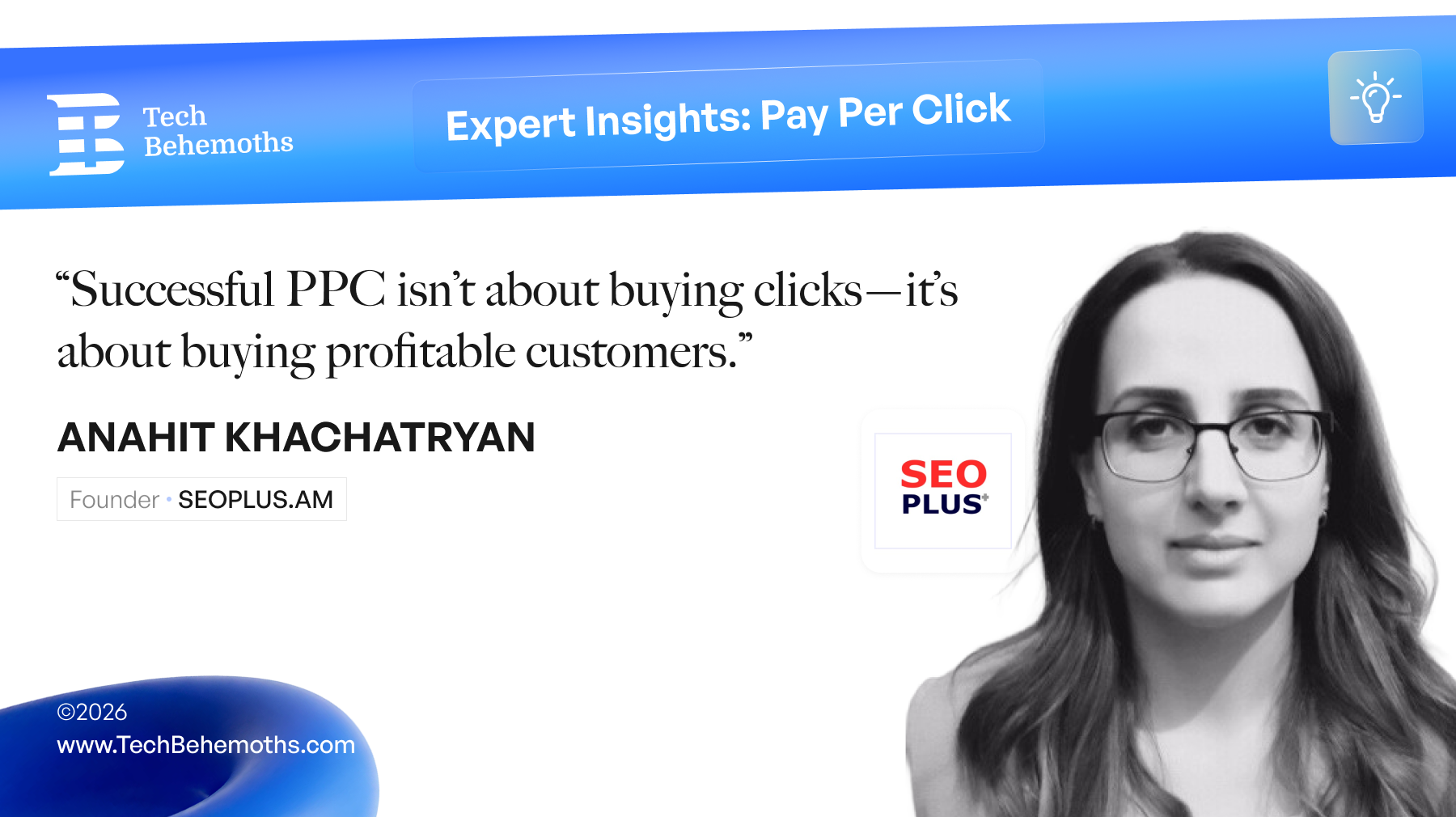
To summarize all answers in one sentence: Successful PPC isn’t about buying clicks—it’s about buying profitable customers.
What Both Experts Agree On
PPC works best with a proven offer and a strong sales process.
A clear offer, a converting landing page, and fast lead follow-up are essential.
The first 90 days are for testing and optimization.
Expect accurate tracking, data collection, reduced waste, and gradual improvement.
Ads are rarely the main reason campaigns fail.
Weak landing pages, poor offers, and slow follow-up are often the real problems.
Clicks and impressions do not prove success.
Tracking should connect ad spend to qualified leads, customers, and revenue.
Profit matters more than cheap leads.
The key metric is the cost of acquiring a real, paying customer.
Thank you to Joel Brooker (JBE Digital) and Anahit Khachatryan (SEOPLUS.AM) for sharing your expertise and contributing to TechBehemoths Pay-Per-Click Expert Insights Edition 2026.
Check our list of top Pay-Per-Click companies
Looking for Pay-Per-Click Services?
I absolutely love embracing new opportunities and connecting with people. Every project is a chance to analyze, create, and work until I am satisfied with the results. Bringing creativity into every aspect of my work offers a fresh perspective on turning ideas into reality. Paying attention to the details is key because it's the little things that truly make all the difference.
Discover more TechBehemoths Insights
Learn practical tips and insights about IT Companies, how to find the right company for your projects.
Read the latest news about Market Trends and fresh Interviews.