TechBehemoths Mobile App Development Expert Insights 2026


Summary
Before investing in a mobile app, companies should ask a few important questions: Do customers genuinely need it? Will it improve their experience? Can the business support it after launch?
Alex and Samrawit share what companies should consider before starting development, from identifying a real user need to recognising when an app may not be worth the investment.
A mobile app can strengthen customer engagement, improve convenience, and support business growth, but only when it serves a clear purpose.
In this Expert Insights edition, Alex Migachev from Timspark and Samrawit Nebiyou from Kuri Graphics explain when a business is ready for a mobile app, when developing one may be a poor investment, and what companies should consider before getting started
Meet the Experts
Alex Migachev is the CTO and Head of Delivery at Timspark, a global custom software development company.
With over 17 years of IT experience, Alex combines a strong technical background with extensive expertise in engineering and delivery management. He has led teams of up to 140 professionals and delivered solutions for clients including Deutsche Bank, Coca-Cola, and Thomson Reuters.
Samrawit Nebiyou is a Marketing Officer at Kuri Graphics, a creative design studio specializing in logo design, brand identity, web design, motion graphics, animation, and visual effects.
Passionate about design, Samrawit helps create meaningful, timeless, and engaging visuals that bring brands’ ideas to life.
Let’s start with our first question.
What is the biggest misconception companies have about mobile apps today?
Alex Migachev, Timspark
I think the main misconception is that companies treat a mobile application just as a set of screens to be pushed to the app store. In reality, it involves much more: backend services integration, security, scalability, performance, and so on.
Samrawit Nebiyou, Kuri Graphics
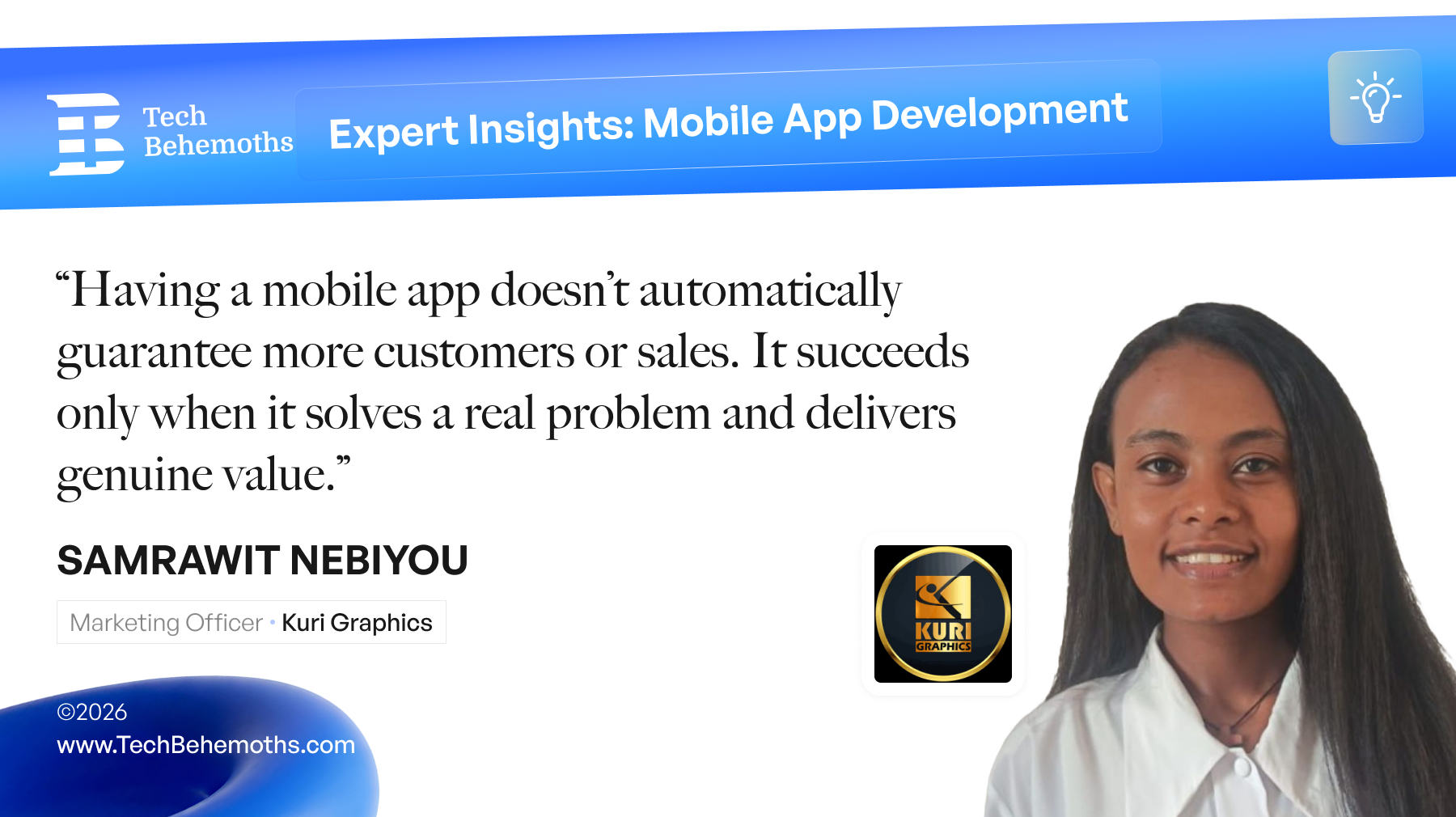
Many campaigners think having a mobile app automatically guarantees them more customers and sales. In reality, an app is only successful when it solves real problems. Add value to customers with a strong marketing and growth strategy.
What signs indicate that a company is ready for a mobile app?
Alex Migachev, Timspark
The biggest signs are when customers interact with the business regularly, and when mobile-native features like push notifications, location services, or the camera are required. Another strong indicator is when user behavior data shows that a significant amount of engagement is already happening on mobile devices.
Samrawit Nebiyou, Kuri Graphics
A company is ready for a mobile app when it has clear business goals, an established customer base, and a process that can be improved through mobile technology. If customers frequently interact with the business, an app can enhance convenience and engagement.
When is a mobile app a poor investment?
Alex Migachev, Timspark
I think a mobile application is a poor investment when it is treated merely as the "next logical step," rather than being driven by a real, defined business need.

Samrawit Nebiyou, Kuri Graphics
A mobile app becomes a poor investment when there is no clear user need and business objectives. If a website already met a customer's need, efficiently developing an app may add unnecessary cost without delivering meaningful returns.
What do most businesses overlook before starting mobile app development?
Alex Migachev, Timspark
I think it’s when a business rushes straight into implementing features before aligning them with their core business goals and actual user needs.
Samrawit Nebiyou, Kuri Graphics
Many businesses focus on the features but overlook user experience, maintenance and marketing. Developing an app is only the beginning. Ongoing updates, security, customer feedback and users accusations are critical for long term success.
What separates a mobile app that users love from one they delete after a week?
Alex Migachev, Timspark
If users can quickly accomplish what they came for in just a couple of clicks, they will keep coming back. On the other hand, if they have to fight with a tedious registration process, slow performance, or confusing navigation, they will probably delete it.
Samrawit Nebiyou, Kuri Graphics
User skips an app that are simple, fast, reliable, and genuinely useful. An app that solves problems efficiently and provides a smooth experience or simplicity. Apps that are confusing, slow, and lack value are quickly deleted.
What Both Experts Agree On
A mobile app must solve a real problem.
Building an app only because it seems like the next logical step can lead to unnecessary costs.
Clear business goals should come first.
Companies should understand their users’ needs and define how an app will support the business before development begins.
An app is more than a collection of features.
User experience, security, performance, scalability, integrations, and maintenance are all essential.
A simple and useful experience keeps users engaged.
Fast performance, intuitive navigation, and genuine value encourage users to return.
Launching the app is only the beginning.
Ongoing updates, user feedback, marketing, and optimization are necessary for long-term success.
Thank you to Alex Migachev (Timspark) and Samrawit Nebiyou (Kuri Graphics) for sharing your expertise and contributing to the TechBehemoths Mobile App Development Expert Insights Edition 2026.
Looking for a Mobile App Development Services?
Check our list of top Mobile App Development Companies
Did you enjoy reading the interview?
I absolutely love embracing new opportunities and connecting with people. Every project is a chance to analyze, create, and work until I am satisfied with the results. Bringing creativity into every aspect of my work offers a fresh perspective on turning ideas into reality. Paying attention to the details is key because it's the little things that truly make all the difference.
Discover more TechBehemoths Insights
Learn practical tips and insights about IT Companies, how to find the right company for your projects.
Read the latest news about Market Trends and fresh Interviews.