Interview with Damian Wasserman, Co-Founder at BEON.tech


Summary
What happens when one engineer can manage three or four projects that previously required their full attention on just one?
For Damian Wasserman, Co-Founder of BEON.tech, this is already happening as AI changes how software teams research, plan, build, and validate their work.
He explains what defines an AI-first engineer, where human oversight still matters, and which skills are becoming essential. He also shares lessons from building BEON.tech and why cheaper software development could open the door to a new wave of businesses.
A new interview, this time with someone who started out writing code and ended up building a company around engineering talent.
Damian Wasserman co-founded BEON.tech in 2018 with a simple idea: to connect talented engineers across Latin America with companies in the US. Today, AI is changing both how he works and how he sees the future of software development.
Please meet Damian Wasserman, Co-Founder of BEON.tech.
Hello Damian, and thank you for joining us.
You describe yourself as “a software developer turned founder.” What led you from writing code to building BEON.tech, and how does your technical background influence your role today?
I’ve always been passionate about the technical side of things, making things work through technology, but I’ve also always had a strong entrepreneurial and business mindset.
I was constantly looking for ways to create something bigger than what I could build with my own hands, and technology became the multiplier that made that possible.
For several years, I stepped away from writing code directly, and it was something I genuinely missed. Over the last two years, AI has brought me back to it. Today, I feel several times more productive.
I build new integrations, automations, and internal tools almost every day, and I share them with the team so I can help lead by example and show what is now possible.
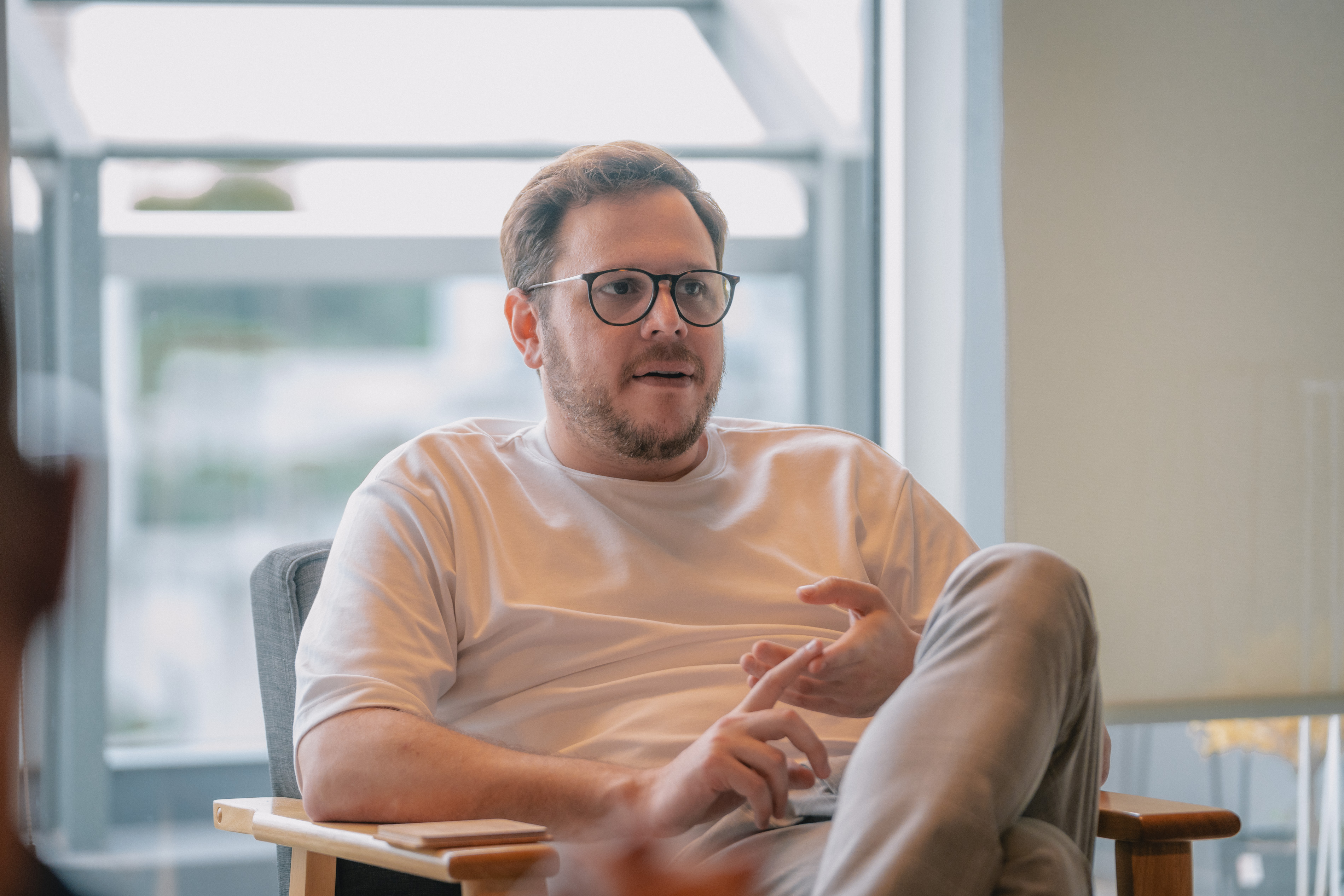
BEON.tech started in 2018 with the idea of connecting overlooked Latin American talent with US companies. What did you recognize in the region that others were missing at the time?
We realized that Latin America had what I would call Silicon Valley-compatible talent, but much of it was being overlooked.
We also believed in remote work before it became mainstream. BEON.tech has been a remote company since the beginning, and we learned early that a distributed team could still operate in a highly integrated and synchronous way when communication was strong.
Latin America also has a major advantage for US companies: time-zone compatibility. Engineers can collaborate with their US counterparts throughout the working day rather than relying on an asynchronous handoff model.
Building a company across different markets rarely comes without challenges. What were the biggest obstacles you faced while growing BEON.tech, and how did you overcome them? Can you share a concrete example?
One of our biggest challenges was building trust when connecting talent from one region with companies in another.
To solve that, we first had to understand exactly what kind of professionals succeed in this environment. It is not only about having a university degree or being technically strong. We look for qualities such as proactivity, flexibility, problem-solving ability, excellent communication skills, and genuine passion for what they do.
Then we had to understand what attracts and retains those kinds of engineers. In our experience, they look for stability, leaders they respect, strong peers they can build great things with and learn from, recognition, meaningful performance feedback, and opportunities for career growth.
A very concrete part of our approach was applying those criteria to both sides of the equation: finding engineers with the right mindset, but also finding projects that could provide the environment those engineers were looking for.
For example, one client (a US-based platform serving arts and cultural organizations) started with just two engineers on a single team, still cautious about how well the collaboration would work. Rather than focusing only on technical skills, we stayed closely involved, matching communication style and working rhythm to that specific team as carefully as we matched technical background.
Once the collaboration started working well, that initial caution turned into trust. In less than two years, the same client grew to 30 BEON engineers across nine different teams, and the large majority of those original engineers are still with us today.
That experience reinforced an important lesson for us:
Successful international hiring is not just about finding great engineers. It is about creating the right match between the person, the team, and the environment where they can do their best work.
Over time, that consistency helped us build a reputation and gradually close the trust gap between Latin American talent and US companies.
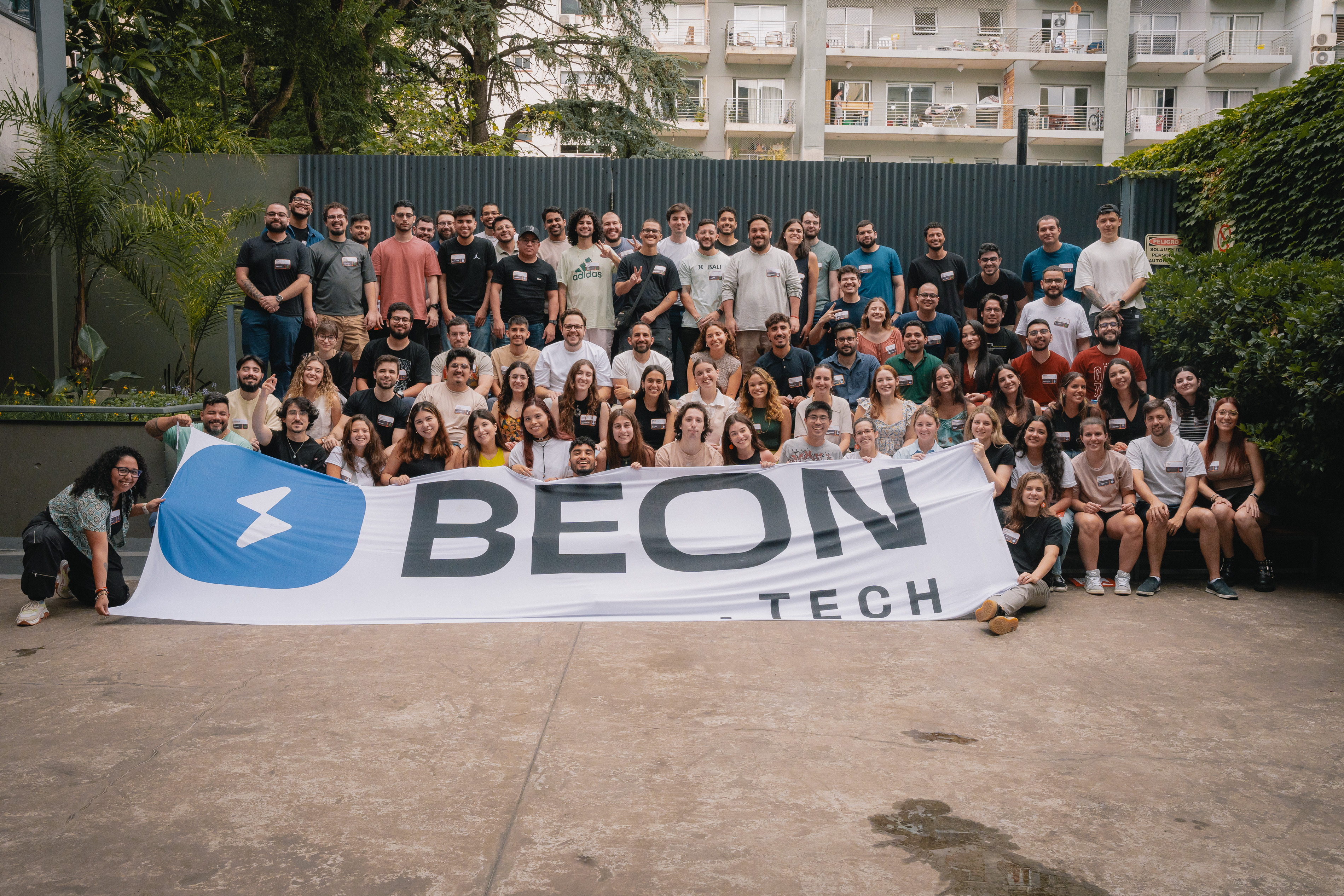
You say that AI-first engineers can ship three times faster. What does “three times faster” mean in practice, how do you measure it without sacrificing quality, and what truly defines an AI-first engineer is mastering AI tools enough?
When I say three times faster, I don’t mean writing three times as many lines of code. The bigger change is the paradigm around what an engineer’s role actually is.
Engineers are becoming much more domain-oriented, business-oriented, and focused on shipping production-ready outcomes. AI is an important part of that acceleration, but simply knowing how to use AI tools is not enough.
You need the right workflows around them, from research and planning to execution and validation, to make sure what you produce is actually production-ready. So speed should be measured by how quickly you can move through that entire cycle and deliver a validated result, rather than by raw code output. And quality isn't a trade-off in that equation; it's part of the definition.
If something ships fast but has to be reworked, it wasn't fast.
A good example is our partnership with Aloha, a healthcare platform serving more than 5,000 practitioners. Our engineers there built AI into their whole workflow: scoping and planning the work, generating and reviewing code, reviewing pull requests, and debugging production issues, with custom agents and automations to catch problems before they reach users. The result is that each engineer can now manage three or four projects in parallel, where before they'd handle one. They rebuilt a full mobile app in two weeks and launched a new web app in a single day. And quality went up, not down: fewer post-release defects and better code review scores.
To me, an AI-first engineer is someone who uses AI to create impact. Sometimes that means creating automations, sometimes building or improving workflows, sometimes validating a plan, and sometimes validating the final output.
The engineer is no longer necessarily at the center of every line of code. Increasingly, the engineer becomes the harness around the coding process.
AI can make engineers more productive, but it can also introduce unreliable code, security vulnerabilities, and technical debt. Where should companies draw the line between acceleration and human oversight?
That's exactly where the harnesses that make production possible come in. It's technically possible to review everything that gets produced, but given the sheer volume of code, that becomes virtually impossible to sustain. So one option is to build processes or skills that run security checks and catch the countless things a human simply couldn't review manually. Instead of spending time reviewing lines of code, you spend that time building agents that get progressively smarter at reviewing the work.
But I think the ideal model is still a hybrid one. AI can take on the first layer of review, identify potential issues, and surface green or red flags, but there should still be a human validating those outputs and making the final call, especially when the decision involves security, architecture, business-critical logic, or putting something into production.
The same principle applies outside of coding. In hiring, for example, you can use AI for an initial screening process that is carefully configured around the actual needs of the role and continuously improved to detect the right signals. But that output should still go to a person who can review the context, validate what the AI identified, and ultimately make the decision.
So the goal is not to remove human oversight, but to use AI to make that oversight more scalable and focused.
The AI can do a large part of the filtering and checking, while the human remains accountable for the final outcome.
If traditional coding ability is no longer enough, which skills should CTOs prioritize when hiring software engineers for the AI-driven workplace?
They should prioritize:
-
curiosity
-
domain-oriented people
-
people who genuinely care about the business and want to create real impact through their work
-
greater independence
-
the ability to run full workflows, from research to planning, execution, and validation
-
comfort working in that kind of environment
Staff augmentation is sometimes perceived as a way to access cheaper labor. What separates an integrated nearshore engineering team from traditional outsourcing?
Cost is certainly one dimension of remote staff augmentation, particularly in Latin America. But it comes with real benefits: access to a much larger talent pool across an entire region.
That means faster hiring and a wider range of candidates to choose from, which raises the bar on the quality of talent you end up hiring, genuinely comparable to Silicon Valley.
That translates into access to talent many US teams can't reach on their own, without having to compete with US cost of living or with companies like the FAANGs.
But the biggest difference from traditional outsourcing is how those engineers work with the client. They are not a separate team receiving a project and delivering it back months later.
They work directly with the client’s internal engineers, within the same workflows, communication channels, and development processes. They participate in the same discussions, understand the product and business context, and become part of the team rather than an external delivery layer.
That integration is what makes the model work long term. The goal is not simply to add capacity, but to add engineers who can collaborate closely with the existing team and take real ownership of what they are building.
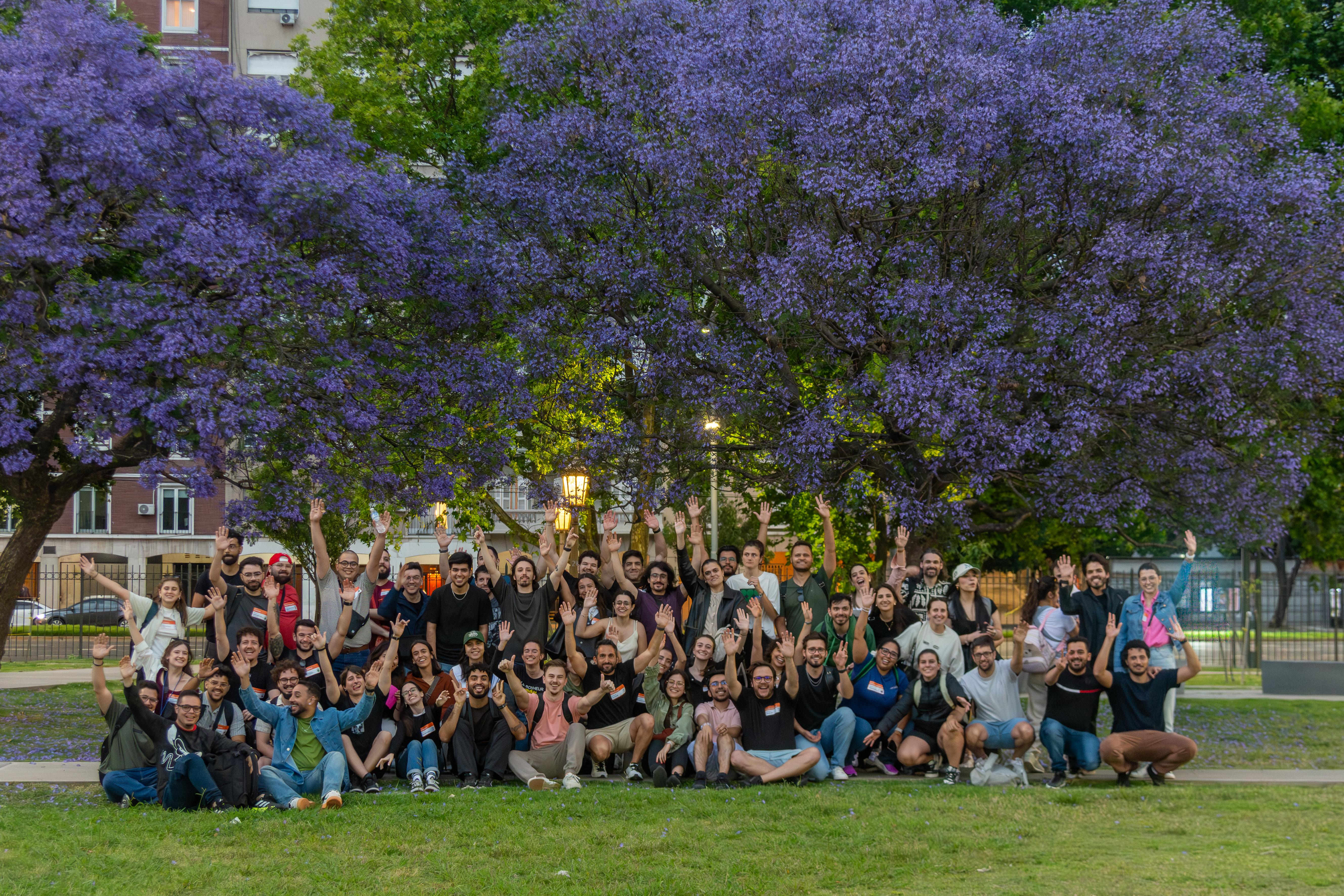
BEON.tech reports an NPS of 84 and emphasizes low attrition. What have you learned about keeping both clients and engineers engaged over the long term?
For us, reputation is non-negotiable. It's what allows us to run a business like this, and building it isn't just about marketing; it's about being reliable when things go wrong.
That's also why we measure it. Once a year, we survey the main point of contact at every active client account, usually the engineering or hiring manager who works with our developers day to day. Over our last three surveys, our NPS has stayed between 75 and 84, with our best year in 2024, when we hit 84 without a single detractor. In our most recent round, 24 of the 29 clients who responded were promoters. And the number I'm proudest of is the one for our Talent Experience Managers, the people who look after each relationship day to day: last year they scored 96, their highest ever.
Our clients consistently tell us they value us not just for how fast or cost-effectively we find great talent, but for how we show up when something doesn't go as planned. That's where the real partnership shows. It's the same with developers: we build that relationship over time, and we keep deepening it.
One example I remember is from our 2023 survey. A client told us the relationship felt strained. They were going through a big restructuring, and they felt we hadn't been flexible enough with them. And honestly, we didn't get defensive. We picked up the phone, listened to really understand what had gone wrong, rethought how we were working with them during that time, and kept checking in over the next few weeks. The next year, that same client gave us a 10.
So for us, having an empathetic, human relationship with both clients and developers, even when that means stepping up in difficult moments, comes from the confidence that we're building something bigger than any single situation.
You mentioned you're "reconnecting with your technical side through AI-assisted development." What does your day-to-day workflow with AI actually look like now, and what has surprised you most about rediscovering code this way?
I typically run multiple research threads at the same time. From that research, I build a plan. Then I execute it, and finally validate and ship it. That workflow is now completely standard for us, and the goal is to run several of them in parallel.
It makes me feel incredibly capable, because I can take on coding tasks related to search engine optimization, performance advertising, or content generation for our blog. I can also handle legal matters, client contracts, and developer contracts. We can work through compliance issues. We can operate as if we were insurance experts. That's expanded the range of skills and knowledge we have access to, letting us have conversations and negotiations at an expert level we simply didn't have before.
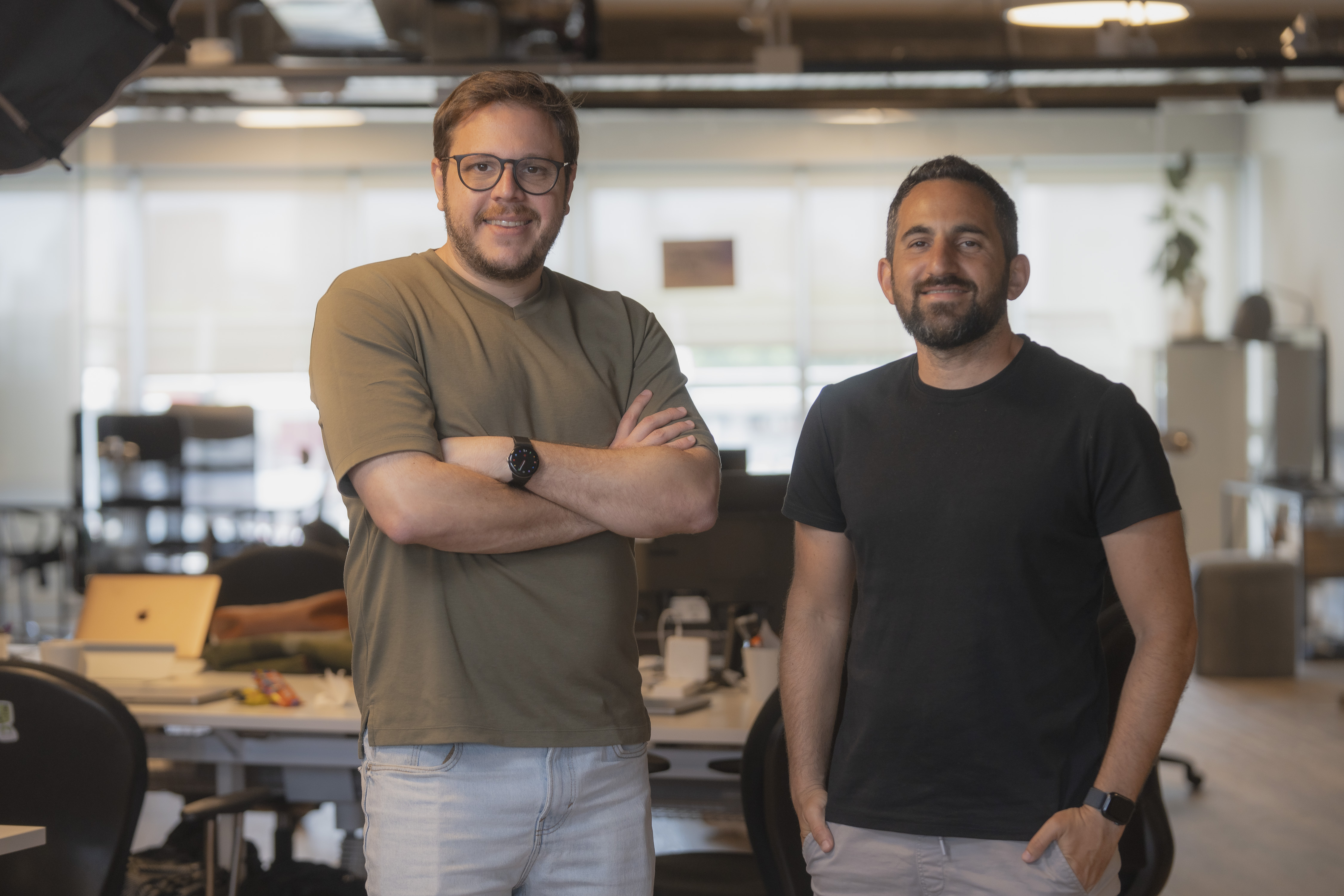
Where do you see BEON.tech in three years, given how fast AI is reshaping the developer role? What stays constant in your model, no matter how much the technology evolves?
We imagine the cost of accessing software will drop so much that it opens the door to many new ventures and startups. Ideas that will finally get tested and iterated on, sparking a huge wave of new businesses. The large teams companies used to need, the "armies" of engineers, will likely shrink, so we picture more companies running with smaller teams.
At the role level specifically, we picture engineers whose skill sets overlap what used to be separate roles: someone who needs UI/UX, frontend, backend, and infrastructure skills, and can genuinely do it all at once.
Damian, enough about business. Outside of work, what do you actually enjoy doing, any hobbies, sports, or ways you like to unplug completely from tech?
Something I try to do is train at least twice a week, just to move my body after sitting for so long. I also like to play soccer once a week, usually with friends on a turf field, and I try to stay close to my family.
I have four nephews and nieces, with a fifth on the way, and I try to be a good uncle to them. They're a lot of fun, still very little, and ever since they were babies, I've tried to spend as much time with them as I can. Same with my siblings, my family, and my girlfriend, who I share a home with every day.
What is the best advice you’ve received in your career? What about the best one from your parents?
From my parents: always trust and optimism, trusting my own ability, and doing things calmly, without rushing. From my business partner Michel, BEON's co-founder, we have a saying:
"If you cost the company money, I'll be understanding. But if you cost the company even a shred of reputation, I'll be relentless."
If given the chance, which personality, dead or alive, would you have dinner with?
Without a doubt, Lionel Messi.
Favorite movie, and what's on repeat on your playlist these days?
Back to the Future. And these days I've got two local Argentine bands on repeat; one is called El Zar, and the other is Silvestre y la Naranja.
And to conclude, what message and advice would you like to share with our readers?
This is the best time in the world to take the leap and build software.
Costs that used to be prohibitive, needing a team of at least two or three people full-time for months, have come down to a demo built in a couple of days. Knowledge transfer, which used to feel risky whenever a team changed hands or someone picked up work another team had started, is essentially commoditized now. It's the moment to do practically anything with confidence. I think 2027 is going to be a real turning point for all of us; we'll start seeing the results of everything that's being built for the first time this year.
Thank you, Damian, for sharing your perspective with us today.
BEON.tech is one of the leading companies on TechBehemoths. If you like this interview and think that Damian and his team can help your business, don't hesitate to contact them via TechBehemoths or discover the agency on social media: LinkedIn.
Did you enjoy reading the interview?
I absolutely love embracing new opportunities and connecting with people. Every project is a chance to analyze, create, and work until I am satisfied with the results. Bringing creativity into every aspect of my work offers a fresh perspective on turning ideas into reality. Paying attention to the details is key because it's the little things that truly make all the difference.
Discover more TechBehemoths Insights
Learn practical tips and insights about IT Companies, how to find the right company for your projects.
Read the latest news about Market Trends and fresh Interviews.