Top Companies providing Online Reputation Management services:
Handpicked companies • No obligation to hire • 100% risk-free
Use the advanced filter to find companies near you or refine the results Last updated in: September, 2026

Green Call Technology leads in IT solutions with top-notch managed IT services, custom software development, and cost-effective BPO services.
Hp Sangha is One of the Top Search Engine Optimization Company In Toronto. We Dominate Competition.
We are a digital marketing agency specialized in content marketing and SEO.
Digiown strives to assist businesses in maintaining their top rankings on Google search engines. Our SEO specialists build your effective SEO strategy
At Electric Alley, we use cost-effective, data-driven campaigns to help companies grow their businesses with highly targeted marketing strategies

SIMSIN - Your trusted digital partner for schools in Pakistan, offering digital solutions to enhance school presence & apply the latest technologies.

Specializing in web design, web development, and digital marketing.

We're more than just a digital solutions provider – we're your strategic partner in navigating the dynamic world of online branding.

Digital solutions. Specializing in Digital Marketing, SEO, and E-Commerce support, we're your trusted partner for online success.

Ad vantage has strong experience in handling corporate events, loyalty programs, outdoor advertisement, corporate gifting, and exhibitions.
Reel Agency is a "Purpose-Driven" Branding and Digital Marketing Agency
Dentsu M21World is a full-service advertising agency that provides comprehensive communication solutions to businesses of all sizes.
The HCS Agency1 is a legal marketing agency based on Long Island, that understands the competitive nature of the legal industry.
Elevate Your Digital Vision with Richmond Tech Factory

Shopify SEO Consultant offers 360° services to help businesses navigate the complexities of Shopify SEO, PPC, Content Marketing, and Site Maintenance.
Trivium PR is a multi-fold agency incepted 11 years ago by experienced professionals to drive business modules and shape public relations.
Stratagem Marketing Agency draws its inspiration from the timeless strategy
Top Digital Marketing Agency in Hyderabad, India
A digital design company focussed on developing interactive applications and Metaverse platforms using VR/AR/XR/Mobile/Web2.0-3.0 technologies.
A leading full-service brand, web and marketing agency based in South Wales.
SATELIUS has pioneered IT services in Tanzania,Canada, India, consistently delivering business value with the latest technology.

SEO and Digital Marketing Consultant from Toronto, Canada
Marketing is just about sharing your passion.

International Digital marketing agency based in México City and Paris. We are really good at Influencers Marketing, Content, Social Media & Ads.
Companies on the map offering Online Reputation Management services
North America
What is Online Reputation Management and what are its benefits for your projects?
Online reputation management (ORM) is the practice of strategically controlling and enhancing the way a brand, business, or individual is perceived online. It plays a vital role in building customer trust, establishing industry credibility, and driving sales. Key aspects of ORM include effectively responding to negative feedback, getting positive reviews, and closely monitoring brand mentions on various platforms.
Are you aware that 75% of businesses consider online reviews, comments, and forum posts crucial for their financial stability and reputation?
Why online reputation management is important for your business
-
The way your brand appears online can significantly impact purchasing decisions.
In fact, studies show that 59% of shoppers conduct online research before making a purchase, and a whopping 97% of consumers consult product reviews before buying. This means that if your brand doesn't present itself positively online, you risk losing potential customers.
-
Managing negative reviews is essential for any business.
While negative reviews are unavoidable, actively monitoring and responding to them can have a positive impact on your online reputation. Research has shown that customers who had their complaints addressed within five minutes on social media were more likely to continue making purchases with the company in the future.
-
It provides valuable feedback.
Customer reviews offer valuable feedback that can help identify and address potential issues in your products, services, or overall customer experience. By analyzing and reading through multiple reviews, you can gather useful insights that highlight recurring complaints and guide improvements.
Factors that Contribute to ORM
While every business uses a unique mix to maintain its online reputation, effective ORM should involve combining the following strategies:
-
Owned media - Experiences of both employees and customers, user-generated material, assessments, online seminars, and brand-generated content.
-
Paid media - Lead generation, affiliate programs, native advertising, and sponsored social media postings.
-
Earned media - Public relations, media relations, and influencer marketing.
-
Shared media - Community service and collaborations, co-branding campaigns, and organic social media content.
What is the role of online brand reputation manager
A brand reputation manager maintains a positive online image for a brand. They utilize various online resources to monitor and influence public perception of the brand. This involves analyzing reviews, tracking online mentions, and measuring brand sentiment. By actively managing the brand's online presence, they ensure that the brand maintains a positive reputation among its audience.
TechBehemoths lists over 900 online reputation management service providers. Use the smart filters to find and select the companies you need. You can view their profiles and reach out to them for collaboration or submit your project.
The system will match your peoject requirements with the best brand strategy service providers. Lastly, you can find out more about what is online reputation management and how to develop effectively on TechBehemoths blog.
Where to track your brand mentions and what tools to use?
The web is vast, so finding mentions about your brand requires specific tools. You can monitor your brand mentions and sentiment on different platforms like:
-
Social media - Facebook, Linkedin, Twitter (X)
-
Web and news sites - niche websites/blogs and news sites.
-
Review sites - Trustpilot, Google reviews
-
AI chatbots - ChatGPT, Perplexity,
-
Communities and forums - Reddit, Quora, niche forums
Examples of tools you can use to track the mentions of your brand:
- Social media, community, review sites - BrandMentions, Brand24, Mention.com
- Web and news - Ahrefs, BrandMentions, Brand24
- AI chatbots - Peec AI, Otterly.AI, BrandBeacon.Ai
Most recently, AI chatbots like ChatGPT are gaining fast user adoption and are transforming how people search for and access information. Users are asking more complex questions instead of searching keywords, and the process is more conversational.
AI chatbots aren’t like Google, they don’t rank content traditionally. Instead, they serve and recommend content and websites based on users questions, context, quality, and relevance.
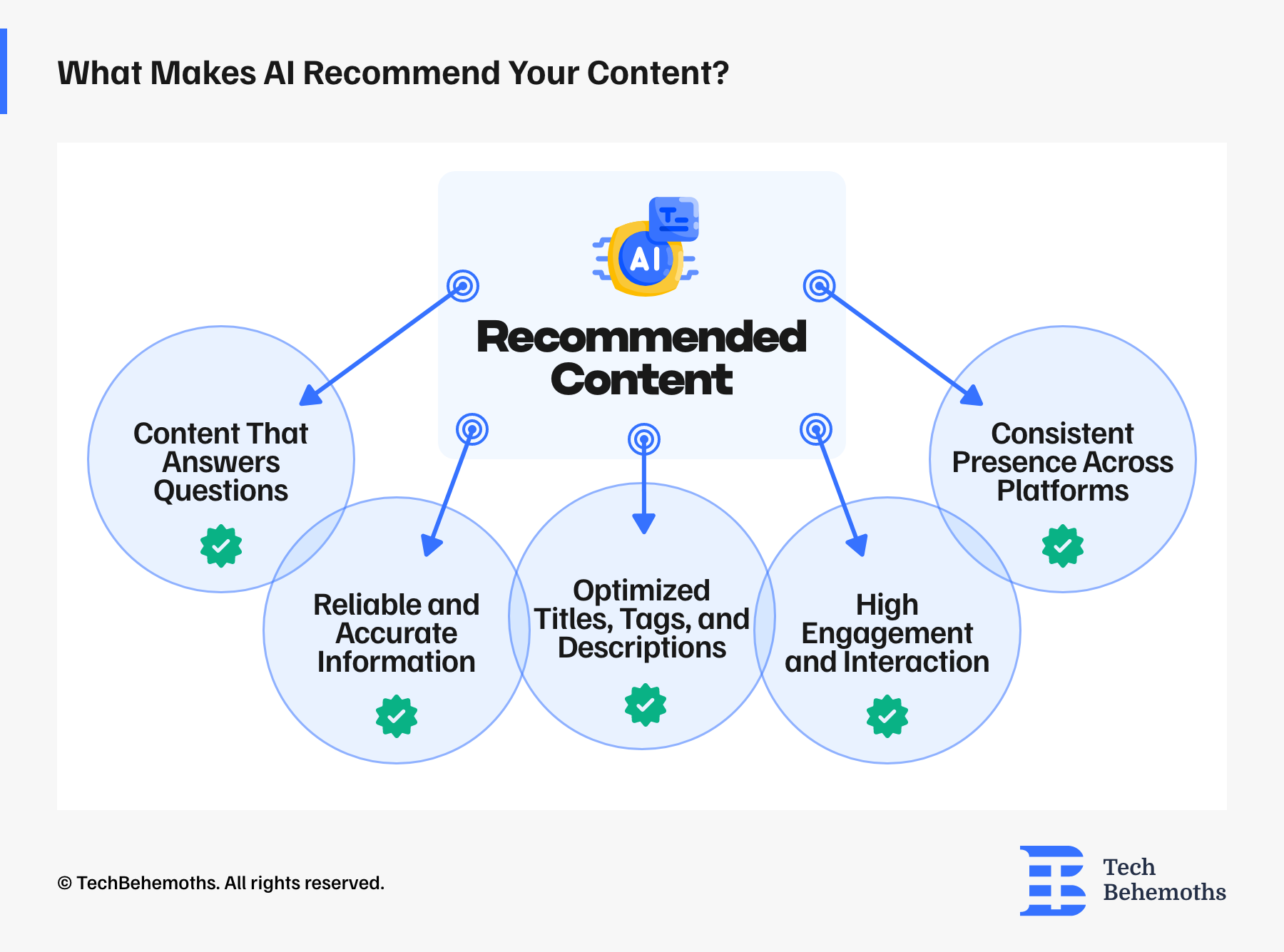
Knowing how good your brand is performing in chatbots and the general sentiment of users when they ask questions about your brand/content is important for your business. This data can help you adjust your marketing activities accordingly and react to possible negative feedback or reviews.
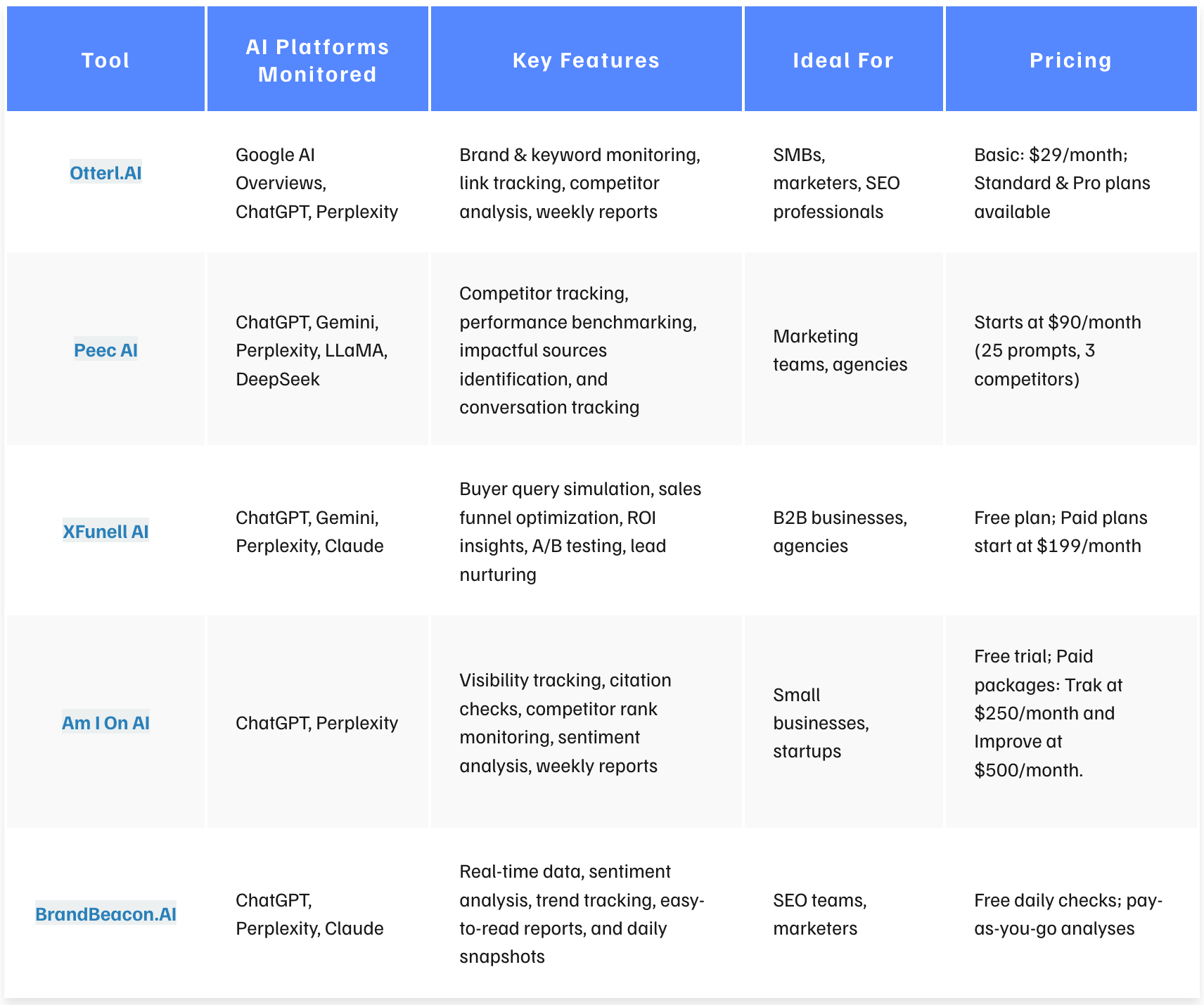
Here is a comparison of some AI chatbot visibility tools:
Key elements for an efficient reputation management strategy
Here are some practical considerations for a successful online reputation management strategy:
1. Define your unique values
Ask yourself some of these questions: what problem are you solving for your customers, why would they want to buy from you and not your competitors? Then tailor your answers/actions to these values
2. Monitor your brand mentions
Use the tools mentioned earlier to track the mentions about your brand on different platforms. Be proactive and respond to positive and negative feedback, reviews, etc.
3. Listen to your customers
Social media platforms, review sites along with your site are feedback channels for your customers. It’s important to listen to your customers' frustrations and positive experiences to adjust your product/service accordingly and communicate in a professional manner.
4. Monitor your competitors
Tracking the online mentions of your competitors is a good way to stay up to date with what’s happening with your competitors and get ideas of new marketing campaigns.
5. Define the key elements
Consider the key elements that are part of your online reputation management:
-
A clear statement of your brand mission/unique value proposition, and social media activities to support them
-
Regular brand related updates using high-quality content
-
Up-to-date positive feedback from customers
-
Internal documentation on how to answer to positive/negative reviews and feedback
-
Fake reviews and spam management rules
-
List of possible reputation risks and how to manage them.
-
Responsibilities distribution among sales, marketing, and support teams. Who is doing what?
If you need help with ORM, consider finding the right agency for your needs, using the Submit your project option on TechBehemoths. It’s free, and there is no obligation to hire.