Explore Top Online Reputation Management Companies in United Kingdom

Welcome to BrainZ Digital, where we sprinkle a little magic (and a lot of expertise) on your digital presence.

Aarrth Marketing Agency is a premium digital marketing agency, specialising in crafting customised digital strategies that elevate businesses.
Services:

GrowthChain is a disruptive web3 marketing agency looking to propel your customer base. We focus on DAOs, DeFi, NFT and Crypto projects.

Your industry-exclusive partner for custom web solutions and unmatched marketing strategies, delivering a relentless competitive advantage.

Academic Paper Pros provides academic help for students all over the world. Connect with us if you wish to pursue a successful academic career.

All experts at Papersnow (reviews) are uniquely qualified to provide perfect solutions for your writing, editing and proofreading problems.


London, United Kingdom Head office in: Estonia
Lialoom is a Sales, PR & Marketing agency for B2B and B2C Tech companies.

London, United Kingdom Head office in: Ukraine
AroundB has been working with blockchain, Web3, fintech, and crypto projects since 2016 and has over 50 successful projects accomplished.

Electric Alley Verified Company
London, United Kingdom Head office in: United Kingdom
At Electric Alley, we use cost-effective, data-driven campaigns to help companies grow their businesses with highly targeted marketing strategies

A leading full-service brand, web and marketing agency based in South Wales.

Creative Digital Business Solutions
Ivanka Digital Verified Company
London, United Kingdom Head office in: United States
Marketing is just about sharing your passion.

LegUP is an agency that provides a full range of online reputation management services using SERM, ORM and SEO tools.
Services:

AM+A Marketing & Media Relations Verified Company
Crieff, United Kingdom Head office in: United Kingdom
An integrated EU agency made up of creative marketers & PR experts specialising in travel, culture & lifestyle brands.

The Soft Hub Ltd is the first choice for all digital services, from small global start-ups to leading businesses.

PR TECH GLOBAL LTD is a Technology focused Consultancy that specialises in Education and Training in the UK.

We are a Digital Solutions, Software Development & IT Services Company Committed to helping SMEs Build & Improve their Products
We Provide Website Design, Graphic Design, Mobile Application Design, UI/UX Design, Digital Marketing, Hosting, Domain and Guaranteed SEO services.
Services:

A live events PR company that specialises in music festivals and large scale events.
Filter Online Reputation Management Companies in United Kingdom by Cities
Find the right tech company near you or from a specific city. Some of the best companies might be located in smaller cities.
Find more Online Reputation Management companies around the world
TechBehemoths is the world's most advanced and user-friendly platform to match IT Companies with real clients without hustle.
ICT in the United Kingdom: General Profile and Insights
The UK technology sector is growing more than two-and-a-half times faster than the overall economy, and London has been ranked as the second most connected place for tech in the world behind Silicon Valley in the US.
According to Statista, the UK IT Services market is worth nearly $113.46 billion to the economy, a rise from $3.44 billion in 2020. Between 2024 and 2025, the tech market in the UK continued to grow with increased market productivity, influencing the UK’s GDP.
Why Should You Work With a UK-based Company?
Probably the second-largest IT hub in the world, the UK is one of the fastest-growing IT leaders. It is the home of over 225,000 IT & web companies based according to a report delivered by Computer Weekly. Web companies from the UK provide the entire range of services and are known for good management, rich business culture, and great tech performance.
What You Should Be Aware of When Working With UK Web Companies
A report by Tech Nation in 2018 revealed that the main challenges companies and IT hubs face are related to access to talent, affecting 83% of tech hubs. Access to funding and poor transport links were also found to be major challenges for some of the UK’s tech hubs. This challenge is still relevant for 2025, especially the lack of funding possibilities.
Are UK IT Companies Reliable?
The UK companies enjoy a high trust level on a global level and are considered reliable overall. However, due to the wide variety of web & software companies, not all UK-based companies represent the business culture, performance, and tech skills that the UK is so well known for. This is why choosing the IT company as a partner is important.
How the UK IT Industry Relates to the Neighboring Countries
Having a leading IT infrastructure, the IT industry in the UK increased its potential, and following the global trends, just like the US, it will focus more on certifying and developing already existing professionals rather than hiring new skills.
In the background of a fast-developing EU market, the UK looks weaker alone than in the community. Brexit has forced tech giants and many IT companies to leave for other EU countries, especially Ireland and Germany, a report from Tech Spot reveals.
Overall, the UK IT industry will continue to be a good option for businesses that tend to expand their presence on the local market, and also for local startups that would preferably rely on companies from the UK.
What is Online Reputation Management and what are its benefits for your projects?
Online reputation management (ORM) is the practice of strategically controlling and enhancing the way a brand, business, or individual is perceived online. It plays a vital role in building customer trust, establishing industry credibility, and driving sales. Key aspects of ORM include effectively responding to negative feedback, getting positive reviews, and closely monitoring brand mentions on various platforms.
Are you aware that 75% of businesses consider online reviews, comments, and forum posts crucial for their financial stability and reputation?
Why online reputation management is important for your business
-
The way your brand appears online can significantly impact purchasing decisions.
In fact, studies show that 59% of shoppers conduct online research before making a purchase, and a whopping 97% of consumers consult product reviews before buying. This means that if your brand doesn't present itself positively online, you risk losing potential customers.
-
Managing negative reviews is essential for any business.
While negative reviews are unavoidable, actively monitoring and responding to them can have a positive impact on your online reputation. Research has shown that customers who had their complaints addressed within five minutes on social media were more likely to continue making purchases with the company in the future.
-
It provides valuable feedback.
Customer reviews offer valuable feedback that can help identify and address potential issues in your products, services, or overall customer experience. By analyzing and reading through multiple reviews, you can gather useful insights that highlight recurring complaints and guide improvements.
Factors that Contribute to ORM
While every business uses a unique mix to maintain its online reputation, effective ORM should involve combining the following strategies:
-
Owned media - Experiences of both employees and customers, user-generated material, assessments, online seminars, and brand-generated content.
-
Paid media - Lead generation, affiliate programs, native advertising, and sponsored social media postings.
-
Earned media - Public relations, media relations, and influencer marketing.
-
Shared media - Community service and collaborations, co-branding campaigns, and organic social media content.
What is the role of online brand reputation manager
A brand reputation manager maintains a positive online image for a brand. They utilize various online resources to monitor and influence public perception of the brand. This involves analyzing reviews, tracking online mentions, and measuring brand sentiment. By actively managing the brand's online presence, they ensure that the brand maintains a positive reputation among its audience.
TechBehemoths lists over 900 online reputation management service providers. Use the smart filters to find and select the companies you need. You can view their profiles and reach out to them for collaboration or submit your project.
The system will match your peoject requirements with the best brand strategy service providers. Lastly, you can find out more about what is online reputation management and how to develop effectively on TechBehemoths blog.
Where to track your brand mentions and what tools to use?
The web is vast, so finding mentions about your brand requires specific tools. You can monitor your brand mentions and sentiment on different platforms like:
-
Social media - Facebook, Linkedin, Twitter (X)
-
Web and news sites - niche websites/blogs and news sites.
-
Review sites - Trustpilot, Google reviews
-
AI chatbots - ChatGPT, Perplexity,
-
Communities and forums - Reddit, Quora, niche forums
Examples of tools you can use to track the mentions of your brand:
- Social media, community, review sites - BrandMentions, Brand24, Mention.com
- Web and news - Ahrefs, BrandMentions, Brand24
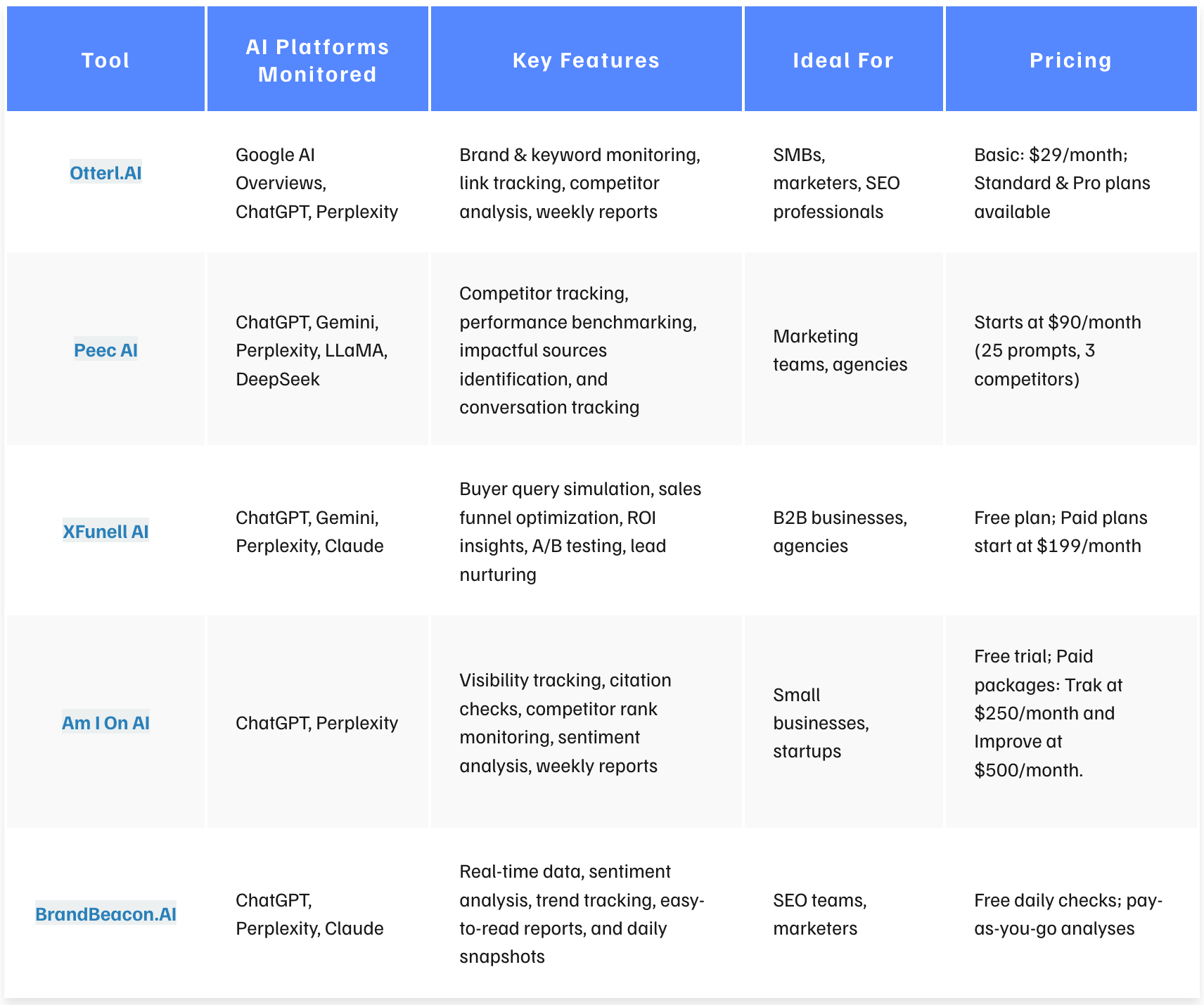
- AI chatbots - Peec AI, Otterly.AI, BrandBeacon.Ai
Most recently, AI chatbots like ChatGPT are gaining fast user adoption and are transforming how people search for and access information. Users are asking more complex questions instead of searching keywords, and the process is more conversational.
AI chatbots aren’t like Google, they don’t rank content traditionally. Instead, they serve and recommend content and websites based on users questions, context, quality, and relevance.
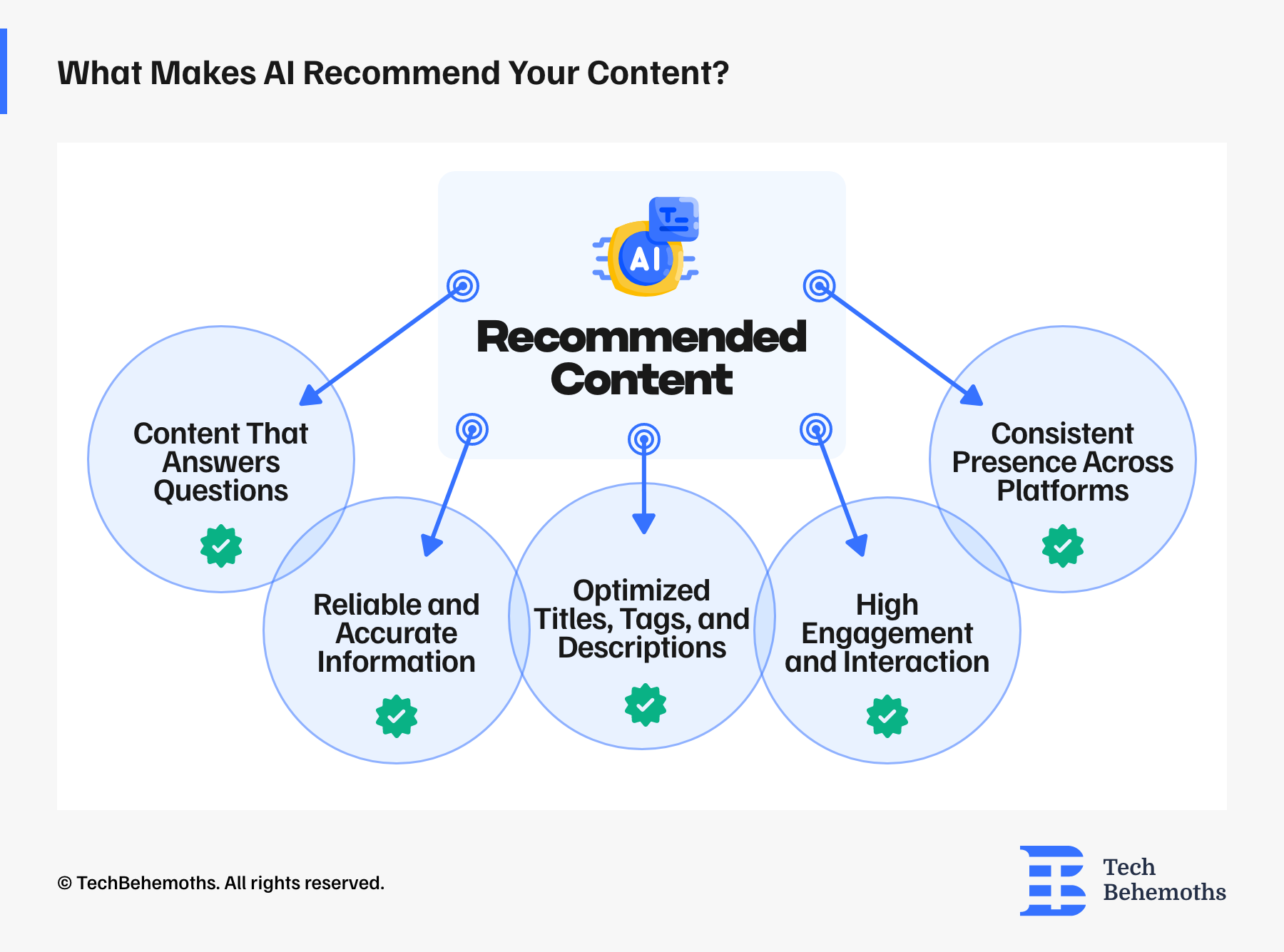
Knowing how good your brand is performing in chatbots and the general sentiment of users when they ask questions about your brand/content is important for your business. This data can help you adjust your marketing activities accordingly and react to possible negative feedback or reviews.
Here is a comparison of some AI chatbot visibility tools:
Key elements for an efficient reputation management strategy
Here are some practical considerations for a successful online reputation management strategy:
1. Define your unique values
Ask yourself some of these questions: what problem are you solving for your customers, why would they want to buy from you and not your competitors? Then tailor your answers/actions to these values
2. Monitor your brand mentions
Use the tools mentioned earlier to track the mentions about your brand on different platforms. Be proactive and respond to positive and negative feedback, reviews, etc.
3. Listen to your customers
Social media platforms, review sites along with your site are feedback channels for your customers. It’s important to listen to your customers' frustrations and positive experiences to adjust your product/service accordingly and communicate in a professional manner.
4. Monitor your competitors
Tracking the online mentions of your competitors is a good way to stay up to date with what’s happening with your competitors and get ideas of new marketing campaigns.
5. Define the key elements
Consider the key elements that are part of your online reputation management:
-
A clear statement of your brand mission/unique value proposition, and social media activities to support them
-
Regular brand related updates using high-quality content
-
Up-to-date positive feedback from customers
-
Internal documentation on how to answer to positive/negative reviews and feedback
-
Fake reviews and spam management rules
-
List of possible reputation risks and how to manage them.
-
Responsibilities distribution among sales, marketing, and support teams. Who is doing what?
If you need help with ORM, consider finding the right agency for your needs, using the Submit your project option on TechBehemoths. It’s free, and there is no obligation to hire.